How Long It Takes A Forest To Recover After A Flood
A flood can leave a forest standing underwater for days or months, but the damage may not become clear until long after the water recedes. Some trees recover during the next growing season, while others decline gradually as damaged roots and waterlogged soils take their toll. A forest may regain green cover within a few years, yet rebuilding its former canopy and mix of species can take decades.
The recovery timeline depends on the type of forest and how the water behaves. Floodplain forests have evolved alongside periodic flooding and contain species adapted to wet conditions. A prolonged flood during the growing season, however, can kill even flood-tolerant trees and change which species dominate the forest for years.
Flood Damage Can Continue After the Water Recedes

Floodwater affects trees in several ways. Fast-moving water can erode soil around roots, destabilizing trees and leaving them vulnerable to wind and disease. Debris carried by the current can damage trunks and branches, while standing water fills soil spaces that normally hold oxygen.
Roots need oxygen to function, and prolonged waterlogging can deprive them of it. Damaged roots may stop growing or begin to die, interfering with a tree's ability to absorb water and nutrients even after the surrounding soil dries. The effects are often more severe when flooding occurs during the growing season, when trees have greater metabolic demands. Some injured trees may continue declining for years rather than dying immediately.
The damage also varies by tree size and species. Mature trees may survive short inundation but become vulnerable to uprooting when saturated soil loosens their grip. Seedlings may bend or become buried by sediment, leaving fewer young plants to replace trees that later die.
Flood Duration and Timing Shape Recovery

A brief flood can produce very different results from one that keeps a forest underwater for weeks. Timing matters, too: trees may tolerate dormant-season flooding better than inundation during active growth, when root function, seedling establishment, and new growth are especially important.
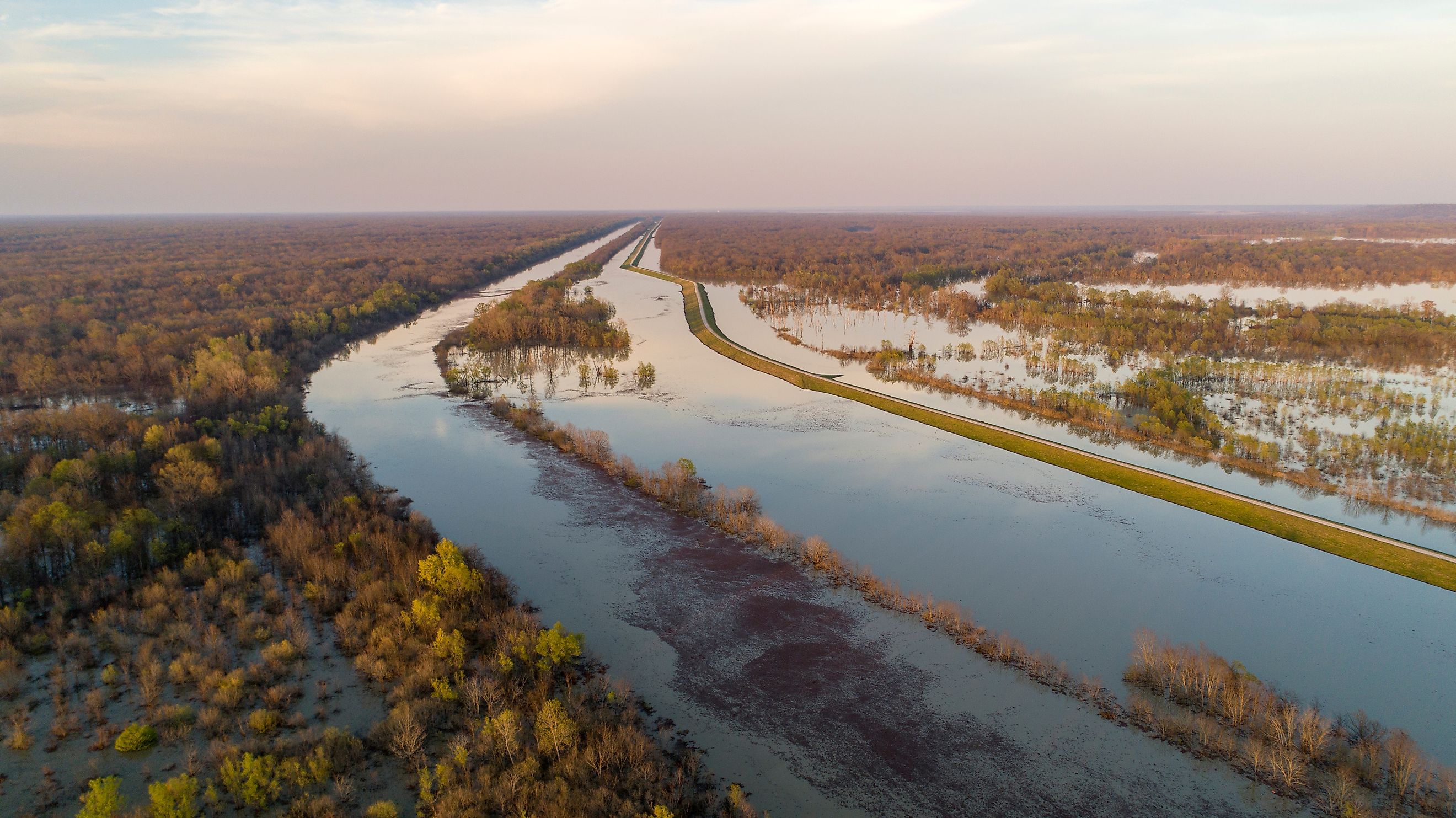
Research by the US Geological Survey has shown how flood duration can shape forest communities along the Upper Mississippi River floodplain. A 2012 study found changes in vegetation and soil conditions across areas exposed to different durations of growing-season flooding. Tree and understory communities varied along that hydrologic gradient, demonstrating how the length of time water remains on the landscape can influence which species persist.
Water speed also influences what happens to the forest floor. Fast currents can carry away seeds and loose soil, while slower water may deposit sediment, covering vegetation but also creating new surfaces for plants to colonize.
Flood-Tolerant Forests Can Recover Faster

Not every flooded forest starts from the same position. Bottomland forests contain trees adapted to periodic high water, including species such as bald cypress and tupelo. These trees can withstand flooding that would severely stress species better suited to drier ground.
Flooding can also create opportunities for regeneration. Water may remove competing vegetation, deposit sediment, and carry seeds into newly opened areas. When mature trees survive, they provide a source of seeds and help preserve the forest's existing structure.
A US Forest Service study of longleaf pine after a major flood found that large trees generally survived better than seedlings and trees in the advance regeneration stage, meaning young trees already growing beneath the canopy. About one-half of affected seedlings and one-third of damaged advance regeneration recovered through resprouting or producing new growth.
New Plants Begin Rebuilding the Forest

As floodwater recedes, surviving trees and new seedlings compete for sunlight and space. Seeds can arrive from surrounding forests through wind, animals, and floodwater, while some trees regenerate by sprouting from surviving roots or stems. New growth may appear during the first growing season, even when the flood has killed many mature trees.
The first plants to return are not necessarily the species that formed the original canopy. Fast-growing shrubs, grasses, and young trees may establish first, stabilizing soil and providing cover before slower-growing forest trees take hold.
A US Forest Service study published in 1999 examined longleaf pine recovery following an unusually severe flood in an upland forest. Most large trees survived, while younger plants suffered extensive damage. About half of the affected seedlings and one-third of the damaged young trees recovered through resprouting or producing new growth.
Early growth does not necessarily mean the forest has returned to its previous condition. Young vegetation cannot immediately replace the height, shade, and habitat created by mature trees. Researchers measure recovery through tree survival, seedling establishment, and species composition, all of which can change at different rates.
The Upper Mississippi Shows How Long Changes Can Last

Research on the Upper Mississippi River System provides an example of how flood effects can continue for decades. USGS scientists examined floodplain forests affected by the record-setting floods of 1993 and 2019, comparing vegetation surveys from the mid-1990s with surveys conducted in 2021.
The researchers found that tree mortality varied across the region and generally reflected differences in how long forests remained inundated. The effects also varied among different reaches of the river. Some forest communities changed little, but areas with high tree mortality experienced more substantial shifts in species composition and structure.
The study also showed that a single flood does not tell the entire story. Changes in the broader flood regime influenced how forests developed after the events. In some areas, species that once dominated the canopy shifted toward more shade-tolerant or flood-tolerant trees.
Dead Wood Can Still Support Recovery

A flood can leave behind dead trees, branches, and other debris that make a forest look heavily damaged. Yet fallen wood continues serving ecological functions as the forest recovers.
As logs and branches decay, they return nutrients to the soil and provide habitat for fungi, insects, and other organisms. Downed wood can also create sheltered, moist locations where some seedlings establish. In areas with extensive tree mortality, this material becomes part of the environment in which the next generation of vegetation grows.
Standing dead trees provide nesting and feeding sites for wildlife. Whether managers leave or remove damaged wood depends on safety, access, timber objectives, and ecological goals.
Other Disturbances Can Slow the Process

Many stresses can slow recovery after a flood. Drought can affect seedlings, while insects, disease, and invasive plants can take advantage of weakened trees or newly opened canopy. Browsing animals may also limit how many young trees survive, and deposited or eroded soil can create uneven growing conditions.
Human management can influence the outcome. Managers may allow natural regeneration, plant trees where seed sources are limited, or remove selected damaged trees. In forests managed for multiple uses, decisions may also consider timber production, recreation, wildlife habitat, and protection of nearby communities.
Replanting can restore tree cover where natural regeneration is insufficient, but tree species must suit the site's flooding conditions to avoid further losses. In areas where repeated flooding has permanently altered the soil or water regime, restoring the original forest may no longer be practical.
Forest Recovery Follows No Single Timeline
A forest may begin producing new growth within months of a flood, while surviving mature trees can require several years to recover from root damage and other stresses. Where many trees die, rebuilding a mature canopy can take decades, and the original species composition may never fully return.
Research from the Upper Mississippi River demonstrates that major floods can influence forest structure more than 25 years after the water recedes. The timeline depends on flood severity, duration, timing, and the species present before the event. Even when new vegetation covers the forest floor, the recovery of the larger forest may have only just begun.