These 9 Towns In Southern California Were Ranked Among US Favorites In 2026
Ask a Southern Californian for a favorite town and the answer usually comes with a specific detail attached, such as a Danish village in wine country or an Art Deco ballroom on an island bay. The nine towns listed below earned their 2026 spot on history as much as scenery, and in San Juan Capistrano that history includes the Serra Chapel, the oldest building in California still in use. In Ojai, the Pink Moment washes the Topatopa Mountains in rose and lavender light for ten to fifteen minutes at dusk. Down the coast, the red-roofed Hotel del Coronado has stood over a mica-flecked beach since 1888. Follow them as a loose loop that starts in the northern valleys, runs down the coast, and finishes in the desert and mountains.
Ojai

Many lists tend to lead with Ojai, and the locals know why. This Ventura County town sits in a rare east-west valley below the Topatopa Mountains, which is exactly why its signature moment happens at dusk. Called the Pink Moment, it arrives when the setting sun produces rose and lavender light across the mountain face for a mere ten to fifteen minutes. For architecture, the Spanish Colonial Revival plan drawn up in 1917 centers on the arched Ojai Arcade and the mission-style post office bell tower that has become the town's silhouette. A longstanding ban on chain stores has preserved the local storefronts, including Bart's Books, recognized as the world's largest outdoor bookstore. Add in trailheads leading into the Los Padres National Forest, as well as the tangerine groves, and Ojai earns its spot on any SoCal itinerary.
Solvang

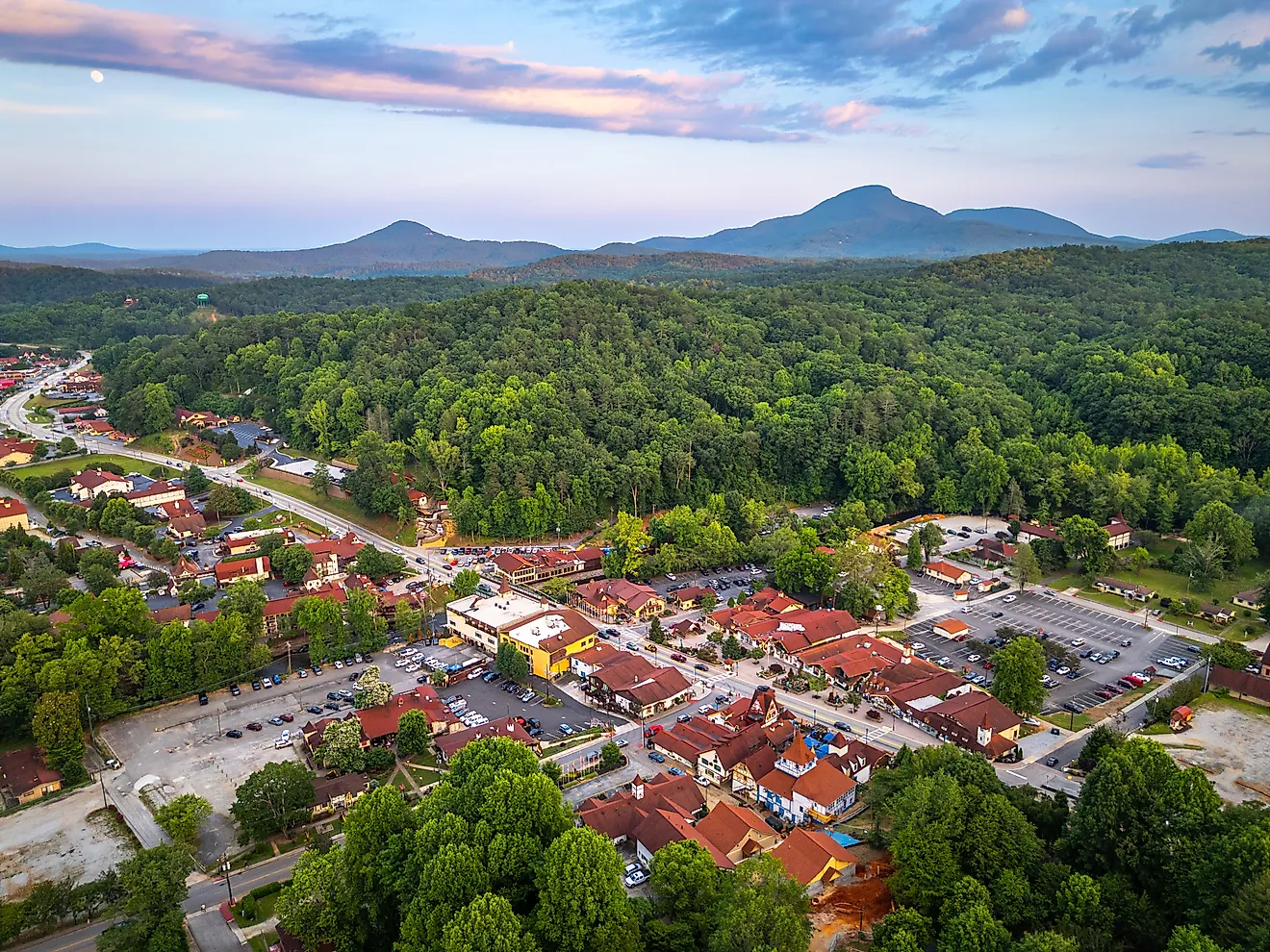
Northwest of Ojai, where the Santa Ynez Valley opens into wine country, Solvang leans into a look no other California town shares. Referred to as the Danish Capital of America, the town was founded by Danish immigrants in 1911, and after World War II, the community rebuilt its center as a Danish village with half-timbered facades, four windmills, and a scaled-down Round Tower modeled on Copenhagen's Rundetaarn. Copenhagen Drive is the walkable gateway, lined with the Danish bakeries and cafes that make the town notable, including Solvang Restaurant and its walk-up window for aebleskiver. The Elverhoj Museum preserves the settlement story, and the Old Mission Santa Inés, founded in 1804, lets you see the living history in person. The town's setting does the rest with vineyard-covered hills and tasting rooms encouraging patrons to linger.
Avalon

For an offshore favorite, Californians trade the mainland for a channel crossing to Santa Catalina Island, where the town of Avalon curves around a small, bright bay. The Catalina Casino, a round Art Deco landmark commissioned by William Wrigley Jr. and opened in 1929, has the skyline to itself. However, no one has ever gambled here. The name itself means gathering place, and inside sits the world's largest circular ballroom above the Avalon Theatre. Head back down to the water and the Green Pier for an undersea expedition or glass-bottom boat adventure over kelp forests thick with bright orange garibaldi. Crescent Avenue, known to locals as Front Street, is the heart of the town and provides access to many beaches, shops, and restaurants, as well as the serpentine wall. Private cars are scarce, with many residents preferring to get around by golf cart or on foot, leaving the streets quiet and slow-moving.
Laguna Beach

Back on the mainland, Laguna Beach turned its scenery into the town's identity well over a century ago. Plein air painters settled in these coves in the early 1900s for the light, softened by the marine layer and saturated by the water and sandstone. The Laguna Beach Art Association, today's Laguna Art Museum, formed in 1918 and backed the first Festival of Arts in 1932, whose Pageant of the Masters remains an annual favorite, staging living recreations of famous paintings. The coastline earns its reputation in its own right, with a string of coves and sea caves, tide pools at Shaw's Cove and Crescent Bay, and the bluff-top paths of Heisler Park, the town's most-walked route at sunset. Complemented by thousands of acres of protected canyon, Laguna stays green even with all the sand.
San Juan Capistrano

About 20 minutes south of Laguna Beach, the coast gives way to a town built around the oldest story in the county. Mission San Juan Capistrano, founded in 1776 as the seventh of California's twenty-one missions, is known as the Jewel of the Missions, and its Serra Chapel is the oldest building in California still in use. The grounds contain the ruins of the Great Stone Church and gardens that draw crowds each spring for the return of the swallows, an annual celebration that takes place March 19. A short walk away, the Los Rios Historic District preserves the oldest residential street in California, lined with historic buildings, some dating as far back as 1794, that now house cafes and shops.
Coronado

Farther down the coast, Coronado presents its history on the sand. The town grew up around the Hotel del Coronado, also known as "The Del," the red-roofed National Historic Landmark that opened in 1888 and remains one of the largest wooden buildings in the country. The hotel's turrets and white shingles have defined the shoreline for well over a century, while mica-flecked sand creates a sparkling beach that contrasts with the blue water. Orange Avenue runs like a tree-lined main street through the middle of town, walkable end to end, with tidy storefronts, cottages, and the award-winning Coronado Brewing Company. Glorietta Bay offers calmer waters for paddleboarding, sailing, and swimming.
Palm Springs

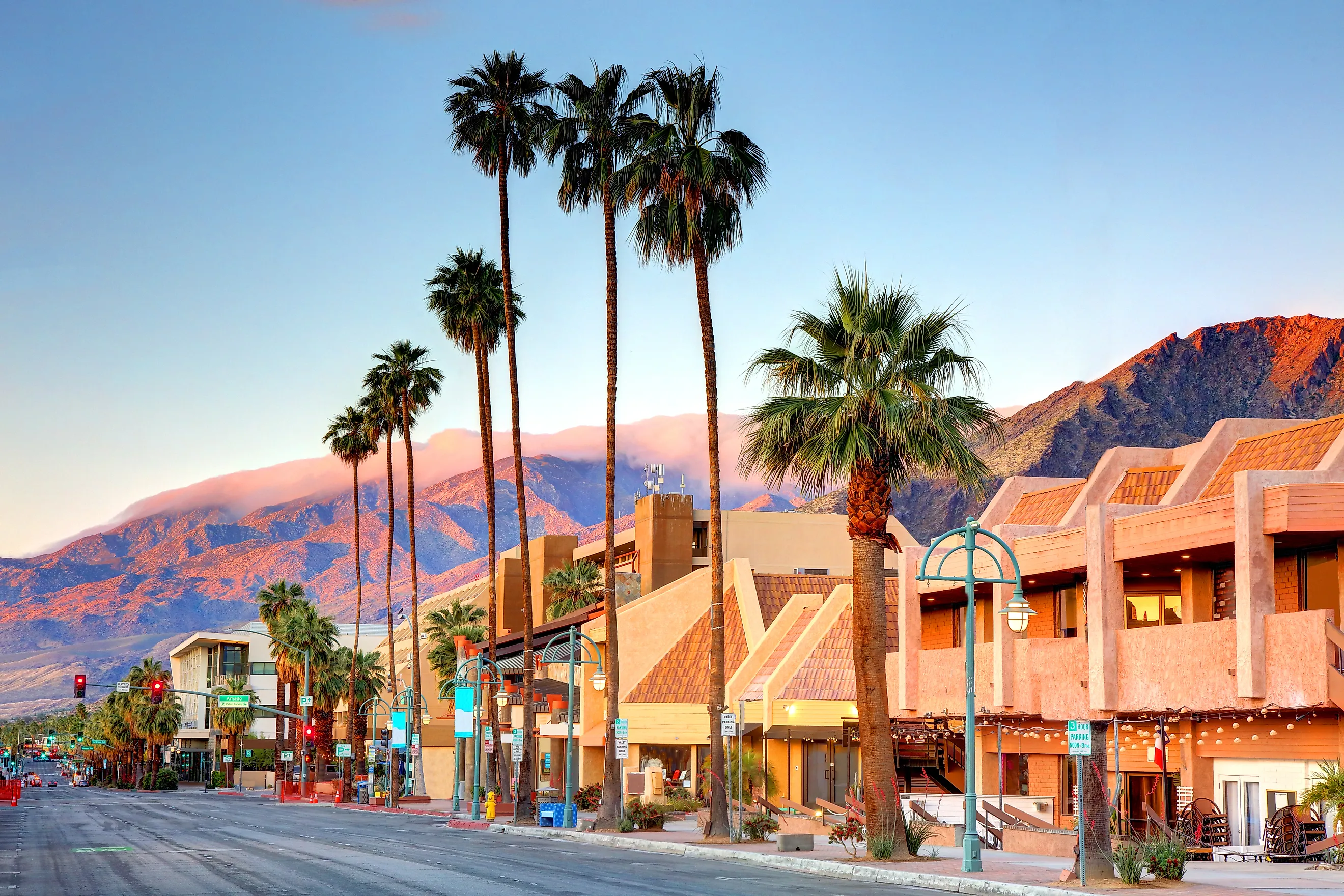
Inland from the coast, Palm Springs sits on the Coachella Valley floor beneath the sheer wall of the San Jacinto Mountains, and it is widely regarded as the capital of mid-century modern architecture. Low-slung glass houses, breezeblock screens, and butterfly rooflines fill the town's neighborhoods, celebrated each February during Modernism Week. The town's boldest structure runs straight up the mountain. The Palm Springs Aerial Tramway, opened in 1963, lifts riders in slowly rotating cars from the desert floor to a station near 8,500 feet, trading cactus for pine in about ten minutes. Back down among fan palms, the Indian Canyons shelter natural palm oases and hiking trails on ancestral Agua Caliente land.
Idyllwild

The San Jacinto Mountains that tower over Palm Springs shelter a second favorite on their more forested side. About an hour up a winding highway, Idyllwild sits a mile high among ponderosa pine and cedar in the San Jacinto range, a sharp contrast to the desert below. Locals call the area the Hill, and it runs on the outdoors and the arts. Granite crags flank the town, with Tahquitz Rock and Suicide Rock ranking among the best-known climbs in Southern California, while trails like Devil's Slide Trail climb toward San Jacinto Peak. The passion for the arts runs just as deep and is perhaps best displayed at the Idyllwild Arts Academy and during its summer festivals. The town even elects a golden retriever, Mayor Max, as its beloved civic mascot.
Big Bear Lake

Farther north, in the neighboring San Bernardino Mountains, Big Bear Lake stretches seven miles through pine forest at nearly 6,800 feet, giving Southern California a genuine four-season resort within an easy drive. Summer turns the lake into an open playground of pontoon boats, kayaks, and paddleboards, with trout and bass drawing anglers to the same shoreline. When snow falls, the slopes above the town at Snow Summit and Bear Mountain make this the region's main place to ski and snowboard. The walkable Village livens the town side year-round with shops and popular food spots like Stillwells, while the surrounding forest shelters bald eagles that winter over the water. The lake even hosts a solar observatory on its north shore.
From Valley Light to Mountain Pine
Strung together, these nine towns explain why Southern California lands on so many favorite lists, and it has little to do with size. Each one matches a specific setting with a look all its own. Danish windmills and Spanish arcades fill the valleys, an island ballroom rises offshore, and a red-roofed Victorian stands by the sea. Follow the loosely formed loop, and you can trade valley light for desert modernism and alpine pine in a single long weekend. For anyone deciding where to go next, these California towns are calling.