The Towns That Banned Cars Entirely
Municipalities across the globe manage traffic through speed limits and metered parking. A select group of towns have eliminated cars altogether. These locations share a strict legal framework that completely outlaws motorized cars and allows only emergency vehicles onto their streets. Residents and visitors rely instead on bicycles and their own feet within the town's limits. Horse-drawn carriages, golf carts, and electric scooters cover the rest.
Some of these places adopted the ban to preserve historically narrow streets and architecture, and others enacted car-free laws to protect the local environment from pollution and noise. Eight towns prove that modern communities can function and flourish without the constant whirring of engines.
Mackinac Island, Michigan

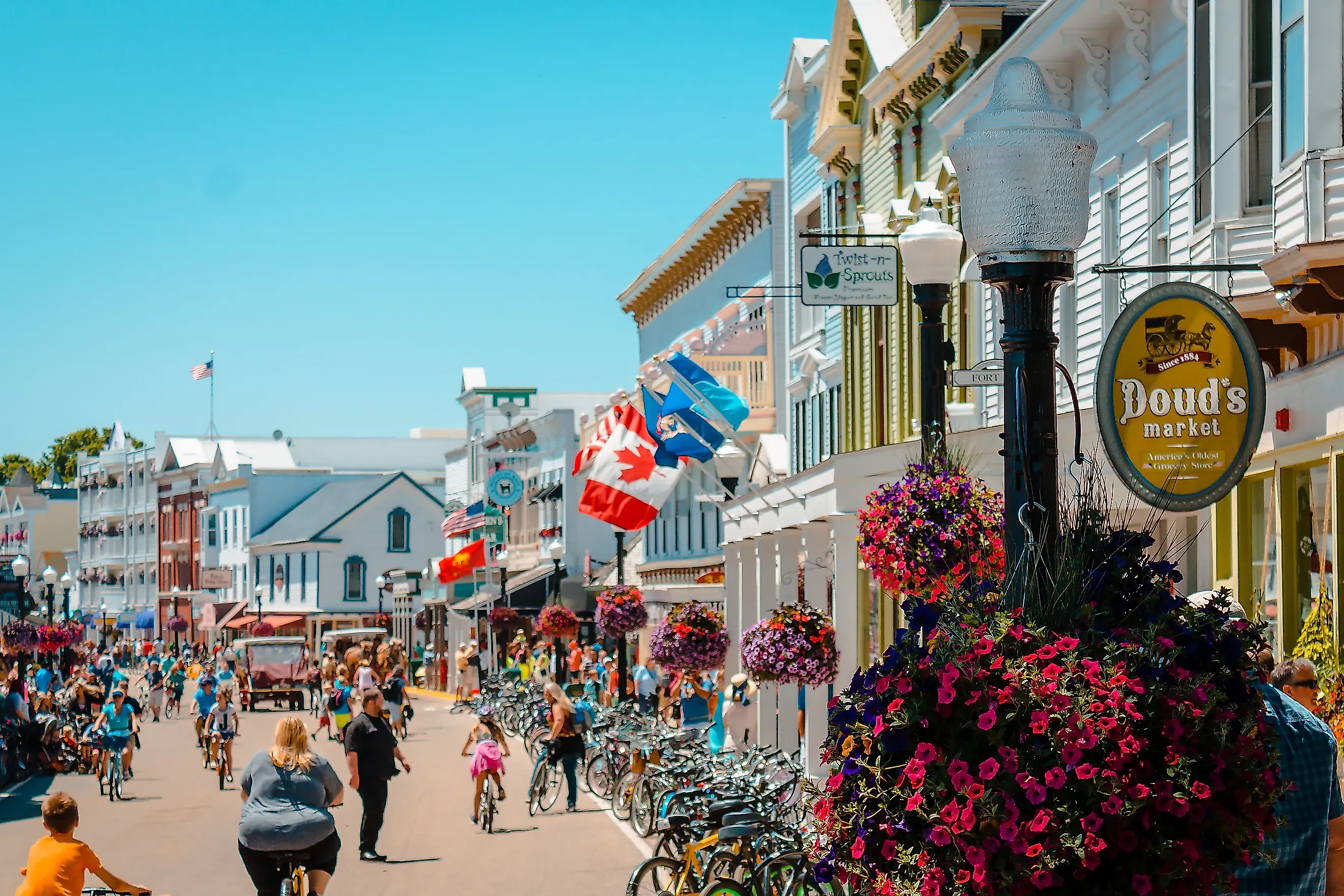
Automobile travel ended on Mackinac Island back in 1898 soon after the introduction of early automobiles to the island, which frightened the horses that pulled the town's carriage trade. Located in Lake Huron, the entire island operates under Michigan State Law and local ordinances that restrict transit to non-motorized options.
The permanent population of approximately 623 residents relies on a fleet of horses, bicycles, and hand-pulled carts to move groceries, building materials, and luggage. According to the Mackinac Island State Park Commission, the island maintains over 70 miles of paved and unpaved trails, including Michigan State Highway M-185, which is the only state highway in the country that outlaws personal motorized vehicles.
Daily life centers around the ferry dock on the southern shore, where supplies arrive from the mainland. Businesses like the Grand Hotel, operating since 1887, utilize horse-drawn dray services to transport guests and freight. Emergency and utility vehicles are the only standing exception, and residents get one seasonal exception of their own. When Lake Huron freezes solid enough, a permit system allows snowmobiles for the coldest months, after which the streets go back to the quiet of engineless travel.
Giethoorn, Netherlands

In the Dutch province of Overijssel, the village of Giethoorn has functioned without roads or cars since its establishment by peat cutters in the 13th century. The early settlers excavated deep trenches to harvest and transport peat, creating a network of canals that physically divided the town into small islands. The local municipality maintains a strict ban on passenger vehicles, requiring the roughly 2,800 residents to travel by water or foot.
Transit in Giethoorn occurs via small, electric-powered boats known locally as whisper boats. They utilize silent motors to prevent noise pollution along the narrow waterways. 176 wooden pedestrian bridges span the canals, connecting homes directly to the main footpaths.
The local economy depends heavily on agricultural heritage and canal-based commerce. Mail carrier vans, grocery deliveries, and waste management services operate using custom-designed barges. While the town has built peripheral parking lots on its outer boundaries for commuters who work in neighboring cities like Meppel, the residential core remains completely free of tire tracks and exhaust.
Afuá, Brazil

Situated on Marajó Island at the mouth of the Amazon River, the delta municipality of Afuá banned all motorized passenger cars and motorcycles by municipal decree in 2002. Built entirely on stilts over the wet marshes and floodplains of the delta, the city's pier foundations were never engineered to carry the weight or vibration of standard automotive traffic.
With a population of 40,910 residents in the wider district, Afuá's urban core relies almost exclusively on modified bicycles for daily transportation. Local innovators welded two bicycles together to create the bicitaxi, a pedal-powered four-wheeled vehicle with passenger seats, which functions as the city's taxi service. Cargo is transported on heavy-duty cargo tricycles, while emergency service vehicles are restricted to customized pedal-powered ambulances or watercraft.
Because the entire city sits elevated above the tidal fluctuations of the Amazon delta, the absence of cars prevents structural damage to the delicate hardwood pilings supporting the homes and shops. The lack of road infrastructure keeps the community highly dependent on regional boat transport to and from the neighboring cities of Macapá and Belém.
Tangier Island, Virginia

Resting in the middle of the Chesapeake Bay, Tangier Island enforces a long-standing prohibition on full-sized passenger automobiles through local town ordinances. The island's landmass is crisscrossed by exceptionally narrow ridges of high ground separated by tidal marshes, leaving no physical space to build standard, wide car lanes. Personal sedans, SUVs, and trucks are completely banned, requiring the community to leave standard vehicles parked at mainland docks in Crisfield, Maryland, or Reedville, Virginia.
In the place of cars, the approximately 400 permanent residents rely predominantly on electric golf carts, motorized scooters, and bicycles to navigate lanes that rarely exceed eight feet in width. The local infrastructure limits full-sized combustion engines exclusively to a single tractor for municipal waste management, fire engines, and an ambulance. Due to the tight geographic footprint, standard services like the delivery of home heating oil or building supplies are executed using downsized utility carts.
The local economy runs on blue crab and oyster fishing, so daily transit mostly means a short walk or scooter ride from a house straight to a crabbing boat moored along the harbor.
Gili Trawangan, Indonesia

Gili Trawangan runs about two miles town end to end, small enough to circle by bicycle in under an hour, and inside that loop there are no cars. The restriction is enforced through awig-awig, customary law upheld by the island's own community council, rather than by a national transportation statute.
As the largest of the three Gili Islands off the northwest coast of Lombok, Trawangan also carries the most tourist infrastructure of the group and a permanent population of about 1,500 residents. Visitors arriving via speedboats from Bali or Lombok must adapt entirely to non-motorized infrastructure the moment they step onto the sand. Without cars, transit relies entirely on bicycles, walking, and horse-drawn carts called cidomos. These small, colorful carriages act as the islands' primary freight and passenger taxis. They haul everything from travelers' luggage to heavy construction materials, fresh water, and restaurant supplies.
The absence of motorized transport serves as the foundational pillar for the islands' low-impact ecotourism model, completely eliminating the standard environmental stressors that plague typical coastal resort destinations. The municipality avoids the constant accumulation of toxic engine fluids, tire-wear particles, and heavy metal residues that inevitably wash into the sea during tropical downpours. This absence of toxic urban runoff, paired with the lack of acoustic disruption from engine vibrations along the shoreline, allows the local marine park authorities to maintain a far less polluted, quiet coastal sanctuary where sensitive near-shore coral reefs and seagrass ecosystems can thrive.
Hydra, Greece

The Saronic Island of Hydra established its car-free status through presidential decree in the 1950s, which declared the entire municipality a protected architectural reserve. This law completely prohibits wheeled motorized vehicles, including cars, motorcycles, and even adult bicycles. Only municipal trash trucks and emergency vehicles are permitted on the island's steep, cobblestone streets.
With a permanent population of about 2,000 residents, Hydra relies on a workforce of horses, donkeys, and mules to move goods from the harbor to the hillside homes. Water taxis operate along the rocky coastline to connect isolated residential sectors and beaches that are unreachable by foot. The town itself rises from the harbor in a crescent of 18th-century stone mansions built by the island's former shipowning families, structures that the same 1950s law was written in part to protect, since the vibration of vehicle traffic would work against their aging foundations.
Daily commerce involves a coordinated effort between harbor merchants and animal handlers, ensuring that fresh food, building supplies, and household goods reach every home without the assistance of a single combustion engine.
Bald Head Island, North Carolina

Located at the mouth of the Cape Fear River, the village of Bald Head Island completely banned traditional passenger vehicles to preserve the island's serene atmosphere and protect against noise and pollution. Visitors and the 282 year-round residents must leave their cars at the mainland terminal in Southport before boarding a passenger-only ferry.
Instead of cars, the primary modes of transportation on the island's paved roads are electric golf carts, bicycles, and foot travel. The only internal combustion engines permitted belong to municipal emergency vehicles and essential maintenance trucks. This restriction has allowed the island's dense canopy of live oaks, tupelos, and wild palms to remain intact, shielding the coastal ecology from the asphalt expansion typical of southern barrier islands.
Daily commerce on Bald Head Island relies heavily on the ferry schedule and specialized electric utility carts that haul freight, groceries, and construction materials from the marina. The island's quiet roads wind through residential neighborhoods where houses are built to blend with the maritime forest, demonstrating that a modern seaside community can thrive without the noise or environmental impact of personal automobiles.
Styrsö, Sweden

The historic, car-less village of Styrsö and its surrounding neighborhoods function as the central municipal hub for Gothenburg's southern archipelago. Operating under a strict local transit mandate, this compact town center completely prohibits private passenger automobiles, requiring residents and visitors to leave their cars on the mainland before commuting into the town's harbor.
The town's daily commerce and residential life rely on a network of narrow, paved paths that wind past tightly clustered wooden cottages. To move goods and people without cars, the town's approximately 1,400 residents utilize an inventive mix of bicycles, electric golf carts, and small, three-wheeled motorized cargo mopeds known as flakmopeder. These utility mopeds, designed with a flat wooden cargo bed positioned directly over the front two wheels, serve as the primary replacement for delivery trucks, hauling everything from construction materials to household groceries.
A pedestrian bridge connects the town directly to the neighboring island of Donsö, allowing seamless inter-community travel. Public transportation by boat allows easy access between the islands of the archipelago and to the mainland.
Communities Beyond the Passenger Car
These car-free towns demonstrate that alternative infrastructure designs can support fully functioning modern communities. By utilizing localized transport systems, ranging from canal barges to electric golf carts and specialized cargo mopeds, these municipalities manage daily commerce, residential needs, and public utilities without standard automotive grids. While their restrictive transit frameworks were initially shaped by historical geography, structural limitations, or environmental mandates, they ultimately provide templates for operating a thriving, car-less community.