The Cheapest Beautiful Towns To Live In North Carolina
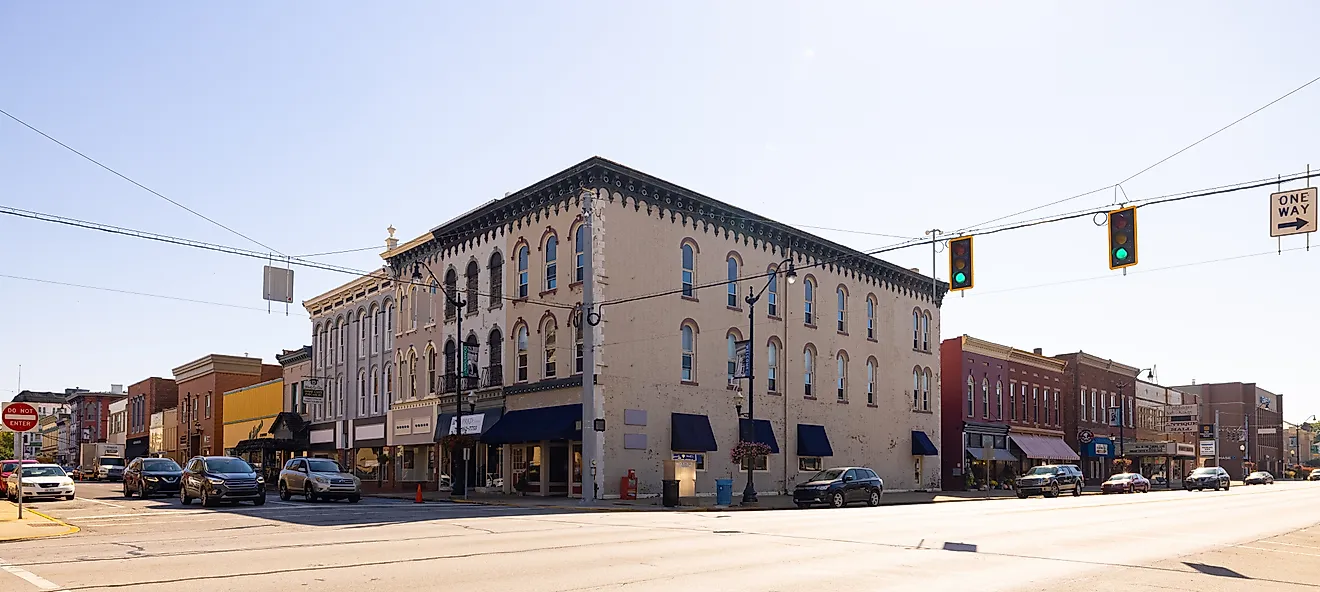
North Carolina's expensive beauty is all about elevation and oceanfront. A mountain view or a barrier-island address costs whatever the view is worth. The cheaper version is inland, along the rivers and sounds that cross the middle of the state, where the water is real and no resort market ever formed. In each of the eight towns below, the typical home was worth less than the $340,430 a typical North Carolina house was worth in June 2026. In Bayboro it was worth less than half that. Warrenton has 202 contributing historic buildings among its 851 residents.
Elkin, North Carolina

Three long-distance trails meet in downtown Elkin. The Mountains-to-Sea Trail runs onto Main Street as its sixth segment, so the downtown sidewalk is part of a footpath that spans the whole state. The Yadkin River blueway runs past Crater Park, the Overmountain Victory National Historic Trail has its eastern trailhead here, and the Wilkes and Surry militia once mustered at what is now Elkin Municipal Park on September 7, 1780, before the fighting at Kings Mountain.
The Elkin and Alleghany Rail Trail follows Big Elkin Creek along an old railroad bed, and Carter Falls is a mile in from Pleasant Ridge Road, close enough that a resident can walk to a waterfall after work. The median here is $237,996, about $100,000 short of the state figure, and it climbed roughly 5% in a year the statewide number spent flat. Hugh Chatham Health's acute care hospital is minutes away on Parkwood Drive.
The commercial core has been listed on the National Register since November 2000, 25 acres of early commercial brick and craftsman work. A restoration put the Reeves Theater's Art Deco front back on Main Street after years dark.
Troy, North Carolina

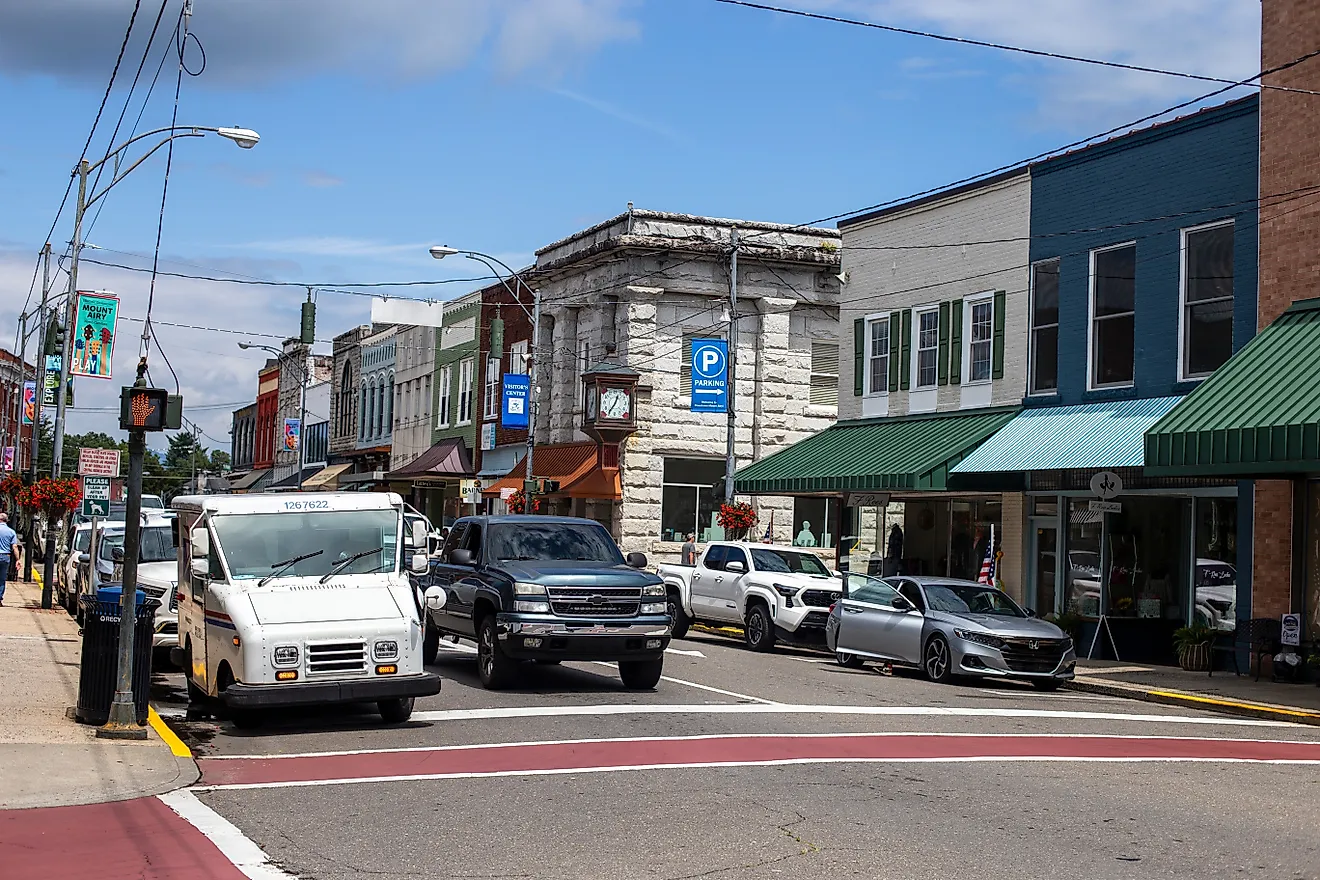
A national forest is run from an office in Troy. Rangers work the Uwharrie district from 789 Biscoe Road, looking after the smallest of North Carolina's four national forests and the only one in the Piedmont. Uwharrie National Forest covers parts of Montgomery, Randolph, and Davidson counties, and the Uwharrie Mountains behind the name have eroded to roughly a thousand feet.
Troy is the Montgomery County seat, where a small historic district runs along North Main Street: five houses added to the National Register in August 2006, built between 1871 and 1940 in Queen Anne and Classical Revival. At $199,842, a house here runs roughly 41% under the statewide typical value, a gap that a year of about 5% gains has been closing. West of town, Lake Tillery and the Pee Dee River form the county's western boundary, and there the Uwharrie River flows into the Yadkin.
Below that meeting point the combined river is called the Pee Dee. Upstream at Elkin the same water is still the Yadkin; below Troy it is the Pee Dee. It is one river with two names, split by a county line.
Rockingham, North Carolina

Paddlers can run Hitchcock Creek 14 miles to the Pee Dee now, which they could not do before 2009. Crews removed the Steeles Mill Dam that June, 15 feet of masonry built in the late 1800s to power a cotton mill and left to fall apart after 1999. With it gone, more than 15 miles of habitat reopened, and hickory shad, blueback herring, striped bass, and Atlantic sturgeon returned up the creek.
The city government then protected 90 acres of bottomland forest along the new blue trail, bought two river accesses, and added a boat launch. The Rockingham Historic District, 165 acres listed in November 1983, includes the 1853 Leak-Wall House above it.
Only Roanoke Rapids runs cheaper among the eight: $140,343 buys a typical house in the Richmond County seat, a figure up about 4% on the year. Bridges and boardwalks now cross the old mill pond bed at Steele Street, beside the last standing structure of the Pee Dee Mills.
Warrenton, North Carolina

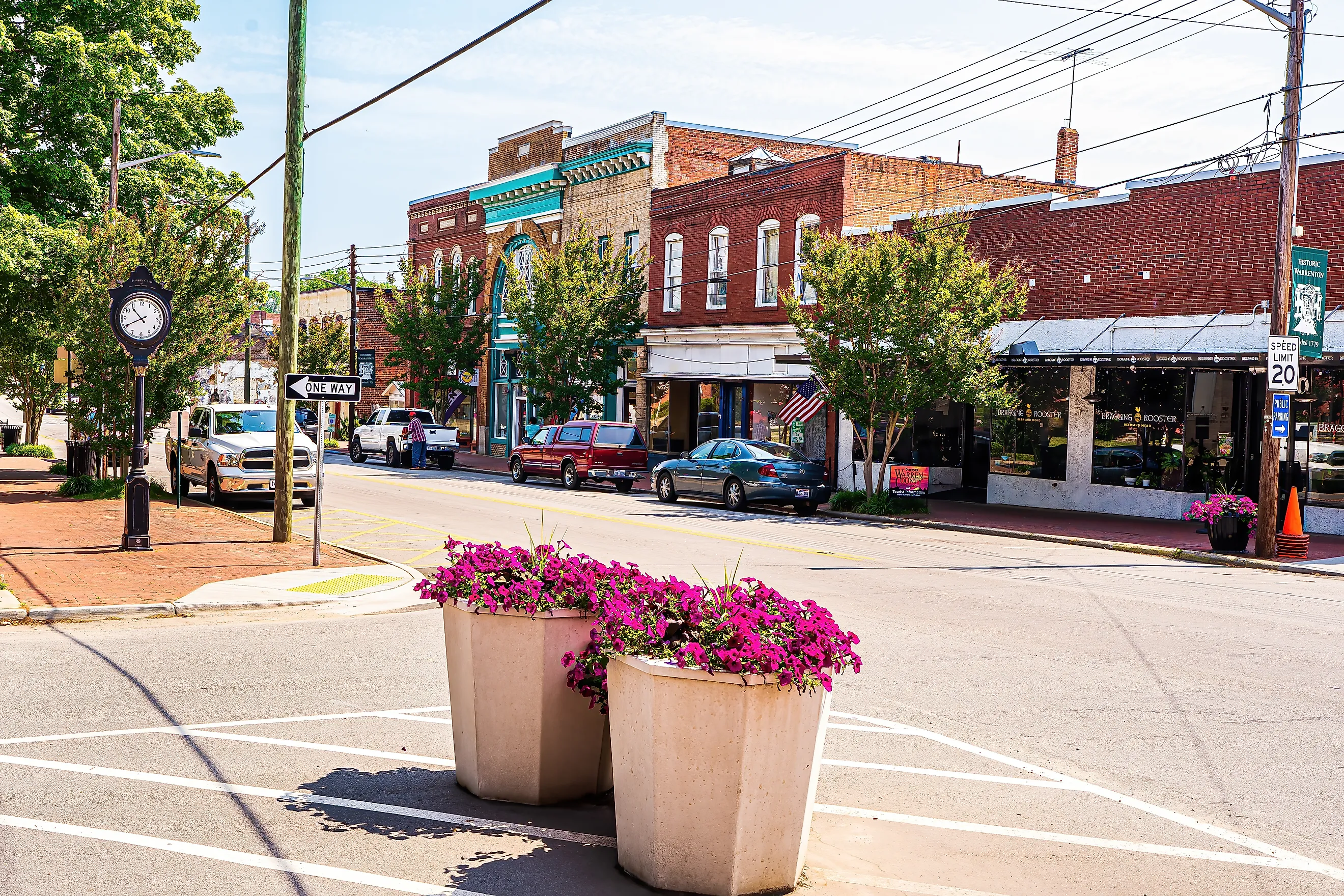
Warrenton has 202 contributing historic buildings among its 851 residents. The typical price among them, $147,793, is under half the state median. The Warrenton Historic District was listed in August 1976 and expanded in April 2024 to cover the business streets and the residential blocks behind them. Construction ran between about 1840 and 1926, so Early Republic, Greek Revival, and Late Victorian buildings all stand within a few blocks.
The Jones-Cook House dates to about 1810 and Eaton Place to 1843. Miles Hardware Store, the Warrenton Hotel, and the town hall make up the commercial end, and All Saints Episcopal Church on West Franklin Street joined the register as recently as August 2025. Kerr Lake and Lake Gaston both reach into Warren County, and boaters crowd both through the summer.
Roanoke Rapids, North Carolina

At $124,295, Roanoke Rapids is the cheapest of the eight, roughly two-thirds under the state's typical value.
The town is named for the falls on the Roanoke, and a tow path follows the Roanoke Canal more than seven miles between Roanoke Rapids Lake and River Falls Park. Crews cut the channel in the early 1800s to move cargo around those falls. Some stretches are still the original width, 39 feet across with a 10-foot path beside them, and the original aqueduct and one stone culvert survive; all of it went on the National Register in 1976.
Power companies took the canal over for hydroelectricity, and the Roanoke Canal Commission took it back in 1984. The Roanoke Canal Museum on Jackson Street Extension is open Tuesday, Thursday, and Saturday. In 2015 the National Park Service added the trail to the Underground Railroad Network to Freedom, a designation few visitors notice.
Birders work the same path, a stop on the North Carolina Coastal Plains Birding Trail. Bald eagles, osprey, barred owls, and great blue herons stay through the year.
Washington, North Carolina

The Washington Waterfront Underground Railroad Museum is set inside a restored railroad caboose on the waterfront. The National Park Service had already added the waterfront itself to its Network to Freedom in 2014, the stretch between Hackney Avenue and Haven's Gardens, and the museum opened two years later.
Waterfront addresses rarely cost this little. The gap here is the narrowest of the eight, about $92,000, which leaves a typical Washington house at $248,685. The 1978 district nomination lists the best of what that buys: the Mayo Law Office of about 1830, the firehouse and city hall of 1884, the Blount-Bragaw Building of 1901, and the post office and federal courthouse of 1913.
The county hospital, ECU Health Beaufort, stands on East 12th Street, with the Marion L. Shepard Cancer Center on the same campus. A short walk from the district, the North Carolina Estuarium holds more than 200 exhibits on the Pamlico and Tar rivers, and its boat trips onto the water are free.
Bayboro, North Carolina

Home prices in Pamlico County divide almost exactly in half. At Oriental, the sailing end of the county, a typical home is worth $385,520, about 13% over the state median. At Bayboro, the seat, it is $161,428, roughly 53% under. One county, one sound, and a gap of more than $220,000 between them.
The Bay River is named for the bay trees along it, and the town for the river; residents incorporated Bayboro in 1881 at the river's head, where crews still run fishing boats from the commercial docks and pull drum, spot, flounder, and oysters from the water. For a town of 1,161, its Main Street stays busy, with the Pamlico County Courthouse and the law enforcement center there and the county health department and administration a few doors apart on North Street. Mapped paddle trails cross the marsh behind it.
Whiteville, North Carolina

The Waccamaw River drains out of a Carolina bay, a stranger source than most rivers have. That bay is Lake Waccamaw, nearly 9,000 acres and the largest bay lake in North Carolina. Thousands of these oval depressions dot the southeastern coastal plain, and every one of them lies the same way. A few aquatic species live in the lake and nowhere else on earth, and pitcher plants, sundews, and Venus flytraps grow in the nearby Green Swamp.
The county seat downstream, Whiteville, was named for James B. White, the county's first state senator, who gave the land for the courthouse in 1808; the town incorporated in 1832. The saving here runs to nearly 44%: $191,460 against the $340,430 benchmark.
Tenants have filled the brick storefronts along South Madison Street again, near the North Carolina Museum of Natural Sciences at Whiteville, Southeastern Community College, and Columbus Regional Healthcare System.
Where The Water Stayed Cheap
In all eight towns, no resort market ever formed on the water. The Yadkin and the Pee Dee run past the first three, the Roanoke, the Pamlico, and the Waccamaw past the rest, and not one of them became a destination. Across the county from Bayboro, homes in Oriental cost about 13% above the state figure. The difference is not the river. The difference is whether anyone ever arrived to sell the view.