The Best Small Towns To Retire In Maine
Maine is the oldest state in the nation by median age. The 2024 Census put that median at 44.8 years (versus a national 39.1), and roughly 23 percent of Mainers are 65 or older, making Maine the only state where the 65-and-older population outnumbers the under-18 population. Retirement towns, in other words, are a Maine staple rather than a niche. The seven covered below span the price range from sub-$300,000 mill cities to $500,000-plus fishing villages, with the current housing data, recent community events, and the senior-specific factors that matter for a long stay. Maine fully exempts Social Security income from state income tax, exempts up to $45,000 of pension income (the cap rose from $35,000 in 2024), and offers the Property Tax Fairness Credit for residents with high property tax burdens relative to income.
Lewiston

Lewiston is the second-largest city in Maine after Portland, with a population of roughly 38,400 and a median home value of about $283,000 (median sale prices ran higher in 2025, around $325,000 to $337,000, but still well under Maine's statewide $419,000 average). The Androscoggin River runs through the center of town, and the old textile mills along its banks have been repurposed into housing, restaurants, and offices. Bates College, founded in 1855, anchors the city culturally with a regular calendar of lectures, concerts, and exhibitions at the Bates Museum of Art. The Great Falls Balloon Festival in August and the Downtown Art Walk in summer are the two largest annual events.
Any honest profile of Lewiston has to acknowledge the October 25, 2023 mass shooting in which 18 people were killed and 13 wounded at the Just-In-Time Recreation bowling alley and Schemengees Bar & Grille (the deadliest shooting in Maine history). Just-In-Time Recreation reopened in May 2024 as a symbol of community recovery, and the One Lewiston Resilience Fund has supported survivors and victims' families since. The Lewiston-Auburn metro continues to grow, anchored by Central Maine Medical Center and St. Mary's Regional Medical Center; both run the area's major senior care programs.
Auburn

Auburn is Lewiston's sister across the river and the seat of Androscoggin County. Population is about 24,500, and the housing market tracks Lewiston's closely (median values around $300,000 to $320,000). The Auburn Riverwalk follows the Androscoggin between the two cities and is the area's main walking-and-biking spine. The Community Little Theatre runs a regular play season; the Norway Savings Bank Arena (home of the L/A Nordiques junior hockey team) hosts games and concerts through the winter. Auburn-Lewiston Municipal Airport handles general aviation, and the Auburn side has the larger share of the metro's grocery and big-box retail.
Violent crime rates run below the Maine state average, the property tax rate is one of the lowest in the metro, and the town has been building out its trail network for some years now. Cyndi's Dockside on Taylor Pond and No Tomatoes downtown are the two anchor restaurants for retirees on the Auburn side.
Old Town
Old Town sits in Penobscot County on the western bank of the Penobscot River, just north of Bangor. Population is about 7,500. The town shares its eastern boundary with the Penobscot Indian Nation's reservation on Indian Island, which is connected to Old Town by a single bridge and remains the political and cultural center of the Penobscot Nation today. The Penobscot Nation Museum on Indian Island holds tribal artifacts, beadwork, and birchbark canoes; visitors should call ahead.
The settlement was reached by Captain John Marsh in 1774, but the town was not incorporated as Old Town until 1840. Marsh Island, on which the modern town sits, is bounded by the Penobscot River on the east and the Stillwater River on the west. The Old Town toll bridge, the Public Library, and the City Hall are the three landmarks of the small downtown grid. Median home value sits at around $200,000 to $220,000, well below the Maine average. The town is served by Northern Light Eastern Maine Medical Center, fifteen minutes south in Bangor, and has its own senior community at Penobscot Terrace.
Kennebunk

Kennebunk is the most expensive retirement option on this list. Median home values in 2025 sit between $650,000 and $750,000, with waterfront properties in adjacent Kennebunkport routinely above $1 million. The trade-off is significant: about 30 percent of the year-round population is 65 or older (well above the state average), the medical infrastructure includes Southern Maine Health Care's Kennebunk campus, and the town has easy access to MaineHealth's Biddeford and Saco facilities.
The Kennebunks beach complex (Gooch's Beach, Mother's Beach, and Kennebunk Beach) is among the most accessible in Maine, with broad sand and limited rocky stretches. Dock Square in Kennebunkport is the main commercial center, with the Maine Art Hill galleries, Hurricane Restaurant, and Old Vines Wine Bar as anchors. The Eastern Trail runs through Kennebunk between Bug Light Park in South Portland and Kittery, and the town sits at the junction of US Route 1, Interstate 95, and Route 9A.
Waterville

Waterville (population about 15,800) is a college town in the central Kennebec Valley and one of the most affordable retirement options in Maine. Median home values run around $210,000, less than half the state average. Colby College's Lunder Family Wing of the Colby College Museum of Art opened in 2013 and gave the museum one of the largest American art collections of any college museum in the country; its collection now exceeds 12,000 works and is free to the public. The Waterville Opera House (built 1902) runs a year-round concert and theatre season.
The Quarry Road Trails (about 3.5 miles of groomed cross-country ski trails in winter and walking trails the rest of the year) sit on the north edge of town and connect to Messalonskee Stream. MaineGeneral's Thayer Center for Health, just north on Kennedy Memorial Drive, is the town's primary medical hub. Property crime rates run roughly at state average; violent crime well below.
Sanford

Sanford is the largest inland town in southern Maine (population about 22,000) and was Maine's most recent city, having upgraded its status from town in 2013. Median home value sits around $340,000, with the Atlantic coast at Wells Beach and Ogunquit reachable in 25 to 30 minutes. Number One Pond, in the center of town, is the most popular walking spot, and the Sanford Country Club offers reasonable senior rates on its 18-hole course. Sanford Regional Airport runs charter and corporate traffic but no scheduled commercial service; Portland International Jetport is 40 minutes north on the Maine Turnpike.
Goodall Hospital and Southern Maine Health Care's Sanford campus give the city a respectable medical footprint. The Eastern Trail's Sanford spur, opened in stages through the 2020s, connects the downtown out to Saco and the larger regional trail network. Violent crime rates are among the lowest in York County, and the property tax rate is below the Maine median.
Stonington

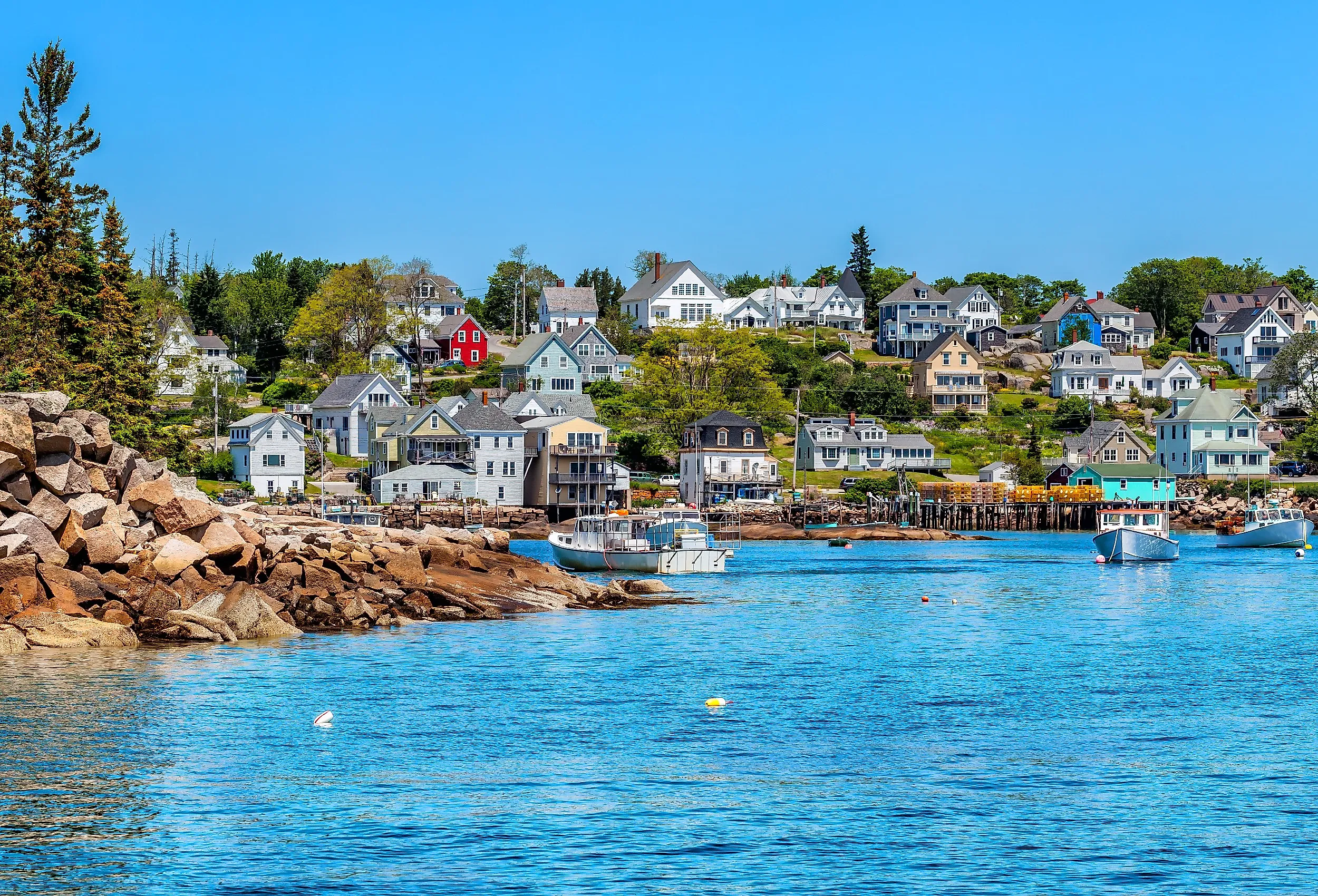
Stonington (year-round population about 1,000, swelling considerably in summer) sits at the southern end of Deer Isle, connected to the mainland by a single bridge across Eggemoggin Reach. The town remains Maine's largest lobster port by annual landings, and the working waterfront still dominates the harbor view. Median home value runs above $500,000 reflecting strong waterfront demand, and the town has a median resident age of about 56, older than most of Maine's already-old population. Retirees who already own here often stay for decades; outsiders pay a premium to get in.
The Stonington Opera House runs a small but respected concert and film season, and the Haystack Mountain School of Crafts on Deer Isle hosts open-studio nights and lectures during its May-to-October program. Barred Island Preserve, off the Sunshine Causeway, has the area's most walkable hiking trails. Medical care requires a drive: Northern Light Blue Hill Hospital is 35 minutes north, and Northern Light Eastern Maine Medical Center in Bangor is about 90 minutes away. The trade-off for the limited services is a small, intact, working-fishing community that has largely resisted the second-home conversion seen further south on the Maine coast.
Comparing The Seven
The seven towns sort fairly cleanly by price and pace. Old Town, Waterville, and Lewiston are the affordable college-and-mill end of the list (median values $200,000 to $340,000), with the largest hospitals and most-developed senior services. Auburn and Sanford are the middle-priced suburban-feeling options with access to larger metros. Kennebunk and Stonington occupy the high-cost coastal end, one with full retirement-community infrastructure and one with almost none. Maine's tax treatment of retirement income (full Social Security exemption, $45,000 pension exemption, Property Tax Fairness Credit) and its housing affordability relative to most of New England remain the structural reasons Maine consistently ranks among the better US states for fixed-income retirees, even with property taxes that run higher than the national median.