Which Country Was Formerly Known As Siam?
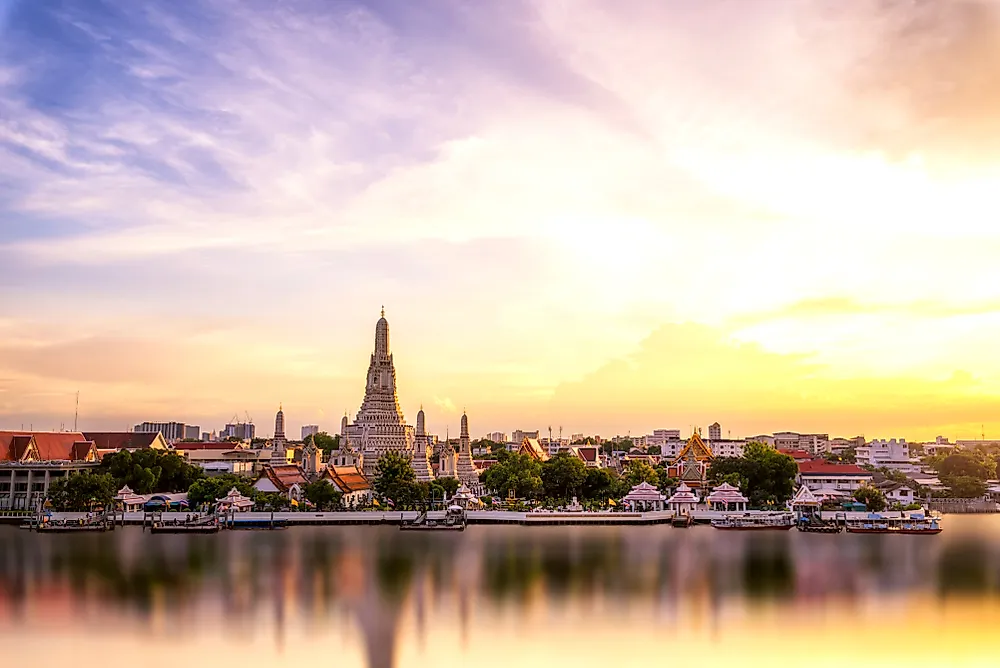
Thailand was officially known as Siam until June 23, 1939, when Prime Minister Plaek Phibunsongkhram (commonly called Phibun) renamed the country on the seventh anniversary of the 1932 revolution that had ended Siam's absolute monarchy. The change reflected the rising Thai nationalism of the 1930s and the idea that the country should bear the name of its dominant ethnic group, "Thai," from the Tai-speaking peoples who had migrated south into the region during the first millennium CE. The name briefly reverted to Siam in 1945 after Phibun's wartime government fell, then was restored to Thailand on May 11, 1949, after Phibun returned to power following a 1947 coup. Today the country remains officially Thailand, though a small but persistent academic and royalist movement still advocates a return to the older name.
The Origin Of The Name "Siam"
The most commonly cited derivation of "Siam" traces it to the Sanskrit word श्याम (śyāma), meaning "dark" or "brown," likely referring either to the skin tone of the Tai-speaking peoples encountered by Indian traders or to the dark, silt-rich character of the Chao Phraya river basin on which the country's central plain depends. Other proposed origins include a Mon word for "foreigner" and a connection to "Shan," the name still used today for related Tai-speaking peoples in northeastern Myanmar. None of these etymologies has been conclusively established, and the country's own inhabitants rarely used "Siam" themselves in the pre-modern era; Thai speakers historically called the country Mueang Thai or simply Sayam. "Siam" became standard in European cartography and diplomatic correspondence from the 16th century onward and remained the international name of the country for the next four centuries.
Ayutthaya, Thonburi, And Bangkok

The Tai-speaking peoples migrated southward from what is now southern China and northern Vietnam over several centuries during the first millennium CE, gradually displacing or absorbing the Mon and Khmer populations that had previously dominated mainland Southeast Asia (the region had also seen the Indianized kingdom of Funan in the 1st through 6th centuries CE and was later within the orbit of the Khmer Empire of Angkor, ca. 802-1431). The Sukhothai Kingdom, often counted as the first major Thai state, was founded in 1238 CE in what is now north-central Thailand. In 1351, Ramathibodi I (also known as U Thong) founded the Ayutthaya Kingdom on an island in the Chao Phraya floodplain about 80 km north of present-day Bangkok, becoming its first king. Ayutthaya remained the Siamese capital for more than 400 years and grew into one of the great trading cities of the early modern world, with European observers estimating its population at around one million by 1700, making it briefly one of the largest cities anywhere on Earth.

A Burmese army sacked and destroyed Ayutthaya in 1767, an event so devastating to Thai cultural memory that the date still appears in popular history. The capital was relocated briefly to Thonburi on the west bank of the Chao Phraya under King Taksin, and then in 1782 to the present site of Bangkok on the east bank, when General Chao Phraya Chakri took the throne as King Rama I and founded the Chakri dynasty that still reigns today.
The 1932 Revolution And The End Of Absolute Monarchy

On June 24, 1932, a group of civilian and military officials calling themselves the Khana Ratsadon ("People's Party") staged a nearly bloodless coup against King Prajadhipok (Rama VII), the brother of the previous king Vajiravudh (Rama VI). The principal civilian leader was Pridi Banomyong, a French-trained lawyer, while Phraya Phahon Phonphayuhasena was the senior military figure; a younger army officer named Plaek Phibunsongkhram, who would later rename the country, was also a key participant. The coup did not depose Prajadhipok. Instead, it transformed the absolute monarchy into a constitutional monarchy, with the king signing the country's first permanent constitution on December 10, 1932. Prajadhipok later abdicated in 1935 over disputes with the new government and lived in exile in England until his death in 1941; he was succeeded by his nephew Ananda Mahidol (Rama VIII).
The 1939 Renaming Under Phibun

Plaek Phibunsongkhram became prime minister in December 1938, and on June 23, 1939, his government issued a decree formally changing the country's name from the older Siam to the new Thailand, deliberately falling on the seventh anniversary of the 1932 revolution. In English the new name was popularly glossed as "Land of the Free," reflecting the dual fact that the Tai ethnonym is connected to a word meaning "free" and that the country had never been formally colonized by a European power. The renaming was part of Phibun's broader nationalist project, the Rattha Niyom or Thai Cultural Mandates, which over the next several years required Western-style dress in public, promoted standard Central Thai over regional languages, encouraged anti-Chinese sentiment, and (perhaps most enduringly) commissioned a Thai version of a Chinese stir-fried noodle dish that Phibun officially declared the national food: pad thai. Critics at the time and since have noted that "Thailand" implicitly privileges the Tai ethnic majority over the country's Mon, Khmer, Malay, Chinese, and hill-tribe minorities, and the appropriateness of the choice remains an active academic debate today.
The 1945 Reversion And 1949 Final Restoration
When Japan moved into Southeast Asia during World War II, the Phibun government aligned Thailand with Tokyo and declared war on Britain and the United States in January 1942. After Japan's defeat, the post-war civilian government under Pridi Banomyong renamed the country back to Siam on September 7, 1945, partly to distance itself from its wartime predecessor and partly to negotiate more favorable terms with the British, who had initially classified Thailand as an enemy power. The reversal was short-lived. A November 1947 military coup brought Phibun back to power, and on May 11, 1949, his second government officially restored the name Thailand. It has remained the country's official English name ever since, though Pridi himself spent the rest of his life in exile (he died in Paris in 1983), and his political vision of a more inclusive Siam never returned to dominance.
Why Siam Was Never Colonized
Thailand is the only country in mainland Southeast Asia that was never formally colonized by a European power, and that fact is built into the modern meaning of the new name. The credit goes largely to King Chulalongkorn (Rama V, reigned 1868-1910), who modernized the army, the railways, the legal system, and the civil service along European lines, abolished slavery in stages, and ceded outlying territories to Britain and France in order to preserve the core of Siamese territory. The 1893 Paknam crisis with France cost Siam control of what is now Laos and the eastern bank of the Mekong, and the 1907 French-Siamese treaty surrendered the Cambodian provinces of Battambang, Siem Reap, and Sisophon to French Cambodia. The 1909 Anglo-Siamese Treaty in turn transferred the northern Malay sultanates (Kedah, Kelantan, Perlis, and Terengganu) to British Malaya. These concessions, however painful, allowed Siam to remain a buffer state between French Indochina and British Burma and Malaya throughout the colonial period, and the avoidance of formal European rule became central to the nationalist case for the 1939 renaming.
The Name Today

Both names continue to circulate in modern usage. Thailand (Prathet Thai or Mueang Thai in the Thai language) is the official name used in international diplomacy, on passports, and in the country's English-language media. Siam survives in the names of long-established institutions, neighborhoods, and businesses, including the Siam Square shopping district in central Bangkok, the Siam Commercial Bank founded by King Chulalongkorn in 1907, and the Siam Cement Group founded by his successor King Vajiravudh in 1913. The current monarch, King Maha Vajiralongkorn (Rama X), succeeded his father King Bhumibol Adulyadej in 2016 and was crowned in May 2019, becoming the tenth ruler of the Chakri dynasty that King Rama I founded in 1782 and the head of state under the constitution first signed by his great-uncle Prajadhipok in 1932. Theravada Buddhism remains the religion of about 93 percent of the population, providing one of the strongest continuities between the older Siam and the modern Thailand that succeeded it.