The 8 Can't-Miss Towns In Minnesota
Minnesota’s most memorable small towns offer far more than lake cabins and northwoods trails. In Grand Marais, a working harbor and Artist’s Point place visitors at the edge of Lake Superior. Lanesboro pairs a historic downtown with the Root River State Trail and the limestone bluffs of southeastern Minnesota. New Ulm’s German heritage appears in landmarks such as the Hermann Monument and in the brewing tradition of August Schell Brewing Company, while Pipestone tells a very different story through sacred quarries, prairie landscapes, and red quartzite architecture. From Boundary Waters gateways to historic riverfronts and lively lake-country main streets, these are the eight can’t-miss towns in Minnesota.
Grand Marais

The harbor is the reason to come to Grand Marais. Fishing boats, a rocky shoreline, and cold Lake Superior water sit within a short walk of the galleries and cafes on Wisconsin Street and Broadway. Walk out onto the rocks at Artist's Point and you get the view that lands on every North Shore postcard: the lighthouse, the open lake, and the Sawtooth Mountains rising behind the shoreline.
The art scene here is not decoration. The North House Folk School teaches boatbuilding and traditional northern crafts right on the waterfront, and the Grand Marais Art Colony has kept working artists in town for over a century. Between a class, a gallery browse, and a plate at the harbor, a full day fills itself.
Ely

Ely sits at the edge of the Boundary Waters Canoe Area Wilderness, and almost everything about the town runs on that fact. Nearly 20 entry points to the wilderness begin near here, opening into more than a million acres of forest and water. The year-round population is only about 3,200, but in canoe season the outfitters, gear shops, and cafes downtown stay busy from morning on.
The town gives you plenty to do before you ever touch a paddle. The International Wolf Center and the North American Bear Center keep live animals and put the region's wildlife up close. The Dorothy Molter Museum tells the story of the Root Beer Lady, who lived deep in the Boundary Waters for decades and brewed root beer for passing paddlers. The old mining-town bones still show in the downtown storefronts.
Lanesboro

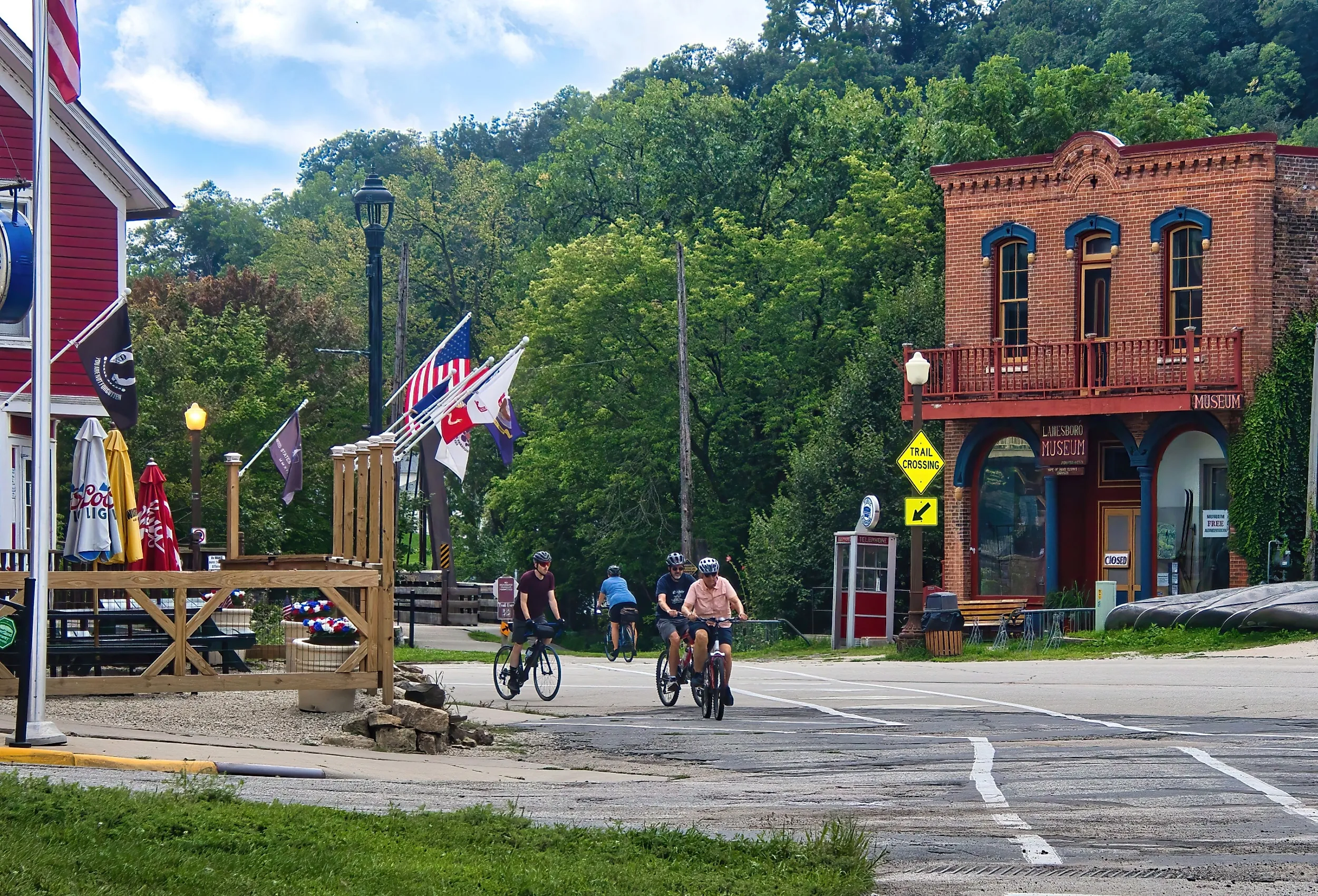
Lanesboro sits in the Driftless Area, the pocket of southeastern Minnesota the glaciers missed, where limestone bluffs rise over the Root River. The paved Root River State Trail runs 42 miles through Bluff Country and passes right through the middle of downtown, which is why bikes outnumber cars on a summer weekend. (Ride far enough and it connects to the Harmony-Preston Valley trail for a 60-mile paved system.)
The trail is only part of the draw. The Commonweal Theatre has staged professional productions downtown since 1989. The Root River gives you paddling and trout water a block from Main Street. Inns, cafes, and brick storefronts pack into a few walkable blocks, so a weekend here needs no car once you arrive.
Stillwater

Stillwater presses right up against the St. Croix River, and the historic downtown is built for walking. Main Street runs a straight line of boutiques, bookshops, antique stores, and cafes set into 19th-century commercial buildings. The Stillwater Lift Bridge, a rare vertical-lift span, is still the town's signature landmark, now carrying a pedestrian loop across the river.
Lowell Park opens the waterfront with lawns and paths along the St. Croix, and riverboat cruises leave from the levee downtown. About 19,000 people live here, enough to keep the restaurants and live music full without swallowing the small-town feel. Stillwater calls itself the birthplace of Minnesota, and the 1848 territorial convention that pushed toward statehood met right here.
Red Wing

Red Wing makes things, and the things it makes gave it a name that travels. This is the home of Red Wing pottery and Red Wing boots, both drawn from local clay and leather along the Mississippi River. The bluffs, the brick downtown, and the river all sit close enough that you can take in the whole story on foot.
Barn Bluff rises about 340 feet over town, with the Mississippi on one side and the rooftops on the other, and the climb is a local rite. The Pottery Museum of Red Wing lays out the stoneware history, and the Red Wing Shoe Store and Museum keeps the world's largest boot on display. Down the street, the Sheldon Theatre has run music, film, and stage shows in a restored downtown auditorium for generations.
New Ulm

New Ulm keeps its German roots out in the open, in the architecture, the festivals, the beer, and the streets themselves. Settlers from Ulm, Germany, laid the town out along the Minnesota River, and the heritage never shrank into a single museum exhibit.
The 102-foot Hermann Monument stands over town from Hermann Heights Park, a copper figure of Hermann the Cheruscan, whose forces destroyed three Roman legions in 9 CE. The August Schell Brewing Company has brewed German-style beer here since 1860, which makes it the second-oldest family-owned brewery in the country. German Park and the downtown Glockenspiel carry the theme into everyday corners. Come during a festival and the lederhosen are not a costume.
Nisswa

Nisswa is Minnesota lake country boiled down to one small downtown. The town sits in the Brainerd Lakes area, minutes from Gull Lake and the Cullen chain, and the whole place moves at resort-season speed. The best-known local tradition is the Nisswa Turtle Races, run every Wednesday through the summer since 1963, when kids line up their turtles and the town turns out to watch.
Main Street is short and busy, lined with candy shops, cafes, and lake-gear stores. The Paul Bunyan State Trail, a long paved rail-trail, runs straight through town for cyclists and walkers. The Gull Lake Trail extends the paved riding out toward the lake itself. Between the water, the trail, and the turtles, a summer afternoon here goes quickly.
Pipestone

Pipestone trades the northwoods and the river bluffs for open prairie and red stone. This southwestern Minnesota town grew up around the pipestone quarries, where Native nations have dug the soft red stone for ceremonial pipes for generations. Pipestone National Monument protects the quarries and the tallgrass around them, with the paved Circle Trail looping past the pits and a ridge of pink Sioux Quartzite.
The town itself is built from that same red rock. The Pipestone Commercial Historic District packs about 30 buildings into a two-block downtown core, and the red-quartzite Calumet Inn holds down its landmark corner. The Pipestone County Museum fills in the local history near the historic district. No other town here mixes prairie, quarry, and red-stone streets the same way.
Minnesota’s small towns reveal just how varied the state can be. Grand Marais and Ely connect visitors to Lake Superior and the Boundary Waters, while Lanesboro, Stillwater, and Red Wing pair scenic rivers and bluffs with historic downtowns, trails, and cultural attractions. New Ulm’s German heritage, Nisswa’s lake-country traditions, and Pipestone’s prairie landscape and Indigenous history offer still more reasons to explore beyond the state’s larger cities. Together, these eight destinations show that a can’t-miss Minnesota town is defined not by one type of scenery, but by the way its landscape, history, and local character come together to create a memorable place.