The 8 Can't-Miss Towns In England
England’s can’t-miss towns are home to landmarks dating back centuries, like Lacock Abbey and Arlington Row, alongside some of the country’s most memorable scenery. Conjure up a fairytale village, and it’s likely that the cobblestoned villages of the Cotswolds, the misty hills of Yorkshire, and the coastal charm of the Sussex coast will have at least partially inspired the picture in your head. And the country’s abundance of historic architecture and one-of-a-kind sites like Burghley House in Stamford and Rye’s photogenic Mermaid Street remind visitors that even the most photogenic town isn’t just a photo opportunity. So if you’re planning a visit to England, planning a visit to one of these eight can’t-miss country towns is an absolute must.
Aylesford

The so-called “oldest village in England” certainly looks the part, and if you’re looking for a townscape plucked from the pages of a Medieval tale, Aylesford is it. Legend has it that the area has been continuously inhabited since the New Stone Age, and today’s village retains its old-fashioned character with graceful stone bridges and timbered facades. Highlights include Aylesford Priory, an impressive monastery dating back to 1242, and Kit's Coty Megalithic Burial Site, an ancient stone tomb resembling a miniature Stonehenge. The latter was constructed in 4000 BCE, during the Early Neolithic period. Also, stop by Aylesford Pottery, a working ceramic studio with beginner-friendly classes and plenty of works available for purchase. Even better: it’s also the perfect London day trip, just an hour and a half to the southeast of the city by train.
Bibury

The Cotswolds region of England is rife with beautiful villages to visit, and one of the finest is the diminutive Medieval town of Bibury. There is a reason that the influential 19th-century designer William Morris called it “the most beautiful village in England”! The peaked-roofed stone cottages of Arlington Row are hard to beat for postcard scenery, but there’s more to Bibury than photo opportunities. Those looking for something a little more educational will enjoy the Arlington Mill, a historic corn mill that’s no longer open to the public but remains worth a stop for its striking stone architecture in the fairytale-esque traditional style of the Cotswolds. You'll also have the chance to catch your own meal at the Bibury Trout Farm; trout have been raised there since 1902, making it England's oldest working trout farm.
Finchingfield

Here’s yet another superlative for you: Finchingfield, a country town in the Essex region, is colloquially known as the most-photographed village in England. Finchingfield looks exactly like you would hope an English country town might. Its highlights include the village green and duck pond at the heart of town, along with the striking 15th-century Guildhall that is near the green. Finchingfield may not see much action, but as a place to soak in the bucolic peace of the countryside, there are few better. Be sure to stop by St John the Baptist Church, whose hilltop position overlooks much of the village, and visit Finchingfield Lavender, a lavender farm just outside of town that makes for a spectacular photo opportunity when the lavender plants are blooming during the summer months.
Grassington

Head north to Yorkshire if you want to discover a rural market town. Grassington’s cobblestoned country lanes, low-slung stone storefronts, and cheerfully tranquil atmosphere won it a starring role in the BBC television series “All Creatures Great and Small,” and it remains a favorite destination for countryside explorers inside the boundaries of Yorkshire Dales National Park. Many are drawn to the area by the landscapes of the Yorkshire Dales, a verdant region of peaks and valleys famous for its scenic beauty, variety of outdoor recreation opportunities, and traditional agricultural shows held in August and September. One of its visitor centers is located in Grassington if you'd like to learn more. The less outdoorsy will enjoy a stop at a friendly local business like The Stripey Badger, an always-delightful bookstop-coffee shop hybrid, or The Cake House, a favorite local family-run tearoom.
Lacock

The Cotswolds are popular for good reason, but if you’re yearning for the same storybook scenery without the crowds, Lacock might be for you. The village is home to the 14th-century St Cyriac's Church, whose medieval tower rises above the rooftops and has overlooked the village for centuries. Just outside the Cotswolds, Lacock offers scenery very similar to that with far fewer visitors. The town also blends scenic strolls (it lacks modern streetlights for a true old-fashioned feel) with sights like Lacock Abbey, a former religious compound turned grand country home where one owner pioneered the development of the photographic negative. Film fans will also recognize the village as a screen setting. Various buildings in town, including the abbey, appeared in the Harry Potter films, while parts of the BBC’s 1995 adaptation of Pride and Prejudice were filmed along Lacock’s quaint streets, which make a convincing stand-in for a Regency-era country town.
Ross on Wye

Ross on Wye is the ideal choice if your idea of the picture-perfect English town involves cathedral spires soaring above the rooftops of a pastoral riverside townscape. It’s supposedly the birthplace of domestic tourism in England, and the subject of the first tour guide published in the country’s history, for good reason. The Parish Church of St. Mary dominates the skyline and features notable artwork and sculpture. Nearby, the historic Market House, built in the 1650s, stands at the center of town on stone pillars and remains one of the most recognizable buildings in Ross on Wye. The ruins of Wilton Castle, a crumbling 12th-century fortification almost overrun by its own gardens, promise to fire the imagination with an air of mystery and historical gravity. And the surrounding Wye Valley, the attraction which prompted the writing of England's very first published travel guide, offers famously dramatic river scenery.
Rye

No, not like the type of bread; rather, Rye is a beautiful Medieval town near England’s southeastern Sussex coast. Abutting the English Channel, it’s a hilly town where steep cobblestoned streets like the frequently photographed Mermaid Street are lined with red-roofed storefronts and houses in the Medieval style. Another notable landmark is the Ypres Tower, a 14th-century fortification that once helped defend the town and now houses exhibits on Rye’s history. Guests may even spend the night in one of the historic cottages along Mermaid Street, or simply view them from above after a climb to the top of the turret at St. Mary’s Church, a 900-year-old parish church that's worth seeing both for its ancient past and its views of the town. And as a once prosperous trading port where smuggling wasn’t unheard of, Rye has a spookier history to match its charm: learn all about it on a Town Crier’s Ghost Walk tour of supposedly haunted spots around town.
Stamford

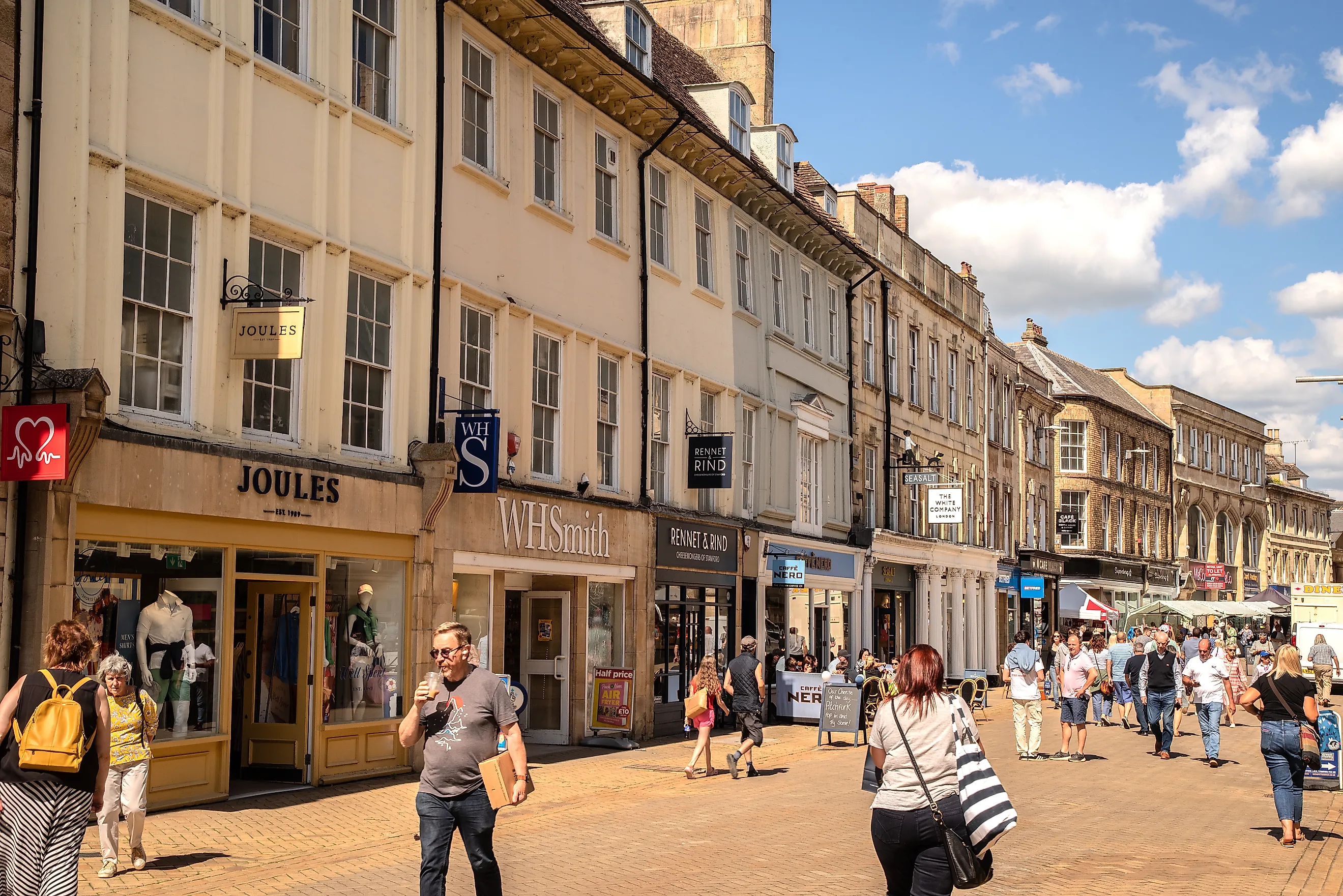
If you prefer grandeur to charm, this Lincolnshire town is full of it. No less than five Medieval stone churches punctuate the landscape. The 16th-century Burghley House, a grand Elizabethan estate that could easily be mistaken for a royal residence, helps to make the town what author Walter Scott called “the finest sight on the road between Edinburgh and London.” Another standout landmark is Stamford Town Hall, an elegant 18th-century building that anchors the historic town center. The town is replete with notable architecture, from the stone storefronts of Barn Hill to the 15th-century Browne's Hospital, a Medieval alms house that looks exactly as it did when it was built, down to the stained glass. Whether you’re usually interested in urban design or not, the town’s stately stone architecture makes Stamford a pleasure to wander and photograph. And for a break from craning your neck in awe, traditional pubs like the Tobie Norris contribute to its frozen-in-time feel.
A Step Out of Time
Whether they’re country scenes out of a pastoral landscape painting or Medieval market towns straight out of a fairytale, these can’t-miss English towns have one thing in common: all of them offer a window into a long-gone past. Visiting any of these eight towns is a step outside of the rush and concrete of modern urban life, and a treat that’s not to be missed on any visit to England. And with most located only a short train ride or drive from London, there’s no reason not to fit an escape from modernity into your itinerary.