The 7 Friendliest Little Towns In Georgia
Georgia's small towns work as friendly stops for two reasons. The historic core is usually walkable and the festival calendar is unusually busy. Blue Ridge has its arts scene and scenic railway. Thomasville has a 330-year-old live oak and a spring Rose Show that has run since 1922. Helen has the longest continuously held Oktoberfest in the United States, going since 1970. The seven towns ahead show what a road trip through Georgia actually looks like once the major metros are off the itinerary.
Blue Ridge

Blue Ridge sits about 90 miles north of Atlanta in Fannin County, with a year-round population of about 1,300. The town's compact downtown centers on the historic 1905 railroad depot, which serves as the southern terminus of the Blue Ridge Scenic Railway. The Scenic Railway runs a 26-mile round trip along the Toccoa River through the Chattahoochee National Forest to McCaysville on the Tennessee state line, where passengers disembark for a two-hour layover before the return run.
The Blue Ridge Mountains Arts Association operates a gallery and education center in the restored 1936 county courthouse on East Main Street and runs the Arts in the Park Festival each spring and fall. Mercier Orchards, the largest family-owned apple orchard in the Southeast, has operated on the western edge of town since 1943 and now produces apples, peaches, and hard ciders across 300 acres. The Lake Blue Ridge Recreation Area, on the 3,300-acre TVA reservoir of the same name, runs swim beaches and boat ramps about 10 minutes from downtown.
Darien

Darien was founded in 1736 by Scottish Highlanders under the Trustees of the Colony of Georgia, making it the second-oldest planned town in the state after Savannah. The town sits on the Darien River at the head of the Altamaha River estuary in McIntosh County. Union forces under Colonel James Montgomery burned Darien in June 1863, an event later depicted in the 1989 film Glory. The town runs about 1,800 residents today.
Darien remains a working commercial fishing port, with the shrimp boat fleet docked along the Darien River waterfront. The annual Blessing of the Fleet Festival, running since 1968 and held the second weekend of April, opens the wild-caught Georgia shrimp season. Fort King George Historic Site, on the south end of town, preserves the location of the first English settlement on the Georgia coast (1721-1727) and runs a reconstructed cypress blockhouse. The Old Jail Art Center, in the 1912 county jail, runs rotating regional art exhibits.
Thomasville

Thomasville, in southwest Georgia about 35 miles north of Tallahassee, became a major winter resort destination in the 1870s and 1880s for wealthy Northerners arriving by rail. Several of the resort-era hotels and Victorian houses have survived. The Lapham-Patterson House, an 1885 Queen Anne with no right-angled rooms, runs as a state historic site. The Pebble Hill Plantation, on the southern edge of town, preserves the 28-room Greek Revival main house and 3,000 acres of the original quail-hunting estate.
The Big Oak at the corner of Monroe and Crawford Streets is a southern live oak that has stood since approximately 1680, with a limb spread of 160 feet, a trunk circumference of 27.5 feet, and a height of 68 feet. The tree was admitted to the Live Oak Society in 1936 and is the oldest registered live oak in Georgia. The annual Rose Show & Festival, held the fourth weekend of April since 1922, fills the historic downtown with displays, a parade, and a rose-themed street party. The Jack Hadley Black History Museum, in the former Douglas High School, runs the largest African American history collection in southwest Georgia.
Tallulah Falls

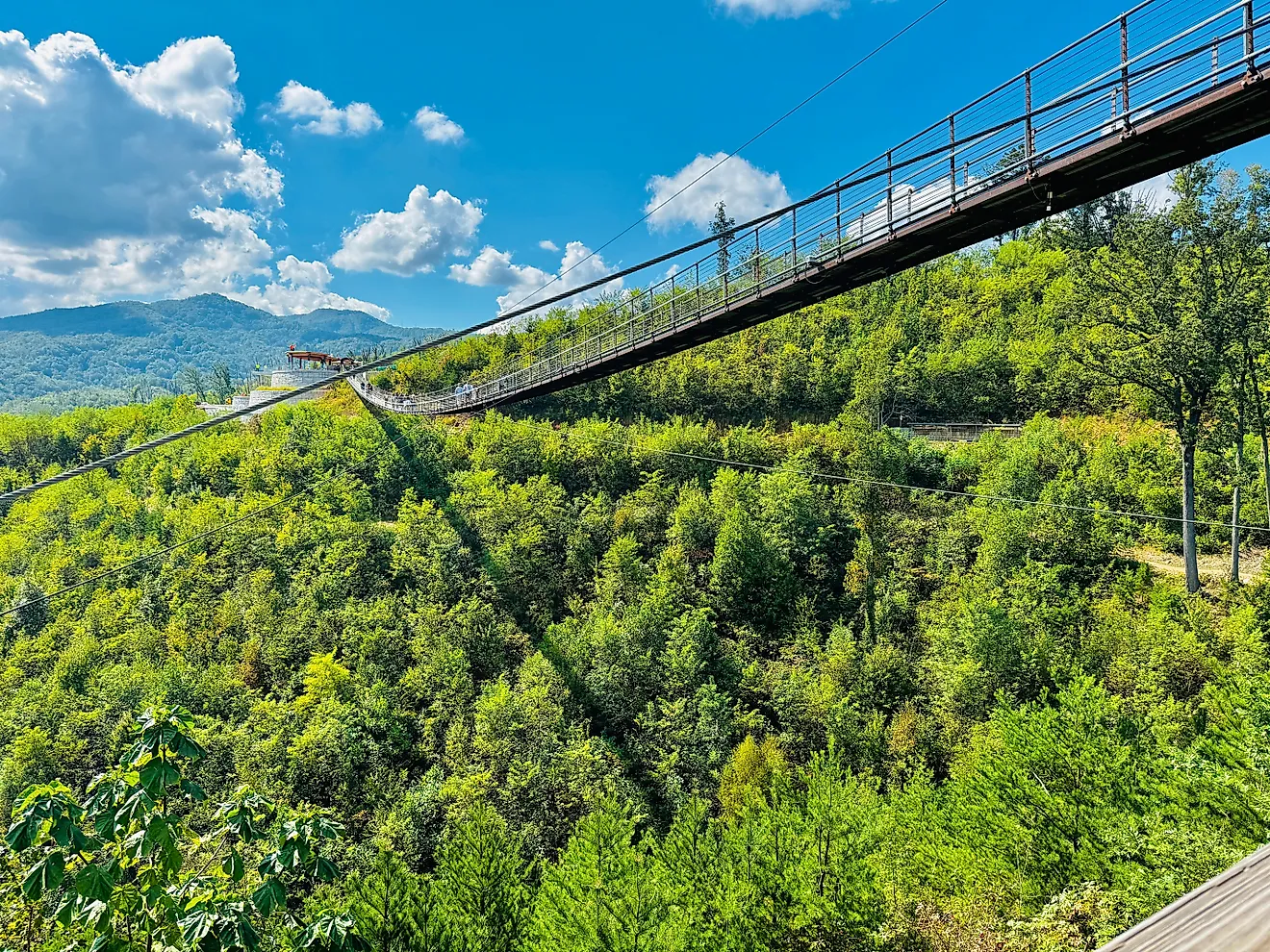
Tallulah Falls grew up around the railroad spur that reached the town in 1882, making the gorge accessible to tourists for the first time. The town runs about 165 residents today, which makes the visitor count during summer weekends a sharp contrast. Tallulah Gorge State Park preserves the two-mile-long, 1,000-foot-deep gorge cut by the Tallulah River. The North Rim Trail and South Rim Trail run paved overlooks above six waterfalls, with the Hurricane Falls Suspension Bridge stretching 80 feet above the river at the gorge floor.
The Jane Hurt Yarn Interpretive Center at the park entrance runs exhibits on the gorge's geology and on Karl Wallenda's 1970 tightrope walk across the gorge. The park issues 100 free permits per day for the strenuous Hurricane Falls Trail to the gorge floor, which involves more than 1,000 stair steps. Tallulah Falls School, founded in 1909 as a mountain mission school for Appalachian children, still operates as a private boarding school on the lake. The annual Tallulah Falls Railroad Days Festival each May brings exhibits, vendors, and a parade to celebrate the rail history that put the town on the map.
Washington

Washington, the seat of Wilkes County, was incorporated in 1780 as the first town in the United States named for George Washington. The 1779 Battle of Kettle Creek, fought about eight miles west of town, was a key Patriot victory in the Southern campaign of the Revolutionary War. The annual Revolutionary Days Festival in February commemorates the battle with reenactments and exhibits at the downtown square.
Confederate President Jefferson Davis convened the final meeting of the Confederate cabinet in Washington on May 5, 1865, and effectively dissolved the Confederate government there. The local rumor that some portion of the Confederate treasury was buried in town has never been verified despite repeated searches. The Robert Toombs House, an 1837 Federal-style residence on Robert Toombs Avenue, preserves the home of the Confederate Secretary of State. The Fitzpatrick Hotel, an 1898 Beaux-Arts building on the square, has been restored as a boutique hotel. Twin Home Tours each April and December open private antebellum residences to visitors.
Helen

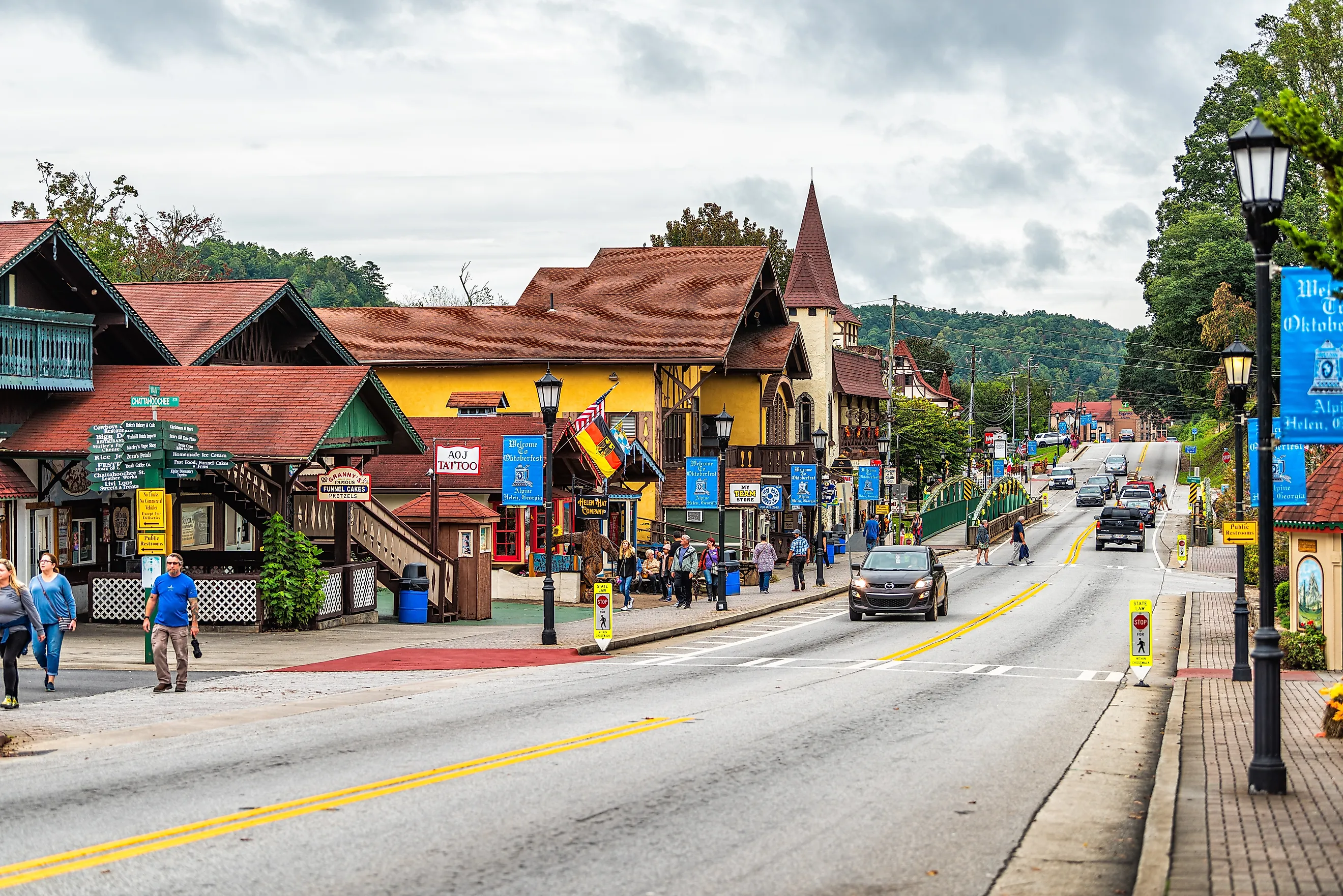
Helen was a sawmill town that almost ceased to exist when the timber industry collapsed in the 1960s. In 1968, three local businessmen hired John Kollock, a local artist and set designer, to redesign the downtown buildings with Bavarian Alpine facades. The town reopened to tourists in 1969 with about 300 residents and now draws over 1.5 million visitors annually. Bodensee Restaurant and Hofer's Bakery & Cafe both serve authentic German fare in the redesigned downtown.
The Helen Oktoberfest, held in the riverside Festhalle since 1970, is the longest continuously running Oktoberfest in the United States. The 2026 festival runs from September 10 through November 1, with traditional polka, keg-tapping, and the parade on September 12. The Chattahoochee River runs directly through downtown and supports a working tubing industry that has been part of the town's draw since the early 1970s. Anna Ruby Falls, in the Chattahoochee National Forest about 10 minutes from town, runs a paved trail to twin waterfalls that drop 153 and 50 feet respectively.
Dahlonega

Dahlonega was the site of America's first major gold rush after Benjamin Parks reportedly discovered placer gold along Bear Creek in 1828. By 1829, thousands of prospectors had flooded into the Cherokee Nation, and the federal government opened a branch mint in Dahlonega in 1838 to convert the gold to coinage. The mint operated until 1861 and the original building now serves as Price Memorial Hall on the University of North Georgia campus. The Cherokee removal that followed the gold rush culminated in the 1838 forced march known as the Trail of Tears.
The 1836 Lumpkin County Courthouse, the oldest courthouse in Georgia still standing on its original site, now houses the Dahlonega Gold Museum State Historic Site. The museum runs exhibits covering both the rush and the Cherokee dispossession. Consolidated Gold Mine on the eastern edge of town runs underground tours of the historic shaft. The surrounding Georgia Wine Country, the state's largest concentration of vineyards, includes Wolf Mountain Vineyards, Three Sisters Vineyards, and Frogtown Cellars. Amicalola Falls State Park, about 15 miles west, preserves the 729-foot waterfall that is the third-tallest cascading waterfall east of the Mississippi.
What These Towns Actually Share
The seven towns ahead each lean into one specific anchor. Blue Ridge has its scenic railway. Darien has its 1736 Highland founding and working shrimp fleet. Thomasville has its 1680 oak and 1922 Rose Show. Tallulah Falls has the gorge and the 80-foot suspension bridge. Washington has its Revolutionary War history and Confederate cabinet meeting. Helen has the longest-running Oktoberfest in the country. Dahlonega has the original American gold rush. None of them tries to be all things to all visitors, which is what makes the road trip work.