Nicest Small Towns To Visit Near Tucson
The small towns surrounding Tucson offer a slice of Arizona you just cannot find elsewhere. Mining towns like Bisbee and Globe offer unique experiences, such as the Old Dominion Historic Mine Park, while Tubac boasts rich colonial Spanish history. Patagonia offers a more recreational itinerary, with camping and boating in Patagonia Lake State Park. Whether looking for a quick day-trip to explore local history or a nearby camping excursion, these small towns have you covered, all within a two-hour radius of Tucson.
Bisbee

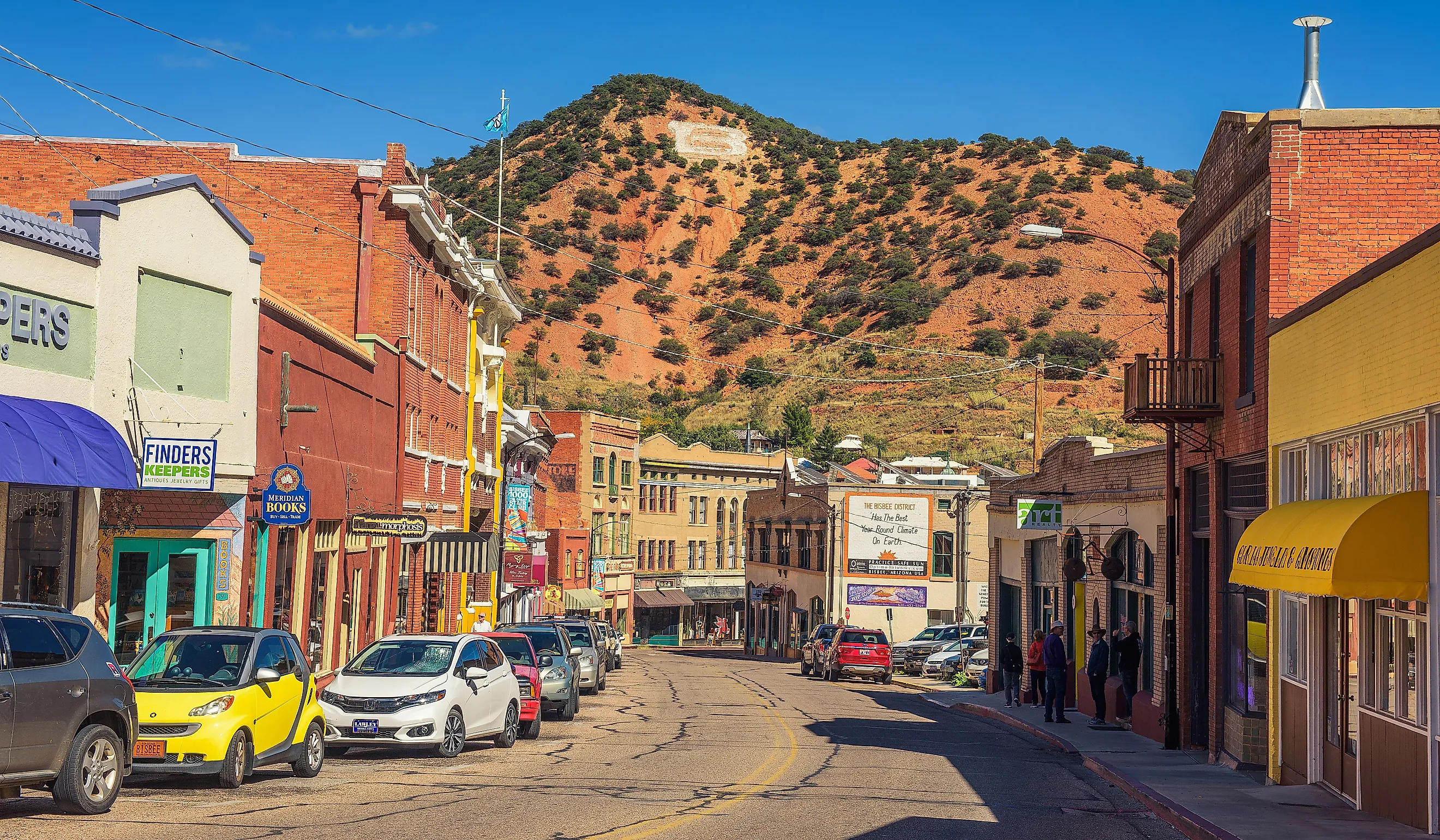
Bisbee began as a copper town, and that history still shapes much of its downtown. Built into the edge of a rocky slope, multi-story brick buildings stand on the hillside with galleries and small hotels now occupying many of the former 1900s commercial buildings. The Copper Queen Mine remains one of the town's biggest attractions, offering guided underground tours that move through sections of the mine's original operations, where visitors can see old rail systems, drilling equipment, and narrow tunnels that supported one of Arizona's largest mining industries.

On downtown's Main Street, the Copper Queen Hotel adds another layer of history. Opened in 1902, it is one of the oldest continuously operating hotels in Arizona. Its balconies and tall windows overlook the business district, where restaurants and independent shops now fill many of the surrounding storefronts.
Tubac

Tubac pairs early Arizona history with one of the state's most active small-town arts scenes. Low adobe buildings house galleries and working studios, next to shaded courtyards and brick walkways of the downtown district. Artists such as painters, ceramicists, jewelers, and sculptors operate throughout the area, and many studios allow visitors to watch artists at work or speak directly with them about regional materials and techniques. Seasonal art festivals, like the annual Tubac Festival of the Arts each February, regularly bring additional vendors and exhibitions to town.

Tubac's oldest major site is Tubac Presidio State Historic Park, built around the remains of a Spanish colonial military post established in 1752 (the first European settlement in what is now Arizona, and Arizona's first state park, dedicated in 1958). Excavated foundations and reconstructed walls of the original presidio are open for exploration, while museum exhibits explain the post's importance and Spain's influence in regional trade and settlement. Just outside town, the Juan Bautista de Anza National Historic Trail follows part of the Santa Cruz River.
Globe

Stone room blocks and low masonry walls spread across Besh-Ba-Gowah Archaeological Park just outside downtown Globe. Following the layout of an ancient Salado settlement occupied between the 1200s and 1400s, narrow passageways connect courtyards and living spaces built from local stone. The park's museum displays artifacts like pottery, shell jewelry, woven textiles, and trade goods linked to the broader Southwest's trade routes.

Much like Bisbee, Globe developed during Arizona's copper boom. In the downtown, former hotels, banks, and mining offices that date back to the early twentieth century fill Broad Street, many now converted to modern businesses. Antique stores and local diners now occupy many of the older storefronts, while nearby Old Dominion Historic Mine Park continues the story of Globe's mining economy through preserved equipment and remnants of the town's early copper operations.
Patagonia

Patagonia sits in one of southern Arizona's quieter valleys, surrounded by ranchland and mountain views. Its small downtown area hosts art spaces and outfitters serving travelers headed toward nearby lakes and birding sites, like the Paton Center for Hummingbirds. The center attracts birders from across the country with feeding stations and native landscaping built around migratory hummingbird routes.

Patagonia's biggest local draw is Patagonia Lake State Park, where campgrounds and fishing docks sit along a reservoir framed by desert hills. The lake gives this part of Arizona a waterside setting unexpected by most visitors, especially compared with the surrounding grasslands.
Ajo

Palm trees and white stucco arcades surround the historic central plaza in Ajo. The plaza's Spanish Colonial Revival arches surround a park at the interior, a distinct contrast to the buildings of former mining settlements common to the area. Restaurants, galleries, and small shops now operate from many of the historic structures that give views of the square, while the nearby Ajo Historical Society Museum documents the town's mining years through photographs and records tied to daily life in the former company town.
The former New Cornelia Mine reveals the scale of the copper boom that shaped the region. An enormous open pit drops into the desert through layered terraced walls visible from overlooks, and portions of the surrounding mining infrastructure still stand just outside town. Many visitors continue south along the scenic roads flanked by dense stands of organ pipe cactus, giving the eponymous Organ Pipe Cactus National Monument its name. The naturally growing senita and organ pipe cactus continue alongside saguaro forests and mountainous terrain toward the Mexican border.
Sonoita

Sonoita's surrounding grasslands hold spans of vineyards, where rolling pastureland and cooler nighttime temperatures have helped establish one of Arizona's main wine regions. Tasting rooms and production facilities sit along Highway 82 between cattle ranches and oak-covered hills, with several wineries using the area's elevation and dry climate to grow varietals more commonly associated with California and Southern Europe. Weekend traffic can be significant between vineyard properties, especially during harvest season when outdoor patios and tasting spaces open toward the surrounding mountain ranges. The earlier points of the day are typically best for beating the wine tours.

Sonoita's interior is small, hosting roadside cafés, local markets, and feed stores clustered around the nearby highway junction. A short drive away, the Historic Empire Ranch adds a different twist on the region's history with old ranch buildings, corrals, and bunkhouses connected to one of territorial Arizona's largest cattle operations.
Oracle

Oracle sits in the foothills north of Tucson, where oak woodlands replace much of the lower Sonoran Desert. The area's elevation brings cooler weather and makes the town a popular retreat during warmer months. Small cafés and shops sit between stone buildings and older hillside homes.

The town's most unusual attraction is Biosphere 2. Built between 1987 and 1991, the giant glass-and-steel complex was designed for controlled ecological experiments and still operates today as a University of Arizona research facility. Visitors can wander through the enclosed rainforest, ocean, and Landscape Evolution Observatory. Nearby, Oracle State Park offers a quieter contrast through hiking trails and broad views across the Santa Catalina Mountains' foothills.
Why These Seven Tucson-Area Towns Deliver
The appeal of a hillside mining district in Bisbee, a Spanish plaza in Ajo, or the exploration of Arizona's terroir outside Sonoita draws locals from Tucson on a regular basis. These towns show how quickly the area's landscape changes only a short drive away, and how different the culture and hospitality can be reflected in it. Whether looking for nature, wine, history, or architecture, a short drive from Tucson has you covered.