England's 10 Most Laid-Back Towns
England is known for its rich history, royal heritage, and landmarks. With lively cities like London and Manchester, it attracts international tourists for its busy culture and global contributions. Still, many underestimate its quieter, more laid-back towns. Much like England's larger cities, they have plenty to offer. Visitors find great scenery, notable attractions, and the English culture the world knows and loves.
Avebury

Avebury is an isolated village located in Wiltshire. Situated inside the world's largest prehistoric stone circle, it is a haven for peaceful living and tight-knit communities. Visitors spend time walking the Stone Circle and Henge, touching stones and watching sheep pass by. Full of landmarks and local businesses, the village provides tranquil attractions and slow-paced opportunities. One of the local favorites is Avebury Manor and Gardens. Visitors can walk the gardens, sit on 16th-century furniture, or explore hands-on exhibits throughout the historic manor. History enthusiasts can also explore the Alexander Keiller Museum. Named after the archaeologist who re-erected the stone circle in the 1930s, it hosts a barn, Neolithic tools, pottery, and skeletal remains from the ancient stone circle.
Rye

Rye is a medieval town in East Sussex, England. Known for its cobbled lanes, medieval timber houses, and maritime history, it combines handsome surroundings with a laid-back community. Its most popular cobbled street, Mermaid Street, is full of history and culture. Known for being among the most photographed streets in the United Kingdom, it has half-timbered houses that lean into each other. Alongside the scenic cottages, there are also independent shops, pubs, and the historic Mermaid Inn. Nature lovers can explore Rye Harbour Nature Reserve. The reserve is accessible by bike and walking trails along the town's river. The marshland has birdwatching hides, greenways, and a discovery center featuring exhibits and educational activities. Visitors can also enjoy the Old Bell Rye. Rye's oldest pub is known for its peaceful atmosphere, drinks, and traditional bites. With such a tranquil vibe, it is easy to see why it attracted literary figures such as Henry James and E.F. Benson.
Lymington

Lymington is a coastal town in Hampshire, England. Situated on the edge of the New Forest National Park, it is known for its yacht harbor, walking trails, and wild horses. Considered a sailor's paradise by many, it is home to three large marinas filled with everything from fishing boats to luxury racing yachts. Its handsome High Street attracts visitors who indulge in its 18th-century architecture, boutiques, and blend of high-end and local eateries. Those looking to unwind can head to the Lymington Seawater Baths. Dating to 1833, it is the oldest open-air sea water lido in the United Kingdom and also houses an inflatable obstacle course. The Solent Way and Keyhaven Nature Reserve offer another way to enjoy the area's landscape. The walking paths wind along sea-salt pans and marshes, making them great for bird-watching and taking in the views. The Saturday Charter Market is another attraction worth visiting. The centuries-old tradition occurs every Saturday and features 100 booths selling local cuisine, crafts, and homemade souvenirs.
Clovelly

Clovelly is a village located in Devon, England. The privately owned village, once held by William the Conqueror, is known for its car-free living, steep cobbled street, and storied history. To enter, visitors must go through the Clovelly Visitor Centre, and admission covers access to the village, two museums, and its Victorian-style gardens. Because it is traffic-free, visitors will witness donkeys and sledges carrying the village's heavy cargo. To visit the sights, tourists get around on foot or with the village's Land Rover Taxi. History lovers can spend time at the Kingsley Museum. A dedication to Clovelly's most popular resident, Charles Kingsley, showcases a recreation of the author's study, educational exhibits, and a small gift shop. Visitors do not have to go far to experience the adjacent Fisherman's Cottage Museum. The popular attraction hosts authentic period furniture, photographs, and community exhibits. Clovelly Court Gardens provide another place to unwind, featuring glasshouses and exotic fruits that thrive on the mild air the Gulf Stream brings to this coast.
Castle Combe

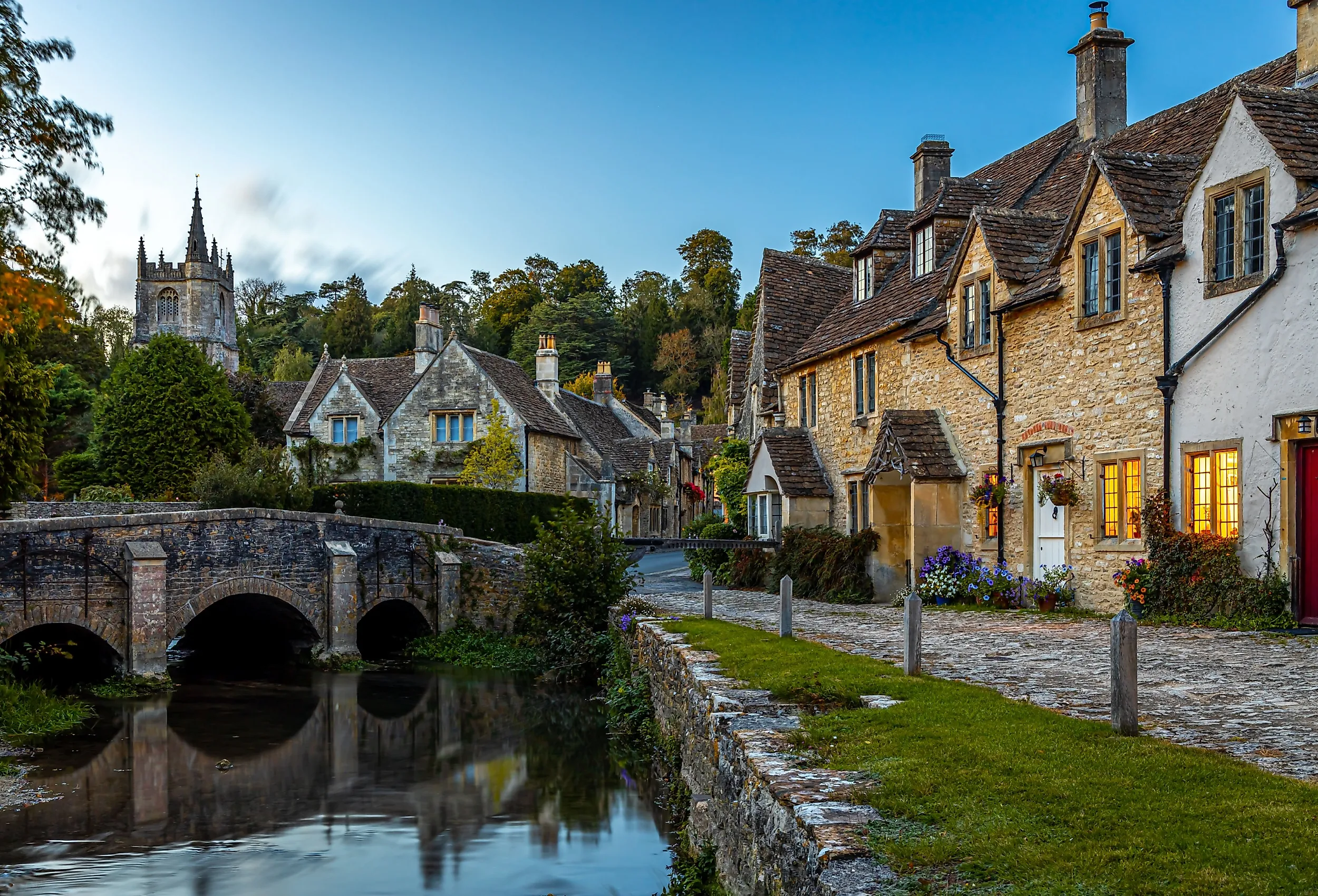
Castle Combe is a medieval village situated in Wiltshire, England. Considered one of the prettiest places in the country, it is celebrated for its peaceful surroundings, centuries-old history, and architectural landmarks. Though its namesake castle no longer remains, the village has plenty to do and see. The village is split into the Upper and Lower Village, and explorers must park in the top section and walk down to the pedestrian-friendly Lower Village. Visitors can explore Saint Andrew's Church, built in the 13th century and known for its faceless clock and tombs of the town's most famous residents. The Bybrook Bridge and Water Lane are notable stops, with scenic views, honey-colored cottages, and appearances as backdrops for movies like Stardust. The town is also home to several walking trails, such as the Ford Circular Walk, where visitors can walk alongside the Bybrook Bridge, through dense woods, and settle at the 14th-century Manor House for an afternoon tea.
Bakewell

Bakewell is a laid-back town known for its Anglo-Saxon heritage. With a thousand years of history, explorers can indulge in the town's striking churches, green landscapes, and delicious treats. The All Saints' Church is a must-see with a notable collection of 9th-century Saxon stone carvings, ancient stone coffins, and alabaster tombs of the Vernon and Manners families of Haddon Hall. The Bakewell Old House Museum showcases the town's unique history with educational programs about previous inhabitants, like industrial pioneer Sir Richard Arkwright, Tudor wattle-and-daub walls, and historic textile displays.
The Monsal Trail is a scenic escape with 8.5 miles of traffic-free biking paths. Bikers can travel through four illuminated railway tunnels and enjoy long views of the River Wye and Monsal Dale. When it comes to good eats, the town's local specialty, Bakewell Pudding, also attracts visitors near and far. Food lovers flock to the Original Bakewell Pudding Shop to get their hands on the delicious local specialty. Visitors can also spend time in the shop's cottage tea room or book a spot in their pudding-making classes.
Beer

Beer is a fishing village in Devon, England. Set inside the East Devon National Landscape, it is celebrated for its slow pace, striking white cliffs, and unique heritage. The Beer Quarry Caves offer an hour-long guided tour through stone caverns while detailing the struggles of the quarrymen who cut the Beer Stone used in structures, like Westminster Abbey. Pecorama is another popular attraction, featuring the Beer Heights Light Railway, which takes riders through landscaped gardens alongside coastal views. At Beer Beach, visitors can rent deck chairs, buy seafood from landing boats, and fish along the bay.
Robin Hood's Bay

Robin Hood's Bay is a smuggling village in North Yorkshire, England. Built up in the 18th century, it is known for its eccentric smuggling history. Legend says that smugglers used the village's tightly packed houses to move contraband without ever touching the main streets. For an in-depth look at the village's history, visitors explore Robin Hood's Bay Museum. The attraction is filled with exhibits on smuggling town lore, maritime shipwrecks, and local family history. The area is also known for its Dinosaur Coast. Visitors can fossil hunt for millions-year-old ammonites or shop for crafts from hometown artisans. There are also a number of walking trails, such as Boggle Hole Circular, where hikers can walk along the beach, explore restaurants, and take in the cliffs of the Heritage Coast.
St Ives

St Ives is a coastal town in Cornwall, celebrated for its cobbled streets, sandy beaches, and tranquil art scene. Nature lovers can explore the seaside town with Wildlife Sea Safaris. The 1-hour boat trip takes riders to Seal Island, where they can spot seals and bottlenose dolphins. Trips to Bamaluz Beach are also a favorite, where beachgoers build and balance on stone sculptures along the shore. Art enthusiasts can head to the Barbara Hepworth Museum and Sculpture Garden. The attraction, known as Trewyn Studio, showcases the renowned artist's tools, workbenches, and unfinished carvings. Hepworth lived and worked there until 1975. The sculpture garden is filled with subtropical plants alongside some of Hepworth's favorite sculptures. The Tate St. Ives is another artsy favorite. Located on Porthmeor Beach, the architectural gallery showcases abstract British modernism, hosts a top-floor cafe, and offers panoramic views.
Dunster

Dunster is a medieval village located in Somerset, England. The peaceful village is known for its slow pace, medieval streets, and bold castle. Dunster Castle sits on a hill overlooking the village. Visitors can step inside the Victorian country house to witness must-see features, like its carved staircase, Antony and Cleopatra leather hangings, and King Charles Room. The Dunster Tithe Barn is another attraction, where people can walk through the quiet garden and take uncrowded pictures of the castle in the backdrop. Nature lovers can walk to the Iron Age Hillfort for panoramic views of Exmoor and the Bristol Channel. Since Dunster is also a gateway to Exmoor National Park, visitors have access to green walking trails and long views. The Exmoor National Park Centre features a small film theatre, exhibits on local wildlife, and a video microscope.
Wrapping Up
With their distinct character, varied landscapes, and memorable attractions, England's laid-back towns showcase the best of the country. If you're looking for coastal views and luxury, Lymington has a lot to offer, while St Ives is a favorite for its gardens and art scene. Others, like Dunster and Castle Combe, offer medieval history and streets that have stood for centuries. Each destination offers its own blend of heritage, relaxation, and unforgettable experiences, showing why England's quieter towns are worth exploring.