Croatia's 8 Most Laid-Back Towns
Croatia's busiest destinations can fill summer days with crowded promenades and packed sightseeing schedules, but its smaller towns encourage a different pace. Island harbors invite long lunches beside the water. Istrian hill towns pair medieval streets with wine and truffles. Riverside communities provide walking paths through forests and past waterfalls. The eight towns below provide enough to fill several days without requiring visitors to rush between attractions.
Cavtat

Cavtat makes slowing down easy along a waterfront lined with fishing boats, restaurant terraces, and views across the Adriatic. Start with a stroll around the harbor before following the pine-shaded path that loops around the Rat Peninsula. Small swimming spots along the route make it easy to interrupt the walk for a dip rather than treating the promenade simply as a way to reach another attraction.
Back in town, the Bukovac House occupies the birthplace of Vlaho Bukovac, one of Croatia's best-known painters. Its collection includes paintings alongside the decorated interiors of the artist's former home and studio. Another short walk leads uphill through the cemetery to the white-stone Račić Family Mausoleum, designed by Croatian sculptor Ivan Meštrović. Afterward, return to the waterfront for coffee or dinner overlooking the harbor. Cavtat works particularly well for travelers who prefer alternating short cultural visits with swimming, seaside walks, and time spent outdoors.
Stari Grad

Stari Grad provides an unusually mellow alternative to the busier resorts elsewhere on Hvar. Its waterfront curves around a sheltered bay where fishing boats and café tables sit only steps from stone lanes leading into one of Croatia's oldest settlements. Wander inland to Škor Square, an intimate space surrounded by old stone houses, before continuing to Tvrdalj, the fortified Renaissance home of poet Petar Hektorović. Its courtyard, garden, and fishpond reward lingering rather than a hurried visit.
Beyond town lies the UNESCO-listed Stari Grad Plain, where stone walls still divide agricultural parcels established when Greeks colonized the island in the fourth century BCE. Visitors can explore the landscape on foot or by bicycle, passing vineyards, olive groves, and fields rather than conventional tourist attractions. Finish back beside the bay or seek out one of the small beaches and coves around Stari Grad. Between swims, local wine, waterfront meals, and walks through an agricultural landscape cultivated for more than two millennia, there is little reason to keep a strict schedule.
Cres

Cres revolves around its compact harbor, where pastel fçades, fishing boats, cafés, and the occasional market stall make sitting beside the water as worthwhile as conventional sightseeing. From the waterfront, wander through narrow lanes into the old center and Cres Museum, housed in the Renaissance Arsan Palace. Its collections introduce the archaeology, history, and everyday culture of an island whose settlements remain scattered among mountains, olive groves, and rocky coastline.
The town's surroundings make an equally good case for taking things slowly. Beaches begin within walking distance of the center, allowing visitors to move easily between swimming and lunch without planning a separate excursion. Local Cres olive oil provides another reason to linger over meals. Olive cultivation has shaped the island landscape for centuries, and local oil appears throughout its culinary traditions. Even the main square maintains an everyday role, with island products such as vegetables, honey, and olive oil sold around the historic loggia. Cres feels less like a checklist of landmarks than a place to settle into the rhythms of harbor and island life.
Vrbnik

Perched on limestone cliffs above the sea, Vrbnik combines medieval lanes with one of Krk Island's best-known wine traditions. Spend the morning wandering the Old Town, where stone houses crowd along passages that frequently open onto unexpected Adriatic views. One passage, Klancic, is famous for being so narrow that visitors can nearly touch both walls at once.
Wine provides an excellent reason not to rush onward. Vrbnik is closely associated with Žlahtina, a white grape cultivated around the town, and local cellars and taverns provide opportunities to sample it close to where it is grown. After lunch, descend toward the coast for time at Zgribnica Beach, a small pebble beach beneath the historic center, or simply find a viewpoint above the water. The pleasures here are straightforward: explore a few old lanes, drink local wine, swim, and watch the Adriatic from a town small enough that an ambitious itinerary would almost defeat the point.
Motovun

Motovun trades the Adriatic for vineyards, forests, and broad views across the Mirna Valley. The hilltop Old Town is best explored without a particular destination in mind. Stone lanes climb between medieval buildings toward the central square, while the town walls provide viewpoints across the surrounding Istrian countryside. Cafés and restaurant terraces make it easy to turn the exploration into a leisurely afternoon.
The landscape below supplies two of Motovun's other great attractions. Motovun Forest is renowned as a habitat for Istria's prized white truffles, which appear on menus throughout the region, particularly during truffle season. Vineyards surrounding the town provide another local specialty, and nearby wineries offer opportunities to sample Istrian varieties without traveling far. A day here can therefore consist of little more than walking the walls, eating a truffle-based meal, tasting local wine, and watching the countryside from a café terrace, an itinerary considerably less demanding than the climb required to reach the town in the first place.
Skradin

Skradin sits where the Krka River widens toward the sea, giving this small Dalmatian town a waterfront atmosphere without the scale of Croatia's larger coastal resorts. Begin along the Skradin waterfront, where sailboats and small craft line the river beside cafés and restaurants. From there, wander into the compact historic center, whose stone streets and pastel fçades can be explored comfortably without turning the visit into an all-day sightseeing exercise.
Food is an attraction in its own right. Local restaurants serve Dalmatian seafood alongside regional specialties, including the slow-cooked Skradin risotto traditionally prepared for hours before serving. The town is also a gateway to Krka National Park, with boats carrying visitors upriver toward Skradinski Buk during the operating season. Rather than driving directly to the park and leaving, spend time beside the river before or after the excursion. A boat ride, an unhurried lunch, a walk through town, and an evening beside the marina make Skradin an easy place to let the day organize itself.
Nin

Nin occupies a tiny island in a shallow lagoon, where sandy beaches and salt pans surround a historic center that takes little time to explore. Cross one of the pedestrian bridges into the Old Town and visit the Church of the Holy Cross, a small pre-Romanesque church dating to around the ninth century. Stone lanes nearby contain archaeological remains and historic buildings, but the center is compact enough to leave plenty of the day for the water.
That is especially appealing at Queen's Beach, whose long stretch of sand and unusually shallow sea make it different from Croatia's more familiar rocky coves. Nin is also known for therapeutic mud found around the lagoon. For another slow-paced outing, visit the Nin Saltworks, where salt continues to be produced using the sun, seawater, and traditional methods tied to the local landscape. Between the lagoon, beaches, salt pans, and diminutive Old Town, Nin allows visitors to combine history and nature without spending much of the day in transit.
Slunj

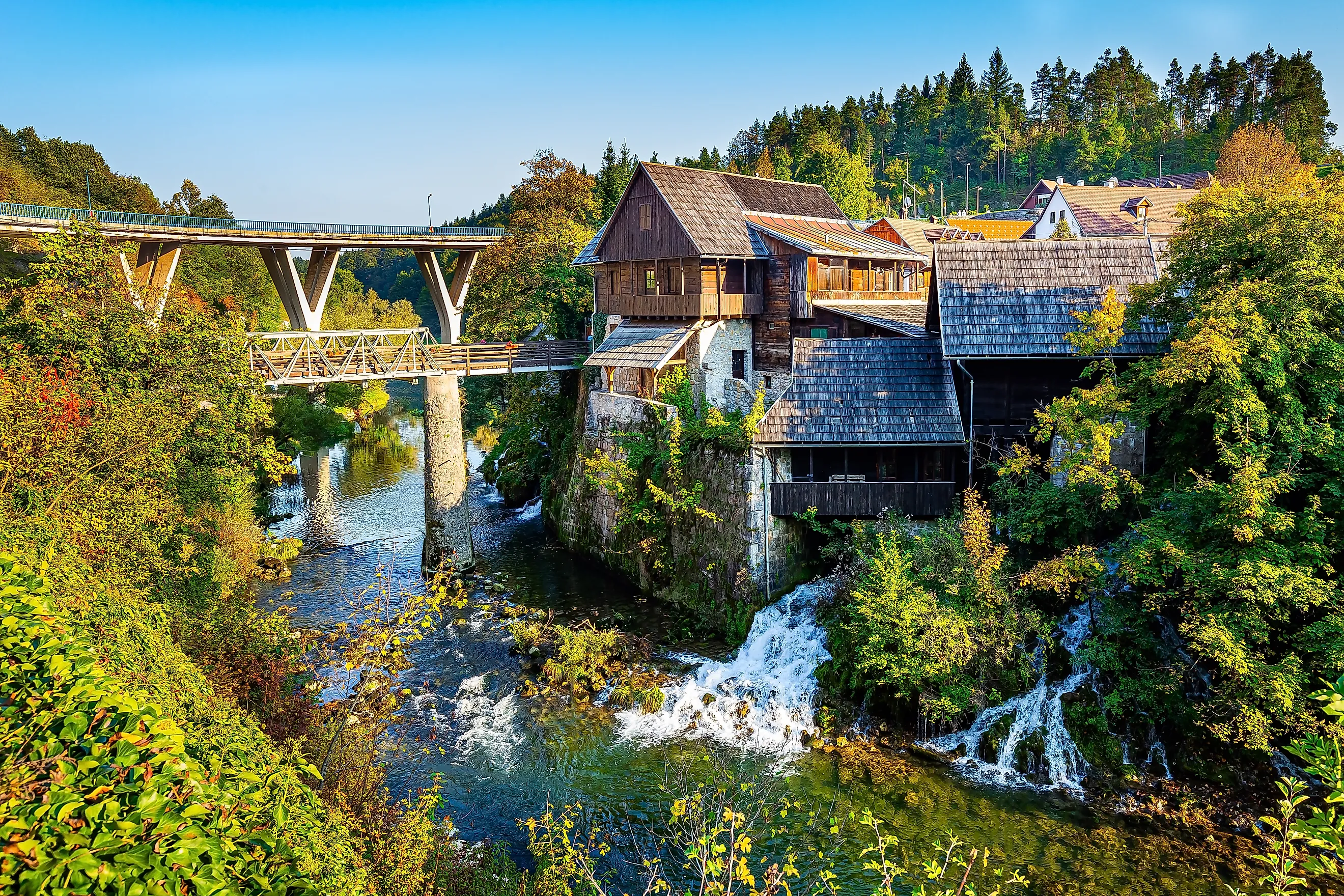
Water determines the pace in Slunj. At Rastoke, the Slunjčica River divides into cascades before joining the Korana, flowing around traditional houses and historic watermills. The protected settlement contains 23 waterfalls, and a roughly 2.5-kilometer promenade provides plenty of opportunities to stop beside the cascades rather than simply photographing them from one viewpoint.
Continue beside the Korana River for another easy dose of nature, or head into nearby Jelvik Forest, where woodland paths provide a quieter counterpart to Rastoke's rushing water. History appears above the Slunjčica at the ruins of the Old Town of Slunj, a fortress associated with the Frankopan noble family and the area's long history as a defensive frontier. None of these outings requires filling an entire day. A morning among Rastoke's mills can lead to lunch beside the river, an afternoon forest walk, and another visit to the cascades as the light changes, making Slunj a compelling inland alternative to Croatia's laid-back seaside towns.
Slow Down in Croatia
Croatia's smaller towns show that an enjoyable trip does not need to revolve around seeing the greatest possible number of landmarks. Cavtat and Cres put swimming within easy reach of historic centers, while Stari Grad combines waterfront life with vineyards and ancient fields. Vrbnik and Motovun encourage visitors to organize afternoons around wine and local food, and Skradin lets the Krka River set the pace. Nin substitutes lagoons and salt pans for busy resort beaches, while Slunj proves that Croatia's relaxed side extends well beyond the Adriatic.
In each case, three or four attractions can comfortably fill a day without dominating it. The time between them, over coffee beside a harbor, on a forest path, at a winery, or next to a waterfall, is as much a part of the experience as the sights themselves.