Set against glaciers, fjords, and the tallest peak in North America, these nine Alaska towns are stunningly scenic. In Sitka, Russian heritage still shines in the dome of St. Michael's Cathedral, while Tlingit totem poles stand among spruce and hemlock in Sitka National Historical Park. Skagway offers visitors the chance to walk in the footsteps of Gold Rush prospectors along the Chilkoot Trail or ride the rails of the historic White Pass and Yukon Route. Each town on this list continues to serve as a vibrant hub and gateway to natural wonders, like the LeConte Glacier and Denali National Park, complete with wooden boardwalks, preserved architecture, and active ports that tell the story of a state steeped in generations of culture and tradition.
Sitka, Alaska. (Editorial credit: denbaim / Shutterstock.com)
Sitka, located on Baranof Island in Alaska, delivers a distinct mix of Tlingit traditions and Russian colonization. The town’s downtown area has a nineteenth-century Russian milieu, owing to St. Michael Cathedral’s green dome and the nearby Russian Bishop’s House, one of the few surviving examples of Russian colonial architecture in North America. The site is open for self-guided and guided tours, both of which are free. Additionally, a trail in Sitka National Historical Park takes hikers through several carved totem poles under towering spruce and hemlock trees, while the town’s stores and cafes on Lincoln Street offer a view of the harbor where fishing and even whale-watching cruises are offered by a wide range of outfitters.
Seward
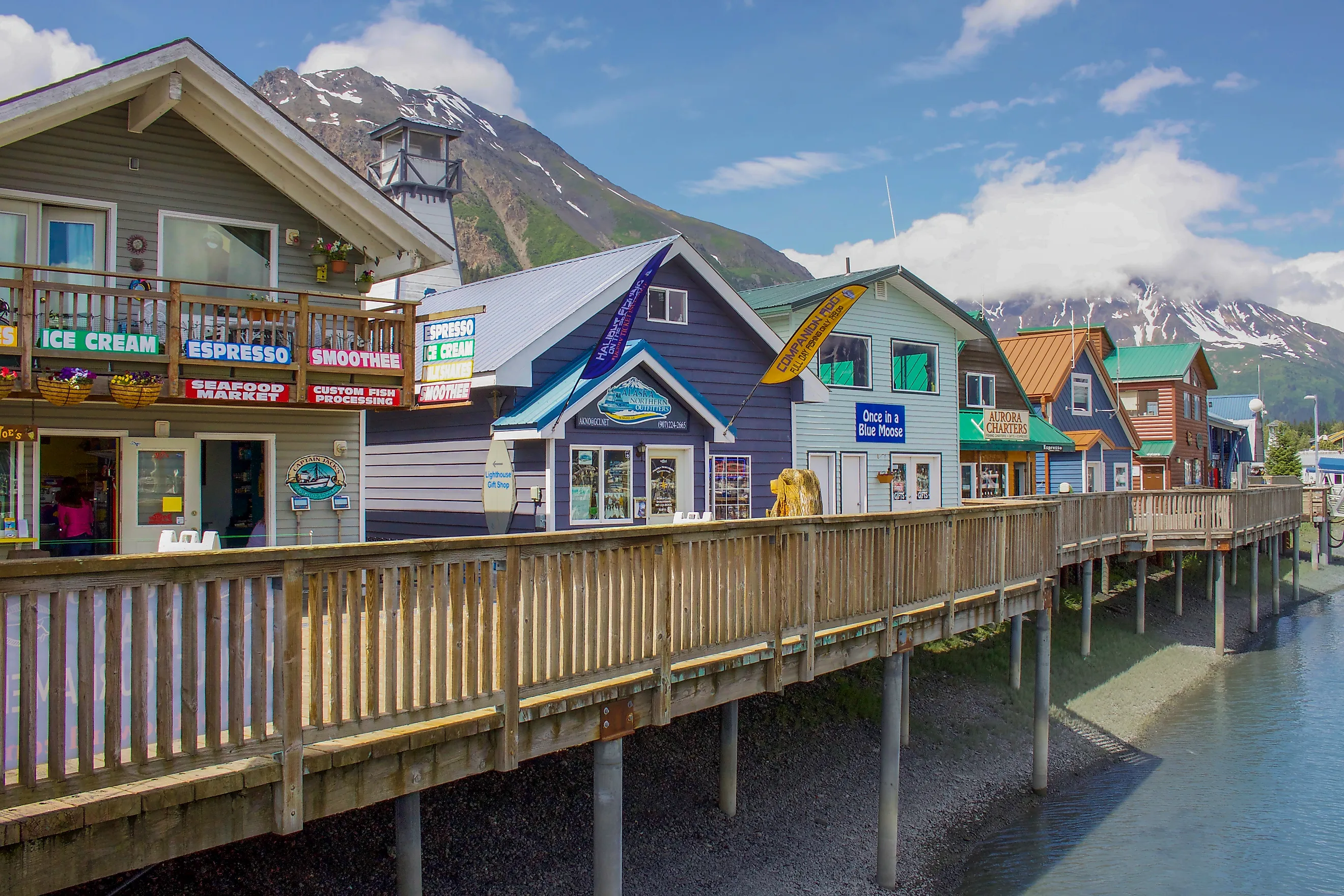
Street view in Seward, Alaska. Photo credit: Joseph Sohm / Shutterstock.com
Seward is located at the head of Resurrection Bay, surrounded by glaciers, fjords, and the Kenai Mountains. Seward was founded in 1903 as a supply town for miners but is now the gateway to Kenai Fjords National Park. The town’s small boat harbor offers visitors a chance to walk into town for coffee or even take cruises through glaciers and islands. Additionally, Exit Glacier is a short drive away, where visitors can hike for a close-up look. Another memorable stop is the Alaska SeaLife Center, where visitors are able to learn about the marine life of the Gulf of Alaska. Inside its quiet halls, puffins, seals, and other coastal species appear almost like characters from the waters beyond the harbour, while outside, the town’s working port tells its own long maritime story.
Homer
Homer, Alaska. Editorial Photo Credit: Jay Yuan, via Shutterstock.
At the end of the Sterling Highway on the southern Kenai Peninsula sits another town that began as a coal mining camp and has since grown into a lively fishing community and arts center. Homer is famous for the Homer Spit, a thin peninsula into Kachemak Bay, filled with charters, seafood places, and galleries. On the other side of the bay lies Kachemak Bay State Park, Alaska’s first state park, where valleys of glaciers, forested trails, and quiet coves create a picture-perfect backdrop for outdoor adventures and nature lovers. If you're looking to step into the past, the Pratt Museum features the region’s history, with exhibits exploring life in South Central Alaska, including a saltwater aquarium, botanical garden & historic cabin.
Haines
Haines, Alaska.
Haines is located on the shores of the Lynn Canal, one of the deepest fjords in North America. The town began as a mission in the 1880s and later became a supply base during the Klondike Gold Rush. Today, Fort William H. Seward is a military base that houses galleries and hotels. Its row of white barracks is a conspicuous feature. For a deeper look at the region’s Indigenous heritage, the Haines Sheldon Museum presents exhibits on the Tlingit people of the Chilkat and Chilkoot, while historic photographs document the missionaries and miners who later shaped the town’s early years. Along Main Street, shops offer smoked salmon and freshly made coffee, while just outside town, the Chilkat Bald Eagle Preserve draws visitors each autumn as the birds assemble along the river during the salmon runs.
Valdez
The marina at Valdez, Alaska. Image credit Victoria Ditkovsky via Shutterstock
Valdez lies on the north shore of Prince William Sound. Its original townsite was created during the gold rush in 1898, but was abandoned after the Good Friday earthquake in 1964. The modern town was rebuilt nearby and later became the marine terminal for the Trans Alaska Pipeline. Today, the marina serves cruise ships and tour boats heading to the Columbia and Meares glaciers. On land, visitors can drive through Keystone Canyon, with waterfalls streaming from cliffs, to the Worthington Glacier, where they can walk close to the ice. Another place to explore is the Valdez Museum, which recounts the 1964 earthquake, the construction of the pipeline, and the town's relocation.
Skagway
Historic buildings in Skagway.
Skagway occupies a narrow valley at the northern end of the Inside Passage and, like so many other Alaskan towns, it flourished during the gold rush. Wooden boardwalks, false‑fronted buildings, and historic saloons still line Broadway and adjacent streets, many managed by the Klondike Gold Rush National Historical Park. One way visitors can access the mountains is through the White Pass and Yukon Route railway, which carries them over a mountain pass through gorges sculpted by glaciers. While nearby, eager visitors can access the Chilkoot Trail, which traces the route taken by gold rush stampeders into Canada and turns a multi-day world-class hiking trip into a historic romp through an open-air museum.
Talkeetna
Shops in Talkeetna, Alaska. Image Credit: Michael Rosebrock
Talkeetna is situated near the confluence of the Susitna, Talkeetna, and Chulitna Rivers. Once again, the promise of gold brought miners to the Susitna River in the late 19th century, and by 1910, the hamlet was a riverboat steamer station with a population that peaked at more than 1,000 people during World War I. Visitors can still see and feel the town's history in the earliest buildings that stand on Main Street, like the Fairview Inn, which dates back to 1923, and the Talkeetna Roadhouse, originally built in 1917. Meanwhile, the Talkeetna Historical Society Museum houses artifacts from the Dena’ina people, early prospectors, and mountain climbers, as well as a detailed scale model of the Alaska Range. Of course, the town is best known as the gateway to Denali National Park and Mt. Denali, North America's tallest peak.
Petersburg
Quaint fishing village of Petersburg, Alaska.
Founded by a Norwegian fisherman who used ice from the local glaciers to pack his fish, Petersburg is still a thriving fishing town on Mitkof Island, with seine boats and gillnetters tied to the busy docks. In addition, Petersburg celebrates its strong Norwegian roots each spring at the Little Norway Festival. The Sons of Norway Hall features Norwegian woodworking decorations, while the Lutheran Church offers another symbol of the town’s Scandinavian heritage. For those fascinated by local history, the Clausen Memorial Museum presents exhibits on the Tlingit people and the early settlers who built the local fishing industry. Meanwhile, boat tours depart for LeConte Glacier, one of the southernmost tidewater glaciers in North America, where large icebergs regularly break away and drift through the surrounding waters. Back in town, Nordic Drive and Sing Lee Alley are home to bakeries, hardware stores, fish markets, and the everyday shops that support life in this busy harbour.
Ketchikan
Ketchikan, Alaska
Ketchikan is situated on Revillagigedo Island, which is near the southern entrance to the Inside Passage. The city was founded as a salmon cannery in the 1880s, with many of the original buildings erected on pilings over Ketchikan Creek. Today, these same structures are home to art galleries and shops, while nearby, the Totem Heritage Center features poles collected from uninhabited villages, and the Saxman Totem Park displays carvings in the traditional style. From the town’s waterfront, boat tours to the nearby Misty Fjords National Monument give a glimpse of the fjords’ granite cliffs, waterfalls, and wildlife, while back on land, the Rainbird and Deer Mountain trails, which begin near the city center, lead through rainforest landscapes with views over the Tongass Narrows.
The towns above illustrate how human settlement in Alaska has been shaped by both history and environment. While Sitka reflects a blend of Tlingit and Russian influences, Seward is defined by its harbor and nearby glaciers. The spit of Homer, the military fort of Haines, the relocation of Valdez, the gold rush streets of Skagway, the log buildings of Talkeetna, the Norwegian heritage of Petersburg, and the totem poles of Ketchikan each represent a different chapter in Alaska’s story. Together, these small towns show how communities have preserved their past while welcoming visitors from around the world. Accessible by road or sea, they invite exploration through museums, hiking trails, and local tours.