9 Offbeat Nevada Towns To Visit In 2026
Across Nevada's empty basins and forgotten rail corridors sit small towns shaped by mining booms and isolation. Many grew fast, faded just as quickly, and kept the streets that carry their past. Pioche was once notorious for its gunfights and mining disputes. Rachel is barely a dot on the map but turned famous through Area 51 and UFO culture. Goldfield mixes crumbling boomtown buildings with desert art while Tonopah draws people for haunted hotels and dark night skies. These nine towns aren't built around attractions, they are the attraction.
Virginia City

Perched high above Reno in the Virginia Range, Virginia City rose quickly after the 1859 discovery of Comstock Lode, one of the richest silver strikes in American history. The boom brought thousands of miners, gamblers, and merchants, turning a rugged hillside camp into one of the most important mining towns in the American West and helping fuel Nevada's early growth. Mark Twain also spent time here as a young reporter, capturing scenes from a town shaped by sudden wealth, rivalry, and constant danger.
Today, much of Virginia City still preserves the 19th-century character, with wooden boardwalks, weathered storefronts, and historic saloons lining its main streets. Its atmosphere is defined as much by its prosperity as by its darker history of fires, mining disasters, and violent disputes over claims, which continue to feed its reputation for hauntings and Old West folklore. Visitors can still experience that legacy through a handful of classic stops, riding the Virginia and Truckee Railroad, touring the haunted Washoe Club, stepping into old saloons like the Bucket of Blood Saloon, and walking the preserved historic downtown.
Tonopah

Sitting roughly halfway between Las Vegas and Reno, Tonopah developed in the early 1900s after the discovery of rich silver and gold deposits turned this remote desert outpost into one of Nevada's major mining centers. The boom brought banks, theatres, and grand hotels to an otherwise empty stretch of high desert, though like many mining towns, its fortunes faded as quickly as they rose. What remained is a quiet, isolated town with a heavy mining legacy and a strong reputation for eerie stories and roadside oddities.
Today, Tonopah feels suspended between history and surreal roadside Americana. Its most famous landmarks include the Mizpah Hotel, a restored early-20th century building known for its elegant interiors and ghost lore, and the famously strange Clown Motel, located beside the Old Tonopah Cemetery. The Tonopah Historic Mining Park preserves the town's silver rush past, while its remote location makes it one of the best stargazing spots in the country due to extremely dark night skies. For those looking to connect with the town's past, a walk through the Old Tonopah Cemetery will allow visitors to see some of the town's earliest residents.
Visitors can explore the mining park, tour the Mizpah Hotel, stop at the Clown Motel, and look up at one of the clearest night skies in the American West. It's a place where mining history, isolation, and eccentric roadside culture all overlap in unexpected ways.
Goldfield

Once the largest town in Nevada during its early-1900s gold rush, Goldfield quickly grew from a desert strike camp into a booming city filled with banks, hotels, stock exchanges, and grand civic buildings. When the mines declined, the population collapsed almost as fast, leaving behind empty streets, crumbling structures, and a strong sense of faded boomtown ambition.
Today, Goldfield is known for its eerie mix of ruins and roadside art in the middle of the desert. The abandoned Goldfield Hotel looms over town with its long history of ghost stories, while the historic Esmeralda County Courthouse stands as a reminder of the town's former wealth and regional importance. Nearby, the International Car Forest turns old vehicles into a surreal open-air art installation. Scattered mining remnants and wide desert views complete the atmosphere of decay and creativity.
Visitors can explore the International Car Forest, photograph the Goldfield Hotel and Esmeralda County Courthouse, walk through the historic ruins, and take in the stark high-desert landscape.
Rachel

Along the lonely stretch of Nevada's Extraterrestrial Highway, Rachel is a tiny desert settlement located near Area 51. Originally founded as a ranching community, it became famous in the late 20th century when UFO culture and government secrecy turned this remote corridor into one of America's best-known conspiracy tourism routes.
Today, Rachel is best known for its offbeat alien-themed identity and extreme isolation. The Little A'Le'Inn serves as the town's informal social hub, mixing diner food with UFO memorabilia and desert road-trip energy. The surrounding desert offers wide-open skies that attract stargazers, while roadside signs and installations reinforce its extraterrestrial reputation.
Visitors can stop at the Little A'Le'Inn, drive the Extraterrestrial Highway, take photos of UFO-themed roadside landmarks, and stargaze under some of the darkest skies in the United States.
Pioche

Founded in the early 1860s after silver was discovered in the surrounding mountains, Pioche quickly became one of Nevada's most notorious mining towns. Its wealth attracted miners, gunmen, and speculators in equal measure, and for years the town's violence and lawlessness were so extreme that hundreds of people were reportedly buried before any natural deaths were recorded. As mining activity slowed, Pioche declined, but much of its rugged frontier character never fully disappeared.
Today, Pioche feels like a preserved slice of the harsher side of the Wild West. The hillside Boot Hill Cemetery reflects its violent past, while the imposing "Million Dollar Courthouse" stands as a symbol of corruption, debt, and mining-era excess. Rusting remnants of the old aerial tramway still hang above town, and the compact historic downtown retains its frontier-era buildings and dusty atmosphere. Just outside town, Echo Canyon State Park adds a quieter contrast with its red rock scenery, reservoir, and opportunities for hiking, camping, and fishing in the high desert landscape.
Visitors can walk through Boot Hill Cemetery, tour the Million Dollar Courthouse, see the remains of the Pioche aerial tramway, explore the historic downtown streets, and spend time at Echo Canyon State Park.
Ely

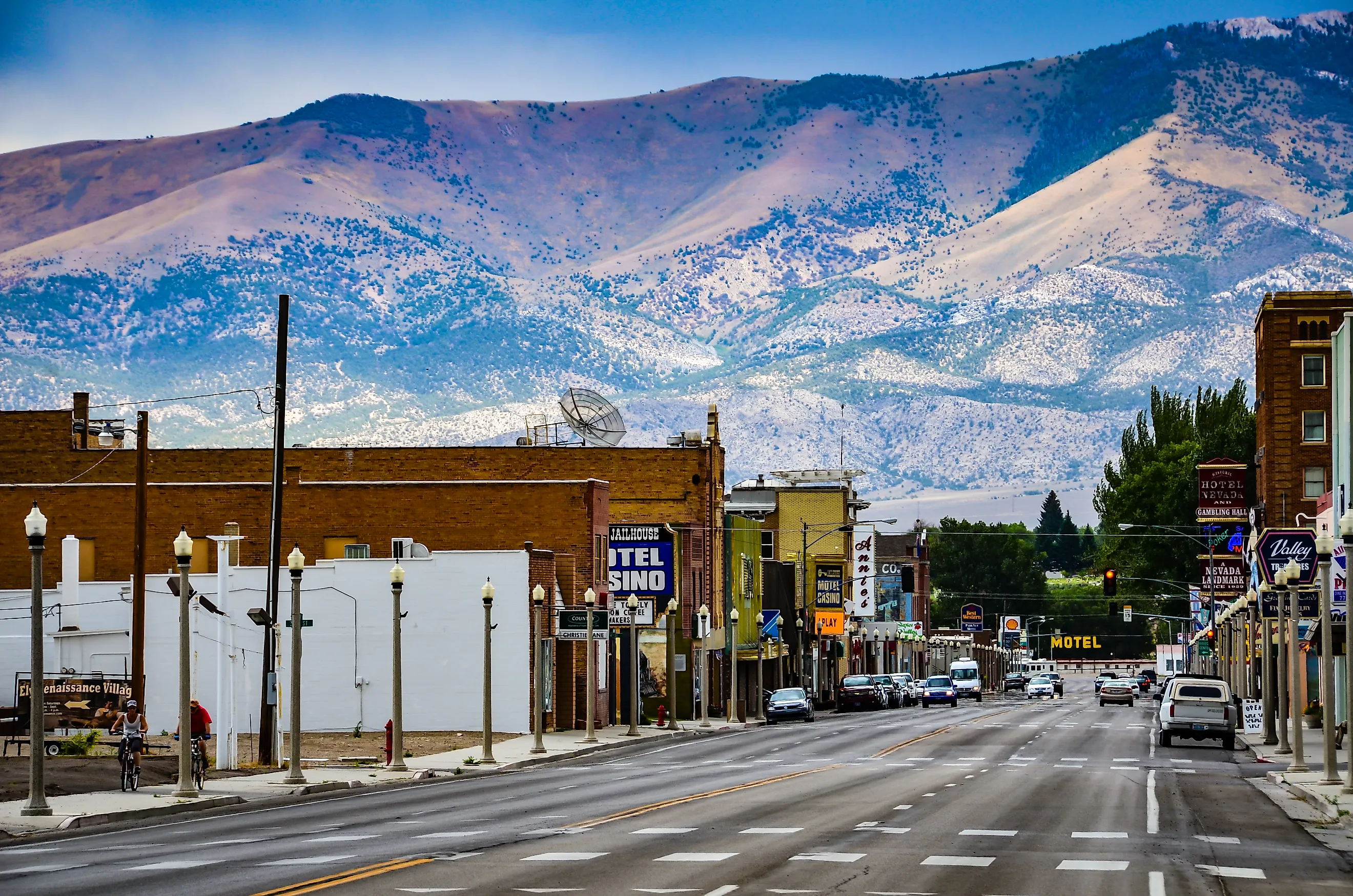
Ely began as a small stage stop and mining supply town before the discovery of copper nearby transformed it into a key industrial hub in eastern Nevada. The arrival of railroads and large-scale mining operations brought steady growth through the early 20th century, leaving behind a layered history of rail culture, mining heritage, and frontier isolation in one of the state's more remote regions.
Today, Ely stands out for its strong railroad legacy and unexpected burst of public art. The Nevada Northern Railway still runs vintage steam and diesel locomotives, offering a rare glimpse into early industrial transport in the American West. Downtown, large-scale murals transform building walls into an open-air gallery, while nearby landscapes stretch into wide, empty desert and mountain terrain.
Visitors can ride the Nevada Northern Railway, explore the railroad museum and historic yards, walk through the mural-covered downtown, and use Ely as a base for exploring the surrounding Great Basin wilderness.
Lovelock

Lovelock grew out of a small agricultural railroad stop in northern Nevada before becoming the county seat of Pershing County. Its location along early travel and trade routes helped it develop into a modest service town, supported by ranching, nearby mining activity, and the steady flow of travelers crossing the desert interior. Like many Nevada towns, its identity is shaped less by size and more by the wide, empty landscape that surrounds it.
Today, Lovelock is best known for its unusual mix of small-town Nevada life, local history, and quirky roadside traditions. The most famous is the "Love Lock" tradition at Lovers Lock Plaza, where couples attach padlocks as symbols of commitment before throwing away the key. The stately Pershing County Courthouse anchors the historic center of town, while nearby Lovelock Cave preserves evidence of thousands of years of Indigenous history and archaeological discoveries. Lovelock also serves as a gateway to the remote Black Rock Desert region, known for its stark scenery, expansive playas, and vast open landscapes.
The town's museums and historic sites add another layer of character. The Marzen House Museum preserves local artifacts and exhibits tied to ranching, railroads, mining, and frontier life in Pershing County. Visitors can also explore local parks, historic buildings, and nearby desert landscapes that highlight the region's rural character and long connection to transportation routes across northern Nevada.
Visitors can walk the courthouse square, visit Lovers Lock Plaza, tour the Marzen House Museum, explore Lovelock Cave, and use the town as a stopover before heading deeper into the Black Rock Desert.
Caliente

Caliente began in the early 1900s as a railroad town when the Los Angeles and Salt Lake Railroad pushed through eastern Nevada's rugged canyon country. Its growth was tied almost entirely to rail operations, maintenance yards, and the steady movement of freight and passengers across the desert. Unlike many mining settlements, Caliente's identity was shaped by transportation rather than ore, giving it a more structured but still isolated frontier history.
Today, Caliente stands out for its railroad heritage and dramatic natural scenery. The Spanish Mission-style Caliente Railroad Depot remains one of Nevada's most distinctive train stations, reflecting the town's former importance as a rail hub. Exhibits inside the restored depot highlight Caliente's railroad history and its role in regional transportation.
Just outside town, Rainbow Canyon cuts through colorful rock formations offering one of the most scenic drives in eastern Nevada. Nearby, Kershaw-Ryan State Park provides a spring-fed desert oasis with shaded picnic areas, hiking trails, and lush vegetation set against steep canyon walls.
The surrounding region reflects Caliente's broader frontier setting, with open desert landscapes, scenic byways, and quiet reminders of rural Nevada history. The area is also used as a base for exploring Lincoln County's remote canyon country and outdoor recreation opportunities.
Visitors can photograph the Caliente Railroad Depot, drive through Rainbow Canyon, explore Kershaw-Ryan State Park, and use the town as a base for canyon scenery, hiking, and backroad exploration.
Jarbidge

Set deep in the mountains of northeastern Nevada near the Idaho border, Jarbidge began as a gold mining camp after a strike in the early 1900s. Its isolation was extreme even by Nevada standards, with supplies and mail once arriving by horseback through rugged wilderness. The town's name comes from a Native word often interpreted as "devil" or "monster," reflecting both the landscape and its folklore-rich past.
Today, Jarbidge remains one of Nevada's most isolated communities, with a tiny population and a setting that feels largely unchanged for over a century. Wooden cabins, rustic lodges, and the historic Red Dog Saloon give the town a frontier atmosphere far removed from the state's larger cities. The surrounding Jarbidge Wilderness adds alpine forests, rivers, steep canyons, and some of the most rugged backcountry terrain in the Great Basin.
Outdoor recreation and frontier traditions remain central to local life. Annual events such as Jarbidge Days celebrate the town's mining heritage, while nearby attractions include the East Fork Jarbidge River, scenic canyon drives, historic mining remnants, and access to hiking, fishing, camping, and off-road trails.
Visitors can walk the historic downtown, stop at the Red Dog Saloon, attend Jarbidge Days in summer, explore the surrounding wilderness, and experience one of Nevada's most remote mountain landscapes.
A Different Side Of Nevada
These Nevada towns show a side of the state far removed from its cities and casinos. Shaped by mining booms, railroads, and isolation, they rose quickly, declined just as fast, and were left with strong traces of their past. Ghost towns like Goldfield, remote places like Jarbidge, railroad hubs like Ely, and myth-driven stops like Rachel each reflect a different chapter of the American West. What connects them is not size or popularity, but a lasting sense of place shaped by history, landscape, and time.