9 Most Welcoming Towns In Ohio's Countryside
Out in Ohio's farm country and river valleys, the small towns still carry the stamp of whoever showed up first: Quakers, Amish farmers, Swiss cheesemakers, German Separatists who pooled everything they owned in 1817, Revolutionary War veterans handed a chunk of frontier, and a Presbyterian minister who hung a lantern on a pole to signal people crossing the river out of slavery. Two centuries on, that history is not behind glass. It is the bakery counter, the courthouse square, the festival your family has hit every year, and the stranger who waves you into the right parking spot. Here are nine of them and exactly what to do when you get there.
Marietta

Marietta sits at the point where the Muskingum River meets the Ohio, on the state's southeastern edge across from West Virginia. Revolutionary War officers of the Ohio Company laid it out in 1788, which makes it the first permanent settlement in the Northwest Territory and, in a real sense, the spot where the westward push of the young United States began. You can stand inside that history at the Campus Martius Museum, which was built around the actual 1788 log house of Rufus Putnam, one of the town's founders. It is the real cabin, not a reproduction, enclosed and preserved where it stood.
The river is still the town's center of gravity. On the weekend after Labor Day, dozens of paddlewheel boats tie up along the levee for the Ohio River Sternwheel Festival, and a crowd in the tens of thousands turns out for music and fireworks. When the levee is quiet, downtown is worth the walk on its own: dozens of dealers set up under one roof at the Antique Mall of Marietta, and the brick streets run past restored storefronts and the Peoples Bank Theatre. It is an easy town to spend a day in on foot.
Millersburg

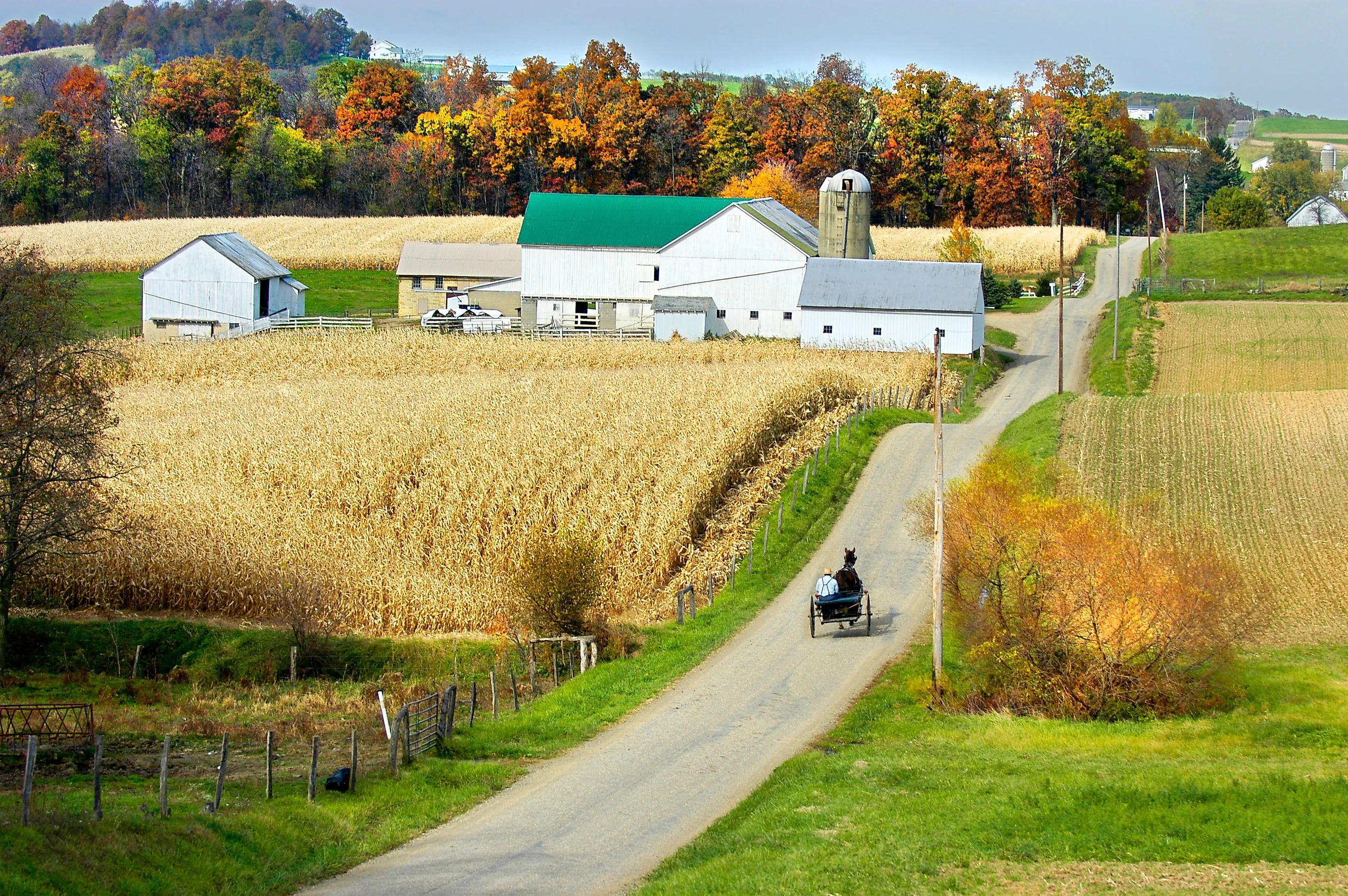
Millersburg is the seat of Holmes County, which sits at the center of the largest Amish settlement in the world. That shapes everything about a visit here. Buggies share the road with cars, farm stands dot the county highways, and the pace is set by people for whom a slower life is a matter of conviction, not marketing. At Yoder's Amish Home a few miles out of town, guides walk visitors through two farmhouses and a barn and explain how an Amish household actually runs, with buggy rides for anyone who wants one.
Back in town, the Holmes County Courthouse stands at the center of the square, and the Victorian House Museum occupies a 28-room mansion filled with local history from the town's earlier decades. For food, drive out to Hershberger's Farm and Bakery, where the draw is fresh pie and bread, a petting barn the kids can turn loose in, and shelves of jams and crafts made nearby. Come hungry and plan to leave with a box.
Sugarcreek

Swiss immigrants settled this corner of Tuscarawas County in the 1830s and made their name on cheese, using milk from the Amish dairy farms around them. The town leaned into that heritage and now calls itself the Little Switzerland of Ohio. Its downtown centerpiece is the World's Largest Cuckoo Clock, roughly 24 feet wide and 23 feet tall, built in 1972 for a Swiss-themed restaurant up the road and moved onto Sugarcreek's main corner in 2012. It made the cover of the Guinness Book of World Records in 1977. Every half hour in the warmer months, a carved band plays and a little couple comes out to dance a polka.
The Swiss story runs across the three floors of the Alpine Hills Historical Museum, which is also the town visitor center, so you can grab maps and directions there too. For a meal, the Dutch Valley Restaurant is known for Amish-style fried chicken and smoked ham in generous portions. The biggest gathering of the year is the Ohio Swiss Festival, held over a weekend each fall since the 1950s, with cheese, yodeling contests, and Swiss stone-throwing that fill the whole village.
Zoar

Zoar is the village those Separatists built on the Tuscarawas in 1817, and it is the most literal example of the settler pattern that runs through this list. Fleeing persecution in Wurttemberg, the group named their new home after the biblical town of refuge, then in 1819 organized as a full communal society, holding land, farms, and workshops in common under elected trustees. The experiment ran until 1898, and much of what they built is still standing.
Today the restored buildings make up a walkable open-air site managed by the Ohio History Connection and the Zoar Community Association, and Zoar holds National Historic Landmark status. The village center holds a 2.5-acre garden the Separatists laid out as a religious symbol, with a tall spruce ringed by twelve trees for the apostles. Around it you can tour the 1835 Number One House, the bakery, the tin shop, and the 1833 Zoar Store, several of them staffed by interpreters in period dress. It is a quiet place, and the quiet is the point.
Loudonville

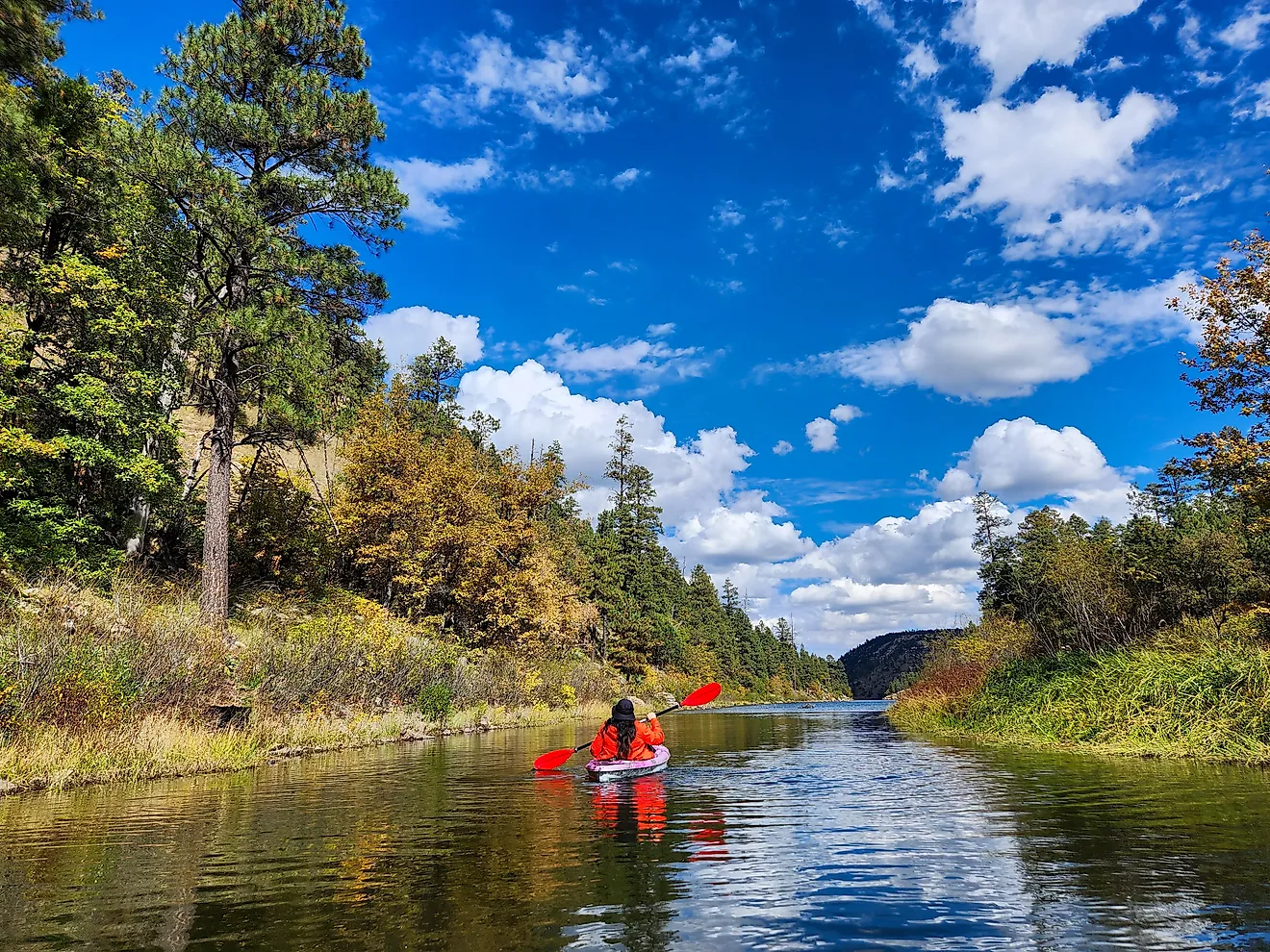
James Loudon Priest laid out this village in 1814 on land along the Black Fork, and its Victorian main street still has the brick storefronts and the 1909 Ohio Theatre to show for the years that followed. What put Loudonville on the map, though, is the river. The town sits at the gateway to Mohican State Park and the state forest around it, and enough people launch canoes here that Loudonville answers to the nickname Canoe Capital of Ohio.
The Mohican River runs slow and shallow through this stretch, which makes it forgiving water for a family paddling or floating on a summer afternoon. When you are off the water, the Cleo Redd Fisher Museum covers the area's logging past and river culture, and the Mohican Market and Cafe on Main Street is a good stop for lunch. Cabins and treehouses in the woods nearby give you a reason to stay the night rather than drive home in the dark.
Ripley

No town on this list took the word welcome more seriously, or at greater risk. Ripley is a village of about 1,600 on the Ohio River in Brown County, and in the decades before the Civil War it was one of the busiest crossing points on the Underground Railroad. Reverend John Rankin moved his family here from Kentucky in 1822 and built a house on the bluff the locals still call Liberty Hill. From it he could see the Kentucky shore, and he hung a lantern on a flagpole to signal that it was safe to cross.
The Rankins sheltered more than 2,000 freedom seekers, with a reported $3,000 bounty on John's head and thirteen children of their own in a small house. The family was proud of never losing a passenger. Down on Front Street, John Parker, born enslaved and self-liberated by purchase, worked as an ironworker and inventor who held U.S. patents, and repeatedly rowed back into Kentucky to bring people out. Both houses are National Historic Landmarks and both are open. Rankin's own words are the plainest statement of the premise of this list: his house, he wrote, "has been the door of freedom to many human beings." The village around them holds a 55-acre historic district on the National Register, and the walk along Front Street is short, flat, and worth taking slowly.
Waynesville

Quakers built much of Waynesville, a village at the crossing of two state routes in Warren County, and their plain, durable Main Street is now the busiest antiquing strip in the region. The town goes by the Antiques Capital of the Midwest, and it earns the title: five blocks of Main hold dozens of vintage and specialty shops, close enough together that you can work the whole run on foot in an afternoon.
Between stores, you can still get a meal at the 1797 Hammel House Inn, in rooms that once fed stagecoach travelers, and there is a full meal to be had at local spots like the Stone House Tavern. Five miles east, Caesar Creek State Park has miles of hiking and bridle trails plus a lake for swimming and boats, and its limestone is a known spot for fossil hunting. On the second weekend of October, downtown is packed for the Ohio Sauerkraut Festival, one of the largest festivals in the state, so plan around it either way.
Van Wert

In the early 1900s the fields around Van Wert, in the flat farm country of northwestern Ohio, grew so many peonies that people started calling it the Peony Capital of the World. The commercial flower fields are long gone, but residents never let the tradition lapse. The Van Wert Peony Festival grew out of it and now falls on the first weekend of June, with a grand parade, garden tours, and a car show downtown.
For a town of about 10,000, Van Wert has a deep arts bench. Touring Broadway shows and concerts come through the Niswonger Performing Arts Center, and local artists show and take classes at the Wassenberg Art Center in a historic downtown building. For families, Smiley Park has a children's garden, ball fields, and picnic grounds. This is a working county seat, and its music and its flowers are both taken seriously here.
Peninsula

Peninsula counts around 600 residents, which makes it the smallest town on this list, and almost all of it is surrounded by Cuyahoga Valley National Park, the only national park in Ohio. The village grew up as a canal town between Cleveland and Akron, and today it is the front door to 33,000 acres of forest, waterfalls, and river bends along the Cuyahoga.
The Ledges Trail is the local favorite, a loop of about 2 miles that runs past tall sandstone walls to an overlook of the valley. If you would rather ride than walk, the Cuyahoga Valley Scenic Railroad rolls through the gorges and past the wildlife, with stops that let you hike one way and ride back. Downtown is small but game, with a handful of shops and Fisher's, a family-run cafe where hikers have eaten since 1958. Come for the park and let the village be the bonus.
What Holds These Towns Together
The common thread across all nine is that someone came to each of these places on purpose and built for the long haul, and that intent still shows. In Marietta and Zoar, the founders' actual buildings are still standing. In Millersburg and Sugarcreek, the traditions are living rather than restored, carried on by the families who keep them. Waynesville still looks like the Quakers who shaped it, and Ripley still has the house on the hill where the welcome was a matter of life and death. Loudonville, Van Wert, and Peninsula each build their year around one thing they do well, whether a river, a flower, or a park at the edge of town. You do not have to take the welcome on faith. Show up on an ordinary weekend and you will find it at the bakery counter and the festival gate.