9 South Australia Towns Where Time Stands Still
The landscape of South Australia opens up into a series of townships where the spirit of the 19th century is still alive and well. There are places here, like the Old Gaol ruins, where the salty sea air has worn against stone walls for nearly a century. Even dining in these small towns is reminiscent of a different time. In Auburn, you can have a wine tasting in an old railway station, and in Robe, you can enjoy a brew in the country's only wood-fired brewery. Explore these nine South Australian towns to appreciate a pace of life that follows the sun rather than a digital clock.
Hahndorf

Wandering down the main street of Hahndorf is like stepping into a picture painted by the Lutheran settlers who founded the town in the 1800s. The town maintains a rhythmic beauty with its traditional Fachwerk architecture (dark timber frames crisscrossing white plaster). The air of downtown's Main Street often carries the scents of woodsmoke and baked bread from traditional bakeries like Otto's Bakery, nearly half a century old.
You can spend an hour at The Cedars, the country estate of artist Hans Heysen, where the studio remains decorated with his works of old gum trees. For a more hands-on experience, the Beerenberg Family Farm allows you to wander the patches and pick your own strawberries directly from the vine. One of the must-see places in town is the Hahndorf Academy, a bright, airy gallery for local makers, housed in one of the town’s oldest buildings.
Burra

Established in 1845, Burra was once a powerhouse of the copper industry, and that heritage is baked into its very hills. The best way to start your visit to Burra is by picking up a Heritage Passport key from the local center. With these, you can unlock the gates to the Monster Mine, where the massive brick chimneys stand stoically against the sky as the former backbones of the town.
You can still climb down into the creek bed dugouts, the cozy underground homes where miners lived before the town was even built. Burra is as steady and grounded as the copper they once harvested. Rows of Cornish miners’ cottages seem as though their original inhabitants might walk out the door and into the red dust and pale stone of the landscape at any moment. And just a short drive away from downtown sits the Midnight Oil House, a solitary ruin in a field that has become a popular site for photographers looking for that perfect outback silhouette.
Penola

Down in the lush southeast, Penola is a town defined by green vines, deep history, and a friendly community. It’s perhaps best known as the home of Saint Mary of the Cross MacKillop, Australia’s first Saint, and there is a palpable sense of peace as you walk the quiet residential streets.
Petticoat Lane features a row of tiny, well-kept cottages with scullery gardens filled with lavender and fruit trees. The Mary MacKillop Penola Centre tells a deeply human story of education and resilience in a beautifully designed museum space, a perfect place for reflection. Because the town sits on the edge of the Coonawarra wine region, you can easily wander into unparalleled cellar doors, many of which are housed in historic stone sheds with views stretching across the famous terra rossa, which is Italian for red soil.
Quorn

Quorn has the rugged quality of a frontier outpost, hiding in the folds of the Flinders Ranges. Its wide streets and grand Victorian pubs have an elegance that has barely changed since the late 1800s. The captivating Pichi Richi Railway is the heart of the community, where restored steam engines chuff through the mountain passes, leaving trails of white smoke in their wake.
In the evenings, the town occasionally hosts a silo light show, a brilliant projection that turns massive grain towers into a canvas. If you head to Warren Gorge at sunrise, the rock walls glow with the sun’s light, and you might spot a rare yellow-footed rock wallaby hopping through the shrubs.
Robe

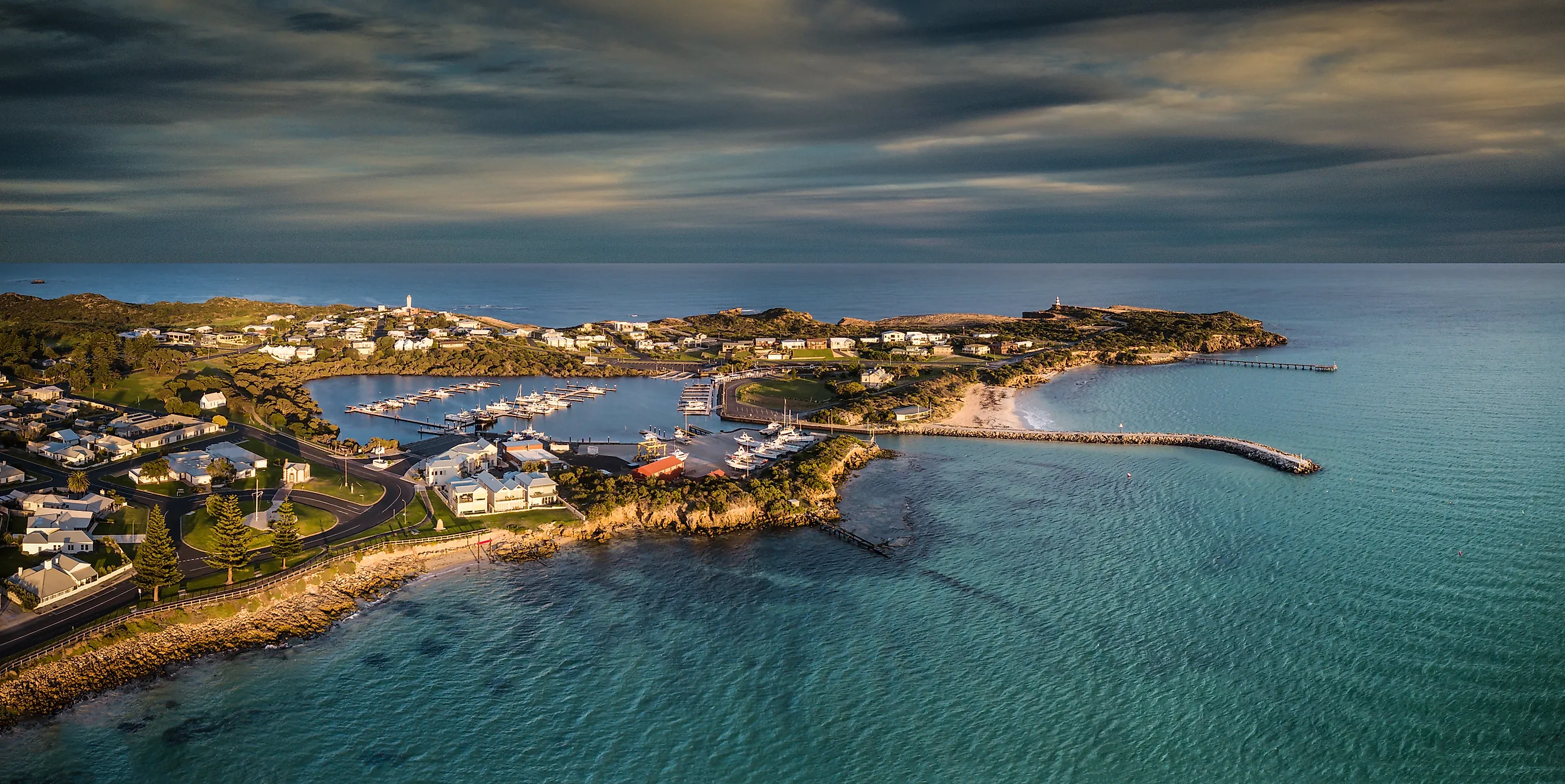
The dreamy Maritime treasure of Robe is where limestone cliffs meet the turquoise waters of Guichen Bay. Once a vital port in the 19th century, it has a breezy, salt-washed atmosphere that feels both historic and incredibly refreshed. The Cape Dombey Obelisk, with its bold red and white stripes, stands as a quiet warden on the edge of the bay, overlooking the crashing surf. You can explore the Old Gaol ruins, where the sea air has worn against the heavy stone walls over the decades.
Long Beach offers the rare experience of sand so firm you can drive your car along the water’s edge in certain spots. After a morning on the coast, the Robe Town Brewery offers a taste of local craft in a setting that feels suitably weathered and authentic.
Strathalbyn

Often called the antique capital of the state, Strathalbyn was settled by Scots in 1839. The town is built around the Angas River, which meanders through the center of town under stone bridges and past manicured lawns. The people of Strathalbyn are known for their unmatched hospitality, and as any local would tell you, the Soldiers Memorial Gardens is the perfect spot for a slow afternoon, where you can watch ducks glide under the willow trees.
The Antique Precinct on High Street is a maze of shops where you can find everything from vintage lace to mid-century furniture. St. Andrews Uniting Church towers over the riverside with a Gothic spire that remains the town's most recognizable landmark. For a bit of local culture, the Station Masters Gallery showcases vibrant community art inside the old railway rooms.
Goolwa

Goolwa is where the mighty Murray River finally makes its way to the Southern Ocean. It’s a town of grand wharves and riverboats, maintaining the soul of a shipping hub from the 1800s. The light here has a soft, watery quality that makes everything look like a painting.
You can still board the PS Oscar W, a genuine paddle steamer that churns the river water just as it did over a century ago. The Cockle Train provides a nostalgic trip along the coast to Victor Harbor, with wooden carriages that offer wide open views of the surf. The Goolwa Barrage is a fascinating spot to watch the river meet the sea, and if you're lucky, you’ll share it with the basking fur seals. For a different type of nature fix, the Spirit of the Coorong takes you into the silent, sandy wilderness of the nearby Coorong National Park.
You really can not go wrong in Goolwa, but if you really want to make the most of your trip, definitely plan it around the South Australian Wooden Boat Festival, typically held in late April.
Auburn

Auburn marks the beginning of the Riesling Trail, offering a gentle path through the vineyards via a converted railway line. The Rising Sun Hotel is the perfect place for a long lunch, with a stone veranda that has hosted travelers for over 170 years.
As the start of the Clare Valley, this tiny bluestone village feels like a gateway to a simpler time. Established in 1849, the town is remarkably consistent, with most buildings constructed from the same smooth, dark stone.
The Mount Horrocks’ Cellar Door is a welcoming architectural beauty, having transformed the old Auburn Railway Station into a bright, welcoming space for wine tasting. It’s a town that encourages you to park the car and just walk.
Kapunda

The site of Australia’s first successful copper mine, Kapunda's early wealth left behind a town of grand buildings and wide-open spaces. It has a quiet and proud energy, surrounded by rolling hills that turn a brilliant shade of gold in the summer.
The Kapunda Mine Trail is a scenic walk through the old digs, where the earth is still stained with green copper ore. You can’t miss Map the Miner, a giant bronze-style statue that honors the town’s Cornish roots. The Kapunda Museum is surprisingly vast, filling a former church with layers of local history, from farming tools to vintage cars. If you are looking for a longer hike, check out the Kapunda Heritage Trail. Some spots overlap with the aforementioned mine trail, so be sure to download their “Discover the Light” app to help navigate the scenery.
Where Time Stands Still
In South Australia's towns, the pace is significantly less breakneck than in cities like Sydney or Adelaide. It's easy to slow things down in this part of the country by watching the waters gently lap on a beach, or by going for a vineyard-side stroll guided by the ghosts of rails long out of use. Unlike in the bustling cities, your time here is yours to take, at whatever pace you wish.