9 Main Streets Where Chesapeake Bay Comes Alive
The Chesapeake Bay’s most unforgettable moments often unfold in its small towns, with Main Streets that sit just steps from the water. In St. Michaels, visitors will discover Talbot Street, a corridor lined today with the Chesapeake Bay Maritime Museum and seafood cafés. Over in Havre de Grace, visitors will find the Havre de Grace Decoy Museum, which uniquely showcases duck and goose decoys. Cross the Bay to Cape Charles, where Mason Avenue leads straight to a sandy public beach, or wander the local Boardwalk along the Chesapeake Bay.
St. Michaels, Maryland

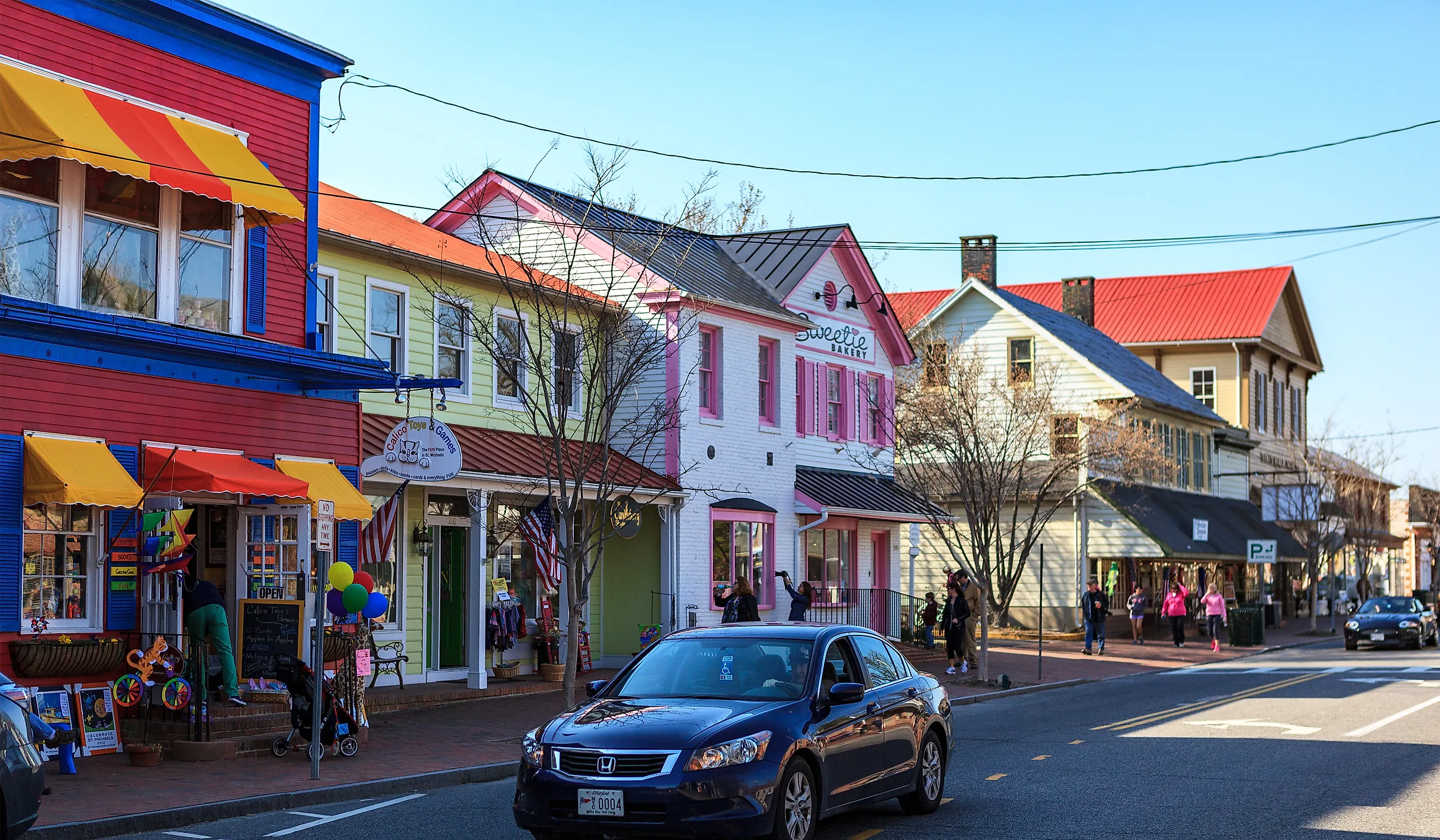
Talbot Street is the historic spine of St. Michaels, with preserved storefronts and maritime architecture that create one of the most photogenic small‑town streets on the Bay. Visitors can explore the Chesapeake Bay Maritime Museum, the centerpiece of St. Michaels’ waterfront and one of the most significant heritage sites on the entire Bay. Founded in 1965 on an 18‑acre former seafood packing campus, the museum preserves the region’s boatbuilding traditions, watermen’s culture, and coastal ecology through immersive exhibits and working shipyard spaces. Visitors can also browse independent boutiques, including Guilford and Company, or follow the nearby St. Michaels Nature Trail for a quiet waterside walk. Today, the paved 1.3‑mile loop winds through shaded woods, marsh edges, and residential lanes, giving visitors an easy way to experience the town’s natural side just a few minutes from Main Street.
Oxford, Maryland

Morris Street reflects Oxford’s origins as one of Maryland’s earliest colonial ports, a settlement dating back to the 1600s, when it served as a key tobacco-shipping hub. Just 50 miles from Annapolis, the street remains peaceful and beautifully scaled, lined with historic homes and shade trees. Highlights include the Oxford Museum, just off Morris Street, which offers one of the most intimate windows into life on Maryland’s Shore. Founded in 1964, the museum preserves centuries of local history, from Oxford’s early years as a colonial port to its evolution as a shipbuilding and watermen’s community. Additionally, tourists can visit the iconic Oxford-Bellevue Ferry landing, one of the most atmospheric experiences tied to Morris Street. Lastly, travelers may enjoy waterfront dining at the Robert Morris Inn and take advantage of easy access to the town’s quiet marinas.
Havre de Grace, Maryland

Washington Street anchors Havre de Grace’s historic district, shaped by its role as a War of 1812 battleground and later as a thriving 19th‑century fishing town. The street blends restored Victorian buildings with a lively arts scene. Visitors can explore the Havre de Grace Decoy Museum, a waterfront folk‑art museum in Maryland showcasing one of the finest collections of Chesapeake Bay duck and goose decoys. Travelers can stroll to the Concord Point Lighthouse, a beautifully preserved 1827 beacon standing at the edge of the Susquehanna River, where it meets the Chesapeake Bay. Lastly, tourists and locals alike can browse antique shops, including Seneca Cannery Antiques, or enjoy waterfront views along the Promenade just steps from Main Street.
Chestertown, Maryland

High Street is one of the Eastern Shore’s best‑preserved colonial thoroughfares, dating to the 1700s when Chestertown was a major port rivaling Annapolis. Brick sidewalks, Federal‑style buildings, and historic taverns give the street a timeless character. Along High Street, travelers can visit the Bordley History Center, the Historical Society of Kent County’s welcoming hub, which offers a curated introduction to the region’s heritage. Inside, guests can explore thousands of archival materials, including historic documents, maps, photographs, genealogies, cemetery records, and oral histories, that illuminate the stories of Kent County. Shop local galleries, including Massoniart Gallery, enjoy coffeehouses like the Evergrain Bread Company, or walk down to the Chester River waterfront.
Cambridge, Maryland

Poplar Street reflects Cambridge’s long history as a shipbuilding and oyster‑packing center, with early‑20th‑century commercial buildings that still define the downtown core. The street has become a hub for arts, dining, and heritage tourism. Visitors can explore the Harriet Tubman Museum & Educational Center, a community‑driven tribute to the life and legacy of one of America’s most courageous freedom fighters. Browse murals and studios in the Arts & Entertainment District, enjoy waterfront dining near the marina, or walk to Long Wharf Park for sweeping Bay views. Long Wharf Park is a scenic waterfront gathering place located near historic High Street, close to where the Choptank River opens wide toward the Chesapeake Bay. The park’s broad promenade, marina, and iconic Choptank River Lighthouse create a relaxed, nautical atmosphere perfect for strolling, picnicking, or watching boats drift in and out of the harbor.
Onancock, Virginia

Market Street captures the charm of Onancock, Virginia, a historic Shore port founded in the 1600s and once a bustling trade stop for steamships. Today, its blocks offer a relaxed, walkable experience that is a perfect stop for travelers. Highlights include the Roseland Theatre, opened in the 1940s, the charming historic cinema that anchors downtown Essex with its classic marquee and small‑town character. Other highlights include local galleries like the Imaginarium: Dana Simson Art, artisan shops, and Hopkins & Bros. Hopkins & Bros. is a restored 19th‑century waterfront storehouse that offers a vivid glimpse into Onancock's maritime and mercantile past.
Cape Charles, Virginia

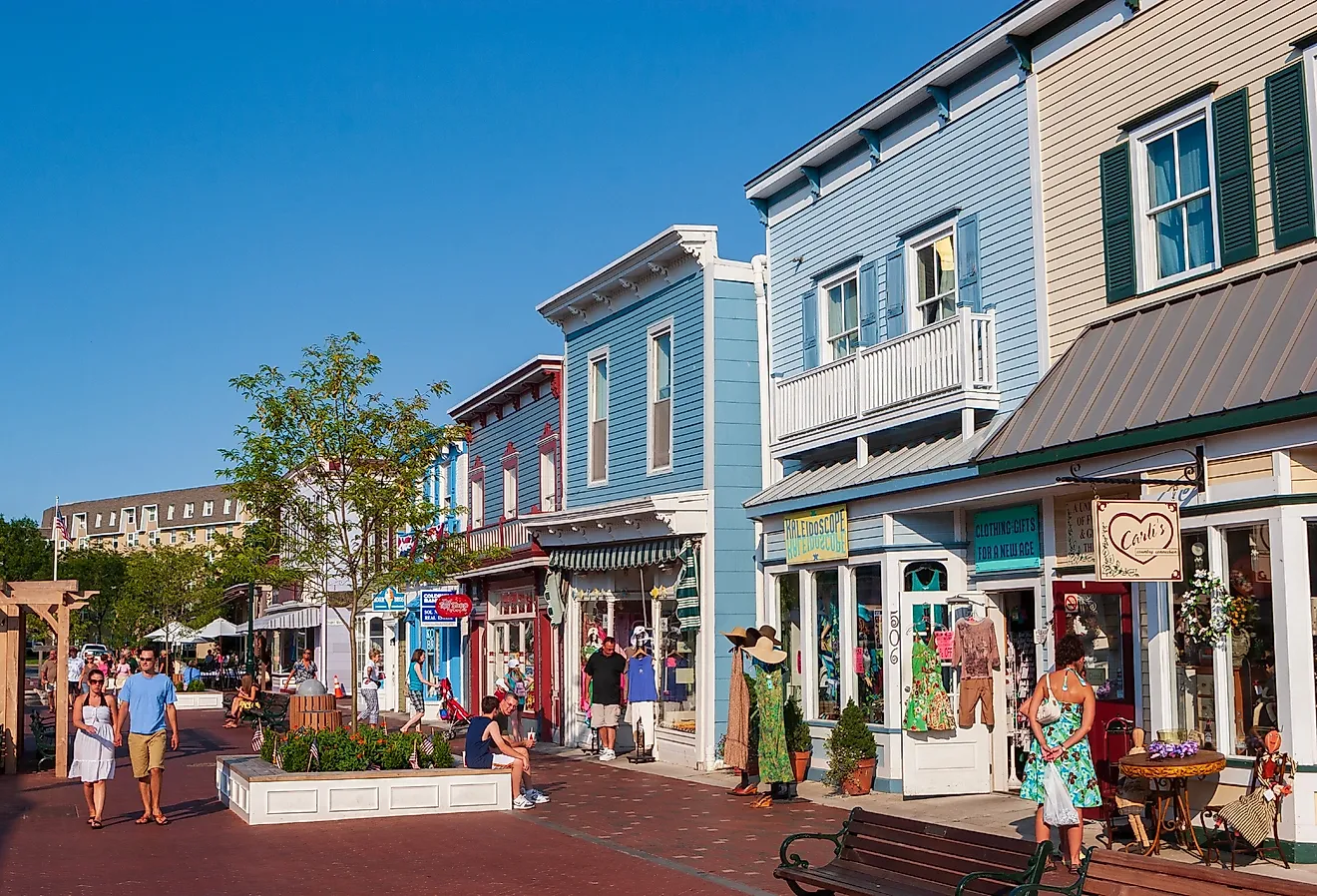
Mason Avenue reflects Cape Charles’ origins as a late‑19th‑century railroad and ferry terminus built by the New York, Philadelphia & Norfolk Railroad. Its wide streets, brick storefronts, and coastal architecture make it one of the most visually appealing small towns on the Bay. Visitors can enjoy the town’s boutique shops, including the Boardwalk. Or explore the Cape Charles Museum, offering an engaging look at the industrial, railroad, and maritime history that shaped Virginia’s Shore. Housed in a converted power plant, the museum features well‑curated exhibits on the town’s railroad heritage, ferry operations, local industries, and the evolution of Cape Charles as a bayside community. Lastly, outdoor adventures may include walking to the beach at the end of the avenue or admiring the nearby historic railway district.
Kilmarnock, Virginia

Kilmarnock’s Main Street grew from an 18th‑century crossroads community into a commercial hub for the Northern Neck’s farming and fishing industries. Today, the street blends historic storefronts with modern revitalization. Travelers can visit the Kilmarnock Museum, housed in the oldest remaining building in town, which offers a compact but fascinating look at the history of Virginia’s Northern Neck. Its exhibits trace Kilmarnock’s evolution from its origins in the 1700s. Additionally, tourists can browse The Burns Shopping Mall and cafés, including Central Park Coffee Shop. Nature lovers can explore the nearby Town Centre Park, or take a short drive to the scenic Carter’s Creek waterfront.
Leonardtown, Maryland

Washington Street is the heart of Leonardtown, a historic county seat established in the early 1700s and shaped by its courthouse and wharf. The street’s brick buildings and courthouse square create a classic small‑town atmosphere. Visitors can explore the Old Jail Museum, built in 1876 and used until 1945, one of St. Mary’s County’s most distinctive historic landmarks and the official Leonardtown Visitor Center. Visitors can enjoy wine tasting at local wineries, including Port of Leonardtown Winery. Located in a repurposed historic building within the Port of Leonardtown Public Park, the winery offers daily tastings, seasonal slushies and sangrias, and a relaxed indoor-outdoor setting with a covered, heated patio. Additionally, tourists can walk down to Leonardtown Wharf Park. A scenic waterfront park on Breton Bay known for its boardwalk, kayak launch, playground, and wide range of water‑based activities.
Across the Chesapeake region, these Main Streets reveal something deeper than charming storefronts or postcard‑worthy waterfronts. They are living gateways into the Bay’s culture, places where maritime heritage, small‑town hospitality, and a thriving sense of community converge. Whether you’re wandering historic districts, sampling dock‑fresh seafood, or watching the sunset settle over quiet harbors, each Main Street offers its own way of experiencing the Bay’s rhythm.