9 Best Towns In Hawaii For Retirees
Retiring in Hawaii is often framed around resort towns, but nine communities make a stronger long-term case. Each town ahead sits below the state's average home value. Daily life centers on community hospitals, public libraries and senior centers rather than vacation amenities. Kaunakakai on Molokaʻi combines theater, market and hospital in one navigable area. The eight others each earn their slot through stable community infrastructure and home prices below the Hawaii baseline.
Kailua-Kona

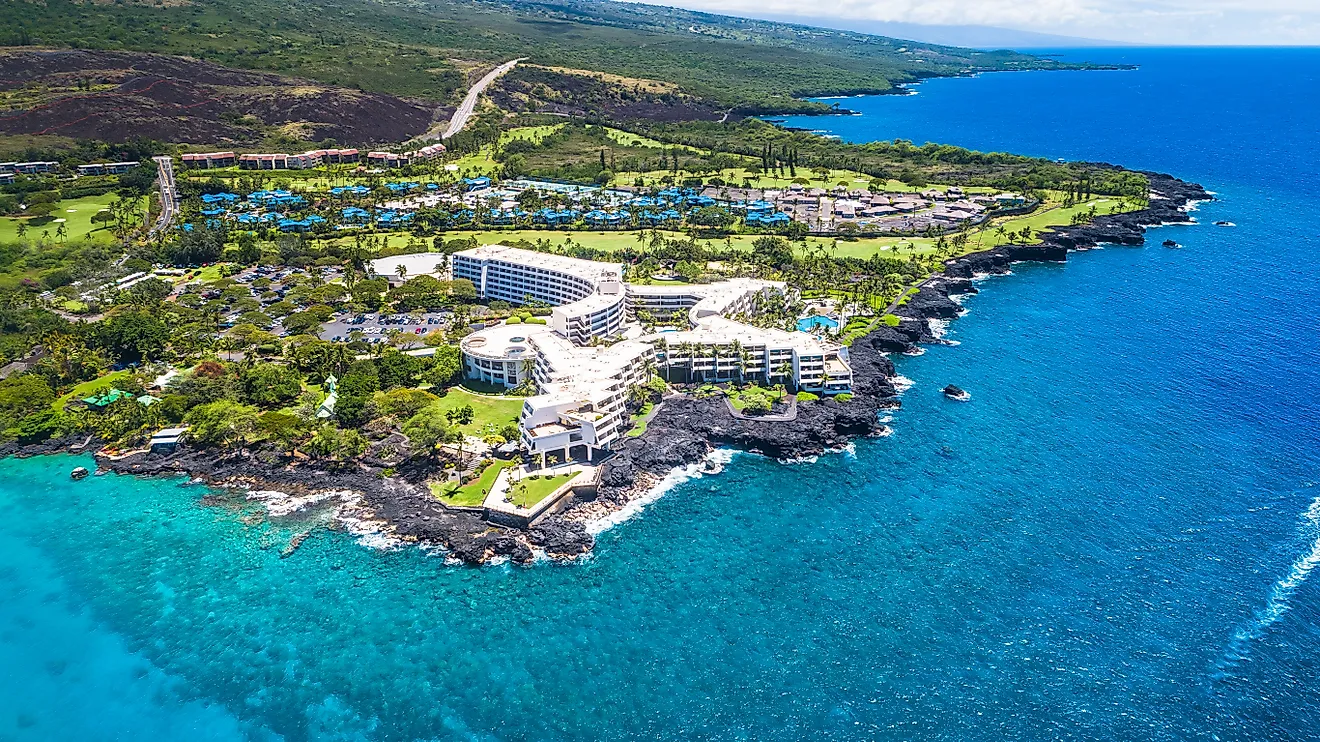
Kailua-Kona on the Big Island's western coast holds a median home value around $730,000, sitting below the state baseline despite the town's resort reputation. The walkable historic downtown along Aliʻi Drive runs about a mile of seawall walkway between cafes, shops, and ocean-view restaurants overlooking Kailua Bay. Hulihe'e Palace, an 1838 royal vacation home now operating as a museum, anchors the downtown alongside Mokuaikaua Church, completed in 1837 as the first Christian church built in Hawaii.
Kona Community Hospital, a 94-bed acute care facility with emergency, surgical, and orthopedic services, sits about three miles south of downtown. The Hisaoka Gym Recreation Complex and the Old Kona Airport State Recreation Area run senior programs and community classes through Hawaii County Parks and Recreation. The Kona Farmers Market on Aliʻi Drive runs Wednesday through Sunday with locally grown produce, prepared food, and crafts. The leeward location keeps weather dry and sunny year-round, in contrast to the rainier eastern side of the Big Island.
Lanai City

Lanai City has a house price average of $708,295 and sits at roughly 1,600 feet of elevation, giving it cooler temperatures and a compact, walkable layout shaped by plantation-era town planning. The Cook Island pines around Dole Park define the town center, with shops and cafes radiating in a tight grid. The Lanai Culture & Heritage Center documents Native Hawaiian life, the pineapple plantation era, and multigenerational family stories with oral history recordings and archival exhibits.
Lanai Community Hospital functions year-round to provide both short-term and long-term medical support for residents. The Lānai Community Health Center runs movement-based programs including stretching, senior aqua aerobics, and gentle chair mobility. For active retirees, the Mānele Golf Course is an 18-hole, par-72 Jack Nicklaus design opened in 1993, with a dramatic oceanfront stretch along holes 12 through 15 and cart-accessible paved paths throughout.
Honokaʻa

Honokaʻa sits along the Hamakua Coast on the Big Island with a median home price of $655,667 and a steady, walkable downtown anchored by long-running local institutions. The Honokaʻa People's Theatre is a restored 1930 Art Deco cinema that still hosts films, lectures, and community performances, with a single-screen layout and fixed seating that's comfortable for older audiences. The Honokaʻa Heritage Center covers plantation-era life and the multicultural communities that shaped the Hamakua region through family photographs, tools, and personal archives.
Daily routines often include time at the Honokaa Public Library, a quiet branch used for reading, internet access, and community programs like Crochet Circle and the local Book Club. Honokaʻa Hospital provides acute and long-term care close at hand for residents. The Hamakua Coast outside town runs a series of small ranching and farming communities with farmers markets, gulches, and ocean overlooks within easy driving distance.
Captain Cook

Captain Cook holds a median home value of $685,146 and functions as South Kona's civic and service hub on the Big Island, with amenities clustered along Mamalahoa Highway about 20 miles south of Kailua-Kona. The Amy B.H. Greenwell Ethnobotanical Garden runs a preserve focused on traditional Hawaiian food and medicinal plants, with clearly marked loop paths that are mostly level and shaded for short, easy walks. Coffee farming remains central to the town's identity, with small estates like Hala Tree Coffee and Kuaiwi Farm running guided farm-and-tasting tours on lanais with ocean views.
Sundays center on the Hoʻoulu Community Farmers Market at Arthur L. Greenwell Park, where South Kona residents pick up locally grown produce, artisan items, and services like chiropractic and massage. Kona Community Hospital sits 2.8 miles away with imaging, emergency services, orthopedics, and surgery for any larger medical needs. The combination of accessible healthcare, agricultural identity, and Sunday-market routine gives Captain Cook a balanced daily rhythm.
Waimea

Waimea on Kauai's west side holds a median home value around $640,000, well below the state baseline, and serves as the historic gateway to Waimea Canyon. The town sits at the mouth of the Waimea River with a walkable downtown of low-rise plantation-era buildings, restaurants, and shops along Kaumualii Highway. Pāʻulaʻula State Historic Site (formerly Russian Fort Elizabeth) preserves the partial remains of an early 19th-century fort built by the Russian-American Company on a bluff overlooking the river mouth, with interpretive signage covering the brief Russian-Hawaiian contact period.
West Kauai Medical Center is a 25-bed Critical Access Hospital sitting within town, with a 24-hour emergency department, primary care, surgical services, lab, imaging, and rehabilitation. The facility handles routine medical needs without requiring the 25-mile drive to Wilcox Medical Center in Lihue. Salt Pond Beach Park a few miles east offers calm protected swimming in a reef-sheltered cove, with active salt-making operations on the adjacent flats. Waimea Canyon State Park, about 12 miles inland on Highway 550, runs paved overlooks of one of the most dramatic canyon landscapes in the Pacific.
Kapaʻau

Kapaʻau holds a median home price of $618,138 and sits at the northern tip of the Big Island in North Kohala. The North Kohala Public Library runs a steady indoor routine for retirees with 20,000 items in circulation including DVDs, audiobooks, e-books, and hardcover titles. The Kohala Artists' Cooperative is a long-running gallery operated by local artists, with glass blowing sessions and affordable artwork to take home.
Keokea Beach Park covers a 7-acre coastal area used for picnics, paved walks, and barbecue gatherings, with the rocky shoreline making it more suitable for shoreline activities than swimming. Kohala Hospital is a full-service medical facility serving the district with emergency, nursing, intermediate, and imaging services, eliminating the need for long drives to Hilo or Kailua-Kona for routine care.
Kaunakakai

Kaunakakai's median home value is $413,403, among the more affordable retirement options anywhere in Hawaii, and the town sits on Molokaʻi as the island's main commercial and civic center. The Kaunakakai Wharf, also known as Molokai Harbor, extends out into the channel as one of the longest piers in the state with a wide, level surface where residents walk, fish from the railings, and watch daily harbor operations. The Mango Theater offers regular movie nights for retirees and their families.
One Aliʻi Park spans an 11-acre coastal area used for swimming in calmer conditions, shoreline walks, shore fishing, and seated ocean viewing, with parking close to the water. Home Pumehana is a senior housing community available to residents 62 and older with multiple clubs, laundry facilities, in-unit amenities, and on-site maintenance. Molokai General Hospital handles inpatient and emergency services on the island, supported by clinics in town.
Pāhoa

Pāhoa's median home value sits at approximately $289,537, well below Hawaii's statewide median and one of the most affordable retirement options in the state. The town serves as the commercial center for much of the Puna District in East Hawaiʻi Island, with daily essentials clustered around the Puna Kai Shopping Center, where retirees pick up groceries at Malama Market, fill prescriptions, attend fitness classes, and dine without leaving town. The Makuʻu Farmers Market is one of Hawaii's largest open-air markets, with hundreds of vendors selling locally grown tropical fruit, vegetables, orchids, baked goods, and handcrafted products.
Isaac Hale Beach Park, rebuilt after the 2018 lower Puna eruption, runs a black-sand shoreline with picnic areas, restrooms, and calmer sections of water that support swimming, shoreline fishing, and ocean viewing. The East Hawaiʻi Health Clinic at Pāhoa handles primary care, preventive screenings, chronic disease management, and specialist referrals, reducing the need for the longer trip to Hilo for routine appointments.
Pāhala

Pāhala holds a median home price of about $291,037, ranking among the least expensive places to buy a home anywhere in Hawaii. The town runs as a former sugar plantation community in the Kaʻū District with quiet residential streets and direct access to coffee-growing slopes. The Pāhala Community Center hosts exercise classes, recreational activities, educational workshops, and seasonal events aimed at retirees and the wider community.
Coffee remains central to the local economy, and the Kaʻū Coffee Mill gives residents and visitors a closer look at the industry through self-guided exhibits, coffee processing equipment, roasting facilities, and tastings of beans grown across the Kaʻū region. Kaʻū Hospital & Rural Health Clinic is a 21-bed facility within town that includes a 24-hour emergency department, laboratory services, diagnostic imaging, rehabilitation care, long-term care beds, and outpatient treatment. The Pāhala Public & School Library shares a campus with Kaʻū High School and offers public computers, research materials, and community programming.
Aging In Place On The Islands
Hawaii reads as out of reach for retirement, but Pāhoa, Pāhala, Waimea, Kaunakakai, Kapaʻau, Captain Cook, Honokaʻa, Lanai City, and Kailua-Kona each show a different side of the United States. These communities combine below-average home prices with real day-to-day infrastructure: community hospitals, senior housing, public libraries, walkable town centers, and everyday outdoor access. Each one trades resort amenities for stability, medical care, and the kind of routine that makes long-term aging in place workable. That balance is the reason these nine show up on retirement lists year after year.