The First Airport In America
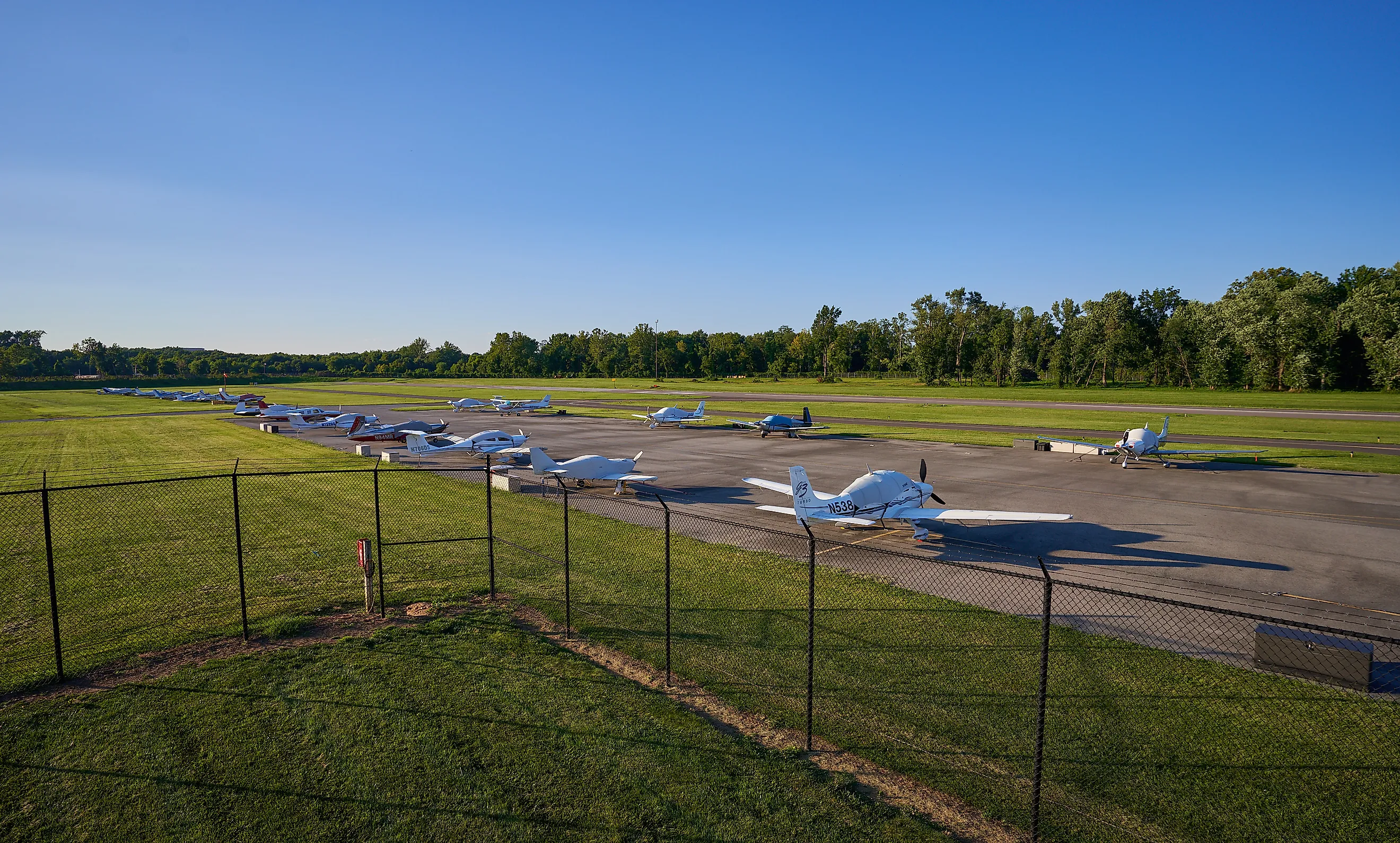
College Park Airport in College Park, Maryland, is the oldest still-operating airport in America and the world. Founded by the United States Army Signal Corps in 1909, the airport sits on the same site where Wilbur Wright helped the military's first officers learn how to fly a government plane. The site later earned the nickname the "Field of Firsts." It hosted the first military officer to fly solo and the first machine gun ever fired from an airplane. More than a century later the field is still in use for charter flights and flight training.
What Does 'First' Really Mean?
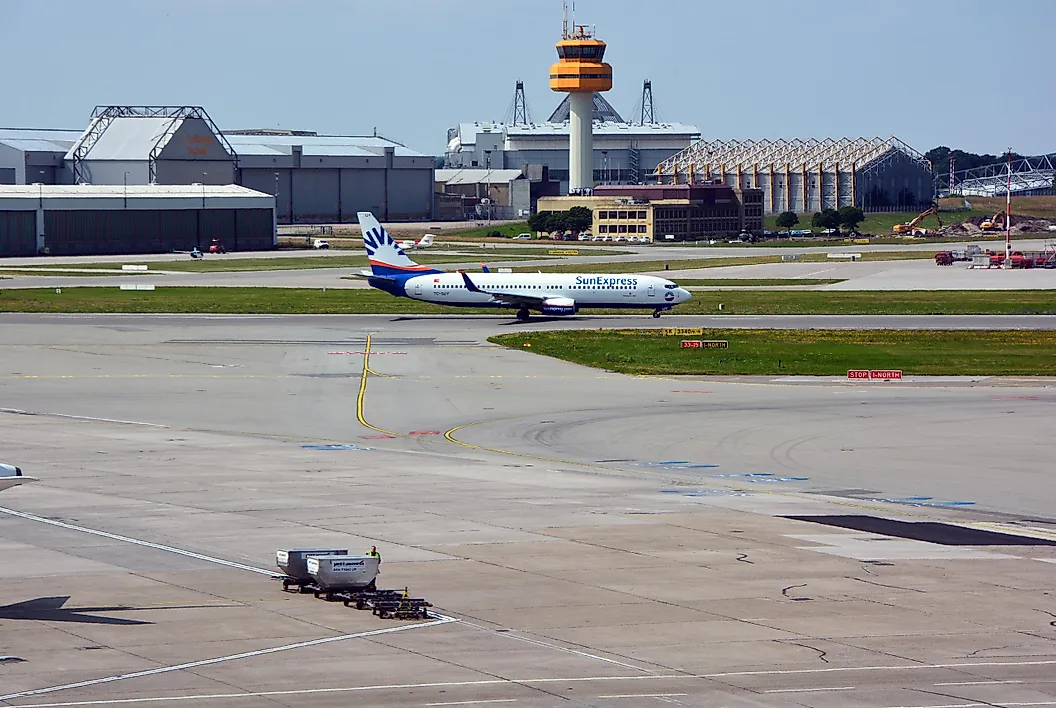
When talking about the first airport, it means a permanent airport that has never stopped operating since it was founded. College Park Airport is a public airport that has seen flights depart and arrive non-stop since 1909. It is only when you deviate from this criterion that other airports enter the picture. For instance, Huffman Prairie in Ohio is one of the oldest informal airstrips in America, hosting the Wright brothers in 1904. The strip was little more than a pasture, however, and was later absorbed into a military base. Pearson Field in Washington saw airships in 1905, but only started plane flights in 1911. Florida's St. Petersburg-Tampa Airboat Line is famous for hosting the first commercial flight in 1914, but the plane ran off wooden ramps in water, instead of taking off from an airfield.
The History of College Park Airport
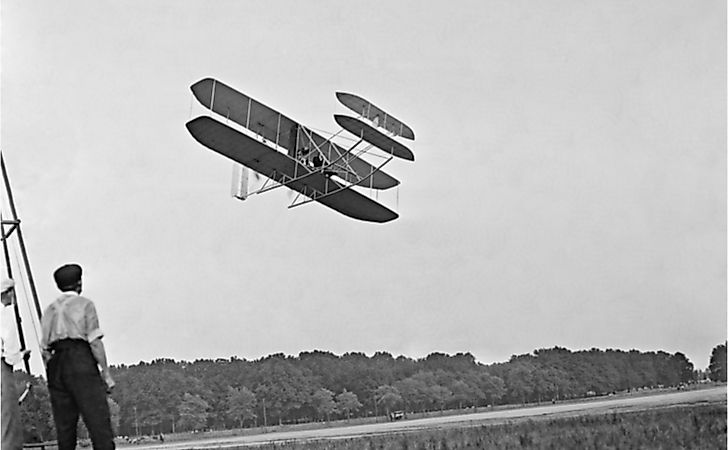
College Park Airport's history started when the site was used for training for the first military pilots in the United States Army. The Army's Chief Signal Officer created an Aeronautical Division for his office in August 1907 and struck a deal with the Wright brothers to build a plane. The plane was delivered to Fort Myer in Virginia a year later. The contract between the Chief Signal Officer and the Wright brothers required several flights that would not only demonstrate the plane's performance, but also provide flying training for the army pilots.
Orville Wright was up first. He flew a Wright Model A around Fort Myer's parade ground, but then the plane crashed, and he was seriously injured. His passenger, Lieutenant Thomas E. Selfridge, was killed, becoming the first fatality in a powered airplane. The delivery of the next plane and the training had to be postponed until 1909, and the Army formally accepted that replacement as Signal Corps Airplane No. 1 on August 2, 1909. By then the Signal Corps had signed a lease for a large field in College Park. Wilbur Wright started training Lieutenant Lahm and Second Lieutenant Frederic E. Humphreys in October 1909.
While training continued, Wilbur not only made 55 flights at the College Park site, but he also set his last flight record there, flying 46 miles per hour across 500 meters. His success was not his alone, having trained Humphreys to become the first military officer to fly an airplane by himself, followed by Lahm. The very next day, on October 27, 1909, the site recorded another historic moment when Mrs. Ralph H. Van Deman went up in the air with Wilbur Wright. That flight made her famous as the first woman in America to fly as a passenger in a powered airplane.
College Park Becomes the First U.S. Army Aviation School

History continued to be made at College Park with the Navy joining the fray on November 3, 1909, with Lieutenant George C. Sweet flying for nine minutes. He became the first Naval officer to fly in an airplane. Unfortunately, flying was suspended at the site two days later when the Army's plane was damaged. This incident opened the way for College Park to become the first U.S. Army Aviation School, thanks to an appropriation of $125,000 by Congress. The money was enough for five more airplanes and the establishment of the flying school. The school was called the Signal Corps Aviation School and was the site for flying training and experiments in various technologies.
More Aviation History At College Park

In June 1912, Lieutenant Thomas DeWitt Milling made history over College Park as he piloted a Wright Model B airplane while Captain Charles Chandler fired a Lewis machine gun in mid-air. This was the first time a machine gun was fired from an airplane. College Park is also the place where civilian aviation history earned a special spot. On August 12, 1918, the United States Post Office Department picked College Park Airport as the southern hub for the country's first regular airmail route. The route connected Washington, D.C., Philadelphia, and New York City. Postal pilots took to the skies in and out of College Park until operations moved to other, regional fields in late 1921.
Throughout the 1920s and 1930s, Emile Berliner and his son, Henry, used the College Park field to run experimental helicopter flight tests. This allowed them to achieve tethered vertical flight in 1920 and untethered vertical flight in 1924. Between 1927 and 1935, pilots at the airfield tested early night-flying gear, navigation lights, and target sights. The Maryland-National Capital Park and Planning Commission bought College Park Airport in 1973, and it was added to the National Register of Historic Places in 1977.
Visiting College Park Aviation Museum

Today, College Park Airport is also aptly nicknamed the "Field of Firsts." It continues to be an active airport for pilots in the Washington, D.C., area, and its museum is a site that both history and aviation enthusiasts flock to. Those who visit the airport and Smithsonian-affiliated museum can see the historic hangar where America's first airmail operations were situated. There are several historic airplanes in the museum, including a reproduction of the Wright B and the 1911 Curtiss Model D "Pusher." Other things to see here include photographs, displays, and interactive exhibits.
Other Early Airfields
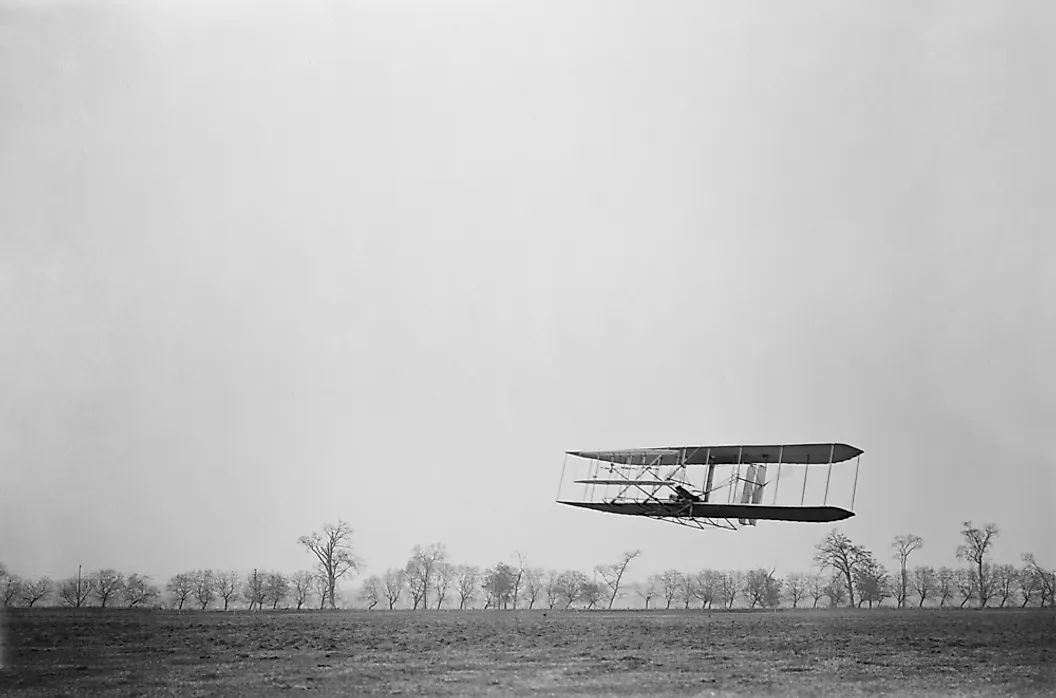
As mentioned earlier, several other early airfields in America have written their own fascinating history. The Huffman Prairie Flying Field was an 84-acre pasture in Ohio where the Wright brothers perfected controlled flight. They also made the world's first practical figure-eight turns and ventured into long-distance flying. But since the Prairie was just a pasture without actual runways and permanent hangars, active flying ended when the land was absorbed into the Wright-Patterson Air Force Base. Pearson Field in Vancouver, Washington, saw the dirigible Gelatine land on the parade grounds of the Vancouver Barracks in 1905. After this memorable event, airplane flights began at the field in 1911, and planes have flown from here ever since. It is one of the country's oldest active airfields, having started operations two years after College Park.
Grand Central Air Terminal opened in Glendale, California in 1923, and it did not take long for it to become the premier air terminal in Southern California. The terminal featured the area's first paved concrete runway in 1929 and hosted frequent flyers such as Charles Lindbergh and Amelia Earhart. Flight operations shut down in 1959, and the land was developed into a commercial business park. As for the Minneapolis-Saint Paul International Airport, its history began as Speedway Field in 1914. The field was an auto racing track that held exhibition airshows now and then. Authorities bought the field in 1920 to build a passenger and airmail airport. It was renamed Wold-Chamberlain Field in 1923 and remains one of the oldest continuously operating commercial airports in the U.S.
The World's Oldest Airport Still Has An Impact Today
College Park Airport is more than just a museum today. It serves the local community by processing corporate charter flights. The airport also hosts flight school training and supports emergency medical and police helicopter missions. It sits in a high-security airspace in Washington, D.C., which means it is one of the most regulated public airfields in the country.
Preserving the Dawn of Flight
It is at the College Park Airport that American aviation history came to life. It was the testing ground for the country's first military pilots and the site of the first regular airmail operation. Add to this the wild early experiments that paved the way for today's helicopters, and you have a facility that helped link the uncertain raw beginnings of flight to modern flying reality.