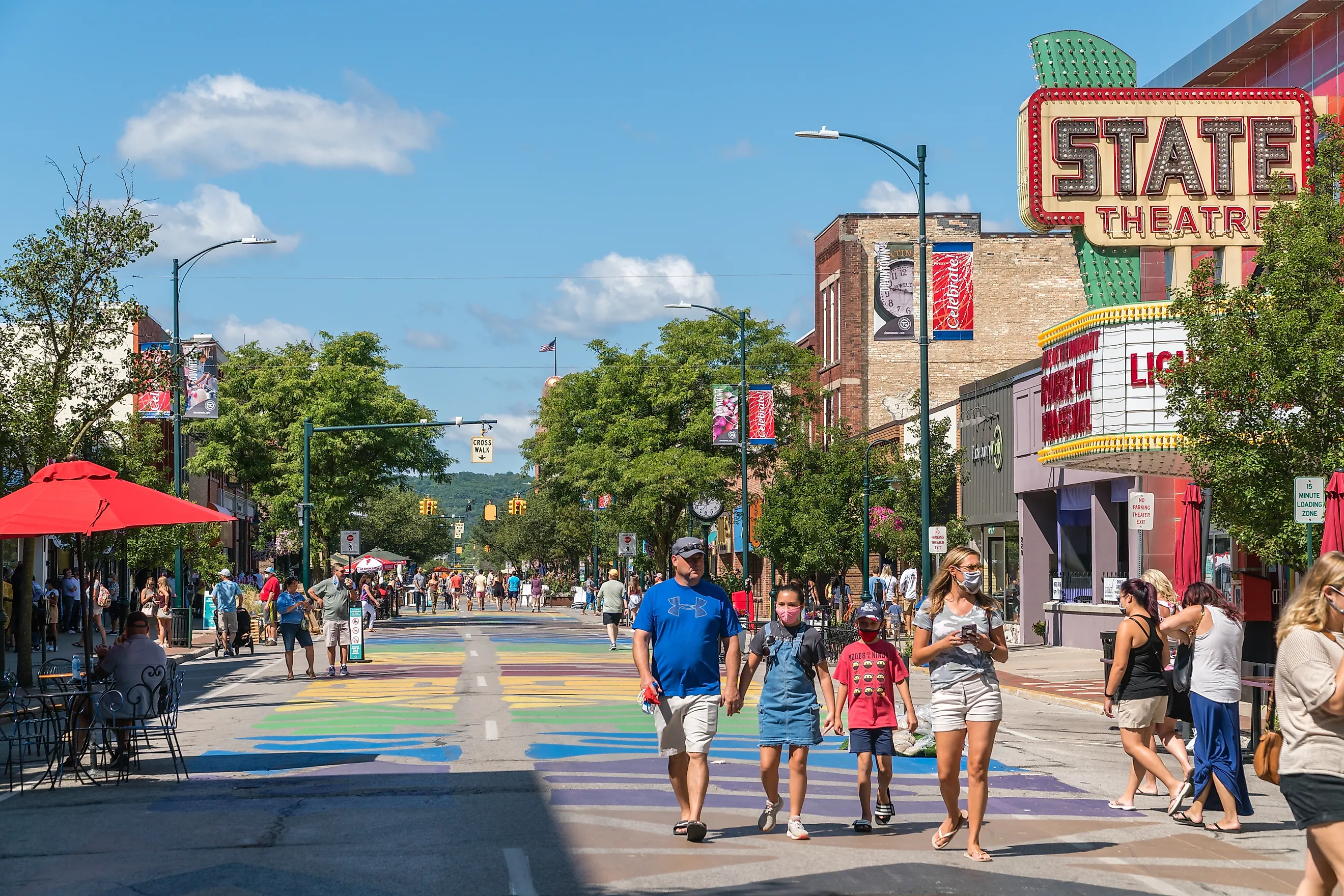
8 Towns in Michigan With the Best Downtown Areas in 2026
The downtown district serves as a community's central heartbeat for many residents and visitors alike. Nowhere is this urban core spirit, mood, and character better captured than in Michigan, home to diverse yet dynamic town centers flourishing with local businesses. Whether sitting on the banks of the Great Lakes or set within the forests of the interior, certain municipalities across the state cultivate real downtown energy through a commitment to small businesses, civic projects, and communal events.
Strolling these Main Streets reveals much about local heritage and creativity. This overview highlights towns in Michigan with the finest downtown zones, where authentic experiences, architecture, and a sense of community shine through. They present an excellent getaway for your 2026 itinerary.
Holland

Christened "America's Most Dutch Town," Holland hosts a downtown exuding European heritage at every street corner. The Holland Museum invites newcomers to explore the community's Dutch roots through artifacts, crafts, and archives. A short walk northeast of the shopping district, Windmill Island Gardens holds De Zwaan, a 250-year-old windmill shipped over from the Netherlands in 1964 and the only authentic working Dutch windmill in the United States. It still grinds flour you can buy on site. Veldheer Tulip Gardens, about five miles north of downtown, is the other place to see tulips in quantity.

Time a visit for early May and the whole calculation changes. Tulip Time fills the streets with millions of blooms and is one of the largest tulip festivals in the country, so book accommodation months out. The rest of the year, the Holland Farmers Market is the place to mingle with residents while shopping for farm-fresh produce and handcrafted goods, and one more thing worth knowing about this downtown: the sidewalks are heated. A snowmelt system runs beneath them, which is why Holland's Main Street stays walkable in January.
Traverse City

Traverse City's historic downtown features a cluster of 19th-century buildings housing art galleries, shops, and boutiques. The Village at Grand Traverse Commons, about a mile southwest, is a former state asylum turned into a shopping and dining district, and the scale of the place is startling once you are inside it. Back on Front Street, the historic City Opera House hosts live performances in a restored Victorian theater seating around 700.

Traverse City is a terrific stop for those traveling with young ones, and the Great Lakes Children's Museum handles that with interactive exhibits. The town is also the self-declared cherry capital of the world, and the National Cherry Festival takes over the waterfront for a week each July. Finish at Right Brain Brewery, which has built a reputation on experimental batches that have included a beer brewed with an entire pig's head.
Petoskey

This Emmet County town is known for the Petoskey Historic Gaslight District, among the liveliest downtowns of any small town in the state. Teeming with art galleries, theater venues, museums, and shops, it holds enough to fill a day. Start at the Little Traverse History Museum, housed in the old railroad depot, which keeps a collection tied to Ernest Hemingway, who spent his boyhood summers on nearby Walloon Lake and set several of his Nick Adams stories in this country. Art is a significant part of Petoskey's culture, and visitors can catch live shows at the Crooked Tree Arts Center.

Down at the shoreline, the local pastime is hunting Petoskey stones, the fossilized coral that is Michigan's state stone and takes its name from this town. They look like ordinary gray rocks until wet, when the honeycomb pattern appears. Shoppers looking for fresh produce should head out to Bill's Farm Market on Howard Road, a family-run operation a few minutes from the center.
Saugatuck

A mix of art centers, restaurants, and shops along Butler Street gives downtown Saugatuck more range than a city of about a thousand people has any right to. This Allegan County town has been an artists' colony since the Art Institute of Chicago's Ox-Bow school opened here in 1910, which is why the gallery count runs so high. Browse Amazwi Contemporary Art, then catch a production at Mason Street Warehouse, the professional summer theater at the Saugatuck Center for the Arts.

Stop by the Southerner for Southern-style dishes at a lakeside table, then follow it with a cup at Uncommon Coffee Roasters. The other local institution is the Saugatuck Chain Ferry, a hand-cranked boat that has pulled passengers across the Kalamazoo River since the 1830s, and it remains the quickest way to reach the dune stairs on the far bank.
Birmingham

Upscale shopping meets fine dining in this Oakland County community about 20 miles north of Detroit. Birmingham has a compact, walkable downtown built around Maple Road and Old Woodward, and it is the most polished entry on this list by some distance. At the Birmingham Museum, visitors can work through local history via the 1822 Hunter House, one of the oldest surviving homes in Oakland County. The streets hold high-end stores and national brands; Caruso Caruso is the long-standing local name for menswear.
The Birmingham Farmers Market runs Sundays through the warmer months and is the friendliest thing in town, with good-natured vendors and produce worth the trip. If you love the silver screen, catch a release at the Emagine Palladium, or look for the Birmingham 8, a restored 1927 theater on North Old Woodward.
Marshall

Marshall's downtown is not just old, it is federally recognized as such. The Marshall Historic District is a National Historic Landmark and one of the largest of its kind in the country, covering hundreds of 19th-century buildings in Greek Revival, Gothic Revival, and Italianate. The town expected to be named the state capital in the 1840s and built accordingly; when Lansing won the vote by one, Marshall was left with the architecture of a capital and the population of a small town, which is exactly why it still looks like this.
At the center sits Brooks Memorial Fountain, a 1930 structure modeled on the Temple of Love at Versailles and lit in color at night. A few blocks away, the 1860 Honolulu House was built by a former US consul to the Sandwich Islands who came home and reproduced the governor's residence he had lived in, complete with a tropical veranda, in southern Michigan. Downtown also supports a working arts scene, with Eastend Studio & Gallery showing local artists and the Franke Center for the Arts staging performances.
Frankenmuth

Frankenmuth goes by Michigan's Little Bavaria, and the Bavarian-style facades along Main Street house museums, shops, and restaurants. Start at the Frankenmuth River Place Shops, a complex of more than 40 storefronts, then work through the Frankenmuth Historical Museum for the story of the Franconian Lutheran missionaries who founded the town in 1845. The Bavarian Inn and Zehnder's face each other across the street and between them serve something on the order of a million chicken dinners a year.

The other reason people come is Bronner's CHRISTmas Wonderland, the largest Christmas store in the world, which sits on a site the size of several football fields and stays open most of the year. The weekly Frankenmuth Farmers Market is the low-key counterpart, good for local food and crafts, and the covered bridge over the Cass River makes the walk between districts worthwhile on its own.
Marquette

This Upper Peninsula city on Lake Superior has a downtown that climbs a hillside above the water, which gives Washington Street a view most Michigan main streets cannot match. The Marquette Maritime Museum covers shipwrecks and lighthouse history on the big lake, while the Marquette Regional History Center takes the broader view of the town and the iron country around it. Out in the harbor, the ore dock is the landmark: a hulking industrial structure that loaded iron onto freighters for decades.

Families will get a day out of the Upper Peninsula Children's Museum downtown, with interactive exhibits pitched at a range of ages. On the Northern Michigan University campus, the Superior Dome is the largest wooden dome in the world, framed in Douglas fir, and it is worth walking into whether or not the football team is playing.
Final Thought
What separates these eight is that each downtown is built on something specific rather than generic. Holland has an actual Dutch windmill and heated sidewalks. Marshall has the architecture of a state capital that never happened. Frankenmuth has the world's largest Christmas store, and Petoskey has a fossil named after it. Traverse City and Marquette both trade on the water they sit beside, in very different ways. The practical note for a 2026 trip is distance: Marquette to Birmingham is well over 400 miles, so pick a region rather than trying to string all eight together.