8 Safest Small Communities To Settle In Hawaii
Some of the safest communities to settle in Hawaii are places where taro patches thrive beside art studios, where the legacy of paniolo cowboys endures, and where every ridge, wave, and landmark resonates with generations of stories. New residents will feel at home in historic spots such as Lānaʻi City, where ancient Hawaiian royalty once lived, or laidback wilderness retreats like Hanalei. Whether you are savoring freshly roasted Kona coffee in the uplands of Hōlualoa, immersing yourself in the unique cowboy culture of Makawao, or finding peace and tranquility in Pāʻia, these safe communities to settle in Hawaii are vibrant locales to visit or call home.
Pāʻia, Maui

Vibrant, eclectic, and full of North Shore enthusiasm, Pāʻia is a beachside town shaped by surfers, artists, and a thriving boho spirit. Its windswept coastline has earned worldwide fame, especially at Ho‘okipa Beach, where expert windsurfers gather to ride some of Maui’s most powerful waves. Those looking for calmer scenery can unwind on the soft sands of Baldwin Beach Park or explore the quiet tide pools tucked along Secret Beach. Creativity and spirituality flow through the community as well, which you can find at the Maui Dharma Center, home to the striking Great Paia Lha Bab Peace Stupa, a symbol of the Tibetan Buddhist traditions embraced locally. Nearby, the lush Sacred Garden of Maliko provides a peaceful sanctuary ideal for reflection and tranquility.
Hōlualoa, Hawaii (Big Island)

The village of Hōlualoa, straddling the gentle slopes of the Hualālai volcano, exudes a calm, creative energy that feels worlds away from resort crowds. Once named for the ancient Hawaiian tradition of hōlua sledding down volcanic slopes, this safe community has grown into the heart of the famed Kona Coffee Belt, where farms and art-filled galleries coexist in harmony. A visit to Mauka Meadows Coffee Farm offers an immersive tasting experience where you can sip freshly roasted brews from beans grown on site, and they also offer guided tours of their botanical garden.
For a bit of local flavor, you can go sauntering through the Hōlualoa Village Coffee & Art Stroll each November, when galleries and roasters line the laneways and invite you to taste, view, and connect. Meanwhile, the surrounding Puʻu Waʻawaʻa Forest Reserve and Honuaʻula Forest Reserve provide a counterpoint to cultivated fields, where wild terrain inspires you to explore the natural side of Kona.
Makawao, Maui

High on the slopes of Maui’s Haleakalā volcano, the town of Makawao captivates with a spirited blend of cowboy grit and artistic soul. Its roots in 19th-century paniolo (Hawaiian cowboy) culture are honored during the annual Makawao Rodeo on the Fourth of July, the largest paniolo rodeo in Hawaiʻi, offering a lively commemoration with barrel-racing, calf-roping, and bareback bronco riding. On the more tranquil side, the Hui Noʻeau Visual Arts Center brings creative energy to town. Inside its historic Baldwin Estate, you will find rotating exhibits, art studios, and locally made jewelry, paintings, and sculptures. For a breath of fresh air and a lesson in Upcountry Maui’s flora, the nearby Kula Botanical Garden at an elevation of 3,300 feet showcases hundreds of plant species from native Hawaiian trees to orchids and bromeliads.
Hanalei, Kauaʻi

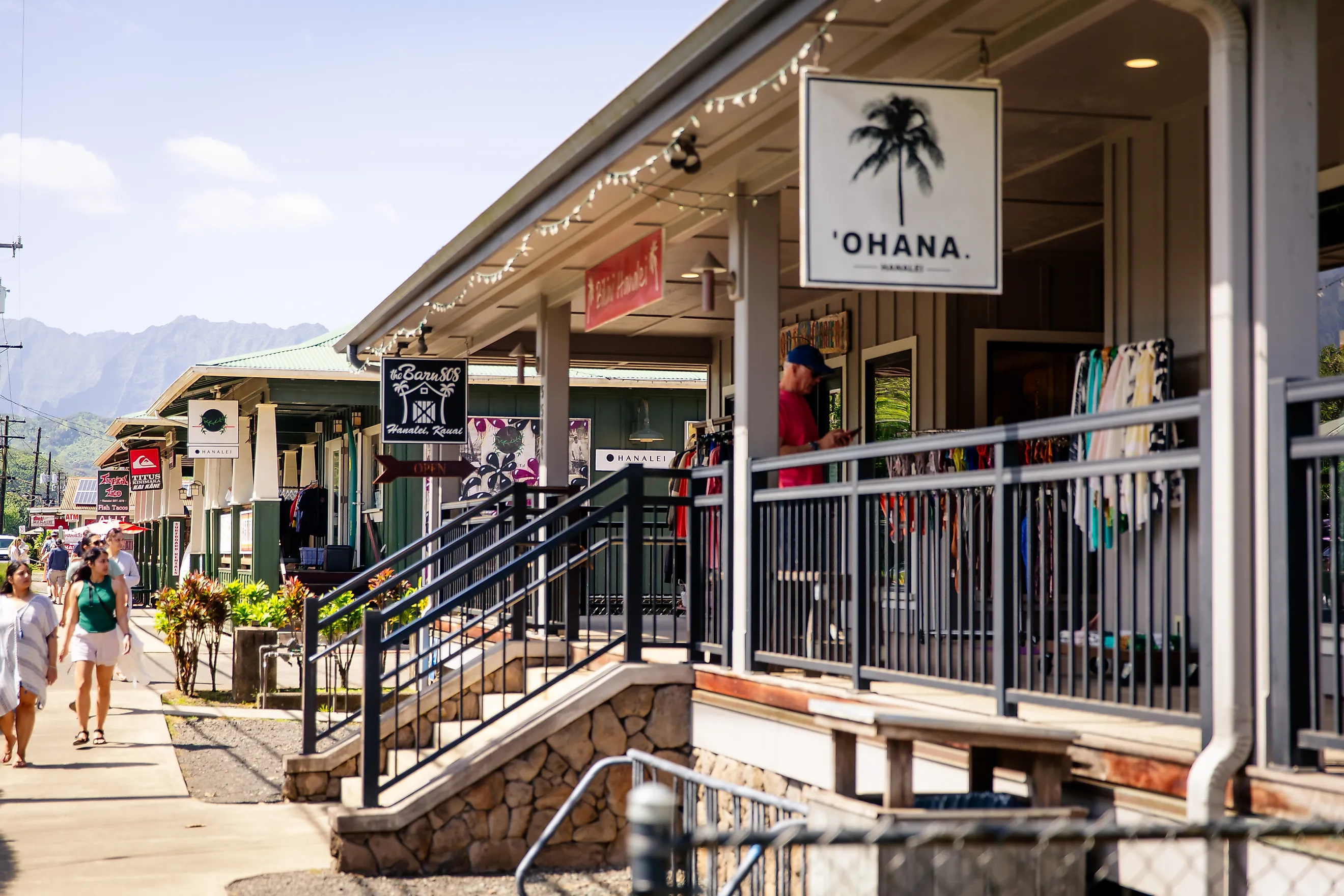
Tucked within Kauaʻi’s North Shore valley, the town of Hanalei radiates effortless charm and comfortable safety in a seascape brimming with surf legends and lore. Dominating the coastline is Hanalei Bay, its graceful arc an ideal spot for surfing, swimming, and sunbathing. Meanwhile, Waioli Beach Park (Pine Trees) also invites relaxation under swaying palms. For panoramic views of taro fields sculpted by waterfalls and rainforest mountains, a trip to the Hanalei Valley Lookout gives you plenty of photographic locations to capture. On the other hand, the Waiʻoli Mission House allows you to learn all about the history of both Hanalei and the whole island of Kauaʻi. Last but not least is Havaiki Oceanic and Tribal Art, which features a wide variety of works by local artists to turn your Hawaiian house into a home.
Lānaʻi City, Lānaʻi

On the rugged, remote island of Lānaʻi, the small settlement of Lānaʻi City prospers as a serene small town. High on a plateau once shaped by volcanic forces, the village retains a mellow atmosphere that is far removed from big-island hustle. Animal lovers will appreciate the Lānaʻi Cat Sanctuary, a real-life haven where you can wander among free-roaming cats, relax under the tropical sky, and perhaps donate to support the sanctuary’s work. For a landscape unlike any other, the moonlike terrain of Keahiakawelo, often called the “Garden of the Gods,” offers exploration of otherworldly rock formations that glow golden at sunset. If you are drawn to Hawaii’s deep past, the ancient fishing village of Kaunolū Village Site remains a poignant glimpse into pre-contact life, once frequented by royalty and coastal fishers alike.
Hāwī, Hawaii (Big Island)

Hāwī welcomes newcomers with friendly and comforting enchantments in this raw and untamed corner of the Kohala region. Once the hub of North Kohala’s sugar industry, the town has shifted into a laidback and secure gateway for those eager to explore rugged landscapes and Hawaiian heritage. One can begin by wandering the ancient fishing settlement at Lapakahi State Historical Park, where traditional culture has been carefully preserved. Hāwī also gains international attention every October as a major turnaround point in the IRONMAN™ World Championship cycling route, challenging athletes with its windy climbs. Just down the road in Kapaʻau stands the iconic King Kamehameha I statue, honoring the ruler who united all the Hawaiian Islands into a single kingdom in the early 19th century, while history-seekers can visit the sacred Moʻokini Heiau, one of Hawaiʻi’s oldest religious sites and the birthplace of Kamehameha I.
Waimea, Hawaii (Big Island)

Waimea, often referred to as Kamuela, stands out for its deep ranching roots and paniolo identity in the high uplands of Hawaiʻi Island. The name “Waimea,” meaning “reddish water,” hints at the rich volcanic soil and iron-toned streams that run through the area. New residents can immerse themselves in this proud heritage at Parker Ranch, one of the oldest and largest working cattle ranches in the US, originally tied to King Kamehameha I’s royal herds. Likewise, they can learn all about the paniolo culture that continues to prosper in Waimea at the Paniolo Heritage Center at Pukalani Stables, complete with artifacts, images, and original Hawaiian saddles to appreciate. Meanwhile, adventurers can head toward the summit of Mauna Kea for stargazing, while beachgoers will find the island’s scenic coastline, including Hapuna Beach, just a short drive away.
Honokaʻa, Hawaii (Big Island)

Honokaʻa, on the lush Hāmākua Coast, is the gateway to some of Hawaiʻi’s most dramatic landscapes and storied natural areas. This quiet town retains nostalgia from its plantation days while opening the door to awe-inspiring geology and biodiversity. Among them is the serene beauty of the Waipiʻo Valley, a visually striking region of steep green cliffs, taro terraces, and waterfalls, which once housed Hawaiian royalty. The region beyond further unveils dense native foliage in Puʻu O ʻUmi Natural Area Reserve and the Kohala Watershed Forest, where rare species of flora and fauna flourish. For coastal charm, the vantage shores of Laupāhoehoe Point and nearby forest reserves offer misty, tranquil scenery that contrasts beautifully with tropical beaches. Within the town itself, you can shop and peruse exquisite foods and craft items at the Hāmākua Harvest Farmers Market, particularly during the warm and bountiful months of the summer. Best of all, you can watch live performances and movies at the Honoka'a People's Theatre, an old-school theater from the 1930s.
Let Your Worries Wash Away In These Safe Communities in Hawaii
Some of the most hospitable Hawaiian towns also happen to have the safest small communities to settle in this archipelago-state, offering a rewarding and welcoming tapestry of deep-rooted traditions and untamed nature. Where each one of these locales leads to walkable valleys, surfable waves, and respectable farmlands straddling sleeping volcanoes, you will experience an alternative Hawaii that holds as much wonder as its famous resorts. If you let yourself meander and roam, step off the beaten path, and open your heart to island stories, these safe and serene communities will entreat you to many surprises and secrets for years to come.