9 Best Places To Live In Australia
Australia combines high living standards with an outdoors-first culture across six states and two territories. Sydney anchors the financial east coast with the harbour and the Opera House. Hobart pulls a different crowd at the foot of Mount Wellington. Smaller cities like Toowoomba and Ballarat have built strong regional economies in health and education. The nine listed below cover six of those states and territories. Each ranks among the best places in the country to settle in for the long run.
Sydney

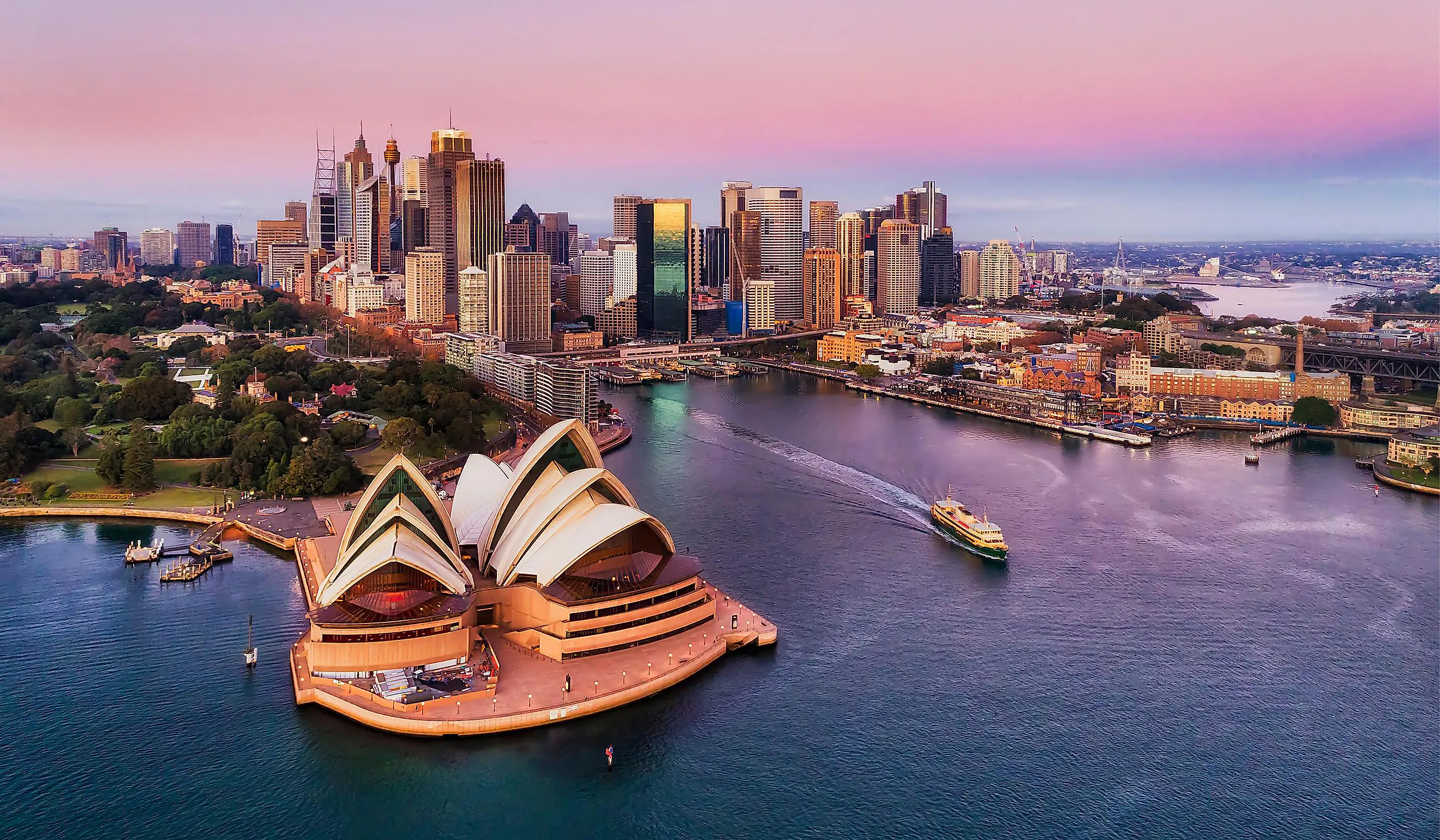
Sydney, the capital of New South Wales, runs as Australia's largest financial centre and global business hub. The cost of living reflects that role; estimates from Numbeo run the monthly cost for a single person at around AUD 4,800 to 5,200 in 2025, and Sydney has consistently ranked among the most expensive cities globally on the Mercer Cost of Living rankings. The trade-off is the deepest concentration of finance, technology, healthcare, and creative jobs in the southern hemisphere. The Sydney Opera House on Bennelong Point has run as the country's signature performing-arts venue since 1973 and lists more than 1,800 performances a year. The Bondi to Coogee Coastal Walk covers six kilometres of cliff path through the eastern beaches. The Royal National Park south of the city, established in 1879, is the second-oldest national park in the world after Yellowstone.
Hobart

Hobart, the capital of Tasmania, sits at the foot of kunanyi/Mount Wellington and runs as the second-oldest city in Australia after Sydney. Median house prices and everyday costs run well below Sydney and Melbourne. The Sydney to Hobart Yacht Race finishes at Constitution Dock each Boxing Day and is the highlight of the city's annual calendar. The Museum of Old and New Art (MONA) opened in 2011 on the Berriedale peninsula and has become the country's most-visited private museum, with the underground galleries built into the cliff face. The Salamanca Market every Saturday on Salamanca Place runs more than 300 stalls under the sandstone warehouses of the 1830s Hobart waterfront. Mount Wellington Road runs to the 1,271-metre pinnacle and the dolerite columns of the Organ Pipes.
Darwin

Darwin, the capital of the Northern Territory, sits closer to Jakarta than to Sydney and runs as the country's most tropical capital, with a wet season running November through April and a dry season running May through October. Kakadu National Park, 250 kilometres east of Darwin, covers nearly 20,000 square kilometres and is dual-listed by UNESCO for both its natural and cultural values, with rock-art galleries at Ubirr and Nourlangie dating back tens of thousands of years. Litchfield National Park, 90 minutes south, runs the Florence Falls, Wangi Falls, and Buley Rockhole swimming areas. The Mindil Beach Sunset Market every Thursday and Sunday during the dry season runs more than 200 food and craft stalls along the beach. The Museum and Art Gallery of the Northern Territory at Bullocky Point covers the regional natural history and the Cyclone Tracy 1974 exhibit.
Wollongong

Wollongong sits on the Illawarra coast 85 kilometres south of Sydney and runs as the third-largest city in New South Wales after Sydney and Newcastle. The Grand Pacific Drive, the coastal road that runs through Wollongong, includes the Sea Cliff Bridge, the cantilevered structure suspended over the ocean at Coalcliff that has run as one of the most photographed roads in the country since opening in 2005. The University of Wollongong on the northern edge of town ranks among the top public research universities in the country and adds the cultural and concert programming. The Wollongong Botanic Garden covers 27 hectares of themed gardens. The Nan Tien Temple at Berkeley, the largest Buddhist temple in the southern hemisphere, runs daily public visits.
Melbourne

Melbourne, the capital of Victoria, ranked 73rd on Mercer's 2024 Cost of Living City Ranking and consistently lands in the top end of The Economist's Global Livability Index, holding the world's most livable city title for seven consecutive years between 2011 and 2017. The Melbourne Cricket Ground (MCG), with a capacity of 100,024, is the largest stadium in the southern hemisphere and hosts both the AFL Grand Final and the Boxing Day Test cricket match. The laneways through the central business district, including Degraves Street, Centre Place, and Hosier Lane, run as the city's coffee, street-art, and small-bar core. The Royal Exhibition Building in Carlton Gardens, opened in 1880, is one of the world's oldest exhibition pavilions still in active use and a UNESCO World Heritage Site. The Queen Victoria Market in West Melbourne has run continuously since 1878 and covers seven hectares of food and goods stalls.
Geelong

Geelong sits at the head of Corio Bay 75 kilometres south of Melbourne and runs as the second-largest city in Victoria. The Geelong Waterfront, redeveloped through the 2000s as a Victorian heritage and modern public space, runs as the central recreational corridor with the carousel pavilion, the bay walk, and the Royal Geelong Yacht Club marina. The Great Ocean Road, the National Heritage-listed coastal route, starts at Geelong and runs 243 kilometres along the southern Victorian coast, passing the Twelve Apostles before ending at Allansford. Deakin University at Waurn Ponds and Waterfront campuses adds the cultural and research programming. The Geelong AFL Cats, the country's oldest professional Australian rules football club, play at GMHBA Stadium and have won ten premierships.
Adelaide

Adelaide, the capital of South Australia, was the first planned colonial city in the country and was designed by Colonel William Light in 1837 around the now-protected Adelaide Park Lands ring. The Adelaide Central Market on Grote Street has run continuously since 1869 and is one of the largest covered fresh-produce markets in the southern hemisphere with more than 70 traders. The Barossa Valley, the country's most internationally known wine region, sits an hour northeast of the city and produces the Shiraz that established Australia's reputation in the global wine market. McLaren Vale, 40 minutes south, runs as the other major Adelaide wine region. The Adelaide Festival and Adelaide Fringe each March together run as the largest combined arts festival in the country, with the Fringe second in the world only to Edinburgh in scale.
Toowoomba

Toowoomba, on the Darling Downs 125 kilometres west of Brisbane, sits at 691 metres and is one of the highest-elevation cities in Australia. The Carnival of Flowers each September, running continuously since 1949, is the country's longest-running floral festival and draws roughly 250,000 visitors over the ten-day program. Picnic Point on the eastern escarpment runs the public lookout over the Lockyer Valley toward the coast and is paired with the adjacent Picnic Point Parklands. The University of Southern Queensland's Toowoomba campus anchors the education economy and adds the cultural and concert calendar. Toowoomba was also the country's first regional UNESCO World Heritage-related Biosphere City for sustainable development, and the local agriculture, food-processing, and health sectors continue to drive the regional economy.
Ballarat

Ballarat sits in the goldfields of central Victoria 100 kilometres west of Melbourne and was the centre of the country's defining 1850s gold rush. The Eureka Stockade rebellion of December 1854, in which gold miners armed themselves and faced colonial troops over the licence fee, took place at the eastern edge of the city and is commemorated at the Museum of Australian Democracy at Eureka. Sovereign Hill, the open-air goldfields museum on the south side of town, runs daily costumed demonstrations of 1850s mining-era life and is one of the country's most-visited heritage attractions. Lake Wendouree, the central recreational lake, hosted the rowing and canoeing events of the 1956 Melbourne Summer Olympics. The Ballarat Botanical Gardens on the lake's western shore run as one of the country's most intact Victorian-era public gardens.
The Australian Lifestyle Calculation
The nine cities above represent a full slice of Australia's residential options. Sydney and Melbourne are the country's two largest job markets, with the trade-off of correspondingly high cost of living. Hobart, Adelaide, and the regional centres of Geelong, Wollongong, Toowoomba, and Ballarat each offer the same broader lifestyle at a steeper discount, with the trade-off of smaller specialised job pools. Darwin sits in a category of its own, with the tropical climate, the proximity to Asia, and the World Heritage landscapes within driving distance. Whichever city wins the relocation calculation, the country's healthcare, education, and infrastructure run at standards comparable to any developed nation.