8 Prettiest Downtown Strips In Massachusetts
Massachusetts has a peculiar talent for looking like it never left the 18th century. The prettiest small downtowns in Massachusetts were mostly built on money that no longer exists, by people chasing whales, shipping cargo, or fleeing the British, and somehow they all stayed standing long enough to become postcards. Newburyport ran on a shipping fortune and pirate money. Concord started an entire war and then produced half the American literature canon. Provincetown turned the literal tip of Cape Cod into an art colony. Stockbridge let Norman Rockwell move in and paint it forever. Eight downtowns, eight very different ideas of what a New England main street is supposed to be.
Newburyport

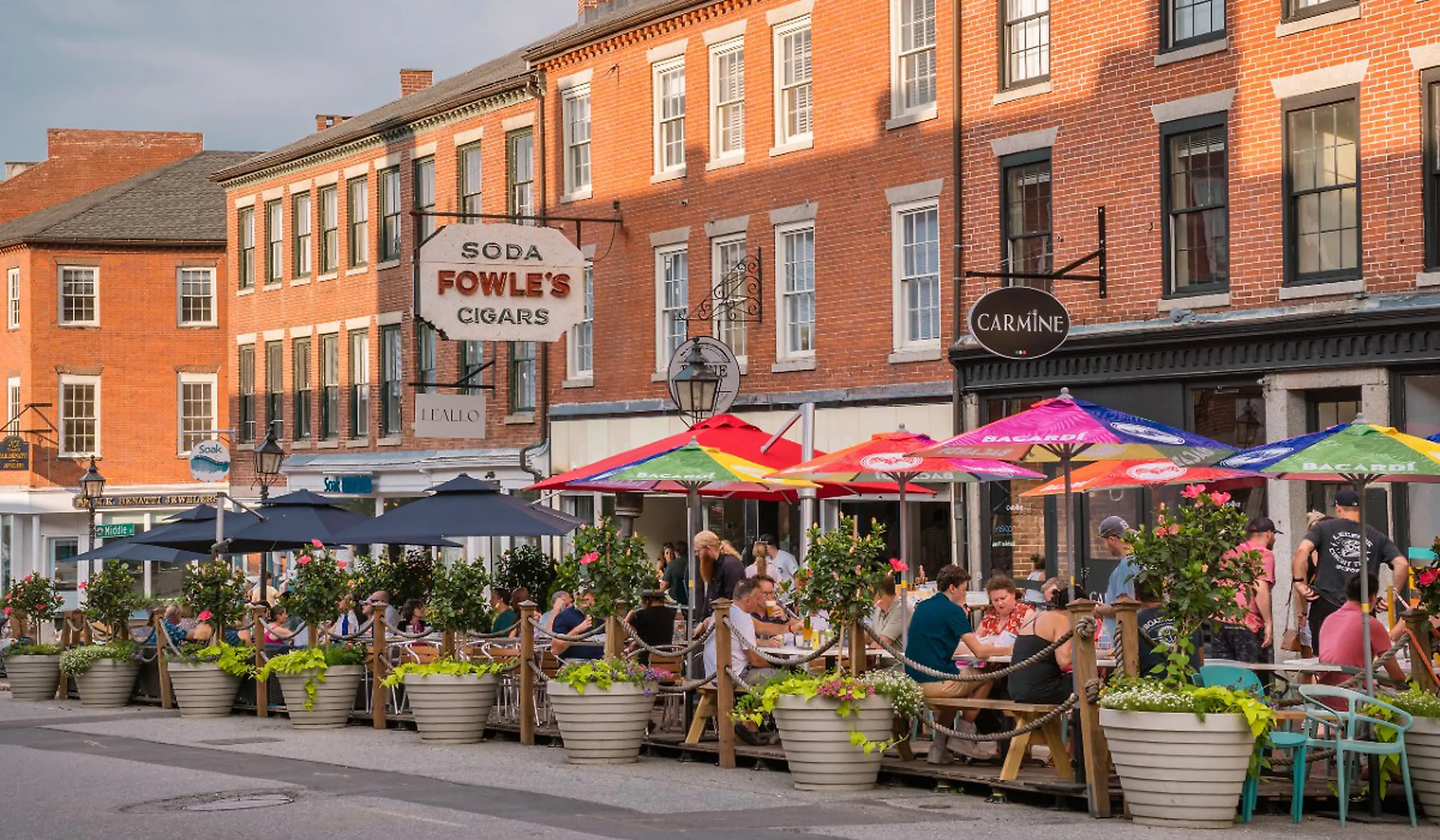
Newburyport sits at the mouth of the Merrimack River, and during the Revolutionary War it was one of the country's busiest privateering ports, which is the polite term for government-sanctioned piracy. The brick downtown that shipping and privateer loot paid for is still standing, with brick sidewalks, federal-era buildings, and old signs that make the whole core feel suspiciously well preserved.
The Waterfront Promenade gives you the harbor and a parade of sailboats. Bartlet Mall, a landscaped 19th-century park with a cast-iron fountain, has the picnic-on-a-grassy-slope thing handled. Market Square, which locals insist on calling the Bullnose, packs independent shops and restaurants into a federal-era brick district. The Custom House Maritime Museum lives in the 1835 customs building and keeps a hands-on kids' discovery area down in the basement, and Loretta on State Street does sidewalk dining with seasonal seafood.
Chatham

Chatham sits at the elbow of Cape Cod, the exact spot where Pleasant Bay, Nantucket Sound, and the open Atlantic all crash into each other, which is great for views and historically terrible for ships. Main Street runs along the shoreline past gray-shingled shops and sea captain's houses. Chatham Lighthouse, the second light station ever built on Cape Cod, was first established in 1808, though the current cast-iron tower dates to 1877. For years it was one of a matched pair, which is why old-timers still call it the "Twin Lights."
Lighthouse Beach across the road comes with resident gray seals lounging on the offshore sandbars and a rip current the lifeguards watch like hawks. Yellow Umbrella Books is one of the longer-running independent bookstores on the Cape. The Chatham Orpheum Theater, restored in 2013 inside its 1916 building, runs current indie films and a seasonal classic-film series, proving a town this old can still get a movie made after 1920.
Concord

No American town crams more history into its borders than Concord, which started a war and then went home and wrote books about it. The Battles of Lexington and Concord on April 19, 1775, kicked off the Revolutionary War, and the Concord Museum near the center holds the actual lantern from the Old North Church signal that launched Paul Revere's midnight ride.
The Old North Bridge in Minute Man National Historical Park is where Concord militiamen fired the volley Emerson later branded the "shot heard round the world," which is excellent marketing for a skirmish. A few miles south, Walden Pond is where Henry David Thoreau spent 1845 to 1847 living in a one-room cabin and writing Walden. Authors Ridge in Sleepy Hollow Cemetery stacks Thoreau, Emerson, Hawthorne, and Louisa May Alcott onto a single small terrace, an all-star literary lineup buried within arm's reach of one another. Caffè Nero handles the coffee near Main Street, and the Concord Players theater runs out of an 1850s building.
Marblehead

Marblehead, on the North Shore, is the most undersold colonial town in New England. Its harbor holds working fishing and sailing fleets, and the colonial street grid winds so tightly between 17th- and 18th-century houses that driving it feels like a dare. The town has more pre-1800 buildings still standing than almost anywhere else in Massachusetts, and people still live in them.
Crocker Park offers a public bench with a harbor view, which on the North Shore counts as luxury real estate. Hooked Nutrition on Pleasant Street pours fresh smoothies. Fort Sewall, a Revolutionary-era earthwork at the harbor mouth, once sheltered the USS Constitution from a pursuing British squadron during the War of 1812; today its grounds are a small park with wide Atlantic views and no British ships in sight.
Rockport

Rockport sits at the tip of Cape Ann on a granite coast that drops straight into the Atlantic. The town stayed committed to its fishing and art identities for so long that it remained a dry town until 2005, when residents finally voted to let restaurants serve a drink. Bearskin Neck, the skinny peninsula poking into the harbor, has packed dozens of art galleries and craft shops into former fish shacks.
Motif No. 1, a red fishing shack on Bradley Wharf, has been called "the most painted building in America" for the sheer number of artists who have set up easels in front of it since the 1880s. The original got flattened by the Blizzard of 1978 and the town rebuilt it so fast and so exactly that most people never knew, which tells you how seriously Rockport takes its red shack. Halibut Point State Park north of town runs trails along the granite shore past a flooded 19th-century quarry, and the Shalin Liu Performance Center stages chamber music in a glass-walled hall with the harbor as a backdrop.
Shelburne Falls

Shelburne Falls is the unofficial gateway to the Berkshire hill country, with the Deerfield River running straight through downtown. Its signature attraction is the Bridge of Flowers, an abandoned 1908 trolley bridge that the local Women's Club decided in 1929 to replant as a public garden rather than let it rot. It now blooms across 400 feet with wisteria, perennials, and seasonal annuals from April through October, which is a far better fate than most disused infrastructure gets.
The Shelburne Falls Trolley Museum keeps the original 1896 Trolley Car No. 10 that once hauled freight across the Deerfield. Just downstream, the Glacial Potholes are circular bowls drilled into solid bedrock by meltwater more than 14,000 years ago, with over 50 of them visible when the river runs low. Salmon Falls Gallery on Ashfield Street rotates shows by local and regional artists.
Provincetown

Provincetown clings to the absolute tip of Cape Cod, surrounded on three sides by the Cape Cod National Seashore, about as far out to sea as you can get and still be in Massachusetts. Commercial Street runs the full length of town and crams galleries, seafood joints, drag bars, and bookshops into a strip that has been an art colony since the early 1900s.
The Provincetown Art Association and Museum keeps five galleries of work by Provincetown-connected artists including Hans Hofmann and Robert Motherwell. The Provincetown Portuguese Bakery on Commercial Street has been frying malasadas since 1976. And looming over all of it is the 252-foot Pilgrim Monument, finished in 1910 and still the tallest all-granite structure in the United States. It marks the spot where the Pilgrims actually first landed in 1620, a full month before Plymouth, a detail Provincetown will happily explain to anyone who brings up Plymouth.
Stockbridge

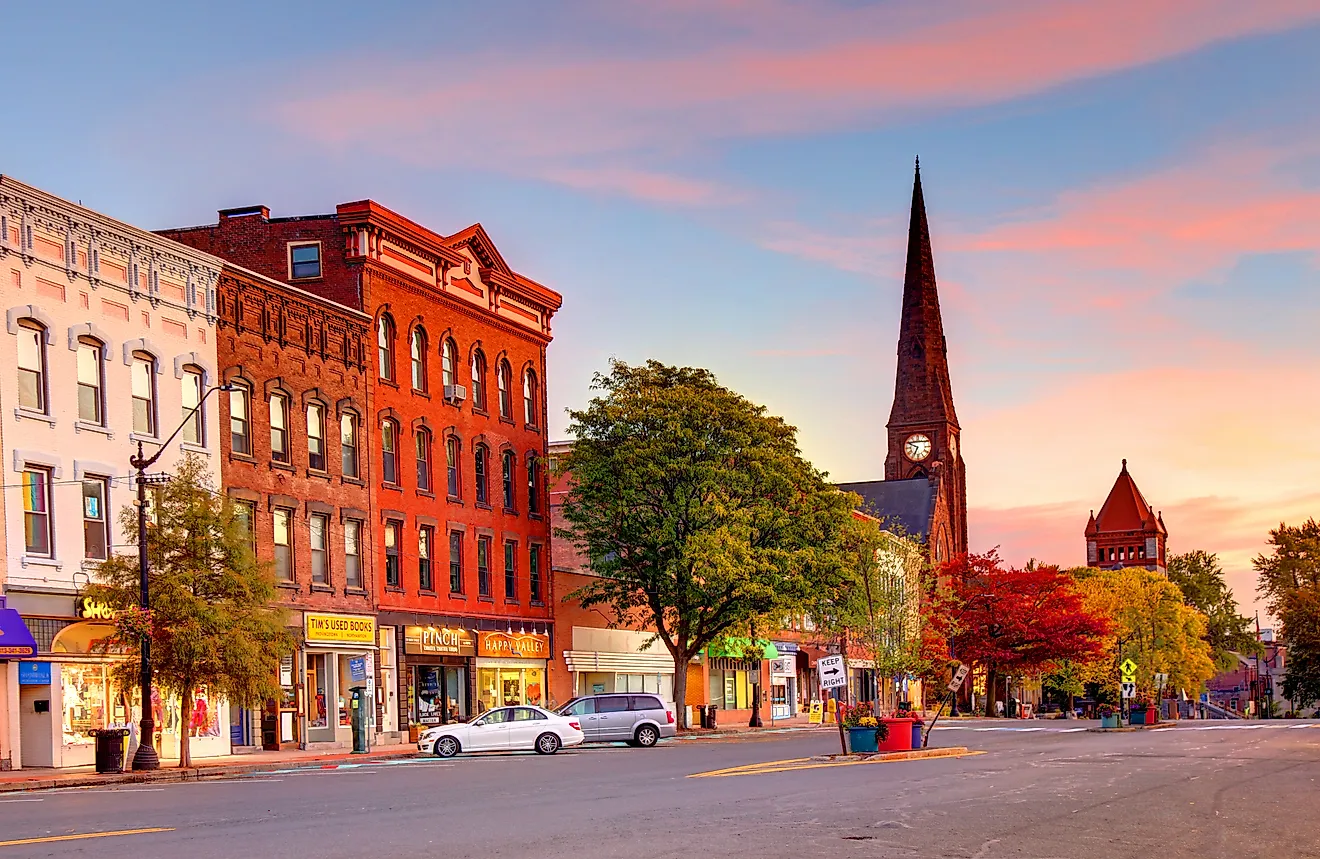
Stockbridge is the most Berkshires of all the Berkshire villages, and its Main Street is not just pretty, it is famous: the brick storefronts under autumn maples are the exact scene Norman Rockwell painted in Main Street at Christmas, Stockbridge in 1967. Rockwell lived here from 1953 until his death in 1978, and the Norman Rockwell Museum on the south side of town holds the largest collection of his original paintings anywhere, which means the town you are walking through and the paintings on the wall are the same place.
The Red Lion Inn has run continuously on Main Street since 1773, surviving an 1896 fire and hosting guests from Nathaniel Hawthorne to Franklin D. Roosevelt. Naumkeag, the Joseph Choate summer estate finished in 1885, surrounds a Gilded Age mansion with landscaped gardens by Fletcher Steele, including the much-photographed Blue Steps cascading down a hillside. The Federal-style Merwin House on Main Street, preserved by Historic New England, overlooks the Housatonic River.
Eight Downtowns, Eight Different New Englands
The fun of Massachusetts is that no two of these towns agree on what a main street is for. Newburyport and Marblehead are colonial maritime fortunes frozen in brick and clapboard. Concord layers a Revolutionary battlefield onto a literary graveyard. Chatham and Provincetown bookend Cape Cod with totally different personalities. Rockport guards a red shack like a crown jewel. Shelburne Falls turned a dead trolley bridge into a flower garden. Stockbridge is a Norman Rockwell painting you can park in. Put together, they make a strong case that the small towns, not the big city, are where Massachusetts keeps its best material.