9 Must-See Historic Towns in North Carolina
Start with Bath, which became North Carolina's first town and first port in 1705 and counted Blackbeard among its neighbors. A few of the state's small towns still wear that past on Main Street. New Bern came next, handing the young state its first permanent capitol five years later. Their stories span four centuries, right down to a clapboard house in Tryon where a girl named Eunice Waymon learned piano before the world called her Nina Simone.
Bath

Bath is North Carolina's oldest town. It does not let anyone forget it. English settlers laid it out on the Pamlico River and chartered it in 1705, when it served as the colony's first official port. That made it a natural haunt for the pirate Edward Teach, better known as Blackbeard, who based himself in the area and reportedly married there. The town leaned into the reputation rather than living it down.
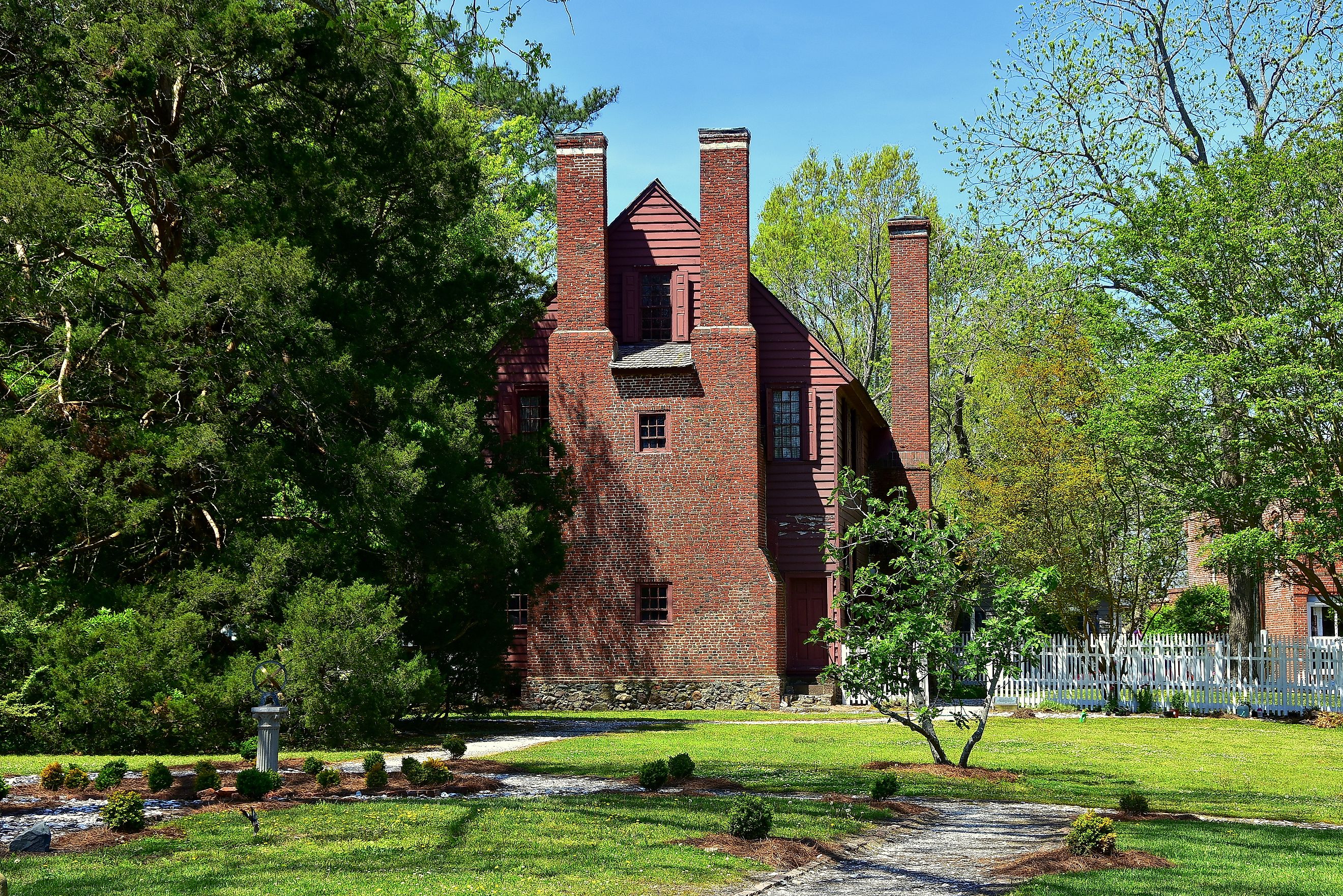
Most of Bath fits in a few walkable blocks. St. Thomas Episcopal Church, built in 1734, is the oldest church building in the state and still holds services. The Palmer-Marsh House dates to 1751 and shows off a pair of double chimneys that were a real flex for a colonial merchant. The Bonner House and the Van Der Veer House are open too, both bookable at the visitor center down the block.
New Bern

New Bern, the state's second-oldest town, took shape in 1710 when Swiss and German Palatine immigrants named it after Bern in Switzerland. Its centerpiece is Tryon Palace, the Georgian mansion built by royal governor William Tryon in 1770 as the colony's first permanent capitol. After independence it served as the state capitol until the government moved to Raleigh in 1792. The reconstructed palace and its formal gardens open onto a downtown thick with historic homes.
New Bern also holds a stickier claim to fame. Pharmacist Caleb Bradham invented Pepsi-Cola here in 1898. The corner drugstore where he mixed it is now a small shrine to the soda. The North Carolina History Center lays out the wider regional story beside the palace grounds. New Bern earns its history the easy way, by never tearing much of it down.
Salisbury

Salisbury treats historic preservation as a competitive sport, with five separate historic districts inside the city limits. The town dates to 1753 and grew into a Piedmont trade and rail hub, which is also why it held one of the Confederacy's largest military prisons during the Civil War. The Salisbury National Cemetery now marks where thousands of those prisoners were buried.
The Josephus Hall House, built in 1820, started as a school before it became a family home. It stands near the old Rowan County courthouse and the brick Bell Tower. The Rowan Museum lays out the county's story a few doors from the restored Meroney Theater. Salisbury also gave the world Cheerwine, the cherry soft drink bottled here since 1917. That is about as North Carolina as a beverage gets.
Hillsborough

Hillsborough was a political flashpoint long before it became a quiet county seat. Founded in 1754 on the Eno River, the town cycled through several names before settling on Hillsborough in 1766. The honoree was Wills Hill, the Earl of Hillsborough, a British secretary of state for the colonies. In the years that followed it became a colonial capital and a hotbed of the Regulator movement, the backcountry tax revolt that some historians call a rehearsal for the Revolution. Royal authorities hanged several Regulators here in 1771.
More than 100 homes in the historic district date to the 18th and 19th centuries. You can walk most of them on a self-guided tour. Ayr Mount, a Federal-style house from 1815, opens its grounds to the Poet's Walk trail along the river. On the edge of town, the grass-covered Occoneechee Speedway survives as one of the last tracks from NASCAR's first season in 1949, now a quiet walking trail through the old grandstands.
Waynesville

Waynesville took its name from General "Mad" Anthony Wayne, a Revolutionary War officer. It has been the seat of Haywood County since 1808. The entire downtown is listed on the National Register of Historic Places. Brick storefronts now hold galleries and craft shops instead of feed stores. The bones are the same.
The Shelton House, an 1875 farmhouse, holds the Museum of North Carolina Handicrafts. Inside, the rooms hold regional pottery and old mountain quilts. And if one historic downtown is not enough, Cherokee and Sylva are both close enough to fold into the same weekend.
Boone

Boone is named for Daniel Boone, who hunted these mountains long before the town existed. The Hickory Ridge Living History Museum recreates an 18th-century mountain homestead, with costumed interpreters working the cabins and gardens. Next door, the outdoor drama "Horn in the West" has staged the story of Revolutionary War-era settlers in the high country every summer since 1952. Daniel Boone himself turns up as a character.
Downtown, the Mast General Store has the creaky floors and barrels of candy that come with a King Street fixture going back generations. A few miles out, Tweetsie Railroad still loops a historic narrow-gauge steam locomotive around a Wild West theme park, the same ride Boone kids have begged for since 1957. History here is the kind you can climb aboard.
Cherokee

Cherokee is the cultural center of the Qualla Boundary, the homeland of the Eastern Band of Cherokee Indians, whose people have lived in these mountains for thousands of years. When the federal government forced most Cherokee west on the Trail of Tears in 1838, a determined group stayed behind. Their descendants hold this land today. The Museum of the Cherokee People, founded in 1948, tells that story in Cherokee voices rather than an outsider's summary.
A short walk away, the Oconaluftee Indian Village has recreated an 18th-century Cherokee community since 1952, with artisans weaving baskets and burning out dugout canoes. The outdoor drama "Unto These Hills" has performed the tribe's history at the Mountainside Theatre since 1950. For traditional work to take home, the Qualla Arts and Crafts Mutual has operated as a Native cooperative since the 1940s. Together they make Cherokee one of the few places in the state where you hear the history straight from the people who lived it.
Tryon

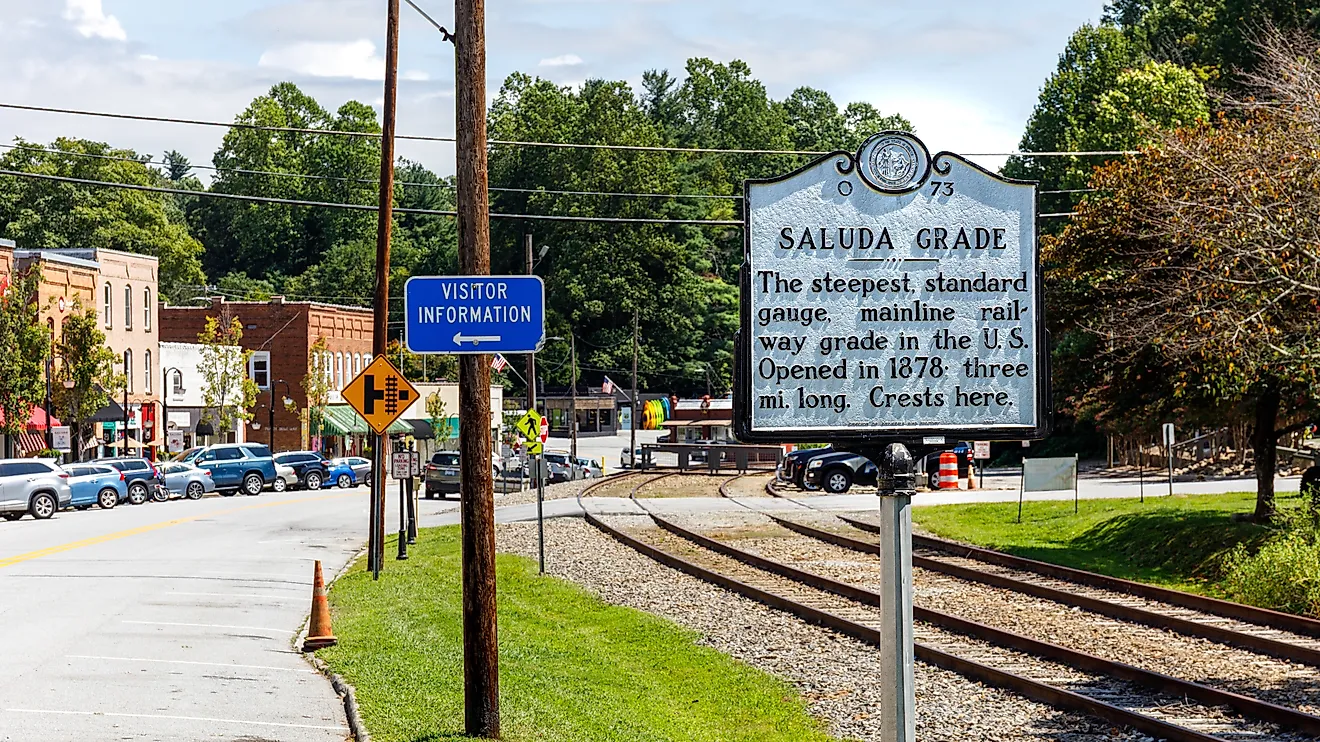
Downtown Tryon, North Carolina. Editorial credit: Janet Gray via Wikimedia Commons
Tryon's biggest contribution to history was born on East Livingston Street in 1933. Eunice Waymon spent her early childhood there in a three-room clapboard house, learning piano in her mother's church, before the world knew her as Nina Simone. That house was nearly demolished before four artists bought it in 2016 and restored it as a National Treasure. A statue of Simone now stands downtown. The whole Tryon historic district landed on the National Register in 2015.
Tryon began as a railroad town in the late 1800s, when the Asheville line climbed the Saluda Grade. Out past the edge of town, the Tryon International Equestrian Center carries on a horse-country tradition that goes back generations. For a town of around 1,600 people, Tryon has produced an outsized legacy.
Manteo

Manteo is the closest thing North Carolina has to a four-century-old cold case. The town lies on Roanoke Island, where England planted its first American colony in 1585 and a second one in 1587. By the time supply ships returned in 1590, the settlers were gone. The only clue was the word "Croatoan" carved into a post. Fort Raleigh National Historic Site marks the spot today. The outdoor drama "The Lost Colony" has retold the mystery on a waterfront stage since 1937.
The Roanoke Island Maritime Museum houses a working boat shop downtown. Roanoke Island Festival Park floats a full-size replica of the Elizabeth II, the kind of ship that carried those first colonists over. Manteo itself is small, about 1,600 people, which makes it easy to cover the whole story on foot.
History You Can Still Walk Into
North Carolina did not save its history for the textbooks. It left most of it standing where it happened. Salisbury looks after a Civil War burial ground. The Eastern Band of Cherokee tells its own story in its own voices. In Boone, costumed settlers still work an 18th-century homestead. Hillsborough's old racetrack is now a walking trail through NASCAR's first season. None of it is behind glass, just open most days and hiding in plain sight.