8 Off-The-Grid Oregon Towns To Visit In 2026
Oregon may draw its fair share of visitors, but there are still places where the road narrows, cell service fades, and the landscape takes over. In Mitchell, just 144 residents live near the striped hills of John Day Fossil Beds, while Port Orford is so isolated on the southern coast that the town itself describes it as “hard to get to.” Farther east, Joseph sits near the end of Oregon Route 82 beneath the Wallowa Mountains, and Halfway opens onto Hells Canyon and miles of rugged backcountry. These eight off-the-grid Oregon towns reward the extra drive with quiet streets, wild scenery, and experiences that feel far removed from the usual 2026 travel circuit.
Mitchell

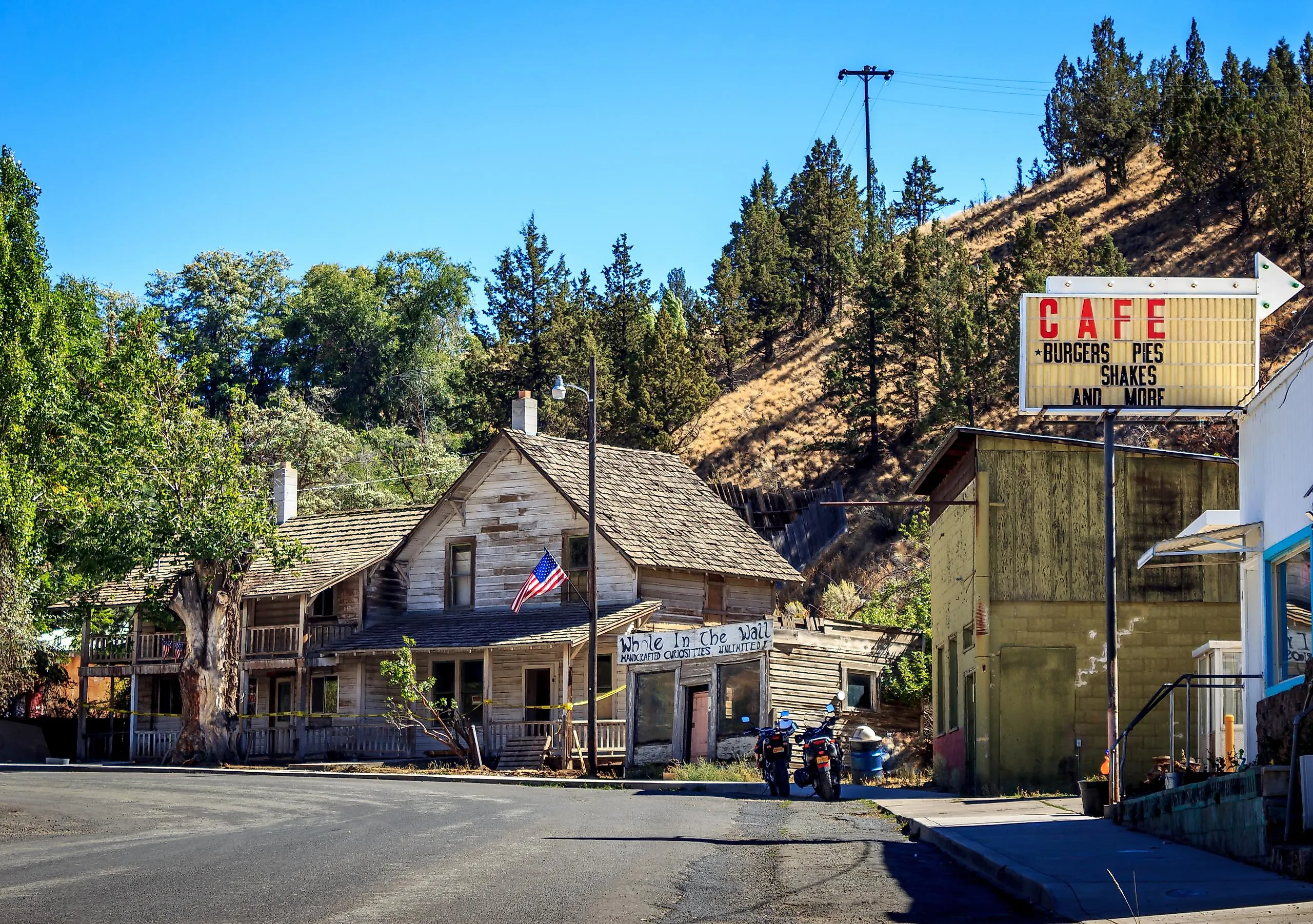
Mitchell may be the smallest town on this list, with a population of just 144 in 2025, but its isolated location in the state's interior makes it one of the clearest fits for an off-the-grid destination. The town's main draw is the Painted Hills Unit of John Day Fossil Beds National Monument, located northwest of Mitchell and known for bands of red, gold, black, and yellow that can appear different depending on light and conditions. Cyclists can venture farther into the surrounding high desert on the Painted Hills Scenic Bikeway, which passes through Mitchell and continues toward the Ochoco Mountains. The Sutton Mountain Back Country Byway forms a 41-mile loop just west of Mitchell, passing high-desert cliffs, Girds Creek Canyon, historic ranching sites, and the John Day River. Although the town of Mitchell itself may be small, it's home to Tiger Town Brewing Co., which draws its name from frontier-era Main Street, once nicknamed "Tiger Town" for its rough character.
Lakeview

Not far from the state's southern border with California and Nevada, Lakeview is a true off-the-grid destination due to its sheer remoteness. It's set amid the region's high deserts, serving as an ideal base for exploring the 171-mile Oregon Outback Scenic Byway. Along with views of the Warner Mountains and other diverse landscapes, the route takes travelers past Hunter's Hot Springs Resort, where visitors can take a dip in mineral springs or check out Old Perpetual, a geyser that erupts every 90 seconds, shooting 200-degree water over 60 feet into the air. The town is also home to the Bullard Canyon Trail system, which offers scenic views for hikers, bikers, and horseback riders close to town. Back in town, the MC Chuck Wagon Exhibit provides a hands-on look at the area's pioneer and Old West heritage, providing some context to the people who settled this remote spot.
Port Orford

Parts of Oregon's coast can be quite off-grid, including Port Orford, which even the town itself describes as "hard to get to." It sits about three hours from Eugene, Medford, or Grants Pass, and much further from larger cities in the region. However, those who make the trip can explore attractions like Port Orford Heads State Park, which provides views and hiking trails along the coastal area west of town and includes the historic Port Orford Lifeboat Station Museum. Farther north, Cape Blanco State Park combines more than eight miles of trails with the Cape Blanco Lighthouse, built in 1870 and recognized as the oldest still-standing lighthouse on the Oregon coast. Back in town, the Port of Port Orford offers one of the area's most unusual sights, with the West Coast's only "dolly dock," where large cranes lift fishing boats in and out of the water to be stored between trips.
Halfway

Halfway sits deep in northeastern Oregon, where its location at the southern base of the Wallowa Mountains (far from even regional hubs) makes it a natural fit for an off-the-grid trip. The town is home to just over 300 residents in the 2020 Census, making it one of the smallest stops on this list. Those who make the trek out there can explore the Hells Canyon Scenic Byway, a 208-mile route connecting the Wallowa Mountains (known as "Little Switzerland" for their alpine appearance) with Hells Canyon, North America's deepest river gorge and a popular spot for fishing, rafting, and camping. Closer to town, the Pine Valley Community Museum reveals how mining and ranching shaped the area before modern outdoor recreation became a top draw. Travelers can also make the short trip to Cornucopia, a former gold-mining town in the Wallowa-Whitman National Forest that now serves as a gateway to trails and the Eagle Cap area.
Powers

Powers sits in an out-of-the-way valley among Oregon's Coast Range, surrounded by forested hills along the South Fork of the Coquille River. This river plays a major role in one of the area's signature outings, the Coquille River Falls Trail, a half-mile hike through mature forests that ends at the falls. Travelers can also head into the Wild Rogue Wilderness on the Panther Ridge Trail, which travels through old-growth timber to overlooks providing panoramic views of the area. In addition, Powers County Park has a 30-acre pond for fishing and non-motorized boating, along with a display of historic steam logging equipment, all located right within town. Another easy stop is Coquille Myrtle Grove State Natural Site, a secluded swimming hole along the Powers Highway shaded by old Oregon myrtle trees and bordered by a sandy stretch of the Coquille River.
Burns

Burns is the largest town on this list, but with a population of under 3,000 and a remote high-desert setting, it remains decidedly off-the-grid. In town, the Harney County Historical Society and Museum displays regional artifacts and photographs tied to local history. However, the real appeal of Burns comes from its proximity to numerous outdoor recreation spots, including Malheur National Wildlife Refuge south of town, which offers trails, wildlife viewing, a visitor center, nature store, and more. Roughly 25 miles southeast, Crane Hot Springs offers indoor and outdoor soaking in naturally heated mineral water. Travelers can also explore Oard's Museum & Gallery, a longtime local institution displaying Native American art and artifacts from several tribes.
Joseph

Near the end of quiet, rural Oregon Route 82, Joseph sits near the state's far northeastern corner, giving it a genuinely secluded setting. Its biggest draw is Wallowa Lake, where visitors can fish, paddle, hike, or head into the surrounding Eagle Cap Wilderness. Nearby, the Wallowa Lake Tramway climbs 3,700 feet to the summit of Mount Howard, where roughly two miles of trails overlook the lake and Wallowa Valley. For local history, the Wallowa County Museum covers the region's past, including its Nez Perce heritage, while the town's Art Walk positions enormous bronze statues along Main Street for all to enjoy.
Sumpter

Sumpter's tiny population and tucked-away setting in the Elkhorn Mountains reinforce the off-the-grid feel. Its biggest attraction is the Sumpter Valley Dredge State Heritage Area, where you can board the massive "gold dredge" that extracted more than $4 million in gold during the mid-20th century. Those further interested in the area's mining history can explore the Cracker Creek Museum of Mining, which preserves historic mining equipment. The Sumpter Valley Railroad adds another connection to the town's mining past, operating narrow-gauge excursion trains between Sumpter and nearby McEwen. For an adventure behind the wheel, follow the Elkhorn Drive Scenic Byway, a 106-mile loop through the surrounding mountains.
Oregon's Vast Open Spaces Provide Plenty of Off-Grid Adventures
Disconnecting in Oregon can mean soaking in a remote hot spring outside Lakeview, following old mining routes through Sumpter, or hiking through forested hills near tiny Powers. These towns are scattered across high desert, mountain valleys, and hard-to-reach stretches of coast, but remoteness is part of their appeal. For travelers willing to put a few more miles on the car in 2026, Oregon’s quieter corners offer something increasingly rare: room to slow down, explore, and feel genuinely off-the-grid.




_(5773399625).jpg)
