11 Small Towns in Tasmania with the Best Downtowns
Some of the best downtowns in Tasmania feature sandstone shopfronts, heritage landmarks, and local art lining the main streets. Richmond fills more than fifty Georgian buildings with cafés, galleries, and boutique shops, and its Richmond Bridge is the oldest surviving stone bridge in Australia. Sheffield reinvented itself as the "Town of Murals" in the 1980s, and today its downtown feels more like an open-air gallery than a traditional main street. Out in the remote west, the former mining town of Queenstown has a weathered, industrial look, and the West Coast Wilderness Railway departs right from Queenstown Station. Read on for 11 small towns with the best downtowns in Tasmania, each one worth pulling off the highway for.
Stanley

Stanley is built in the shadow of The Nut, a 143-meter volcanic plug that looms over the harbor. You can hike up it or take the chairlift, but either way you'll be rewarded with magnificent views over the Bass Strait and the cottages below. In the downtown, you wander past the old public buildings and the waterfront, but don't miss Joe Lyons Cottage, the former childhood home of Australia's only Tasmanian-born prime minister. Just outside of town, Highfield Historic Site preserves the grand 1830s estate once tied to the Van Diemen's Land Company, offering a glimpse into the island's colonial past. If you have time, head to Godfrey's Beach around dusk, where you might spot tiny penguins waddling ashore after a day at sea.
Oatlands

For travelers who love architecture more than adventure, Oatlands is the town to slow down in. High Street holds one of the largest concentrations of sandstone buildings in the country, and locals will proudly tell you there are 138 of them in town, and 87 found only on Main Street. You can spend an hour just walking through and photographing the old shopfronts, cottages, and churches before making your way to Callington Mill, a historic windmill from 1837 that still dominates the skyline. History buffs can duck into the old courthouse and gaol, remnants of the town's convict-era past, while those wanting a quieter moment can walk the loop around Lake Dulverton just behind Main Street.
Richmond

If you have time for only one classic postcard-perfect town, make it Richmond. With more than fifty Georgian buildings now filled with cafés, galleries, and boutique shops, it's the version of historic Tasmania that ends up on brochures for good reason. At its center is Richmond Bridge, the oldest surviving stone bridge in Australia, and just past it sits the 200-year-old Richmond Gaol, the oldest intact gaol in the country, with cells that still carry the weight of its convict past. Find some time to wander the Georgian core, including the St. John the Evangelist Church, then stop by the slightly odd but beloved Pooseum before heading into the nearby Coal River Valley for a wine tasting.
Queenstown

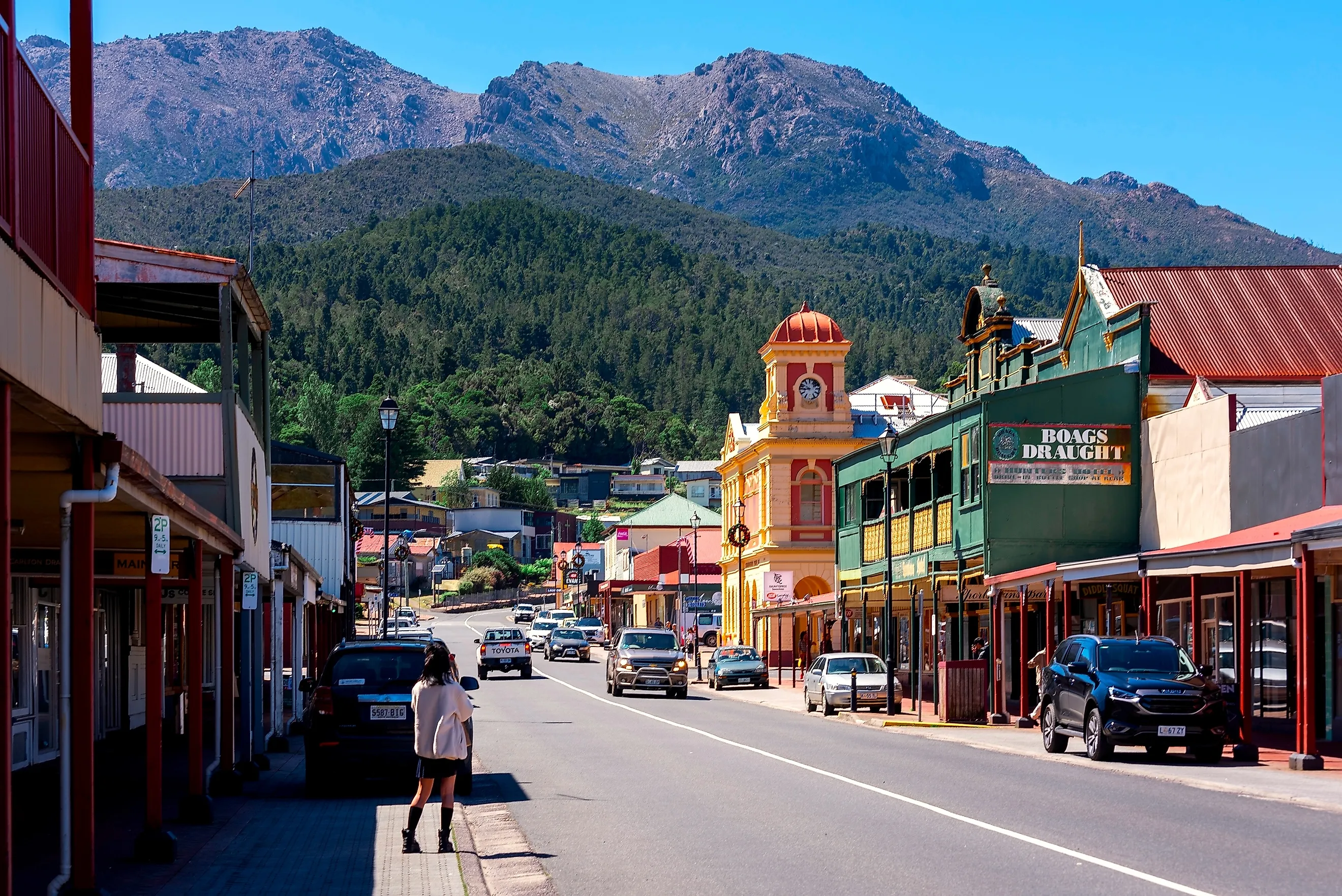
Not every town on this list is postcard-pretty, and that's exactly the point of including Queenstown. Set deep in Tasmania's remote west, this former mining town looks like the total opposite of Richmond or Oatlands. It looks weathered, industrial, and it’s surrounded by a rugged mountainous landscape. You can wander the historic center to take in its mining history, then hop aboard the West Coast Wilderness Railway right from Queenstown Station for a scenic ride through the region. The Paragon Theatre stands out as one of the town's most distinctive buildings, a reminder of when the town had its boom years.
Deloraine

Deloraine blends three identities into one riverside town: historic country charm, a vibrant arts community, and a genuine connection to the water running through it. Along its Georgian and Victorian streets, you'll find galleries, antique shops, and craft businesses tucked into old buildings, while the Meander River flows right alongside the town center. A newer addition, the Great Western Tiers Sculpture Trail sprinkles contemporary art throughout the historic streetscape, creating a visually appealing riverside walk. Deloraine is also a great base for exploring the nearby Mole Creek Caves and the Great Western Tiers themselves.
Ross

Some towns feel historic, but Ross feels frozen in time. Its centerpiece is the Ross Bridge, a spectacular sandstone bridge built by convicts in 1836 and still standing as a good example of Australia’s convict-era stonework. Take a stroll down the main street and Church Street to take in the historic buildings, then visit the Ross Female Factory Historic Site, one of the most significant female-only convict sites remaining in Tasmania. You can round out the visit with a walk around Lake Dulverton and a browse through the town's small galleries.
New Norfolk

As the island's third-oldest settlement, New Norfolk is set around a river lined with historical buildings, and a pretty unusual centerpiece in Willow Court, a former asylum complex with a somewhat eerie history. History lovers can also visit St Matthew's, the oldest Anglican church in Australia, or spend an afternoon browsing antique shops housed in the town's older buildings. New Norfolk also works well as a jumping-off point for Mount Field National Park and the roaring waters of Russell Falls. This town doesn't try too hard to be pretty or perfect, and that is truly part of its appeal.
Sheffield

Back in the 1980s, the town reinvented itself as the "Town of Murals," and today more than 200 murals cover buildings throughout the center. This makes downtown Sheffield more like an open-air gallery than a traditional main street. Walking the mural trail is the obvious highlight, especially through Mural Park, home to some of the town’s largest and most prominent pieces. Beyond the art, Sheffield has a wide array of cafés, galleries, and small shops to explore, and it sits close enough to Mount Roland and the Great Western Tiers for an easy scenic drive afterward.
Geeveston

Tucked into Tasmania's south, Geeveston has built its identity around timber, forestry, and easy access to some of the island's most panoramic natural attractions. In town, the Platypus Walk at Heritage Park is a short boardwalk where, with a little luck, you might spot a platypus in the creek, alongside the Tasmanian Forest Workers Memorial and a collection of large carved wooden figures. The Geeveston Town Hall and Visitor Centre is worth a stop for local crafts and produce, and the main street itself is dotted with hand-carved statues depicting local characters. From here, it's about thirty minutes to the Tahune Airwalk, an elevated walkway through the forest canopy that ends some 50 meters above the Huon River. Geeveston also serves as a main gateway to Hartz Mountains National Park, for those wanting a proper wilderness detour before heading back into town.
Campbell Town

Along the Heritage Highway between Hobart and Launceston sits Campbell Town, a small but substantial stop with a population of barely a thousand people. Its charm is concentrated along High Street and the Elizabeth River, where colonial buildings, antique shops, and an unusually rich convict-history trail come together. You can follow the Convict Brick Trail down High Street, then stop at the Red Bridge, a brick arch bridge built by convict labor back in 1838. The Book Cellar, tucked into the historic cellars of the Foxhunters Return, is a favorite for snooping through the book selection on a quiet afternoon. Then walk along the Elizabeth River through Valentine Park to round things out nicely.
Penguin

On the island’s north coast sits a town that’s dedicated to a popular wild visitor: Penguin. The town's real namesake shows up after dark, when little penguins return from the sea each evening. If you're visiting at the right time of year, watching them waddle ashore can be the highlight of the trip. Just make sure you keep a healthy distance at least 3 meters. Near the waterfront, you’ll notice a a giant penguin statue in front of ocean view cafes, picnic areas, and a playful penguin-themed promenade. In town, you can find the Penguin Heritage Trail a self-guided walk covering 26 historic sites, including the 1903 Uniting Church and the heritage-listed Penguin General Cemetery.
Small Towns With Big Character
What's nice about Tasmania's small-town centers is just how different they are from one another. There's no single formula here. Instead, you can find sandstone streets in Oatlands, murals in Sheffield, convict bridges in Ross and Campbell Town, and the weathered beauty of Queenstown standing in total contrast to all of the rest. Add in coastal vibes from towns like Stanley, riverside art in Deloraine, and forest gateways like Geeveston, and it becomes clear that Tasmania's downtowns are just as worth exploring as its national parks. Next time you're planning a trip to the island, leave room in your itinerary to wander a main street or two. You might find the small towns are the part you remember most.