8 Most Breathtaking Towns In England
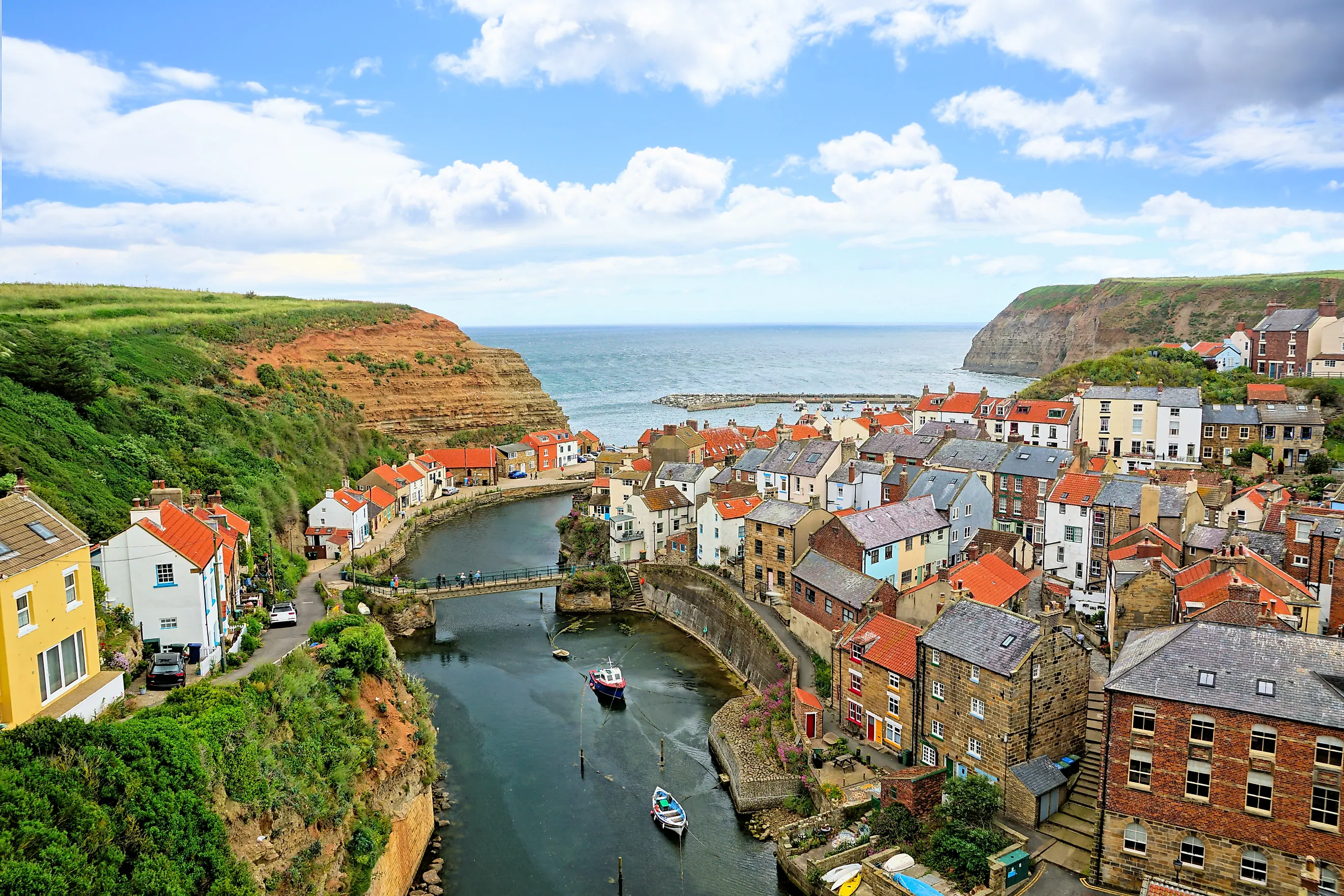
England’s smaller towns and villages are often defined by medieval streets and abbey ruins that still mark the landscape around them. In Staithes, traditional homes look out over the North Sea from between Cowbar Nab and Penny Nab, and visitors can hunt for fossils along the beach below. In Ludlow, medieval architecture and Ludlow Castle still anchor the town’s presence, and the town is also known for the Ludlow Food Festival and its excellent food scene. Towns like these, and the others listed below, show how much of England’s character can be seen in its smaller communities.
Staithes, North Yorkshire

Staithes offers beach walks in a postcard setting and the chance to stay in a colorful cottage that used to be a fisherman’s home. Once you have settled in, make your way to The Staithes Museum to find out more about the town’s connections to Captain Cook and the Jurassic period that defined its surroundings. The museum also features a section with locally crafted products for purchase.
After spending a couple of hours at the museum, you can take a stroll around town, keeping an eye out for the optical illusions painted by artist Paul Czainski. As you walk down to Staithes Beach, the views will take your breath away. Take some time to explore the rock pools, and you might just find a fossil if you are really lucky. If you have some time left in the day, take the short walk to Beck Bridge, which connects the two sides of the village. If you visit the bridge as the sun goes down, you are in a great vantage point for a memorable sunset, and you might just run into the ghost of a fisherman who once lived in town if you stay until dark.
Rye, East Sussex

In Rye, Mermaid Street is one of the oldest and most beautiful streets in England. The charmingly named Mermaid Street features historic buildings from the medieval period. Some of the buildings were rebuilt hundreds of years later, including the Tudor building on Oak Corner, which was rebuilt in 1490. You might also spot another proper English ghost at the 600-year-old The Mermaid Inn. Even if you do not have any ghost encounters, stay for a delicious dinner anyway.
Rye sits near the English Channel and was once an island accessible only via the roadway leading northwards from the Landgate. You can learn more about the gate and the Ypres Tower at the Rye Castle Museum (the museum is located in the same building). The tower also offers views of the town and the River Rother estuary. The Rye Harbor is located next to the River Rother, and the Rye Harbor Nature Reserve is a few minutes further. Here, you can walk paths that will take you along the salt marsh habitat while looking out for some of the multiple species of birds in the area.
Aylesford, Kent

Aylesford is located on the River Medway, and the river played a major role during the Battle of the Medway in AD 43. The Aylesford Bridge, a Grade I-listed medieval stone bridge spanning the river, was once a crucial crossing point. The bridge features several medieval arches and is still used by pedestrians in 2026. It also makes for a striking backdrop. You can walk along the river after taking your pictures and keep an eye out for the local wildlife. The Medway Valley Walk is also a good option for a longer walk through the surrounding landscape.
After your outdoor excursion, you can head over to The Friars, where a community of Carmelite Friars arrived in 1242. You can explore the grounds, sit beside the stone ponds, and admire the local flowers. Make some time to stop by The Chequers, a Grade II* early 16th-century manor house that also features a historic pub.
Polperro, Cornwall

Polperro is an unspoiled fishing village on the south coast of Cornwall. Here, pretty cottages tower over the water from their foundations on the green hillsides. The town has a murky smuggling past, but that history does little to soften Polperro’s striking first impression. If this history fascinates you, you can learn more at the Polperro Heritage Museum of Smuggling and Fishing, which overlooks the beautiful harbor.
For views from every angle, take a stroll to Chapel Rock, also known as Peak Rock, at the entrance to the harbor. You can also explore Chapel Pool, a stunning blue-green tide pool that dates to the 1940s. It is great for swimming, but only during low tide. Back in town, Polperro’s Model Village offers a distinctive stop. The model village is a faithful replica of Polperro and features a railway with miniature trains running through a diorama. The model site also includes Land of Legend, which depicts Cornish legends and superstitions.
Ludlow, Shropshire

Ludlow is framed by the Shropshire Hills and, like many English towns, features its own castle. Ludlow Castle is one of the most dramatic-looking Norman fortresses in the country, even if it is in partial ruins. Prince Arthur, older brother to Henry VIII, once lived in the castle with his wife, Catherine of Aragon. Visitors can come for the Ludlow Food Festival or for the historical re-enactments held at the castle. Ludlow is well known for its delicious foods, and the festival celebrates that with local, responsibly sourced foods as well as appearances by top chefs.
Throughout Ludlow, you will see Georgian, Tudor, and medieval buildings, the same buildings that prompted poet John Betjeman to say that Ludlow is ‘the loveliest town in England.’ Among them is a marketplace that offers local plants and crafts. Near town, the Ludlow Farmshop is known for its fresh food.
Castle Combe, Wiltshire

Castle Combe delights in its unofficial designation of the ‘prettiest village in England.’ Strangely enough, there is no castle here now, only earthworks, but there used to be one on the hill overlooking the village. The castle was abandoned by the 14th century, and it is believed that the stone used to build it was scavenged over time. While you may not be able to visit a castle during your trip to Castle Combe, you can walk down the winding main street and take in the names of the stone cottages built in the 14th century and the old-fashioned letter boxes.
While exploring Castle Combe, stop by St. Andrew’s Church to see one of the oldest working faceless medieval clocks in the country. Afterwards, you can take a stroll over to Manor House Hotel to admire the building’s exterior, which is covered in dark green ivy. When you keep walking and get to the bridge that crosses the By Brook River, the bridge itself will seem very familiar if you have seen War Horse. After taking some pictures from the bridge, you can take one of the walking trails that lead from the town to the countryside. The Castle Combe Circular Walk is very popular and offers views of pretty pastoral landscapes.
Bamburgh, Northumberland

Bamburgh is home to a massive Norman castle overlooking the coast. It suffered severe damage due to cannon fire during the Wars of the Roses. Over the years, the castle housed a coastguard station where a local coble was adapted for lifeboat service in 1786, before it became a hospital and school. It still stands on a basalt crag overlooking the North Sea and has also appeared in screen productions including The Last Kingdom and Transformers: The Last Knight. At the north end of the castle grounds stands an 18th-century windmill, another point of interest for history enthusiasts.
Another must-see building is the Grace Darling Museum, dedicated to Grace Darling, who risked her life saving nine survivors from a shipwreck in 1838. Grace helped her father look after the lighthouse, and the museum depicts her fascinating life through various items and artefacts. If you want to spend some time outdoors to take in the views, take the paths that start at The Wynding for a slow walk through the picturesque countryside.
Helmsley, North Yorkshire

Helmsley is a market town located very close to the ruins of Rievaulx Abbey. The monastic ruins sit within the River Rye Valley and have inspired artists for many decades. The imposing Helmsley Castle ruins are only three miles away from the abbey, so you can explore both sites in one day. The castle was once a medieval fortress, a Civil War stronghold, and an Elizabethan mansion. The east tower still dominates the landscape from its position in the North York Moors National Park.
The park itself will enchant you with its ancient forests and heather moorland. You can immerse yourself in the various subtle shades of purple when the heather blooms during late summer or walk a section of the 26-mile coastline that dates back to the Jurassic age. If you want to hike, you can take the Cleveland Way National Trail, which starts in town before curving through the park for 109 miles.
Explore England the Old-Fashioned Way
These days, travel is all about the perfect selfie. But, when you find yourself in beautiful England, you will feel a tug on your traveler’s heart to ditch the phone and camera and just take to the small-town cobbled streets on foot. Exploring England the old-fashioned way will take you down historic alleyways and 14th-century buildings. You will find castles along the way, the opportunity for fossil hunting, and more than enough time to enjoy the views. So, if you want an authentic English holiday or just a break from modern life, head to these breathtaking towns and take the cobblestone streets that are often less traveled.