12 Storybook Towns In Tennessee
American storytelling got its modern start in a small Tennessee town. The world’s best-selling whiskey is made in a dry county. A town of 500 people hosts one of America’s most-visited theme parks. A village with one stoplight holds Cherokee artifacts dating back to 9000 BC. Think Jonesborough’s five-decade storytelling festival or Columbia’s mule-pulling championships. Pretty does not do them justice.
Gatlinburg

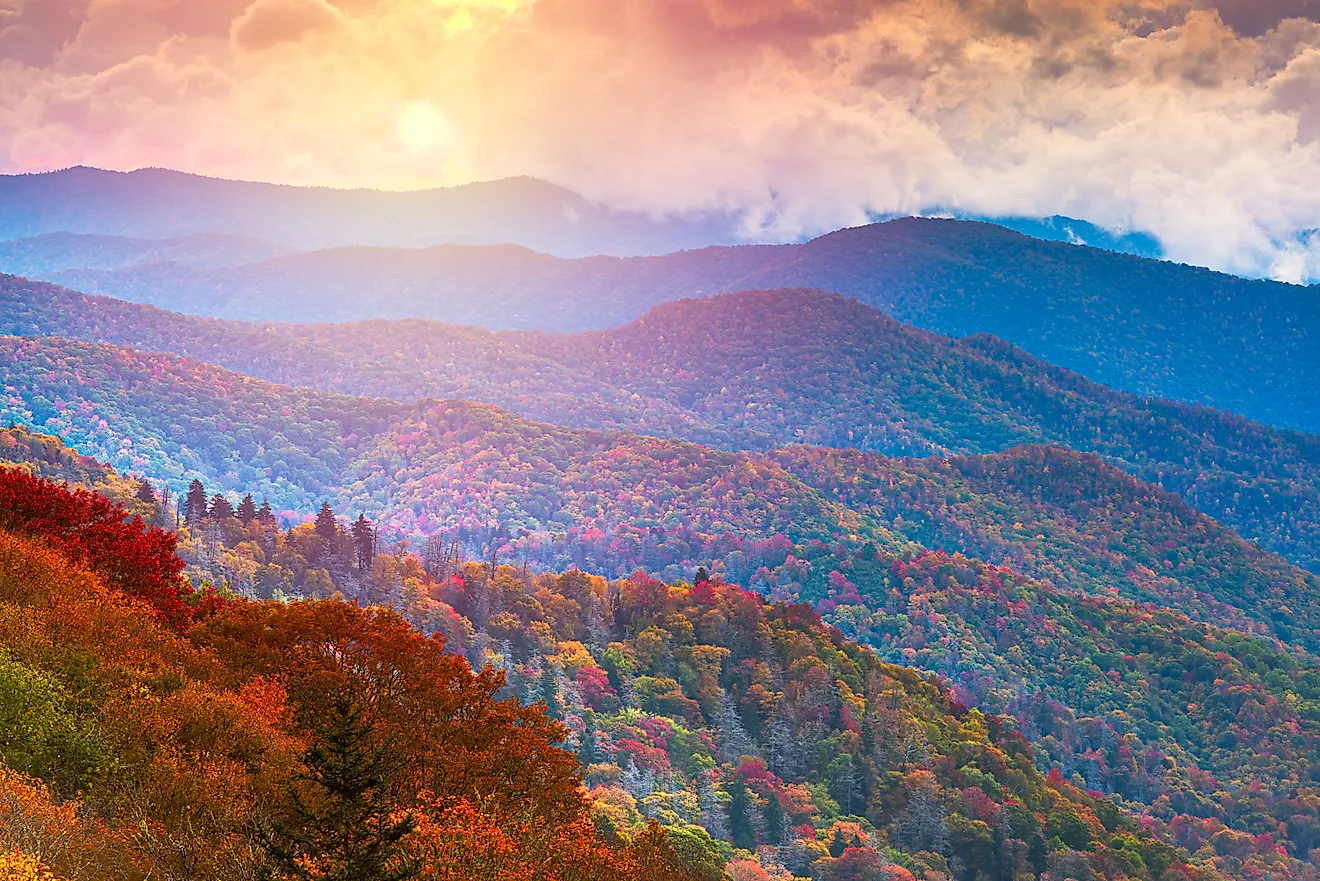
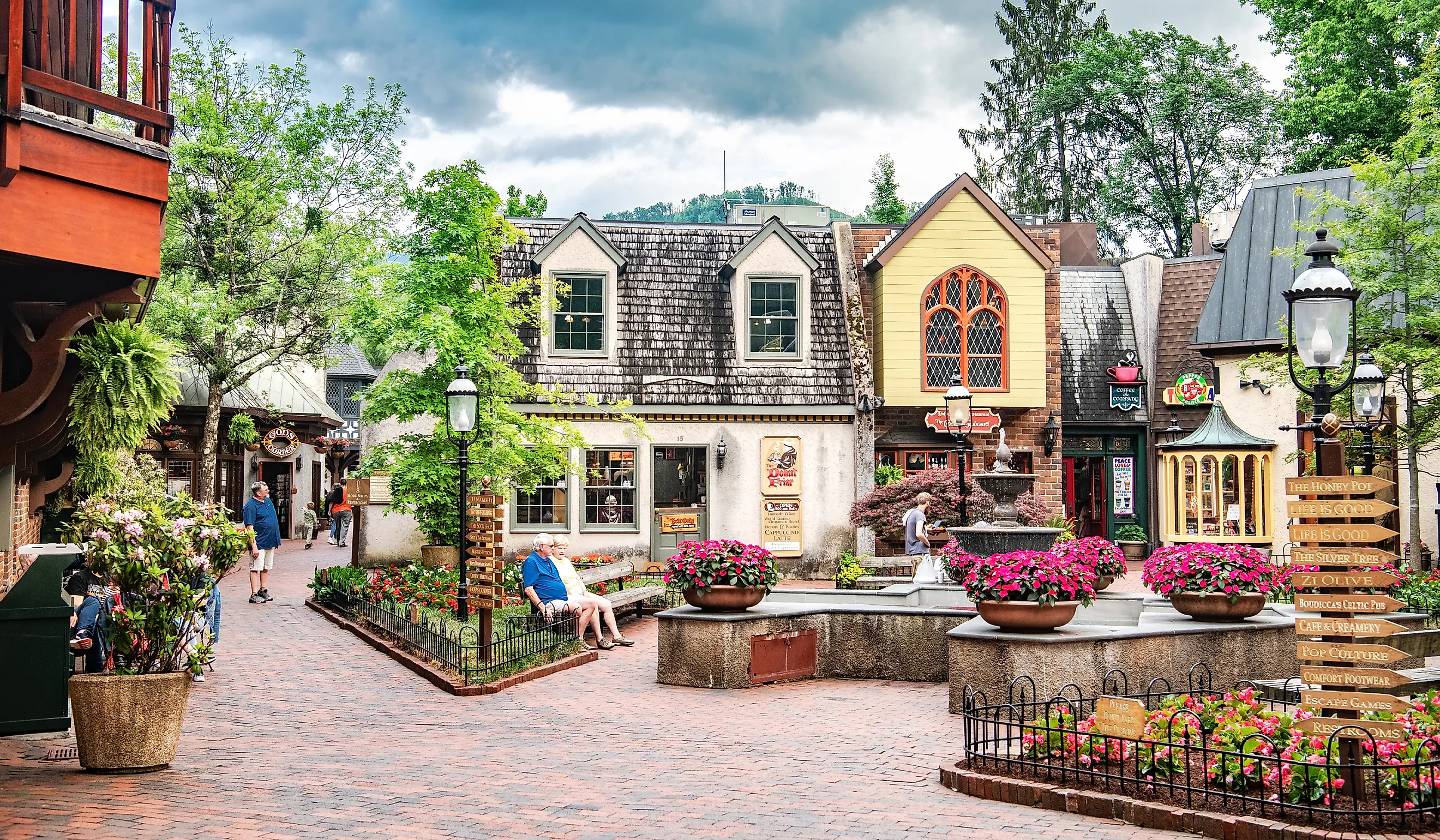
At the entrance to Great Smoky Mountains National Park, Gatlinburg is the kind of mountain town where every turn of the road opens onto a new postcard - fog-draped peaks, cabin-lit hillsides, and a downtown Parkway that glows long after dark. At the heart of it all is Ripley’s Aquarium of the Smokies, housing 10,000+ sea creatures across 350 species. Its 340-foot underwater tunnel puts giant sea turtles and 12-foot sharks directly overhead, and the daily Penguin Parade is a crowd favorite. For a dose of adrenaline, head to Gatlinburg SkyPark, where the historic SkyLift carries riders 500 vertical feet up Crockett Mountain for sweeping Smoky Mountain views.
Down in town, Arrowmont School of Arts and Crafts is a working arts institution on a 13-acre hillside campus, founded in 1912. It now hosts workshops annually in ceramics, woodworking, fiber arts, glass, and metalworking. Round it out with a drive along the Roaring Fork Motor Nature Trail, a 5.5-mile one-way loop through preserved homesteads, old-growth forest, and waterfall views.
Townsend

With only a handful of traffic lights, Townsend rightly holds the claim of being the “Peaceful Side of the Smokies.” The Great Smoky Mountains Heritage Center is central to the town’s cultural identity on 14 acres. Its indoor galleries hold Cherokee artifacts dating back to 9,000 B.C., unearthed during a highway project through Townsend in the early 2000s, alongside pioneer-era tools, furniture, and a transportation gallery. The Heritage Center’s 350-seat outdoor amphitheater adds bluegrass, old-time, and heritage-focused concerts to the town’s cultural calendar.
Another historical highlight is the Little River Railroad and Lumber Company Museum. It is a collection tracing how W.B. Townsend’s logging railroad shaped this entire valley in the early 1900s, including the preserved locomotive that once hauled timber out of the mountains. Outdoor enthusiasts can add Smoky Mountain River Rat Tubing to a warm-weather itinerary, with two routes along the Little River. Outpost A runs a gentler, family-friendly stretch with swimming holes, while Outpost B adds stronger rapids for those who want more of a push. Each route takes about an hour on the water.
Tellico Plains

At the Tennessee edge of the Cherokee National Forest, Tellico Plains is the kind of place where the bakery is a landmark, and the mountains begin the moment you leave Main Street. The Cherohala Skyway departs directly from town and runs 43 miles through the Cherokee and Nantahala National Forests into North Carolina, rising from 900 feet in elevation to over 5,400 feet at its highest point. Just off the Skyway, Bald River Falls stands about 90 feet tall, one of the highest roadside waterfalls in Tennessee, with parking directly beside the falls and a short trail to the top. The rebuilt bridge below makes the base easily accessible, and the adjacent Bald River is open for kayaking.
On the Skyway, the Charles Hall Museum preserves over a century of local history via 10,000+ items. Travelers can check out photographs, logging-industry artifacts, guns, and personal collections from the man who served as Tellico Plains' mayor for 31 years. The museum also serves as a community gathering place, adding another local stop to a day spent exploring the Skyway and downtown Tellico Plains. Tellico Grains Bakery is more than just a landmark on Main Street. They bake from scratch daily, with people dropping by to get loaves, pastries, and pizza.
Pigeon Forge

Ranking among the most visited towns in the American South, Pigeon Forge is a delight for its storybook Appalachian soul. The Old Mill, in use since 1830, is among the United States’ oldest working gristmills. The surrounding Old Mill Square holds pottery, a candy kitchen, and a restaurant that uses the mill’s own grain. Another crowd-puller is Dollywood, a 160-acre theme park on the edge of the Smokies that has repeatedly led Tripadvisor’s U.S. theme-park rankings. Beyond its 50+ rides, it functions as a genuine cultural institution, featuring live Appalachian music and working craftspeople demonstrating skills such as glassblowing and blacksmithing.
Opened in 2024, The Dolly Parton Experience traces Parton’s life from her childhood in Locust Ridge through her international career across multiple exhibit buildings in Dollywood. Furthermore, the Titanic Museum Attraction consistently ranks among the top non-theme-park attractions in the Smokies. At the museum, visitors step inside a half-scale, ship-shaped tribute with more than 400 authentic Titanic artifacts from private collections, a full-scale first-class Grand Staircase reproduction, and interactive exhibits.
Jonesborough

Jonesborough holds the distinction of being “Tennessee’s oldest town,” and takes visitors on a full ride through a historical dream. The International Storytelling Center takes credit for the town’s essence as the self-declared “Storytelling Capital of the World.” It hosts live performances with rotating nationally recognized storytellers, and each October draws tens of thousands of visitors for the three-day National Storytelling Festival, now in its fifth decade. A few doors down, the Chester Inn State Historic Site and Museum has been a mainstay since 1797, when physician William Chester established it as a stagecoach inn. Notable guests, like Andrew Johnson, James K. Polk, and Andrew Jackson, passed through its doors. Today, the ground-floor museum covers everything from an 1850s diorama of the town to the short-lived State of Franklin and an 1873 cholera outbreak, while the Victorian-era upstairs parlor and dining room are open for viewing.
Continuing along Main Street, the Jonesborough Repertory Theatre stages a year-round calendar of productions, with additional regional performances sometimes held at nearby partner venues. Round it out with a Heritage Alliance guided walking tour from the Chester Inn. Costumed guides walk you through the historic district’s layers of Appalachian, frontier, and Civil War history.
Bell Buckle

Bell Buckle has been charming visitors with equal amounts of quirk and authenticity ever since the 1850s. The Webb School, founded in Culleoka in 1870 and located in Bell Buckle since 1886, still operates on 150 acres at the edge of town, making it “one of the oldest continuously operating boarding schools in the South.” Walking downhill from campus brings you to the Bell Buckle Café, a longtime Railroad Square restaurant known for country-fried steak, smoked pork chops, catfish, turnip greens, and its MoonPie Sundae.
On the 3rd Saturday every March, the town hosts Daffodil Day, a tradition since 1978 in which thousands of daffodils planted along six miles of the town’s roadways come into bloom simultaneously. And each June, the RC Cola and MoonPie Festival brings tens of thousands of visitors to this half-square-mile downtown for a full day of races, music, craft booths, and the ceremonial cutting of the world’s largest MoonPie.
Lynchburg

Moore County remains mostly dry for ordinary retail liquor sales, which makes it a quietly ironic backdrop for the world’s best-selling American whiskey brand, every drop of it made right here. Jack Daniel’s Distillery draws over 250,000 visitors a year to its historic property off the Lynchburg square. Tours walk through the charcoal mellowing process, in which whiskey is slowly dripped through 10 feet of sugar maple charcoal before barreling, the so-called Lincoln County Process, which legally distinguishes Tennessee whiskey from bourbon. Down on the town square, Miss Mary Bobo’s Boarding House has served family-style Southern meals since 1908, with reservations bringing guests into one of Lynchburg’s best-known historic dining rooms.
For over a century, the Lynchburg Hardware and General Store has been a curated stop for Jack Daniel’s merchandise, local goods, and collectibles. While on Main Street, don’t skip the Moore County Old Jail Museum. The 1893 jail building, today, welcomes visitors to walk around the cells and hear infamous tales of inmates and officers.
Rogersville

Rogersville is among the most historically layered small towns in the entire South, with a downtown grid of original, unaltered storefronts that has earned it a place on the National Register of Historic Places. One of the iconic buildings is the 1836 Hawkins County Courthouse. You should watch out for the Palladium windows, white-painted Tuscan columns, and red brick facade. Meanwhile, the Tennessee Newspaper and Printing Museum marks Rogersville’s identity as the "Cradle of Tennessee Journalism." The state’s first newspaper, the Knoxville Gazette, was printed here in 1791, and the museum displays a working reproduction of that original press alongside equipment from area print shops, including linotype-era machinery tied to the Rogersville Review.
Another masterpiece is the 1824 Hale Springs Inn. Andrew Jackson, James K. Polk, and Andrew Johnson have been the guests here in the rooms now named for each of them. Self-guided tours of the inn’s nine rooms, original antiques, and presidential suites are available free to anyone walking in. Adjacent to the square, Crockett Spring Park is a certified arboretum with a gazebo, walking paths, historic Rogers Cemetery, and 36 varieties of trees on the site of Rogersville’s early settlement.
Elizabethton

Elizabethton brings you to the Cherokee National Forest foothills, where the Doe and Watauga rivers meet. Sycamore Shoals State Historic Park, a 70-acre National Historic Landmark along the Watauga River, was the site of the Watauga Association in 1772. The park includes a reconstructed Fort Watauga, museum exhibits, and an outdoor amphitheater that hosts the state’s official outdoor drama each July. Three miles away, the Carter Mansion is a fully restored Federal-period home with original over-mantel paintings open for guided tours through the park.
The Historic Elizabethton Covered Bridge dates to 1882, spans 134 feet across the Doe River, and is “one of the oldest covered bridges still standing in Tennessee.” Covered Bridge Park wraps the site in walking paths, river views, and picnic grounds. Finally, connecting Elizabethton to Johnson City is the Tweetsie Trail and is open to walkers, runners, and cyclists year-round.
Leiper’s Fork

About 30 miles south of Nashville, Leiper’s Fork has a main street short enough to walk in ten minutes. But in those ten minutes, you pass art galleries, local shops, a small-batch whiskey distillery, and one of the most celebrated live music venues in Middle Tennessee. Fox & Locke began as a general store in 1947 and has become the cultural anchor of the village, hosting live music Thursday to Saturday and a weekly Thursday open-mic night that has drawn Grammy-winning artists. Leiper’s Fork Distillery is a local highlight, producing small-batch Tennessee whiskey using limestone-filtered water and local grains. Tours walk you through the whiskey-making process and end with a tasting in its on-site tasting room.
Props Antiques gives the perfect chance to go antiquing. From vintage finds and old-timey jewelry to chocolates, gifts, and collectibles, you will find plenty to browse here. And Tennessee Turquoise Co. specializes in vintage Native American silver and turquoise jewelry.
Cookeville

Cookeville takes fame for the title of “America’s waterfall capital,” as more than 150 fall within roughly 40 miles of the downtown square. Cummins Falls State Park is absolutely magnificent, being home to the eighth-largest waterfall by volume in Tennessee, a 75-foot drop into a canyon pool that draws swimmers in warmer months. Visitors who want to reach the base of the falls or swim in the gorge need a Gorge Access Permit, which helps manage conditions in this rugged part of the park.
Meanwhile, the Cookeville Depot Museum stands in the original 1909 Tennessee Central Railway station. Inside and around the museum, Tennessee Central Railway artifacts, a 1913 Baldwin steam engine, a 1920s Tennessee Central caboose, and an HO-scale model of Cookeville as it was in 1955 tell the story of how the railroad transformed this mountain town. A 5.3-mile paved Tennessee Central Trail runs from the depot toward the Algood Community Center, making it walkable from the museum to the Cookeville Farmers Market. From there, visitors can browse produce, baked goods, and handmade items during market hours.
Columbia

Columbia deserves glory for having one of the most intact historic squares in Middle Tennessee. April is for Mule Day, which transforms the city for a full weekend. It promises visitors a downtown parade, mule-pulling contests, the Tennessee State Mule Pulling Championship, a 5K, a craft fair running all day, and line dancing at the Ridley 4-H Center. Two blocks from the square, the President James K. Polk Home & Museum is, other than the White House, the only surviving residence of the 11th president. There is also a museum, with original family furnishings and artifacts from Polk’s Tennessee years.
Columbia also has another one of the most architecturally distinctive buildings in Middle Tennessee, the Athenaeum Rectory. This 1837 landmark boasts a Gothic Revival design with Moorish details. Outdoor time is also not far as the Duck River runs directly through town. Recognized as “the most biodiverse river in North America,” it supports more than 150 species of fish and over 50 species of freshwater mussels.
The storybook towns in Tennessee are not just scenic; they are cinematic. Rogersville’s 1824 Hale Springs Inn has been welcoming guests for two centuries, whereas Lynchburg makes the world’s best-selling American whiskey in a mostly dry county, and every town on this list has something equally specific and unlikely. Tennessee sets the bar high in the United States for towns that are layered, lived-in, and completely themselves. Pack the car, clear your calendar, and let Tennessee do the rest.