8 Idyllic Small Towns In Florida To Visit In 2026
Florida has a habit of manufacturing its charm and charging admission for it. The eight towns here skipped that whole process. They turned out idyllic by accident and never thought to brag about it. That is the good stuff. Cedar Key drowses on its stilts out in the Gulf and Micanopy sits shaded by live oaks older than the state. Each one rewards the kind of traveler who likes to wander. Consider this your 2026 permission slip to go find them.
Cedar Key

Cedar Key sits at the end of one road, three miles out in the Gulf, reachable by a single two-lane bridge. The town runs on farm-raised clams, and it shows. Boats unload at the docks, and the kitchens along the water cook that morning's haul before the ice has time to melt. Golf carts outnumber anything with a license plate. Half a mile offshore, you can paddle to Atsena Otie Key, where the original town stood until an 1896 hurricane wiped it out and everyone moved to higher ground. The trail there ends at the brick ruins of Eberhard Faber's old cedar mill, which turned local trees into pencils until the cedar ran out. Out past the wildlife refuge, the 1854 Seahorse Key lighthouse still sits on the highest dune on Florida's Gulf coast. For a place this small, it has outlasted a lot.
Apalachicola

Apalachicola built its whole identity on oysters, and for a long stretch its bay produced most of the ones Florida ate. That is where the nickname Oystertown comes from. Overharvesting and drought eventually collapsed the fishery, and wild harvesting stayed closed for years before a limited reopening began in 2026. The town leans on the water all the same. Nineteenth-century brick storefronts line the downtown, and raw bars along Water Street shuck whatever the boats and farms bring in. The Raney House, an 1838 home a cotton merchant built at the port's peak, still stands in the historic district as a museum. When you have had your fill of downtown, Oyster City Brewing pours its beer out of a warehouse a few blocks off the river. Nine miles offshore, St. Vincent Island runs wild with pine forest and dunes, a barrier island the government keeps deliberately empty.
Dunedin

Dunedin figured out the walkable downtown long before it was a real estate pitch. Main Street runs palm-lined and low, and you can cover the good part of it on foot in an afternoon. The town holds the title for Florida's oldest microbrewery, Dunedin Brewery, which has been at it since 1996 and still books live music most nights. Coffee people have the Dunedin Coffee Company and Bakery to argue about. The Pinellas Trail cuts straight through the middle, so half the town seems to arrive by bike. Two of the state's best beaches wait just offshore at Caladesi and Honeymoon Islands, both reachable without a car if you plan it right. It is the rare Florida town that rewards showing up with no agenda at all.
Micanopy

Micanopy has been around since 1821, which makes it Florida's oldest inland town, and it wears the age well. One main street, Cholokka Boulevard, runs under live oaks so heavy with Spanish moss they nearly close overhead. The business here is old things. Two dozen storefronts deal in used books and vintage furniture, and the Micanopy Trading Post lets its dusty vinyl and faded maps spill onto the sidewalk. Mosswood Farm Store bakes its own pastries and pours a proper pour-over, best enjoyed on the wraparound porch. Just south, Paynes Prairie Preserve keeps a herd of free-roaming bison and wild horses on open savanna, which is not a sentence you expect to write about Florida. The Herlong Mansion anchors the street, a farmhouse from 1845 that a lumber fortune later wrapped in Greek Revival columns.
Crystal River

Crystal River is built around Kings Bay, where more than 50 springs hold the water at a steady 72 degrees all year. That constant warmth is the entire draw. Every winter, hundreds of West Indian manatees crowd in from the colder Gulf, and this is the one place in the country where a federal program lets you get in the water and swim alongside them. At Three Sisters Springs the visibility runs past 20 feet, clear enough to watch a manatee glide under your kayak. The bay has a deeper history too. Crystal River Archaeological State Park protects pre-Columbian mounds that native people built over roughly 1,600 years, and a short trail climbs a temple mound with a clean sightline to the water. Back downtown, the cafes along North Citrus Avenue keep the anglers and dive guides fed between trips.
Tarpon Springs

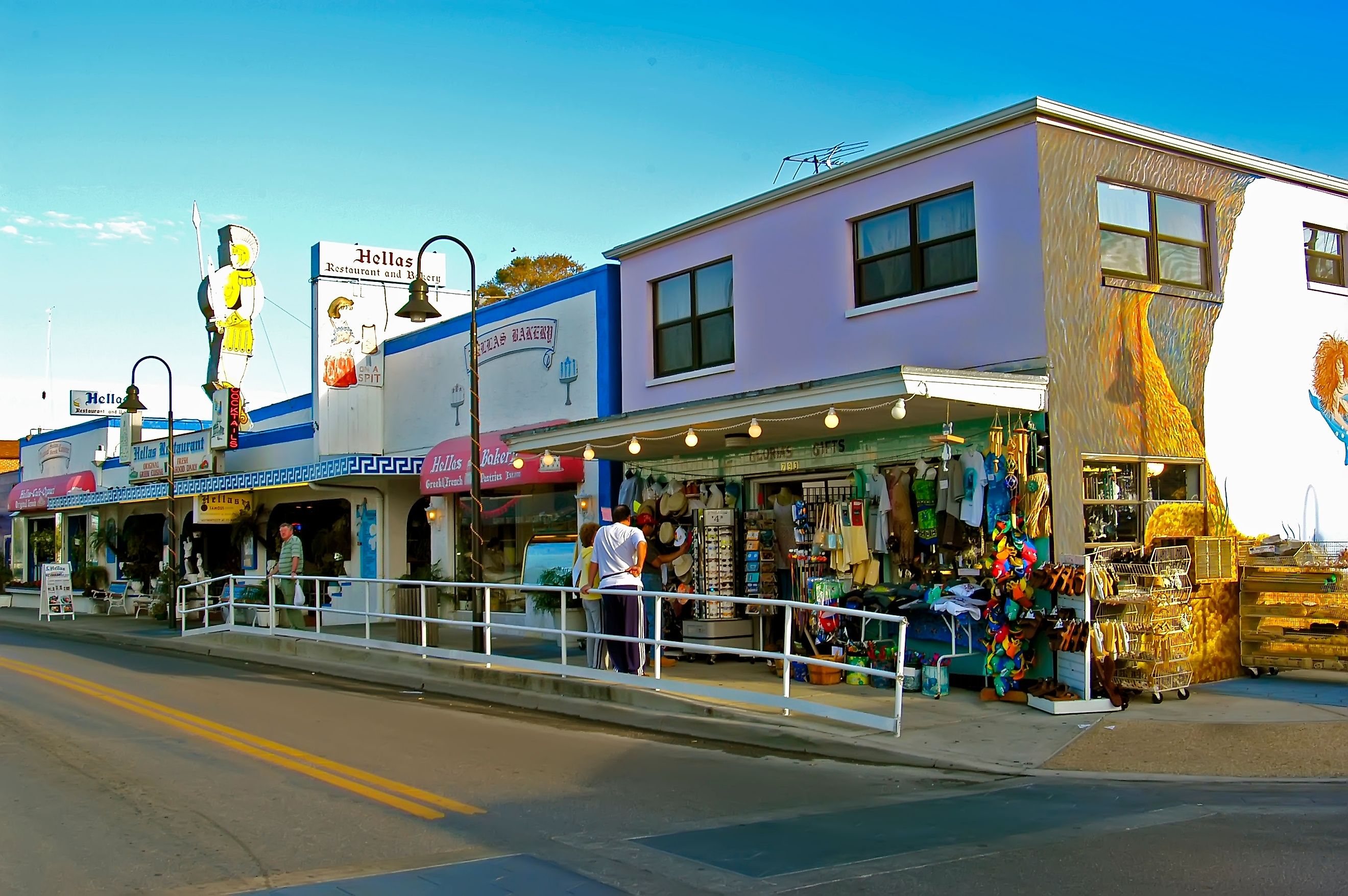
Tarpon Springs runs on sponges, and it has since Greek divers arrived over a century ago. Boats still work the Anclote River docks, hauling in natural sea sponges the same way their crews always have. The neighborhood around Dodecanese Boulevard came with them. Bakeries sell baklava, markets stack barrels of raw sponge next to imported feta and cured olives, and the street signs come in English and Greek. St. Nicholas Greek Orthodox Cathedral, finished in 1943, holds more than 60 stained-glass windows under marble quarried at Mount Penteli in Greece. A short walk away, Spring Bayou sits ringed by Victorian homes where manatees surface in the cool months. The Tarpon Springs Distillery took over an old sponge warehouse and now makes whiskey plus one of the few genuine ouzos distilled in America, which feels about right for the town.
High Springs

High Springs made its name first as a railroad town, and the old bones are still there in the brick downtown. These days the business is spring water and the antique trade that grew up around it. The main street runs a tidy row of antique shops and a local history museum housed in the former depot area, easy to browse in a slow morning. The real headliners sit just outside town. Ginnie Springs and Poe Springs pump out water so clear that divers travel across the country for it, and swimmers treat it as the world's best-kept pool. The Santa Fe River curls along the north edge of town, calm enough for a beginner in a rented kayak and pretty enough to keep a veteran coming back. It is spring country at its most unhurried.
Mount Dora

Mount Dora sits on a ridge above Lake Dora, high enough that the downtown catches a breeze most of central Florida never gets. The work here is antiques and art. Dealers pack the streets with multi-vendor malls and independent galleries, and the town runs more than 30 festivals a year to keep the foot traffic coming. The 1883 Lakeside Inn still takes guests, its yellow-and-white verandas lined with rocking chairs facing the water, which makes it one of Florida's oldest operating hotels. Down at Grantham Point stands the town's odd little mascot, a 35-foot brick-and-stucco lighthouse built in 1988 and billed as Florida's only inland freshwater one. A boardwalk at nearby Palm Island Park threads through cypress swamp where egrets and turtles hold the shoreline. For a quirkier read on the place, the Steamboat Gothic Donnelly House shows off exactly how well the 1890s treated a few local families.
Old Florida, Still Open For Business
What ties these towns together is that none of them are pretending. Cedar Key still sells its clams, Tarpon Springs still sells its sponges, and Micanopy will still sell you a paperback older than you are. The pleasure of visiting is watching a place do the thing it has always done, at the speed it has always done it. That is a harder quality to fake than scenery, and these eight have it in spades.