8 Friendliest Towns In South Carolina
South Carolina's friendliest towns aren't hard to find, but they are easy to underestimate. The state's smaller communities tend to run on the kind of hospitality that shows up in actual conversation, not just a slogan on a welcome sign. In Beaufort, that means a stranger on Bay Street pointing you toward the best shrimp and grits in town. In Landrum, it means a shopkeeper who knows every trail in the foothills by name. From the Lowcountry coast to the Blue Ridge upstate, these eight towns make a strong case that the warmth South Carolina is known for is more than reputation.
Beaufort

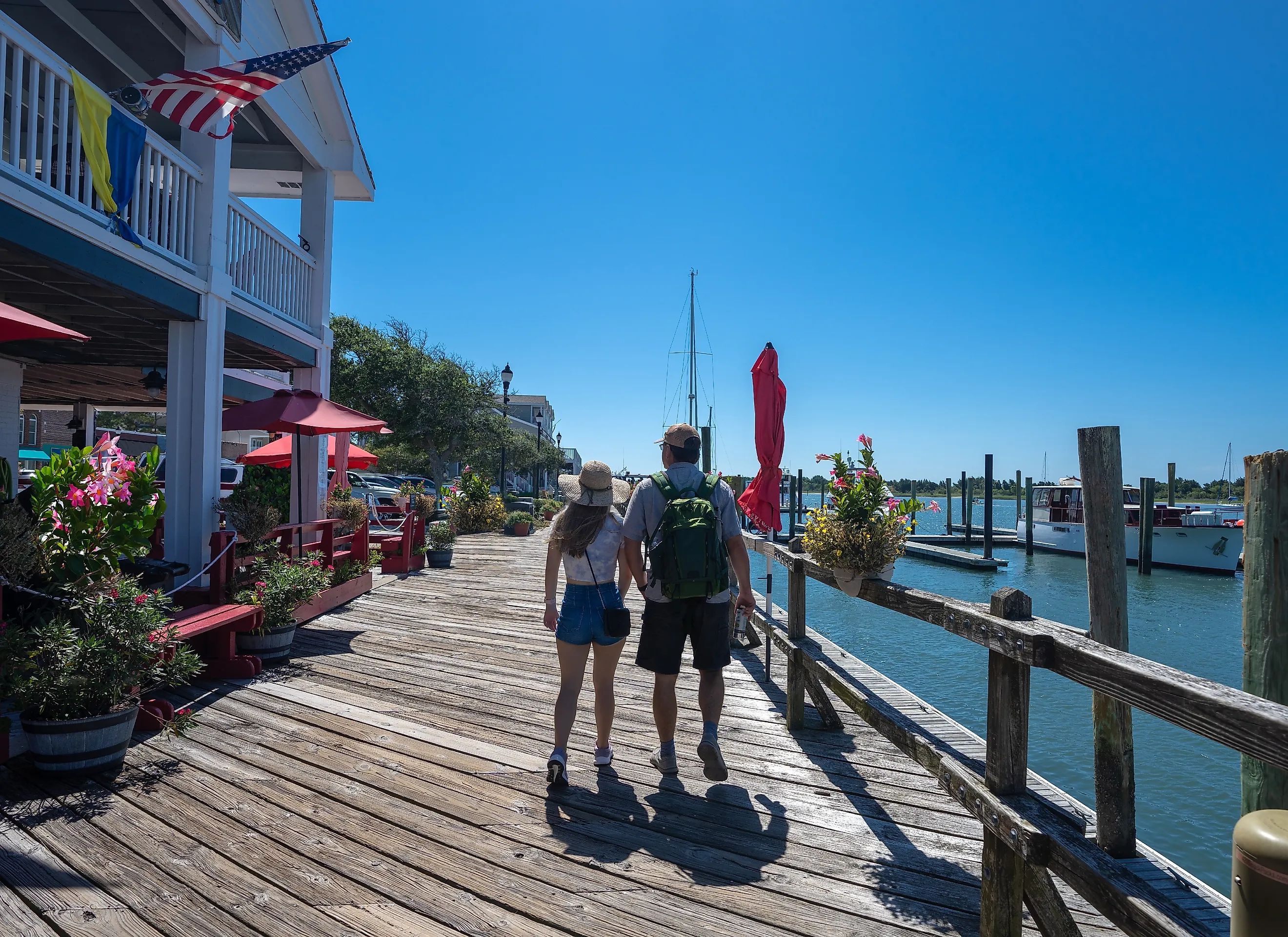
Beaufort is one of the most photogenic small cities in the Lowcountry, with an antebellum historic district that stretches along the waterfront and down streets canopied by live oaks and Spanish moss. Bay Street is the main commercial strip, lined with restaurants, galleries, and shops that face the Beaufort River. Henry C. Chambers Waterfront Park, right off Bay Street, is where much of the town's social life happens, with a boardwalk, swings, and regular community events.
The town has a deep literary connection as well. Author Pat Conroy lived here for much of his life, and his novels drew heavily on the Lowcountry landscape. The Pat Conroy Literary Center on Charles Street is now a gathering place for readers and writers. For Lowcountry food, Plums and Saltus River Grill are two of the better-known spots, both within walking distance of the waterfront.
York

York sits in the Piedmont region of the upstate, a small town of about 8,300 where the downtown still feels like it belongs to the people who live there. The McCelvey Center, a cultural hub housed in a former school building, hosts concerts, theater, and community gatherings year-round. A short drive to nearby McConnells leads to Historic Brattonsville, a Revolutionary War-era plantation site with restored buildings and living history programs that bring the 18th and 19th centuries into focus.
Downtown York is compact and walkable, with local shops and restaurants along Congress Street. The town holds seasonal events that draw the community out, and the pace is slow enough that stopping to talk to someone is the norm rather than the exception.
Aiken

Aiken has been horse country for over a century, and it shows. The town sits within the region known as Thoroughbred Country, and the Aiken Training Track is a working facility where visitors can watch morning workouts during training season. Hitchcock Woods, one of the largest urban forests in the United States at roughly 2,100 acres, is open for hiking, horseback riding, and mountain biking on a network of sandy trails that run through longleaf pine and hardwood forest.
Downtown Aiken has a walkable grid of galleries, boutiques, and restaurants along Laurens Street and the surrounding blocks. Hopelands Gardens, a 14-acre public garden with walking paths, a reflecting pool, and a small performing arts stage, is one of the quieter spots in town and a favorite for evening strolls. The Aiken Steeplechase, held each spring, is a major local event that fills the town with energy and visitors.
Newberry

Newberry is a small city in the Midlands with a well-kept downtown centered on Main Street. The Newberry Opera House, built in 1882 and fully restored, anchors the district and hosts a year-round calendar of concerts, plays, and community events that regularly draws people from the surrounding counties. The Newberry Museum, a few blocks away, covers the town's history from its founding through its textile-era growth.
The downtown is compact enough to walk end to end in a few minutes, with independent shops, a handful of restaurants, and the kind of streetscape where people stop and talk on the sidewalk. Newberry College adds a small but steady energy to the town, particularly during football season.
Georgetown

Georgetown was founded in 1729 and is one of the oldest cities in South Carolina. Its history is tied closely to the rice plantation era, and that past is visible in the architecture and museums throughout the historic district. The Kaminski House Museum, a pre-Revolutionary home on Front Street, displays period furnishings and decorative arts. The Georgetown Harborwalk runs along the Sampit River and connects the waterfront restaurants, shops, and docks that make up the town's social center.
Front Street is the main commercial stretch, with seafood restaurants, local shops, and the town's old clock tower. Boat tours depart from the harbor for cruises along the rivers and into Winyah Bay. Georgetown has the feel of a place that hasn't rushed to modernize, which is a large part of its appeal.
Landrum

Landrum sits in the foothills of the Blue Ridge Mountains in the upstate, just south of the North Carolina border. The downtown is small and walkable, with boutiques, vintage shops, and a few good coffee spots clustered along East Rutherford Street. Campbell's Covered Bridge, a short drive from the center, is the last remaining covered bridge in South Carolina and worth the stop for its setting alone.
Chestnut Ridge Heritage Preserve, also nearby, offers hiking through hardwood forest with waterfalls and ridgeline views. Landrum works well as a base for exploring the broader foothills, with access to trails, farm stands, and scenic drives that fan out in every direction. The town is small enough that repeat visits start to feel familiar fast.
Edisto Beach

Edisto Beach, on Edisto Island, is one of the last family-oriented, uncommercialised beach towns on the South Carolina coast. There is no high-rise development here, and the pace reflects that. The beach itself stretches for miles, and Edisto Beach State Park adds hiking trails through maritime forest, campsites, and access to the marsh and tidal creeks that define the island's interior.
The island's live oak trees, some of them centuries old, are part of the landscape along nearly every road. Local seafood restaurants and a handful of small shops make up the commercial scene, and the community is tight-knit enough that visitors notice the difference. Biking is one of the best ways to get around, with flat roads and little traffic.
Sullivan's Island

Sullivan's Island is a small barrier island just across the harbor from Charleston, but it feels a world apart. The beaches are wide and uncrowded, the streets are residential and quiet, and there is no boardwalk or commercial strip to speak of. Fort Moultrie, a National Park Service site, preserves the military history of the island from the Revolutionary War through World War II. The Sullivan's Island Lighthouse, built in 1962 and one of the last major lighthouses constructed in the US, is a distinctive triangular structure visible from much of the island.
Sullivan's Island also carries significant African American history as one of the primary ports of entry for enslaved Africans brought to North America. A bench memorial near Fort Moultrie marks this history. Poe's Tavern, named for Edgar Allan Poe (who was stationed at Fort Moultrie in the late 1820s), is one of the island's most popular restaurants and a reliable spot for burgers and local beer.
South Carolina's friendliest towns share a quality that's hard to manufacture: the sense that the people who live there genuinely like where they are. That comes through in the pace, the conversation, and the way each town holds onto what makes it distinct rather than chasing what would make it generic. Whether it's horse country, rice country, or barrier island, the welcome is real.