8 Best Places To Live In Kansas In 2026
Choosing where to live in Kansas means weighing very different strengths depending on the city. The Kansas City suburbs in Johnson County offer some of the best schools and safest neighborhoods in the Midwest, all within a quick drive of a major metro. Lawrence and Manhattan bring real college-town energy with walkable downtowns, live music, and research institutions anchoring the local economy. Wichita is a full-scale city where a middle-class income still goes far enough to buy a house. Salina, in the center of the state, pairs affordable housing with solid healthcare and a downtown that keeps improving. These eight cities show that the right place in Kansas comes down to what matters most to you.
Lawrence

Lawrence, home to roughly 97,000 people and the University of Kansas, brings a level of cultural and intellectual energy unusual for a city its size. Massachusetts Street, the walkable downtown corridor, supports independent bookstores, restaurants, and live music venues that have earned Lawrence national recognition as a creative hub. The university and Haskell Indian Nations University anchor the local economy alongside an emerging biotechnology sector centered on KU Innovation Park.

The cultural infrastructure extends well beyond downtown, with the Spencer Museum of Art and the Lied Center of Kansas for the performing arts both drawing from the university's resources. Lawrence Public Schools maintain strong ratings, and the city's investment in bike infrastructure and trail networks, including the Lawrence Loop, supports an active lifestyle that connects naturally to Clinton Lake, about five miles southwest of town, for swimming, boating, and hiking. Housing remains affordable relative to other college towns, with an average home value around $323,000 and a cost of living that falls roughly 14 percent below the national average. Overall crime runs higher than the national average at roughly 28 incidents per 1,000 residents, driven largely by property crime, though violent crime remains near state norms. The city sits about 40 miles west of Kansas City, close enough for residents to access metro-area employers while living at a meaningfully lower cost.
Wichita

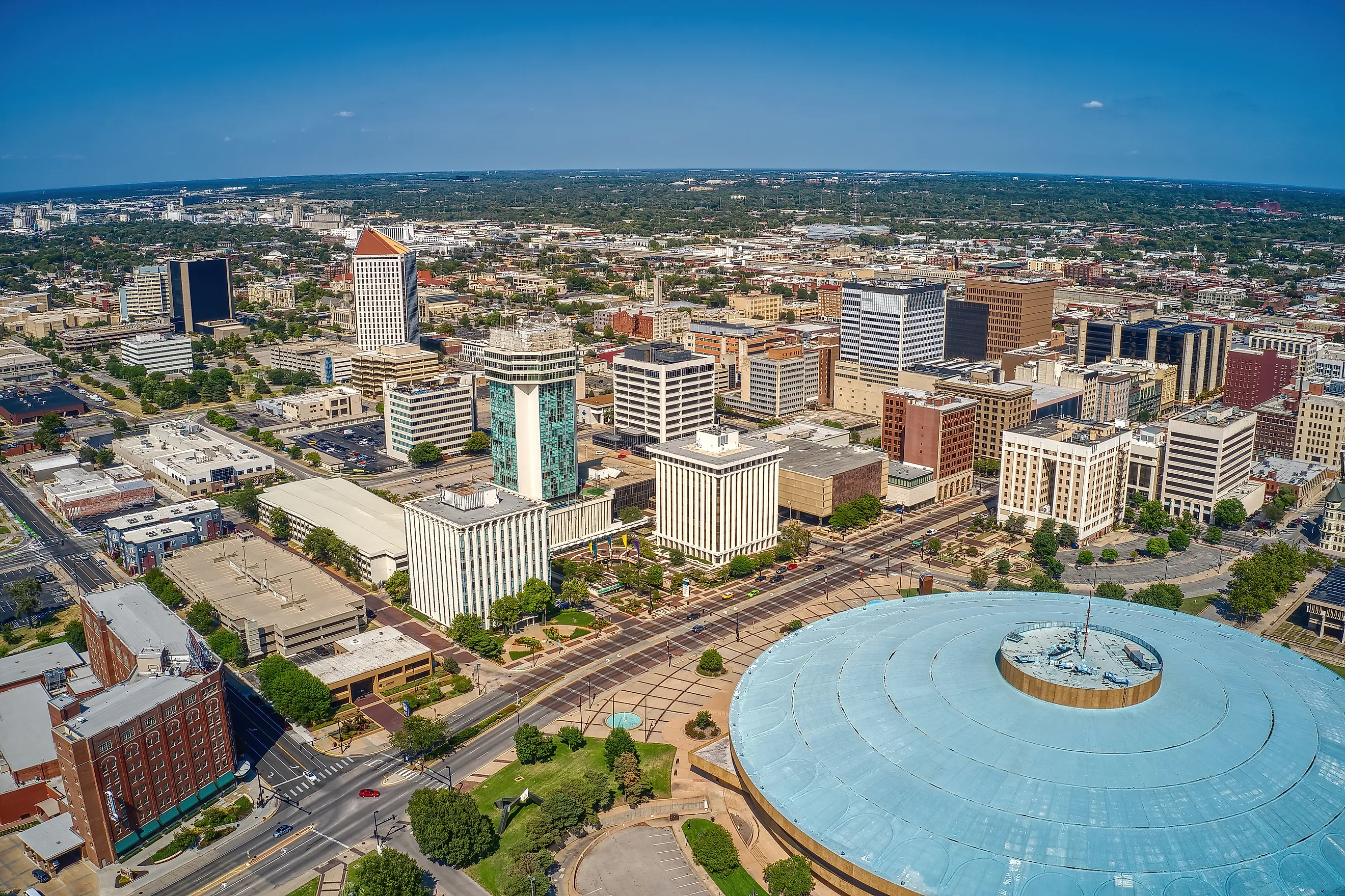
As the largest city in Kansas with a population of approximately 397,000, Wichita offers the widest range of urban amenities in the state at a cost of living that remains well below the national average. The average home value of roughly $198,000 makes homeownership a realistic goal for many residents, though overall crime is higher than national averages at about 28 incidents per 1,000 residents, with violent crime around 5.3 per 1,000. Those levels are generally consistent with other U.S. cities of comparable size.

The city earned its identity as the "Air Capital of the World" through deep ties to the aviation industry, with Textron Aviation and Spirit AeroSystems maintaining major manufacturing operations in the metro area. The healthcare sector has grown alongside aviation, with Ascension Via Christi and Wesley Medical Center providing comprehensive care. But the city's appeal extends well beyond employment. The Sedgwick County Zoo, Botanica Wichita Gardens, and the Old Town entertainment district add depth to the city's cultural life, which is further supported by Wichita State University and Friends University. The Keeper of the Plains, a 44-foot steel sculpture at the confluence of the Big and Little Arkansas Rivers, has become one of the most recognized landmarks in the state. Its surrounding plaza and nightly Ring of Fire ceremony draw families and visitors to the riverfront, anchoring a gathering space that reflects the city's growing investment in public life.
Manhattan

Known as the "Little Apple," Manhattan is a city of roughly 54,000 people in the Flint Hills of northeastern Kansas, where the Big Blue and Kansas Rivers meet. Kansas State University drives much of the local economy, employing more than 6,000 people on a campus that serves over 21,000 students. The National Bio and Agro-Defense Facility, a federal research complex on the university's campus, and Fort Riley, home to the 1st Infantry Division, diversify the job base well beyond higher education.

Downtown Manhattan's Aggieville commercial district keeps the corridor active most evenings with restaurants, bars, and shops that cater to both students and permanent residents. The Flint Hills Discovery Center, also downtown, interprets the ecology and history of one of the last remaining tallgrass prairie ecosystems on Earth, and Sunset Zoo provides a family-friendly attraction within walking distance of campus. Housing remains affordable, with an average home value of approximately $283,000. Manhattan maintains moderate crime levels at about 21 total incidents per 1,000 residents, with violent crime below national averages. The city's proximity to the Konza Prairie Biological Station and the Flint Hills Scenic Byway provides access to some of the Midwest's most visually striking open landscapes. That combination of affordability, outdoor access, and strong public schools makes Manhattan particularly appealing to families weighing the balance between college-town energy and military-adjacent stability.
Salina

Salina, a city of roughly 46,000 in central Kansas, offers a small-city lifestyle at one of the most affordable price points in the state. The average home value of approximately $170,000 opens homeownership to first-time buyers, young families, and retirees on fixed incomes, while the median household income of around $61,000 stretches considerably in a market where housing, groceries, and services all fall below national averages. Crime rates are, however, higher than national averages, at roughly 29 total incidents per 1,000 residents, with elevated property crime compared to state norms.

Salina Regional Health Center provides comprehensive medical services, and the city's position at the intersection of I-70 and I-135 puts Wichita about an hour away, Topeka roughly 90 minutes, and Kansas City under three hours — practical highway access that also connects residents to Kansas Wesleyan University and Kansas State University's Salina campus for higher education. Downtown, the revitalized stretch of Santa Fe Avenue has become a gathering point, with Theatre Salina and the Smoky Hill Museum anchoring a growing cluster of restaurants and small businesses that spills out toward Indian Rock Park and the scenic trail along the Smoky Hill River.
Overland Park

Overland Park, the second-largest city in Kansas with a population of roughly 208,000, consistently ranks among the best places to live both statewide and nationally. The economy centers on professional services, healthcare, finance, and technology, with T-Mobile maintaining offices here alongside engineering firm Black and Veatch and the University of Kansas Health System. That employer base helps keep the unemployment rate around 3.5 percent, well below the national average, and supports a median household income of approximately $101,000.
Families benefit from two of the state's strongest school systems — the Blue Valley and Shawnee Mission districts — while Johnson County Community College provides accessible higher education on a campus that also houses the Nerman Museum of Contemporary Art, one of the largest contemporary art museums in the region. The city maintains 83 parks and more than 10 miles of trails, including the Indian Creek Trail, and the Deanna Rose Children's Farmstead draws families from across the metro for its interactive farm experience. Violent crime rates have remained consistently below state and national averages over the past five years, at roughly 1.8 incidents per 1,000 residents compared to about 4 per 1,000 nationally, and commute times to downtown Kansas City average about 19 minutes. The average home value of approximately $470,000 runs higher than the state average, but the income-to-housing ratio remains competitive for a metro area with this level of amenity.
Lenexa

Lenexa, a city of roughly 59,000 in Johnson County, has positioned itself as a growing mixed-use and logistics hub within the Kansas City metro. Sitting along the I-435 and I-35 interchange, the city provides direct highway access to downtown Kansas City in under 20 minutes, and the Lenexa Logistics Park and City Center development have drawn companies in healthcare technology, data management, and distribution.
The Shawnee Mission School District serves much of the city and ranks among the top districts in Kansas, but Lenexa's community character extends well beyond its schools; the annual Chili Challenge alone draws thousands, and regular farmers' markets and seasonal festivals fill out the calendar. More than 30 parks dot the city, and Lake Lenexa offers paddleboarding, fishing, and shoreline trails within the city limits. The average home value of approximately $468,000 places Lenexa below neighboring Leawood while delivering similar access to Johnson County's infrastructure and amenities. Crime rates remain low, with violent crime at approximately 1.8 incidents per 1,000 residents, and ongoing investment in mixed-use development along the central corridor continues to add retail, dining, and residential options that keep the city evolving.
Leawood

Leawood, a city of about 34,000 in the southern portion of Johnson County, consistently ranks among the safest and most affluent communities in Kansas. The median household income of approximately $186,000 and the average home value of roughly $760,000 reflect the quality of the housing stock and the appeal of its tree-lined, well-maintained neighborhoods.
The Blue Valley School District, which serves much of Leawood, earns some of the highest academic ratings in the state, and the city's commercial anchors, the Town Center Plaza and Park Place, combine national retailers, locally owned restaurants, and entertainment venues within walkable mixed-use settings. The same attention to quality carries over to healthcare, with the University of Kansas Health System and Children's Mercy Hospital both a short drive away, and to the city's green spaces, where Ironwoods Park and Leawood City Park provide trail access within neighborhoods shaped by strict development standards. Violent crime in Leawood runs at approximately 0.6 incidents per 1,000 residents, nearly one-seventh of the national average. For residents willing to invest in a premium living environment with strong schools, low crime, and polished commercial districts, Leawood delivers at a price point that remains well below comparable suburbs on the East and West Coasts.
Olathe

Olathe ranked as the top Kansas city in the U.S. News and World Report 2025-2026 Best Places to Live rankings, and the reasons show up across nearly every quality-of-life measure. With a population of roughly 149,000 and direct access to Kansas City via I-35 and K-10, the city has experienced steady growth while maintaining a median household income of approximately $114,000 and an average commute time of just 19 minutes.
The Olathe School District serves more than 29,000 students across some of the highest-performing schools in the state, and MidAmerica Nazarene University extends that educational infrastructure into a four-year option. The same family-oriented profile carries over to healthcare, where Olathe Medical Center anchors access across the city, and to the extensive park system and trail network — including the Indian Creek Trail — that supports year-round outdoor recreation. At an average home value of approximately $425,000, Olathe sits below the Johnson County average, making it one of the more accessible entry points into a county known nationally for its schools, safety, and economic strength. Crime rates have consistently ranked below national averages, with violent crime around 1.9 per 1,000 residents and overall crime roughly 45 percent below national levels, reinforcing the family-friendly reputation that earned the city its top spot.
Finding the Right Fit in Kansas
These eight communities demonstrate the range of lifestyles available across the state. Johnson County suburbs like Overland Park, Olathe, Lenexa, and Leawood provide strong schools, low crime, and convenient access to Kansas City's job market and cultural offerings. Lawrence and Manhattan deliver college-town energy with walkable downtowns and research-driven economies. Wichita brings the scale of a major city at a cost that keeps the middle class firmly within reach of homeownership. And Salina shows that small-city living in the heart of the Great Plains can mean genuine affordability without sacrificing access to healthcare, education, and community. The right choice depends on what matters most, but Kansas offers more good answers to that question than most people expect.