7 South Dakota Towns Where Time Stands Still
South Dakota’s history is still visible in many of its small towns, with gold rush streets and early territorial landmarks. In places like Deadwood and other Black Hills towns, old storefronts and brick architecture make it easy to see how these settlements once looked during the Wild West era. Yankton reflects the state’s early political history with sites like the Territorial Capitol replica and the Meridian Bridge along the Missouri River. For travelers interested in exploring towns where the past still feels close at hand, below are 7 South Dakota towns where time stands still.
Deadwood

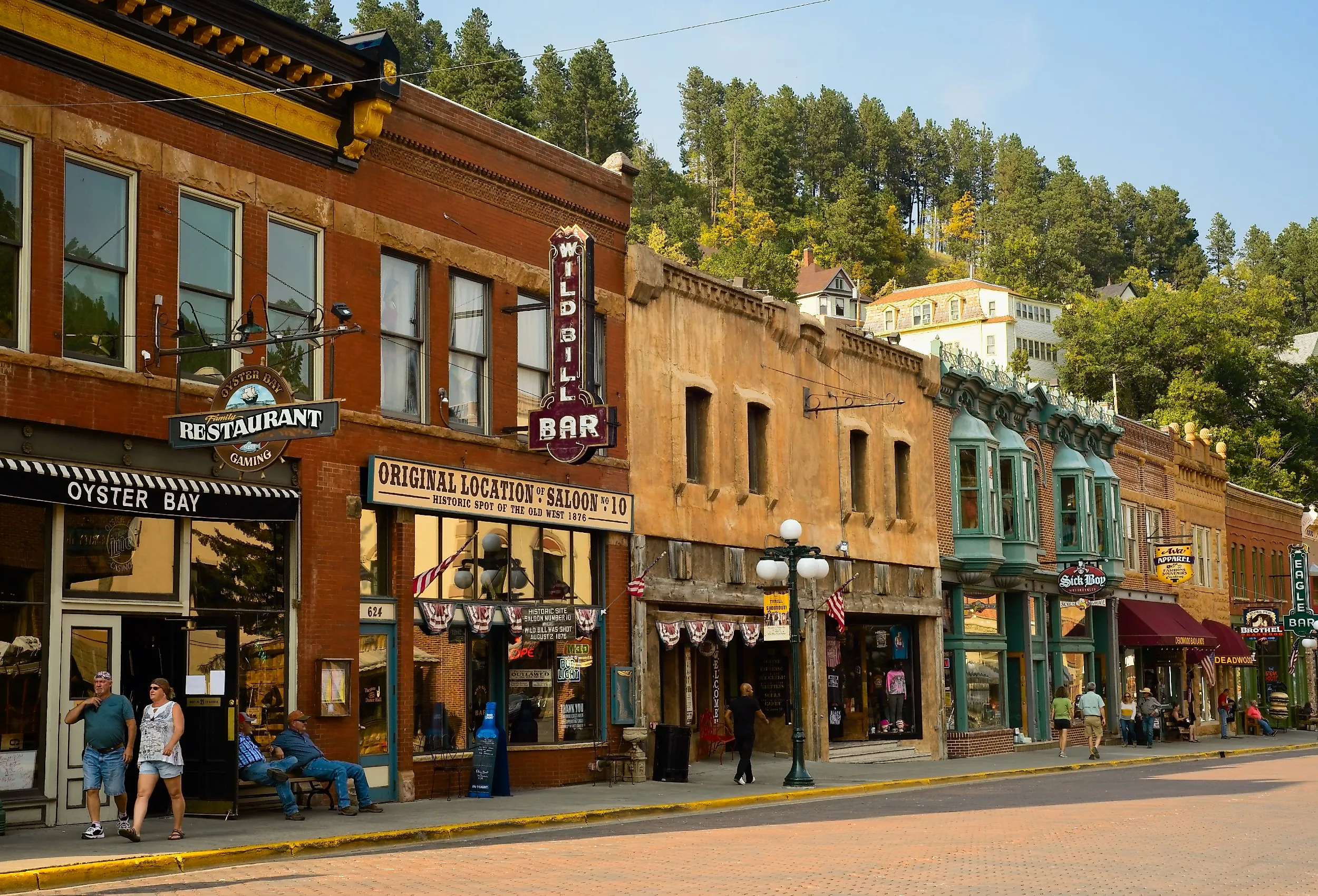
Tourists who want to step back in time can plan their South Dakota trip to Deadwood for a look at the state’s Wild West past. The town boomed in the 1870s during the Black Hills Gold Rush, becoming a hotspot for Old West figures such as Calamity Jane and Wyatt Earp. Today, the same traditions continue to seep through the streets, and the entire town is designated as a National Historic Landmark District. People can roam the preserved 19th-century streets, where spots like the Adams House beckon with tales of old. This structure was built in 1892 by pioneers of the region and showcases intricate Queen Anne-style architecture with rustic interiors. There is also the nearby Adams Museum, which offers more information on local tales.

For a more hands-on experience, Broken Boot Gold Mine is a must-visit, offering tours of an underground gold mine from 1878 with the opportunity to pan for gold. After the underground experience, head back above ground to Mount Moriah Cemetery, where the graves of Old West figures remain. Specifically, Wild Bill Hickok, Calamity Jane, and Seth Bullock are among the notable people buried here, creating a timeless aura like no other. End the day with some time at Saloon No. 10, a spot with so much history it feels like you have gone back in time.
Custer

Custer is the oldest town settled by European Americans in the Black Hills, and it's perfect to explore the region’s scenery and past. Upon arrival, the town of 2,000 has an array of sights that attract curious travelers, including the Custer County Courthouse. This site was built in 1881 and is now listed on the National Register of Historic Places with a unique adaptation of Italianate architecture. That said, the town truly comes to life in July during the Gold Discovery Days, celebrating when Lieutenant Colonel George Custer discovered gold near present-day Custer. The festival features three days of events with a car show, volleyball tournament, parade, and even a 5K run.
Just outside town, Custer State Park offers another reason why the area feels rooted in the past. Established in the 1910s, the park spans roughly 71,000 acres, making it the largest state park in South Dakota. Visitors can drive the famous Wildlife Loop Road, where herds of more than 1,000 bison, along with pronghorn, elk, and prairie dogs, still roam the plains much like they did centuries ago. Scenic routes like the Needles Highway wind through towering granite formations, while Sylvan Lake, one of the park’s most photographed spots, invites travelers to hike, paddle, or simply enjoy the quiet Black Hills landscape.
Yankton

Nicknamed the “Mother City of the Dakotas” for its pivotal role in the region’s early development, Yankton is a charming community along the Missouri River. It was the first capital of the Dakota Territory, and is named after the Yankton tribe of Native Americans. Those interested in the town’s early days can visit the Territorial Capitol replica, which showcases the government building that made state decisions from 1862 to 1883, when Bismarck was named the capital. Tourists interested in learning more about this time and the town can head over to the Mead Museum, a historic 1909 building with exhibits, artifacts, and more on the town and related events, including the Lewis & Clark Exhibit. December is a great time to visit, thanks to the museum’s Hall of Trees, wherein local businesses decorate trees throughout the structure.
Yankton’s charm is not limited to its downtown and buildings, but also spreads to the scenic outdoors nearby. A short walk south leads to the Meridian Bridge on the Missouri, which dates back to the 1920s. This bridge has been a vital link between South Dakota and Nebraska and now supports pedestrian and bicycle traffic across its 3,000-foot length. If the river views seem enticing, follow the Missouri to the Lewis and Clark Recreation Area nearby for some of the best scenes. This area boasts hundreds of campgrounds and camper cabins, hiking trails, and the Lewis and Clark Resort and Marina, offering endless ways to enjoy the waterfront.
Pierre

If you enjoyed the Capitol replica in Yankton, why not check out the current South Dakota State Capitol in Pierre? Also on the Missouri River, this city was founded in 1880 and became the state capital in 1889. Home to around 14,000 people, it is one of the least populous state capitals, giving visitors ample peace and quiet to explore sights like the South Dakota State Capitol. This building was constructed in 1910, showcasing Renaissance Revival architecture with terrazzo tile flooring and a vast garden with statues and memorial structures. The statues open up another timeless piece on the grounds, the Trail of Governors, a series of life-size bronze statues depicting the former governors of South Dakota.
A short drive away from the Capitol Building is the South Dakota Cultural Heritage Center (currently closed for renovations but slated to reopen mid-2026), a hub of information. The museum spans thousands of square feet and features unique exhibits, including “The South Dakota Experience,” which showcases galleries on the state’s early inhabitants. Across the Missouri River lies a different way to experience Pierre on La Framboise Island. With acres of trees, meadows, and plenty of wildlife species, it is the perfect place to relax while hiking, boating, or fishing on the dock.
Spearfish

Similar to most mining towns in South Dakota, Spearfish was once home to Native American tribes and boomed during the Black Hills Gold Rush. The town was founded in 1876 and supplied food to nearby mining camps, gradually developing as both a mining and tourist town. Time here seemed to have stopped ticking since then, as the historic downtown area abounds with brick storefronts from the late 1800s, with charming stories behind them. Visitors should join the walking tour of the Spearfish Historic Commercial District, which covers over a dozen sites, including the 1893 Lown Mercantile building, the 1920 Mail Building, and the 1892 Odd Fellows Lodge.
Showcasing a different side of Spearfish is the D.C. Booth Historic National Fish Hatchery and Archives. This 1896 hatchery was one of over 70 built in the United States to establish trout populations. Today, it is one of the oldest in the country and still releases over 20,000 rainbow trout per year. Inside, the hatchery houses the Von Bayer Museum of Fish Culture, which houses over 150,000 artifacts related to fish culture. Just outside town, Spearfish Canyon adds even more depth to the area’s timeless feel. The adjacent byway for about 19 miles through the Black Hills is known for its towering limestone cliffs and scenic waterfalls like Bridal Veil Falls and Roughlock Falls.
Keystone

Keystone is a small Black Hills town where South Dakota’s gold rush past meets one of the country's most recognizable landmarks. Founded in 1883, Keystone began as a mining camp during the Black Hills Gold Rush, and much of that early identity still shapes the town today. Walking along the historic downtown streets reveals old wooden storefronts, mining-era buildings, and small museums that highlight the town’s rugged beginnings. One of the best places to explore this history is the Keystone Historical Museum. Located in a 1899 schoolhouse, this museum displays photographs, tools, and artifacts from the early miners who helped establish the community.
Visitors can also experience this mining heritage firsthand at Big Thunder Gold Mine, a former operational mine that now offers guided underground tours. During the visit, guides explain how miners searched for gold in the Black Hills while demonstrating the equipment used during the late 1800s. Just minutes from downtown lies Mount Rushmore National Memorial, the towering granite sculpture of four US presidents carved into the Black Hills. This nearby landmark brings millions of visitors through Keystone each year, making the small town both a gateway to American history and a reminder of the region’s gold rush origins.
Sturgis

If the idea of an old frontier town seems exciting, Sturgis has to be the next destination on your itinerary. Founded in the 1870s, the town was once known as “Scooptown,” until the name was changed to “Sturgis” after Major Samuel D. Sturgis, a commander at nearby Fort Meade Cavalry Post. The fort itself was a pivotal structure in the region, serving as a military post to protect miners in the Black Hills and remaining active until the 1940s, when it became part of the Veterans Administration Hospital network. A complete history lesson awaits at the Old Fort Meade Museum, which uses the old commanding officer’s house in town to showcase exhibits and information on the structure.
Putting a cultural spin on things, especially for bikers, is the Sturgis Motorcycle Museum & Hall of Fame. Open for over two decades, the museum has over 100 vintage and rare motorcycles across exhibits like “McGraw’s Cycle Shop,” where visitors can experience the workings of a 1920s bike workshop. The motorcycling fun doesn’t end here, though, as Sturgis also hosts the Sturgis Motorcycle Rally, one of the largest annual motorcycle events in the world. Bikes roar to life for ten days in August, with an annual attendance of around 500,000 watching bike shows, concerts, bands, and live stunts. After all the loud engines, visitors can take a short break at the nearby Bear Butte State Park with its ample boating, fishing, and hiking opportunities. It connects to the Centennial Trail, so there is no shortage of exploration for outdoor lovers.
Uncover South Dakota’s Storied Past
These seven towns in South Dakota showcase the state’s history, each with its own unique set of sights. Those interested in military tales may enjoy Sturgis, while some time in Pierre is perfect for exploring historic architecture. Moreover, plenty of outdoor and cultural opportunities open up along the rustic routes, so there is always something interesting to do. With their ample landmarks, parks, and cultural activities, history lovers must visit these towns where time stands still.