7 Best Towns In Tennessee For A Two-Day Recharge
Two nights in the right place can do more for you than a week of good intentions. The idea behind a 48-hour reset is simple enough: get far enough from the noise that your sleep, your pace, and your attention have room to settle. Tennessee's smallest towns, the pocket-size settlements most travelers speed past, turn out to be well suited to it. Each sits close to wild water or high ridges, each keeps a walkable main street, and none relies on neon to announce itself.
The seven communities that follow qualify because they compress everything a reboot requires, lodging, landscape, and local flavor, into a range you can cover between Friday sundown and Sunday brunch. Expect mill-town breakfasts, porch-front storytelling, and rivers cold enough to numb the week's deadlines straight out of your bloodstream. Pick one, wind the mental hourglass to 48 hours, and let the reset begin.
Gatlinburg

Gatlinburg's entire downtown sits inside a narrow Appalachian valley, which is why it has no room to sprawl, and why almost every storefront, trailhead, and overlook is within walking distance. Originally a logging village, the town became a hub for artists and hikers after Great Smoky Mountains National Park was established in 1934. Today, the Arrowmont School of Arts and Crafts still offers public exhibitions and rotating studio shows, just a block off the main Parkway. Few Tennessee towns combine direct park access, public art, and urban density this tightly.

Visitors can take the SkyLift up Crockett Mountain to Gatlinburg SkyPark, which connects to the SkyBridge, at 680 feet the longest pedestrian suspension bridge in the United States, with a glass-floor panel at the midpoint 140 feet above the valley. Nearby, the Sugarlands Visitor Center sits at the park entrance and offers short hikes to Cataract Falls and free naturalist-led programs. On the north end of town, the Great Smoky Arts and Crafts Community includes roughly 100 studios, galleries, and working shops across an 8-mile loop. For food, Crockett's Breakfast Camp serves cornmeal griddle cakes in a log cabin setting, while Cherokee Grill offers lodge-style dinners inlaid with stone and dark wood. The Park Vista DoubleTree, a round tower perched above downtown, includes private balconies, a central atrium pool, and consistent shuttle access to town.
Pigeon Forge

Pigeon Forge was named after an iron forge that once sat beside the Little Pigeon River, but its modern identity was shaped by a single family: the Partons. Dolly Parton's Dollywood opened here in 1986, transforming the town into a national entertainment corridor. Despite the traffic and neon, Pigeon Forge still operates like a small town. City Hall sits less than a mile from the LeConte Center and Patriot Park, where a walking loop borders a quiet veterans' memorial and the historic Old Mill, built in 1830 and among the oldest continuously operating gristmills in the country.

The Island in Pigeon Forge anchors the central strip with its 200-foot observation wheel and synchronized music fountain. Inside the complex, Margaritaville Island Hotel includes river-facing suites and direct access to shops and restaurants. The Alcatraz East Crime Museum offers exhibits on FBI forensics, vintage getaway cars, and criminal psychology. On the quieter north end of town, Local Goat serves elk burgers and Tennessee whiskey cocktails in a building made from reclaimed barn wood. Just off the Parkway, The Old Mill Restaurant uses grain milled on site for corn chowder, biscuits, and grits. Most visitors never leave the five-mile strip, and most do not need to.
Townsend

Townsend markets itself as "The Peaceful Side of the Smokies," and its sign ordinances back the slogan up: no neon, no strip malls, no go-karts, and no chain restaurants along the main road. The Little River runs through the center of town, and most businesses back directly onto it. On summer mornings, local outfitters like River Rat hand out inner tubes and drop guests upstream for a float back to town. A rail-trail runs parallel to the highway and can be walked or biked in segments past churches, farms, and old millstones.

Tuckaleechee Caverns, known to the Cherokee long before it opened to the public in 1953, descends more than 400 feet underground. Guided tours show calcite formations and a subterranean waterfall over 200 feet high. For regional history, the Great Smoky Mountains Heritage Center keeps a rotating collection of pioneer tools, textiles, and archaeological finds, including log cabins relocated from nearby Cades Cove. Apple Valley Cafe serves country breakfasts and fried pimento sandwiches next to a general store. Dancing Bear Lodge, off Old Tuckaleechee Road, offers timber-frame cabins, onsite trail access, and the Appalachian Bistro, which sources trout, mushrooms, and beef within a 100-mile radius.
Jonesborough

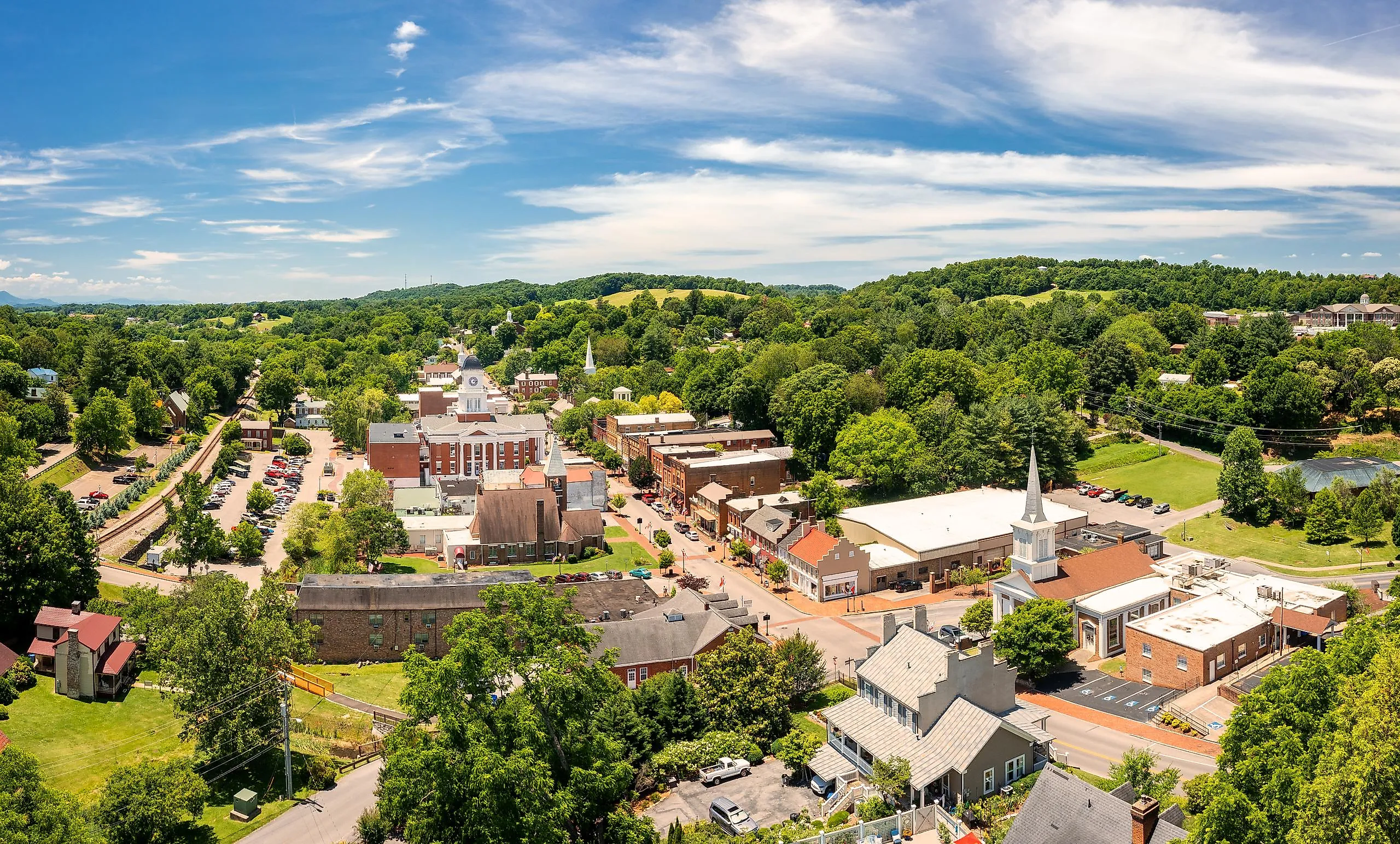
Jonesborough is the oldest town in Tennessee, chartered in 1779, which predates statehood by seventeen years. It became a center for abolitionist printing in 1820, when Elihu Embree began publishing The Emancipator here, the first periodical in the country devoted entirely to abolishing slavery. Today the town bills itself as the storytelling capital of the U.S. Every October it hosts the National Storytelling Festival, which fills downtown with tents, stages, and spoken-word artists from around the world. The International Storytelling Center, in a brick building across from the courthouse, offers weekday matinee performances from spring through early winter.

The Chester Inn, dating to 1797, is the oldest commercial building in town and now operates as a state historic site and museum. Main Street runs three blocks and holds independent shops, galleries, and cafes. The McKinney Center, housed in a former school, offers public exhibits and cultural workshops. For lunch, Main Street Cafe does trout cakes and scratch-made pies, and the Lollipop Shop sells retro toys and Tennessee-made candy in the former Seaver family drugstore. Just behind the courthouse, Mill Spring Park includes a springhouse and a short walking trail along a creek. The Historic Eureka Inn, in a building from the late 1790s, has nine guest rooms, a central courtyard, and original wavy-glass windows.
Greeneville

Before he was a president, Andrew Johnson was a tailor, and he ran his shop just off Depot Street here. It still stands, preserved inside its own building as part of the Andrew Johnson National Historic Site, which also takes in Johnson's two homes and the hilltop National Cemetery where he is buried beneath an obelisk. Greeneville's downtown holds a dense cluster of 19th-century brick buildings, including the Dickson-Williams Mansion, which served as a Confederate headquarters and later a Union hospital during the Civil War.

The Nathanael Greene Museum holds local artifacts and exhibits on frontier life, regional newspapers, and Greene County's role in the State of Franklin, the breakaway territory that briefly made Greeneville its capital in the 1780s. The town's public green space, Hardin Park, includes a walking track, duck pond, and WWII-era stone pavilion. For food, Brumley's at the General Morgan Inn serves trout cakes, bourbon steak, and seasonal pasta from a dining room lined with 1890s wood paneling, and Tipton's Cafe a few blocks away serves tomato gravy and biscuits starting at 7 a.m. The General Morgan Inn anchors downtown with 51 rooms, a rooftop terrace, and a lobby restored with period tile, pressed-tin ceilings, and framed tobacco tax stamps.
Cookeville

Cookeville sits within reach of three state parks and has a fair claim to being Tennessee's waterfall capital, with an unusual concentration of cascades inside a 15-mile radius. The best known is Burgess Falls, which drops roughly 130 feet into a limestone gorge at the end of a short, steep trail. Tennessee Tech University, founded in 1915, brings year-round lectures, music performances, and gallery shows to the town center. The Appalachian Center for Craft, a satellite campus on Center Hill Lake, offers studio access to glassblowing, weaving, and metalsmithing. The Cookeville Depot Museum, in the town's original 1909 train station, includes restored rolling stock and a scale model of the Tennessee Central Railway.

Dogwood Park in the heart of downtown has a tiered fountain, rose garden, and outdoor stage with summer performances. The WestSide district, built around the old depot, includes Red Silo Brewing Company and Cream City Ice Cream. Poet's Coffee on Broad Street serves espresso and lentil wraps in a brick-walled cafe with rotating exhibits from local artists. The Saltbox Inn and Stables sits just south of downtown and includes furnished suites in a white-frame farmhouse, an on-site equestrian barn, and landscaped grounds used for weddings and seasonal events.
Tellico Plains

Tellico Plains sits at the base of the Unicoi Mountains and marks the western entrance to the Cherohala Skyway, a 43-mile scenic byway crossing into North Carolina over elevations reaching about 5,400 feet. The town was built on the site of Great Tellico, once among the largest Cherokee towns in the region. Today a small interpretive exhibit inside the Charles Hall Museum displays 19th-century Cherokee artifacts alongside logging tools, firearms, and local telegraph equipment. Most businesses operate out of converted service stations, cabins, or brick storefronts facing the Tellico River.

The Bald River Falls trailhead, upriver from town, reaches a 90-foot cascade and connects to the larger Citico Creek Wilderness. Tellico Grains Bakery, in a restored Gulf gas station, serves sourdough pizzas, cheddar biscuits, and cranberry scones from a wood-fired oven. The Farmhouse Inn, just outside the town center, includes three suites and a communal porch with mountain views. For gear and guides, Tellico Outfitters stocks local fly patterns and runs casting lessons near the bridge, with trout stocked through the spring and summer. Most visitors use Tellico Plains as a pass-through to the Skyway. Those who stay overnight often do not tell anyone.
Two Nights, Seven Options
Taken together, these seven show that Tennessee's restorative power lies well off its interstates. Each fuses accessible adventure, locally driven dining, and lodging that keeps nature within earshot, which is what turns two ordinary nights into something that actually resets you. Gatlinburg and Pigeon Forge give you the busiest version, with a national park at the door and a strip of neon behind you. Townsend and Tellico Plains give you the quietest. Jonesborough and Greeneville trade in history you can walk through, and Cookeville puts waterfalls in every direction. Whether you want waterfall spray, a mountain panorama, or a porch rocker beside Civil War brickwork, the smaller dots on the Tennessee map deliver calm without costing you convenience.