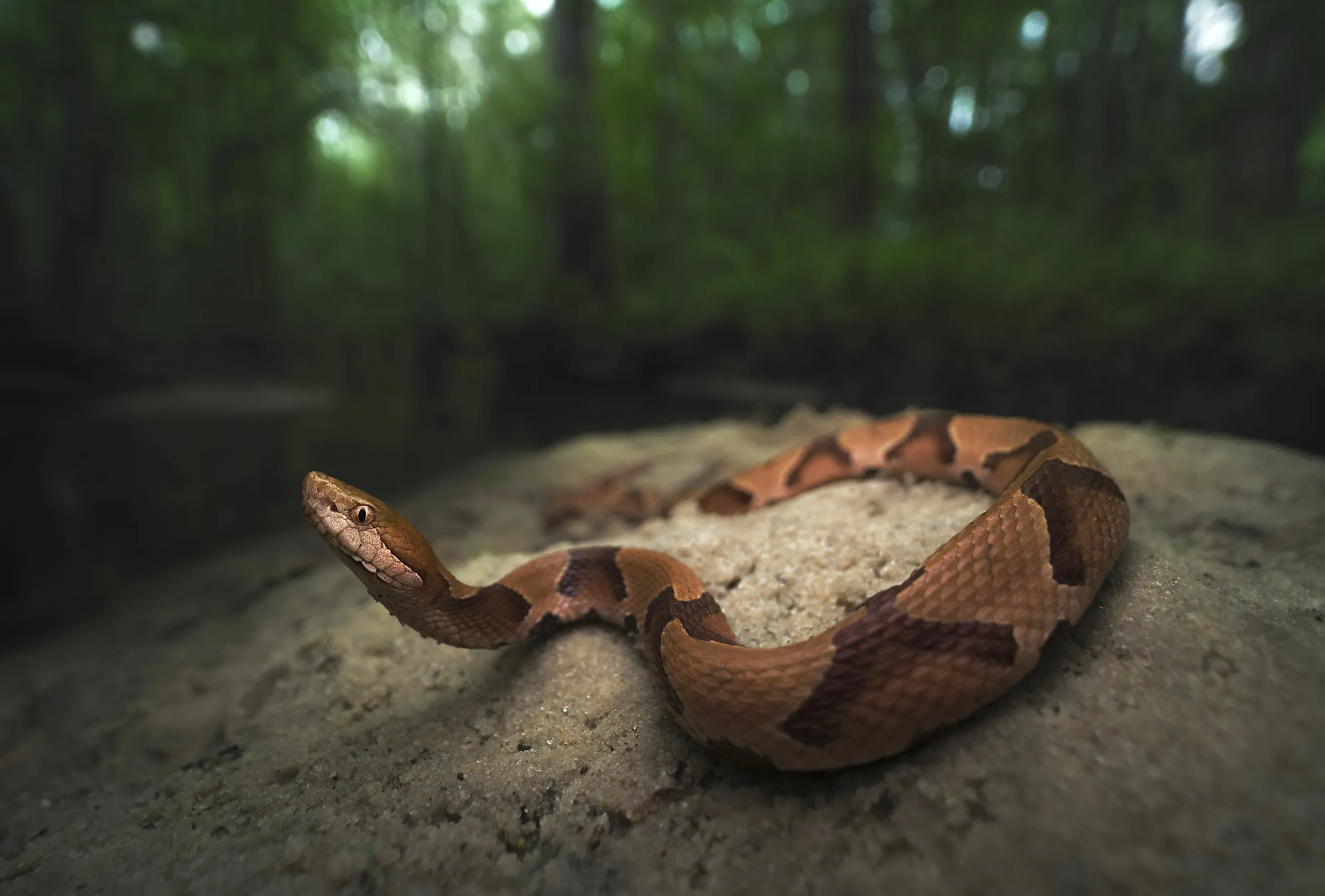
4 Copperhead Snake Hotspots In Tennessee
The Copperhead is one of four venomous snakes in Tennessee, and the most common. It’s found across the state, but the snake’s preferred habitat is forest and other areas where there is plenty of cover, such as rocky slopes. They can also be found near wetlands and streams. October through to mid-November is known as ‘baby Copperhead season’ in the state as this is when the young snakes become active. They’re most often found in the rocky, forested hills of the western Highland rim or in East Tennessee’s mountainous areas.
If you’re planning a trip to Tennessee to enjoy the state’s stunning scenery, you should be aware that you share that space with snakes. Below, we take a look at the most likely places to encounter a Copperhead and share some advice on staying safe on the trails.
Great Smoky Mountain National Park

Last year, a Great Smoky Mountains Copperhead went viral on TikTok. Captured on video by a hiker, the snake was curled up at the base of a sign that read ‘Copperheads spotted in the area’, as if to confirm the warning.
If you’re planning a visit to Great Smoky Mountains National Park, one of Tennessee’s top attractions, be aware that Copperheads are found throughout the park. They are one of 23 snakes found in the area and one of only two venomous species, the other being the Timber Rattlesnake. Despite the presence of these two vipers, there has never been a fatality from a snakebite recorded in the park.

Copperheads have been spotted in the Cades Cove area of the park, taking shelter among the millstones around the historic grist mill near the Cades Cove Visitor Center. If you’re visiting the mills, camping, or hiking in this area, step carefully and pay close attention to any ranger alerts of Copperhead activity.
Overton Park

A scenic green space and recreation area in the heart of Memphis, Overton Park has likely been a home for Copperheads for over a century. The park contains the 126-acre Old Forest State Natural Area, the only urban old-growth forest in the southeastern United States, and a thriving Copperhead habitat.

Studies conducted at the park show that the resident snakes have a small home range, staying close to the forest's wooded environment, which is accessible to visitors via the Old Forest Loop, a one-mile trail through the heart of the urban wilderness. Pristine and largely undisturbed, it’s no wonder Old Forest is a prime Copperhead habitat; one researcher trapped over 70 of the snakes in a single study done at the Park.
Cumberland Mountain State Park

Cumberland Mountain State Park in eastern Tennessee covers a 1,720-acre swath of the Cumberland Plateau, the largest forested plateau in America. The park also includes Byrd Lake, a man-made reservoir, where you can rent a paddleboard, kayak, or canoe. There are also plenty of opportunities for hiking, camping, swimming, and picnicking within the park.
Whatever you’re up to at Cumberland Mountain, tread carefully. The Cumberland Plateau is a known Copperhead hotspot thanks to its forests and rocky areas, which are the ideal environment for the snake. If you’re interested in learning more about the park’s snakes, check the schedule before you visit. Park rangers often host educational workshops and presentations on the wildlife of the Cumberland Plateau and offer a snake-themed program that looks at some of the myths and misconceptions around Tennessee’s snake species.
Meeman-Shelby Forest

Located north of Memphis, the Meeman-Shelby Forest is an area well-known to Copperhead researchers. It covers one of Tennessee’s largest contiguous tracts of mature bottomland hardwood forest and upland forest within the Chickasaw Bluffs and provides a haven for many of the state’s rare flora and fauna. Copperheads have been recorded in the forest by researchers from the Meeman Biological Station.

The 11,000-acre Meeman-Shelby Forest State Natural Area lies within Meeman-Shelby Forest State Park. The park contains more than 20 miles of hiking trails, including the popular 8-mile Chickasaw Bluff Trail, which travels along a bluff overlooking Poplar Tree Lake. Aside from snakes, the Meeman-Shelby Forest State Park is home to deer, turkey, otter, beaver, foxes, bobcats and more than 200 species of birds, making it a great place to enjoy some wildlife watching. The park’s Nature Center contains information on the local wildlife, and has a number of fun, family-friendly exhibits including live snakes.
Staying Safe From Snakes in Tennessee
The Copperhead’s main defence is its camouflage. This shy snake lies to hide undiscovered in natural debris and its brown coloring gives it ample opportunity to blend in. That’s a problem for hikers and other outdoor adventurers as it’s easy to unwittingly disturb a Copperhead and provoke a bite. If you’re enjoying Tennessee’s beautiful natural areas, be careful where you step and where you put your hands. Copperhead bites are rarely fatal as their venom isn’t very potent, but they can still cause severe pain, swelling, nausea and other complications. If you’re bitten, don’t panic but do seek medical attention immediately.