6 Picture-Perfect Main Streets In The Poconos
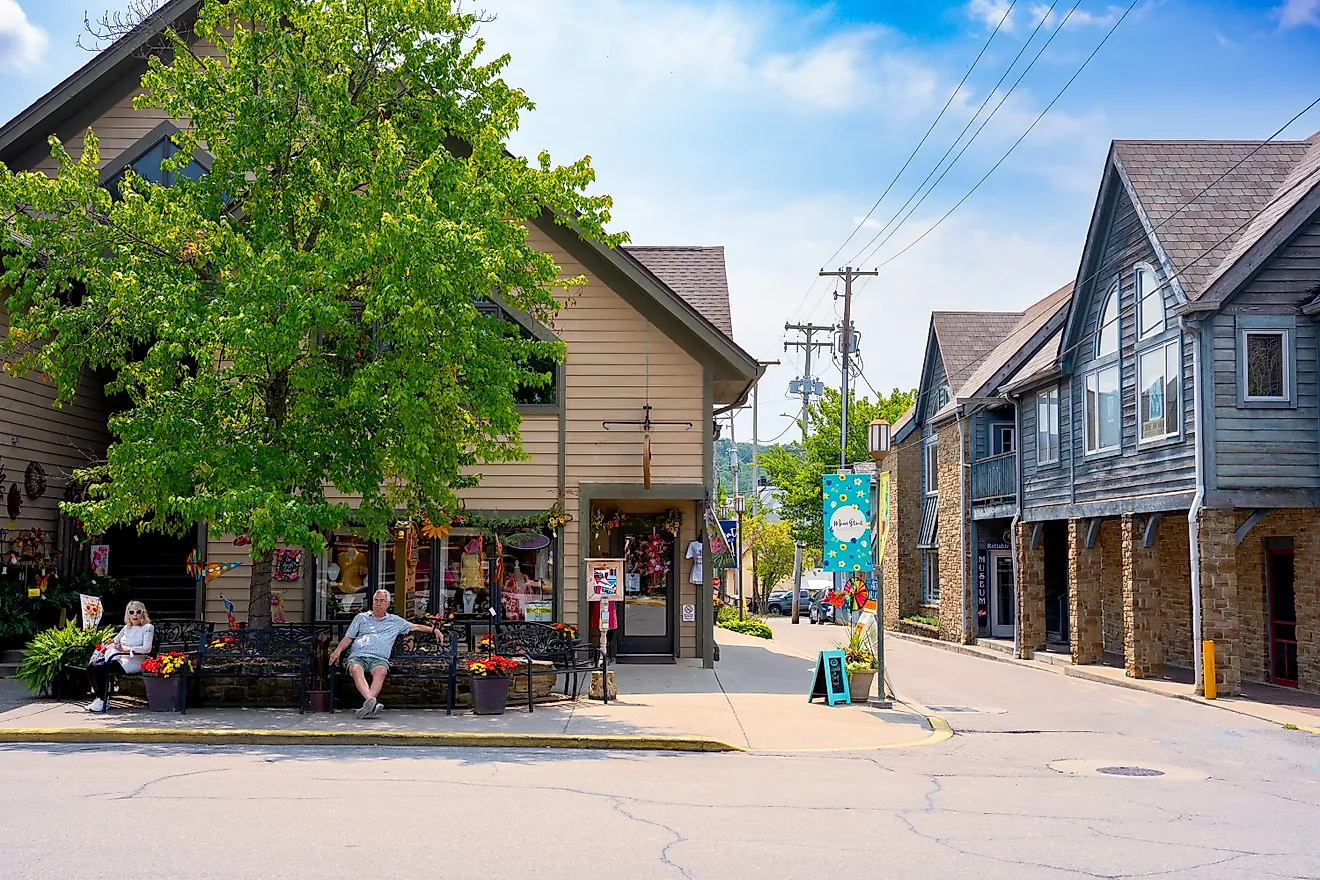
The Pocono Mountains region in northeastern Pennsylvania is home to several of the state’s prettiest small towns, where Victorian facades and wooded ridgelines shape memorable downtowns. In Jim Thorpe, Broadway curves through a narrow valley, drawing visitors past 19th-century buildings and classic mountain views. In Delaware Water Gap, Main Street and the Deer Head Inn bring together live jazz, local history, and the easygoing charm of a longtime mountain retreat. Towns like these show how much scenery and character the Poconos can pack into a single downtown stroll!
Jim Thorpe

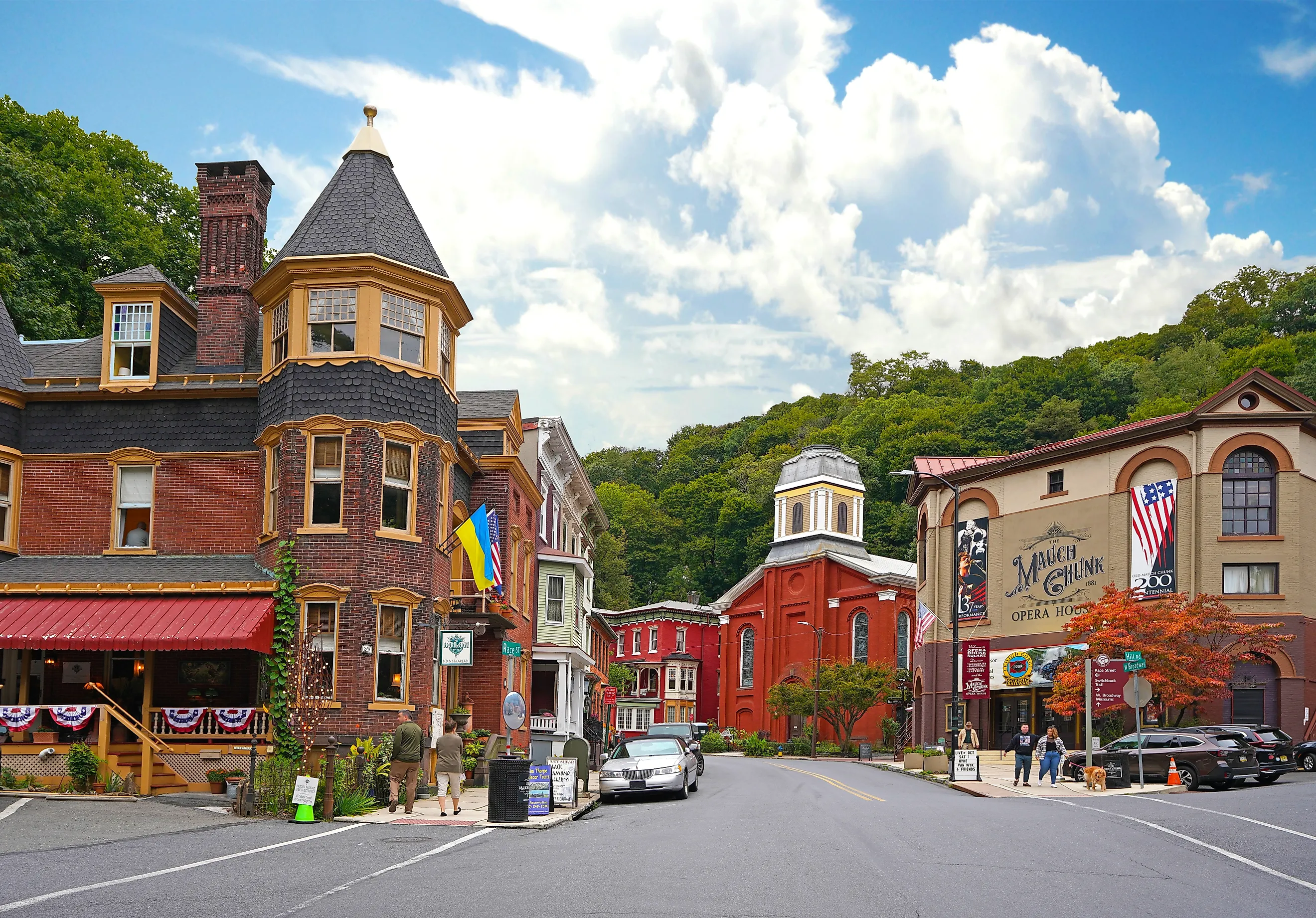
Known as the "Switzerland of America" for its mountain setting on the Lehigh River, it’s no coincidence that Jim Thorpe is the most visited small town in the Poconos. The secret sauce? Jim Thorpe’s main street, Broadway, is undeniably picture perfect. Curving gently through a narrow valley flanked by steep, forested ridgelines, with well-preserved heritage commercial buildings lining both sides, it’s quite literally the stuff of postcards.
Originally a coal town known as Mauch Chunk, its strategic Poconos location had by the mid-1800s seen it morph into a hub for shipping coal. The wealth that followed can still be seen in period structures like the impressive Carbon County Courthouse, built in 1893, and the Inn at Jim Thorpe, which has been welcoming guests since 1849. Both are easy to get to on foot, which is really the best (and, in fact, only) way to explore downtown Jim Thorpe.
Other Broadway must-sees include the Mauch Chunk Opera House, built in 1881 and still used for live music and theatrical performances. The Old Jail Museum, a fortress-like former prison, is where members of the Molly Maguires, a secret society of Irish coal miners, were hanged in the late 1870s. The elegant Italianate hilltop Asa Packer Mansion is also worth visiting and offers guided tours.
Milford

Although one of the smallest county seats in Pennsylvania, Milford’s main street punches above its weight in the picture-perfect stakes. Laid out to mirror the street grid of Philadelphia, Broad Street serves as the main thoroughfare, intersecting with High Street at a public square where most of the town's official buildings and the 22-acre Milford Historic District are concentrated.
Take a walk along Broad Street, and you'll see no chain restaurants or fast-food outlets, but instead locally owned businesses set in historic 19th-century buildings that preserve the town's old-world charm. Hotel Fauchère is such a survivor and has been a Milford fixture since 1852, when it opened to early luxury travelers from places like New York and Philadelphia. The Columns Museum is another Broad Street gem and provides guided tours of the town's Victorian heritage.
Though on the town outskirts, Grey Towers National Historic Site should also be on your list of things to see in Milford. Built in a classy French chateau style in 1886, this imposing turreted mansion and its 100-acre grounds can be toured.
Honesdale

Famous as the birthplace of the American railroad, it was in Honesdale on August 8, 1829, that the Stourbridge Lion, a steam locomotive imported from England, made its first run on commercial tracks. Though a short journey of just three miles from Honesdale to Seelyville and back, it introduced a new technology to the country that would shape the entire nation.
The town hasn’t squandered this unique legacy, and while the original engine resides at the Smithsonian in Washington, D.C., a full-scale replica built from original blueprints can be seen in the Wayne County Historical Society Museum on Main Street. The Stourbridge Line keeps the railroad connection alive with fun 25-mile train excursions along the Lackawaxen River between Honesdale and Hawley, departing from a platform at the Wayne County Visitors Center.
Honesdale's Main Street runs past a downtown of attractive old brick storefronts, with plenty of great excuses to stop along the way. Central Park, a small public green just off Main, is next to the Wayne County Courthouse. It’s also close to the boyhood home of Richard "Dick" Smith, the lyricist who wrote the classic Christmas tune, Winter Wonderland, in 1934. A local legend, Smith drew inspiration from his memories of snow-covered winters in the park.
Stroudsburg

Founded in 1799, Stroudsburg is the region’s must-visit cultural center. The music part of its cultural scene revolves around the Sherman Theater. Built in 1928, it hosts everything from national touring acts to community theater. It’s also the community hub for events like StroudFest, a free end-of-summer celebration that takes over Main Street with live music and local vendors.
The Monroe Farmers Market, held in Courthouse Square every Saturday, adds a weekly dose of local produce, baked goods, and handmade crafts to the town’s appeal
You’ll also want to include the Stroud Mansion on your Google map. The home of the Monroe County Historical Association, it features a research library and exhibits about the town through the years. The Monroe County Courthouse is another must-see that’s located along Stroud’s Main Street corridor.
Hawley

Another former coal town, Hawley, owes much of its current popularity as a tourist destination to its deep connection to the surrounding lakes, rivers, and old canals. The construction of the Delaware and Hudson Canal brought a population boom and rapid commercial development along what is now Main Avenue, some of which can still be seen.
The main survivor of the canal’s early boomtime is the Hawley Silk Mill, a vast 75,000-square-foot former textile factory built in 1880. Reputedly the world’s largest bluestone building, it’s since been renovated as a major lifestyle destination. Highlights include independent retailers like Art on the Edge and Lake Light Candles.
It’s also a popular spot for food and drink experiences, with craft beer fans flocking to Hopping Eagle Brewing Company. In need of a caffeine fix? Then head to Cocoon Coffeehouse. The building's lower level features The Boiler Room, an event venue with views of Paupack Creek's waterfall.
The town’s also known for its recreation opportunities on the manmade Lake Wallenpaupack. Constructed in the 1920s and some 13 miles long, it’s the state’s third-largest reservoir and is popular for boating, fishing, and swimming.
Delaware Water Gap

The Borough of Delaware Water Gap, though small, should also be included on your Pennsylvania travel itinerary. Located at the southern edge of the Delaware Water Gap National Recreation Area, where the Delaware River cuts through the Kittatinny Ridge, “the Gap” has been a popular resort destination for residents of New York City and Philadelphia seeking to escape the summer heat for nearly two centuries.
The Castle Inn, built in 1906 and the last of the borough’s grand hotels, reflects this early popularity. Now an event venue and undergoing further renovations, guided tours of this historic property are available.
The Deer Head Inn is another survivor. Dating back to the 1840s and the USA’s oldest continuously running jazz club, it continues to offer live music along with comfy bed-and-breakfast accommodations. Other Main Street attractions include the Antoine Dutot Museum and Gallery, a 19th-century brick schoolhouse with exhibits covering the town's history, and the Village Farmer and Bakery, known for its delicious pies.
Pennsylvania’s Picture-Perfect Places
The very best small towns and their downtowns in the spectacular Poconos Mountains are travel destinations in their own right. Whether former coal hubs or quiet riverside communities that have preserved their Victorian-era charm, a visit to the best of these Poconos towns will reveal some of the most picturesque downtowns in Pennsylvania.