6 Little-Known Towns In Connecticut
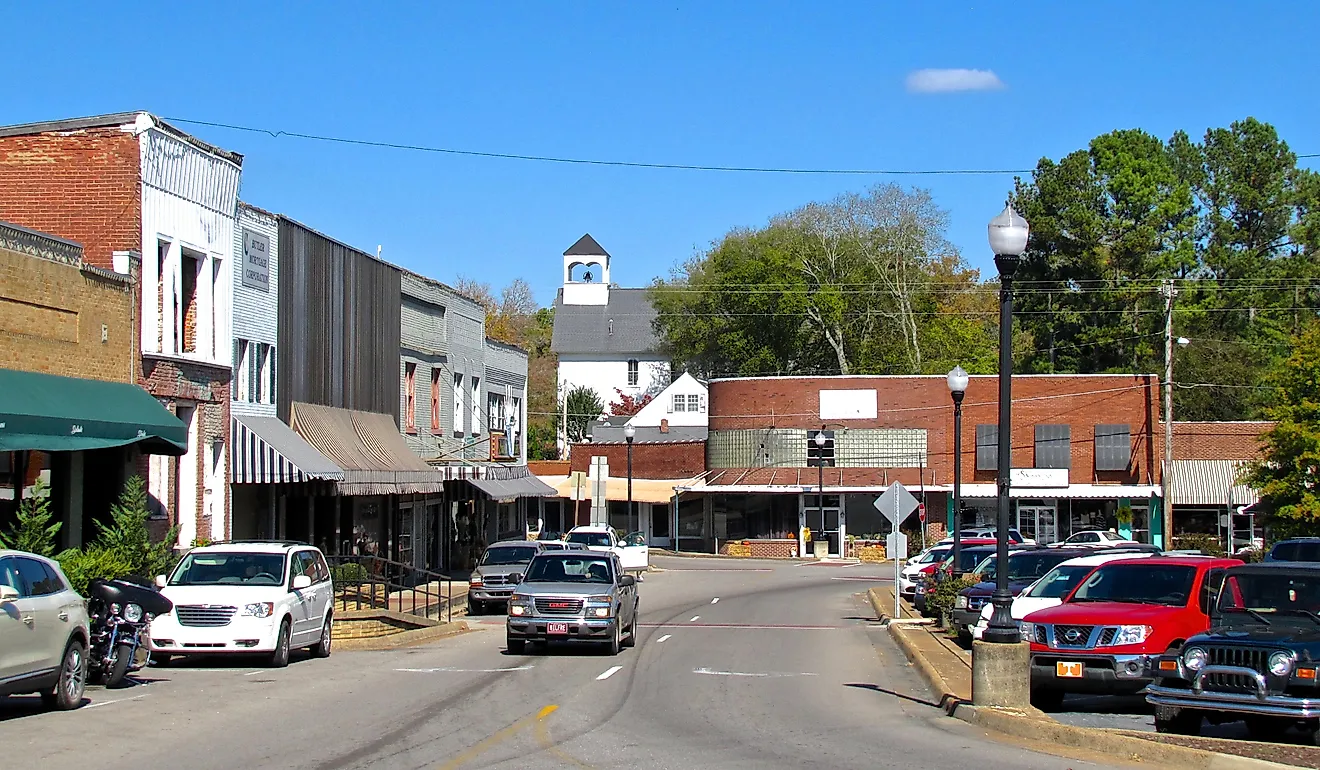
Connecticut sat out most of the suburban-era tear-down that reshaped New England, and the smaller towns kept hold of specific, improbable things that anywhere else would have been paved over by 1975. A 1769 ferry still crossing the river on schedule. A 1784 law school, the country's first, still standing as a museum. A pink Gothic cottage with the original 1846 boxwood parterre in the yard. A stone castle built by the actor who made the curved Sherlock Holmes pipe famous on stage. A 1752 house where George Washington and Rochambeau actually sat down and mapped out Yorktown. These six towns are where that kind of specificity survives, and where walking a block still puts you next to the real thing.
Litchfield

Litchfield's claim to national history is that Judge Tapping Reeve started teaching law out of his home here in 1784, making this the site of the country's first formal law school. Reeve taught Aaron Burr, two future Vice Presidents, a hundred and one members of Congress, and enough Supreme Court justices that the graduate roster reads like a founding-era directory. The Tapping Reeve House and the adjoining Law School, now a museum, are exactly where they were.
The rest of the town played to that register. Litchfield was a Revolutionary War supply hub and later an abolitionist center. The Litchfield History Museum fills in the wider picture, with rotating exhibits on local industry, abolition, and 18th-century domestic life. For an afternoon outside, the White Memorial Conservation Center sits on the edge of town with more than 4,000 acres of woods, meadow, and trail, and Bantam Lake, the largest natural lake in the state, is minutes south. The Litchfield Hills Farm-Fresh Market draws a Saturday crowd at the Litchfield Firehouse, just outside the Historic District and its 18th-century buildings.
Old Saybrook

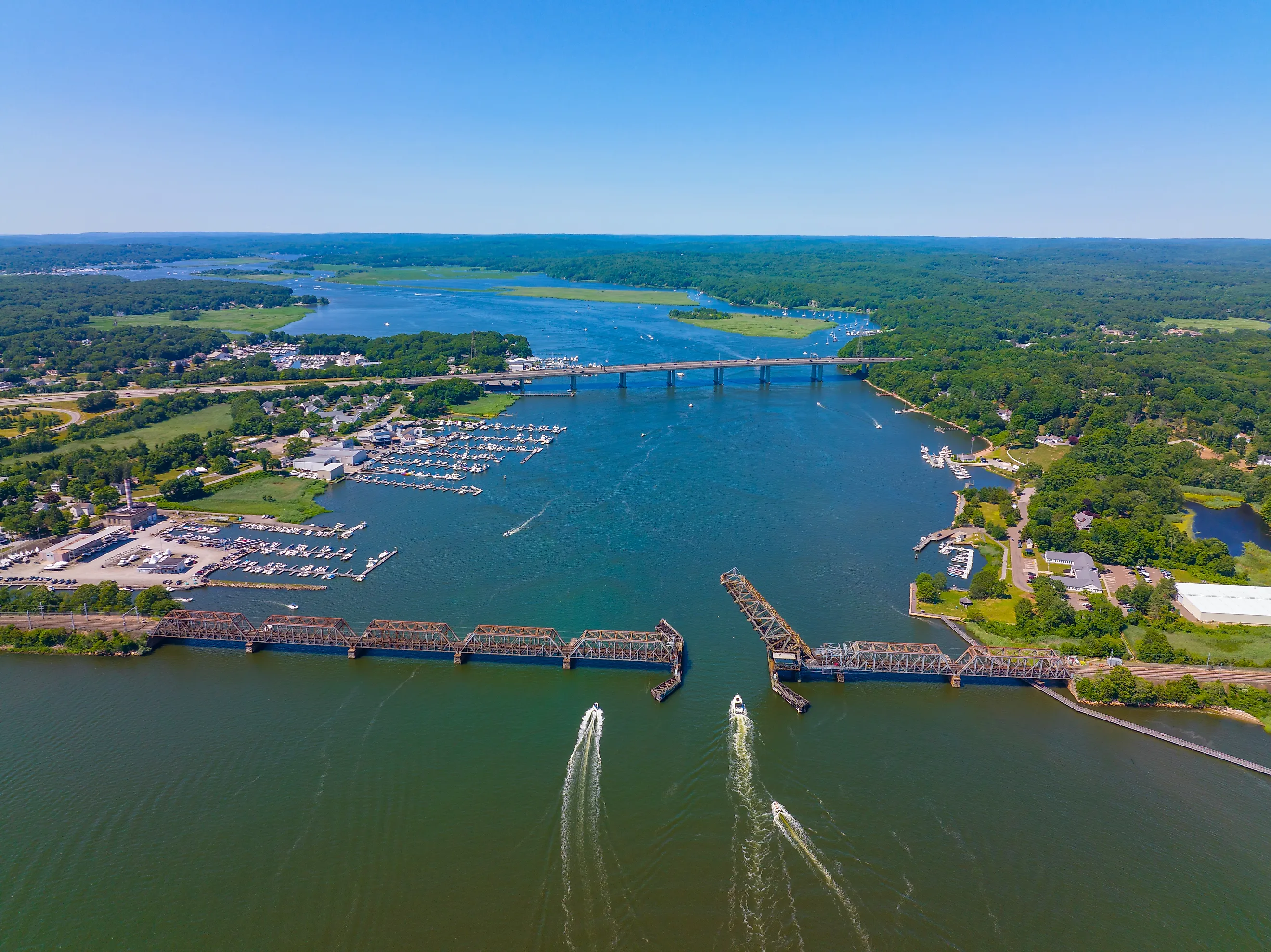
Katharine Hepburn grew up summering in Old Saybrook and kept a house on Fenwick Point until her death in 2003. The Katharine Hepburn Cultural Arts Center, known locally as "The Kate," now occupies the 1911 former town hall and runs a full theater calendar built around her memory. That is only the most famous thread in a town that has been here since 1635, when Old Saybrook was chartered at the mouth of the Connecticut River as an independent colony before folding into the Connecticut Colony in 1644.
Fort Saybrook Monument Park covers the original fortification site. Saybrook Point opens up wide water views across the river mouth, and Harvey's Beach shallows out gently enough for families to wade in. Come late June, the Celebrate Saybrook Street Party shuts down Main Street for live music and food vendors.
Wethersfield

The room where Yorktown got planned is on the second floor of the Joseph Webb House, at the north end of Main Street. In May 1781, George Washington rode into town with a small staff, met French General Rochambeau at the Webb House, and the two of them sat there for five days working out the campaign that would end the Revolutionary War five months later. The house has been here since 1752 and still looks essentially as it did that week.
Wethersfield claims the title of Connecticut's "most ancient town" and dates its founding to 1634. The Old Wethersfield Historic District holds more than 300 historic houses, around 50 of them built before the Revolution, which is a lot by American standards. The Webb-Deane-Stevens Museum tours three of them on adjacent lots: the 1752 Webb House, the 1769 Silas Deane House, and the 1789 Isaac Stevens House, each staged to a different period. The Keeney Memorial Cultural Center fills a red-brick Victorian building with local artifacts. September brings CornFest at Cove Park, where Wethersfield Cove also handles the kayak and waterfront walk traffic the rest of the year.
Chester

The Chester-Hadlyme Ferry has been pushing across the Connecticut River since 1769, and it still runs a seasonal schedule of short crossings between the two banks. When you board, you are stepping onto Connecticut's second-oldest continuously operating ferry, behind only the Rocky Hill-Glastonbury Ferry, which has been running since 1655. The ride is short, five to ten minutes depending on the current, and the river views frame Gillette Castle on the ridgeline across the water.
The rest of Chester grew up around industry: the town was incorporated in 1836 and turned out ivory combs, bits, and augers during the Industrial Revolution. The small downtown is a lived-in two-block stretch, best in summer and early fall when the Chester Sunday Market sets up with produce, baked goods, and live music. Cedar Lake, just outside the village, handles the swim-and-paddleboard side of the weekend.
Woodstock

The house that anchors Woodstock is Pepto-Bismol pink. Built in 1846 for New York publisher Henry Chandler Bowen, Roseland Cottage was an early and very loud piece of Gothic Revival architecture, complete with gabled rooflines, stained glass, and an original boxwood parterre garden laid out in the same year. Presidents from Grant to McKinley showed up for Fourth of July parties here. The cottage is now a National Historic Landmark open for tours, and the pink still looks right.
Settled in 1686, Woodstock occupies Connecticut's northeastern "Quiet Corner" and butts up against Massachusetts. Woodstock Academy, founded in 1801, is among the oldest secondary schools in the state and still holds classes in several of its 19th-century buildings. Woodstock Orchards and Bakery Barn keep the pick-your-own and cider-donut traditions running. The Labor Day weekend Woodstock Fair, running since 1860, is one of the largest in the state, and the Air Line State Park Trail, built on an old rail bed, handles the hiking and biking.
East Haddam

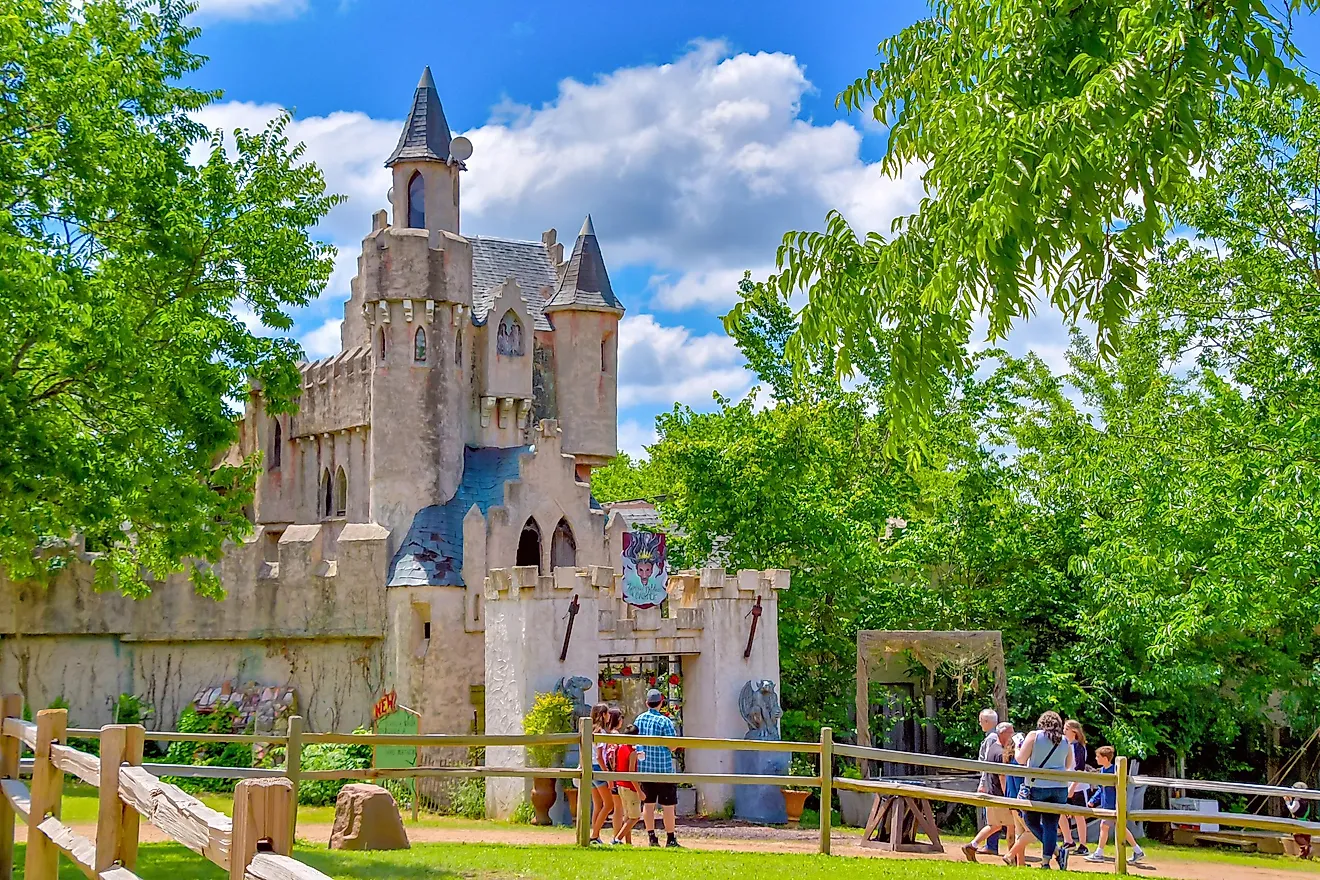
William Gillette was the actor who did more than anyone to define Sherlock Holmes on stage, and his version of the detective lent the curved calabash pipe to a century of pop culture imagery. (The deerstalker came earlier, from Sidney Paget's Strand Magazine illustrations.) What Gillette did with the royalties is Gillette Castle, a 24-room fieldstone medieval-style mansion he designed himself and built between 1914 and 1919 on a bluff over the Connecticut River. The house is full of personal eccentricities: 47 hand-carved doors, each with a unique wooden latch; a sliding table on rails; a system of mirrors he used to see who was at the front door without leaving the parlor. Gillette Castle State Park opens the house and grounds to the public.
East Haddam was founded in 1734 along the river. The Goodspeed Opera House, completed in 1877, still puts on musical theater. The venue has sent 21 productions to Broadway, including the world premieres of Annie, Man of La Mancha, and Shenandoah. The Nathan Hale Schoolhouse is the one-room building where the Revolutionary War hero taught before enlisting. Chapman Falls drops about 60 feet through Devil's Hopyard State Park, a short drive north. The East Haddam Swing Bridge, built in 1913 and recently reopened after a major repair, is the kind of thing you photograph before crossing.
The Final Word
A pattern holds across these six: the thing that matters is still exactly where it always was. Washington and Rochambeau's table is still upstairs at the Webb House. The 1769 ferry is still hauling cars across the river. Tapping Reeve's law office is still standing next to the house. Gillette is still rigging his 47 doors for a century-old audience. Connecticut's smaller towns never let the specific get replaced with the generic, and that is the whole reason to go.