8 Of The Quietest Missouri Towns
Most of Missouri's quietest towns used to be louder. They grew up along the North Missouri Railroad and the Missouri Pacific when freight came through on schedule, farmers shipped crops out, and county courthouses pulled in everyone from three counties over. Then the trains slowed down, the interstates went elsewhere, and the commercial traffic drained out. What was left behind is a compact town square, a courthouse still in use, and streets that can go quiet for hours. These eight places hold onto that version of Missouri.
Blackwater

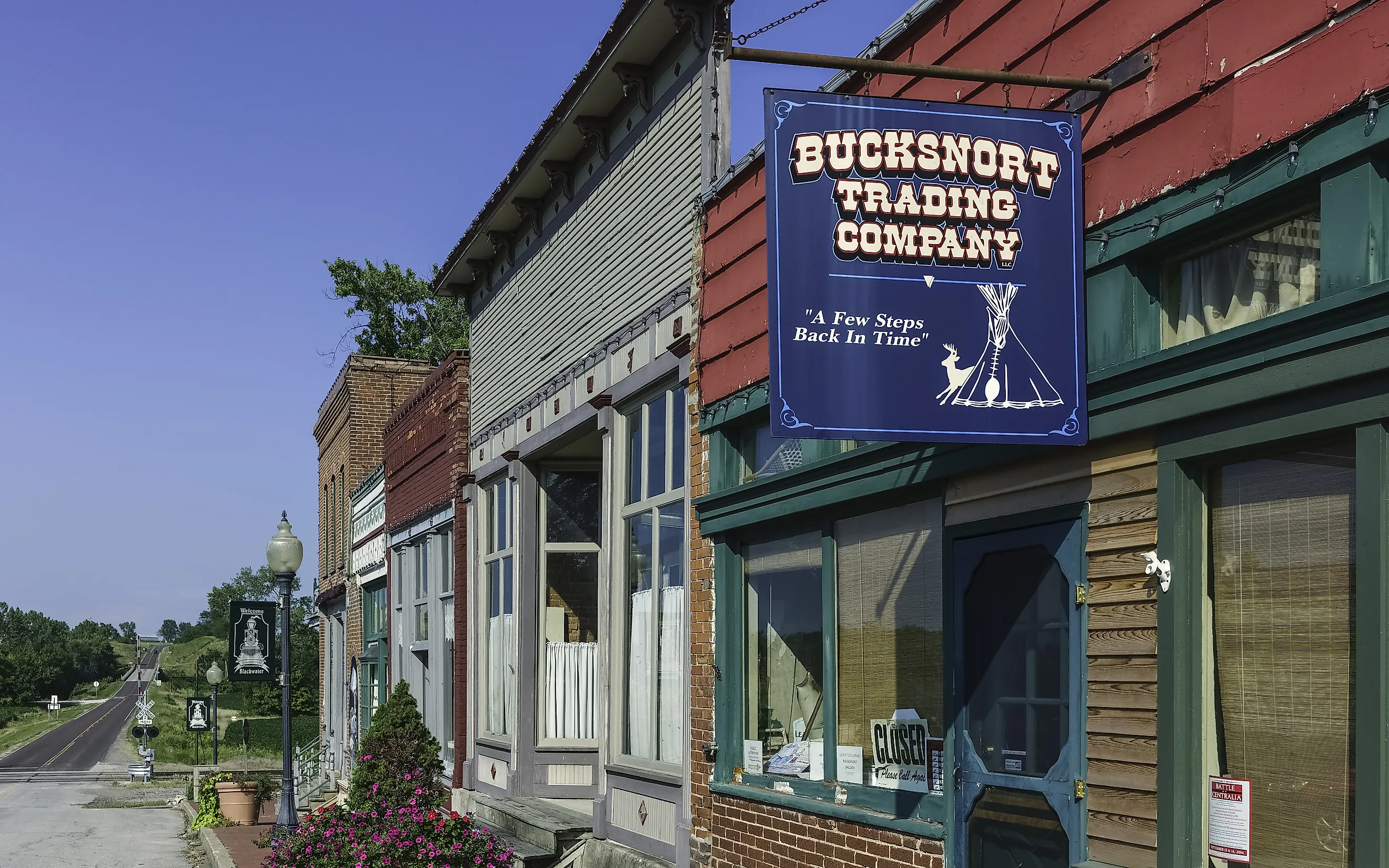
Blackwater has no stoplights or gas stations. It developed in 1887 along the Missouri Pacific Railroad's River Route, where growth came from freight access and a nearby rock quarry that supported a range of businesses. By the mid-20th century, Blackwater had reached a population of around 650. However, after World War II, improved transportation and the quarry's closure in 1950 led to a long-term decline.
Local preservation efforts eventually helped stabilize the town, and several buildings now appear on the National Register of Historic Places. The Blackwater River and Bridge Access draw people to the riverbanks and surrounding open land. The Prairie Lawn School Antiques, a relocated one-room schoolhouse from the late 1800s, now operates as an antiques site. Commercial presence is nearly absent, and vehicle flow is minimal throughout the week.
Clarence

Established in 1857, Clarence is believed to be named after Clarence Duff, the son of an early settler. A post office opened in 1859, marking its role as a center for communication and trade. The town lies in western Shelby County, away from major metropolitan through-traffic.
Daily needs are limited, so residents often rely on the nearby town of Macon for supplies. There, Hays Ten Mile Store combines a grocery and antique shop. The Weathervane is another antique stop. Long Branch State Park features a large reservoir and open spaces a short drive away.
Dadeville

Dadeville started as a mid-1800s settlement called Melville, which got its post office in 1853. The name changed to Dadeville in 1858, taken from surrounding Dade County. With Greenfield holding the county seat just a few miles away, Dadeville never grew past a village. The population today is 237.
Dadeville is just off the main travel paths with low traffic and little commercial buildup. Stockton Lake draws people for fishing and boating, with shoreline areas open to the public almost year-round. Nearby, Hulston Mill Historical Park and Hulston Mill Conservation Area in Greenfield combine historic structures with open countryside.
Greenfield

Greenfield is relatively quiet, with 1,215 residents and limited through-traffic. Most activity happens on the town square, which is lined with brick buildings from the 1880s made from local materials. The city was platted in 1841 and named for the greenery of the original site. It then grew steadily as the county center.
The Greenfield Opera House opened in 1888 and is known as the "Jewel of the Square." It is a central feature downtown. County business brings predictable movement to the courthouse area, but streets are usually silent beyond those official hours. Greenfield City Park and Backroads Flea Market act as common gathering places for weekend browsing. Hulston Mill Conservation Area, just outside of town, includes trails and preserved mill sites.
Sturgeon

Sturgeon was once one of the largest shipping points for goods headed to markets like St. Louis. It was established in 1856 along the North Missouri Railroad and named after Isaac Sturgeon, a railroad official. Its location supported freight and agricultural trade, shaping early development. As rail activity faded and nearby cities expanded, Sturgeon shifted into a smaller, more stable community.
About 850 people live here, and the town is quiet despite being near larger hubs. A large Old Order Amish community north of town continues to influence the surrounding area through farming and small markets. Nearby, Finger Lakes State Park and Rudolf Bennitt State Wildlife Area include trails, lakes, and natural habitats for outdoor recreation.
Kahoka

In northeast Missouri, Kahoka was established in 1858 and takes its name from the Cahokia, a Native American group once active along the Mississippi River. Historic buildings like the Clark County Courthouse, the Col. Hiram M. Hiller House, and the Montgomery Opera House are listed on the National Register of Historic Places. Kahoka is a small regional center with limited commercial activity.
County offices create predictable traffic patterns, but development beyond government services is low. Omak O Hak Park and the Paul Rowe Historical Museum highlight local recreation and history. The Sheffler Rock Shop and Geode Mine in Alexandria provides a hands-on way to dig for geodes and explore rock formations.
Monticello

Monticello is the smallest county seat in Missouri with 104 residents. Located along the Fabius River, it is quiet with little development beyond government operations. The town was laid out in 1833 after commissioners selected a central location rather than choosing one of the existing river towns competing for the designation.
Early growth included a courthouse, school, and small business district serving surrounding farms, though expansion never followed. The Lewis County Courthouse, now housing the Circuit Court Clerk, is listed on the National Register of Historic Places and is the town's primary landmark. Smurfwood Trails ATV Park and Wakonda State Park bring in off-road riding areas and lakeside recreation, but Monticello itself has almost no commercial presence beyond government offices.
Arrow Rock

Arrow Rock has 56 residents and is a National Historic Landmark in its entirety. It sits on a limestone bluff above the Missouri River where the Santa Fe Trail crossed westward in the 1820s, and for a short stretch in the mid-19th century it was a busy outfitting stop for wagon trains heading to New Mexico. When the railroads routed elsewhere, the traffic evaporated and the village essentially froze.
The entire 19th-century streetscape is intact. The 1834 J. Huston Tavern is still serving meals, making it the oldest continuously operating restaurant west of the Mississippi. The Arrow Rock Lyceum Theatre, a professional company working out of an 1872 Baptist church, runs a full summer season of plays. Arrow Rock State Historic Site covers the town's history and the old trail ferry landing at the river.
Where the Roads Go Quiet
These towns reflect a side of Missouri shaped by changes in transportation and commerce. Many moved into smaller roles after highways and regional trade shifted elsewhere, leaving behind communities that no longer see major through-traffic. These places are tied mostly to local needs, where the streets are clear and movement is predictable. Daily routines change very little over time, following a pace set by agriculture, county business, and nearby use rather than outside flow.