6 Charming Old Railroad Towns In Iowa
Iowa's small towns have a long history with the railroad. In the decades following the Civil War, iron tracks (the precursor to steel rails) spread across the state in every direction, turning remote survey camps into permanent settlements. The growth of the railway in Iowa was so fast and on such a grand scale that, by 1917, more than 10,500 miles of track were crisscrossing its prairies and river valleys to haul everything from grain to coal, livestock, and passengers, creating hundreds of communities that sprang up wherever a depot was erected. While only about 4,000 miles of active track remain in Iowa today, boomtowns like Boone, Creston, and Mason City are still thriving. Here are six of the best railtowns in Iowa to explore.
Boone

Located close to the geographic center of Iowa, Boone was established in 1865 and within just two years boasted some 300 new buildings. Coal mining and railroad operations powered the local economy for decades, and the town's connection to the railways has remained constant. The centerpiece of Boone's railroad heritage today is the Boone and Scenic Valley Railroad, which winds through the Des Moines River Valley and crosses the Bass Point Creek High Bridge, a 156-foot-tall steel trestle that’s one of the tallest heritage railroad bridges in the country. Also located at the depot, the James H. Andrew Railroad Museum features equipment, artifacts, and exhibits related to the region's rich rail history.
Even taller than the bridge at Bass Point Creek, the Kate Shelley Memorial High Bridge spans the Des Moines River Valley at a height of 185 feet and a length of 2,685 feet. It was named after local teenager Kate Shelley, who, in 1881, crawled across the original Des Moines River Bridge during a nighttime storm to warn an approaching passenger train of a collapsed trestle. This fascinating story is told at the Kate Shelley Memorial Park and Railroad Museum through immersive exhibits and artifacts that include her lantern, as well as railroad equipment and memorabilia.
Burlington

The Burlington and Missouri River Railroad was incorporated here in 1852 before eventually becoming part of the Chicago, Burlington and Quincy Railroad (CB&Q). Also known as the Burlington Route, it eventually stretched all the way from Chicago to Denver and played a vital role in connecting the grain elevators and stockyards of the Midwest to markets around the country. The railroad and the wealth it brought with it had a huge impact on the town’s architecture. The Hotel Burlington, which opened in 1911, was built specifically to accommodate business travelers arriving by train and even added a huge rooftop electric sign that was visible to approaching passengers for miles. Today, the hotel is an apartment complex and listed on the National Register of Historic Places.
Constructed earlier in 1895, the Chittenden & Eastman Building served as a showroom for one of the city's largest furniture manufacturers, which is still in business today. These and many other heritage buildings connected to the town’s railroad past can be enjoyed on a fun walking tour of this charming old railroad town. One of the more unusual features you’ll see while strolling through Burlington is Snake Alley. Dropping 58 feet from Columbia Street to Washington Street through five half-curves and two quarter-curves, this corkscrew-like street was laid in 1894 as a shortcut to the business district below the residential area. For something a bit more recent but no less impressive, the Capitol Theater, an Art Deco movie house that opened in 1937, is now as popular for independent films as for live music.
Dubuque

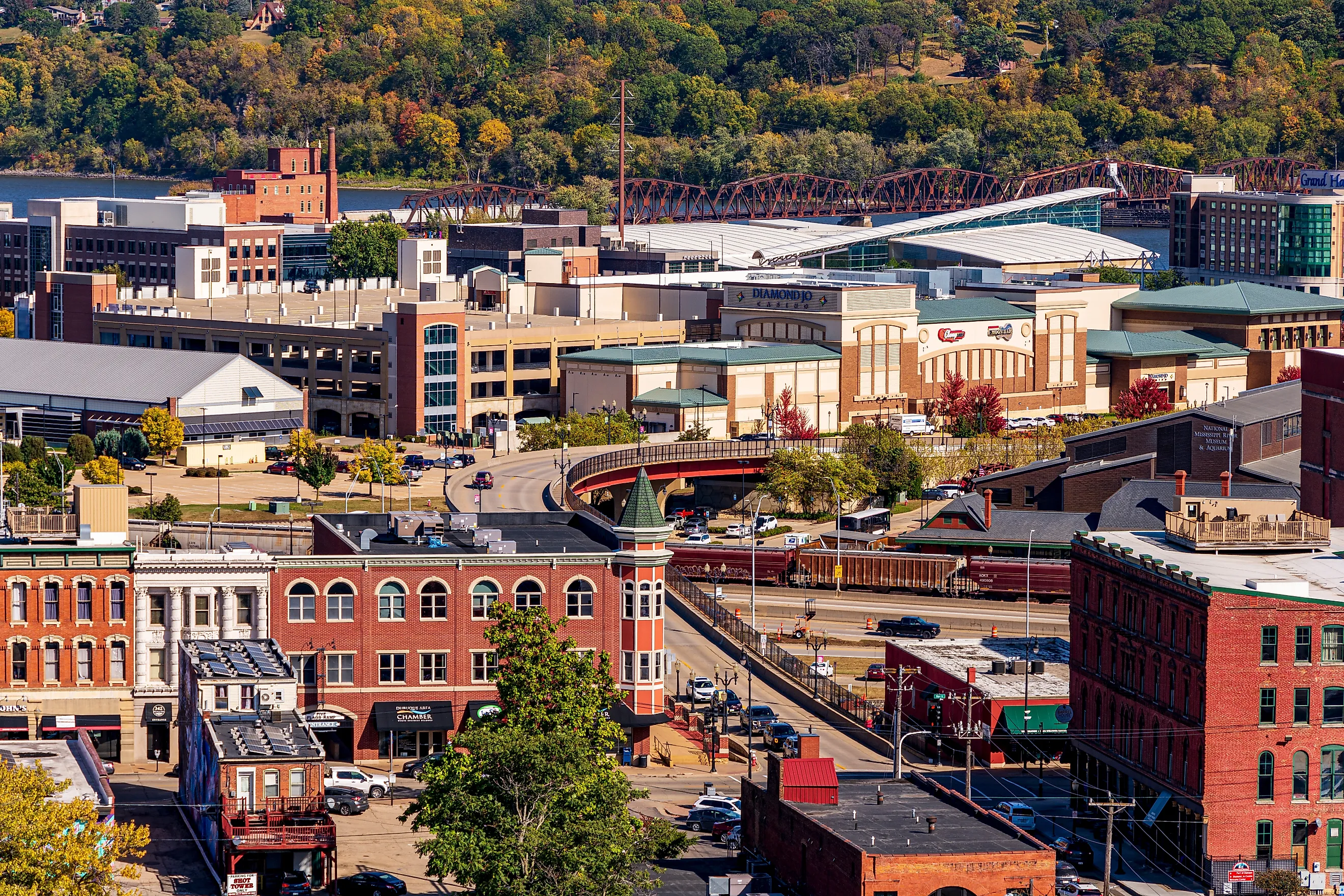
Dubuque, Iowa's oldest city, was chartered in 1833 and named for a French-Canadian fur trader who had earlier spotted the potential of the area's lead mines. Strategically located on the Mississippi River where the states of Iowa, Illinois, and Wisconsin meet, the arrival of the railroad was the result of the town’s leading role in local mining, fur trading, and steamboat commerce - factors that saw it becoming Iowa's largest cityfor much of the late 19th century. The first railroad tracks reached Dubuque in 1855, and within a few decades, multiple lines into the town were shipping a significant portion of the state’s total freight. Manufacturing followed, with lumber yards processing wood from forests in Minnesota and Wisconsin.
The impact of the railroad and its related industries and commercial enterprises are still easy to spot in Dubuque. The Fenelon Place Elevator, built in 1882 and the world's shortest and steepest scenic railway, continues to carry passengers from downtown to the top of the bluff in a fun but brief ride lasting about a minute. Meanwhile, the Old Shot Tower on the riverfront, built in 1856, was used to manufacture lead shot, which was shipped far and wide. Be sure to allocate a little time to explore other attractions in Dubuque, too. The National Mississippi River Museum & Aquarium is one such must-visit and is a Smithsonian affiliate that showcases the marine life of America’s mightiest river. It’s also home to the William M. Black, an old steam-powered dredger dating from 1934 that can be toured.
Mason City

Although founded in 1853, Mason City’s rapid growth into a manufacturing center didn’t happen until the railroad came to town. Completed in 1866, the Mason City and Fort Dodge Railroad was eventually one of four separate railway lines that connected this Iowa town to Chicago, Minneapolis, and points west. By 1912, Mason City was responsible for shipping the largest freight tonnage in the state, and was producing more brick, tile, and Portland cement than any other city on the planet. The ensuing wealth left an indelible mark as money was spent on bringing the likes of Frank Lloyd Wright to design new buildings. The result was the Historic Park Inn Hotel, completed in 1910 and the last remaining hotel designed by Wright anywhere in the world, and the elegant City National Bank.
Other railroad-related attractions include Cannonball 457, located in East Park. Preserved under a purpose-built shelter, you can still get up close to this 1912 steam locomotive and, on occasion, even get to ring its bell and hear its authentic steam whistle. Another blast from the past, the Trolley Trail is a six-mile paved path that follows the route of a trolley line that began carrying passengers between Mason City and neighboring Clear Lake in 1897. The Iowa Traction Railway still follows the route and is the last electric freight-hauling railroad in the United States.
Mount Pleasant

The Burlington and Missouri River Railroad pushed through the area around what is now Mount Pleasant in the late 1850s on its way from Burlington to the Missouri River. An important stop along one of the most heavily trafficked corridors in the Midwest, the mainline still runs through town, and Amtrak makes daily stops on its California Zephyr route. Set aside some time to wander the grounds of the Iowa Wesleyan University campus. It’s here you’ll find Harlan-Lincoln House, built in the 1850s,and once the home of US Senator James Harlan. Harlan served in Abraham Lincoln's cabinet and his daughter later married the President’s son. Now a museum, you can even see a fragment of the coat Lincoln was wearing the night he was assassinated.
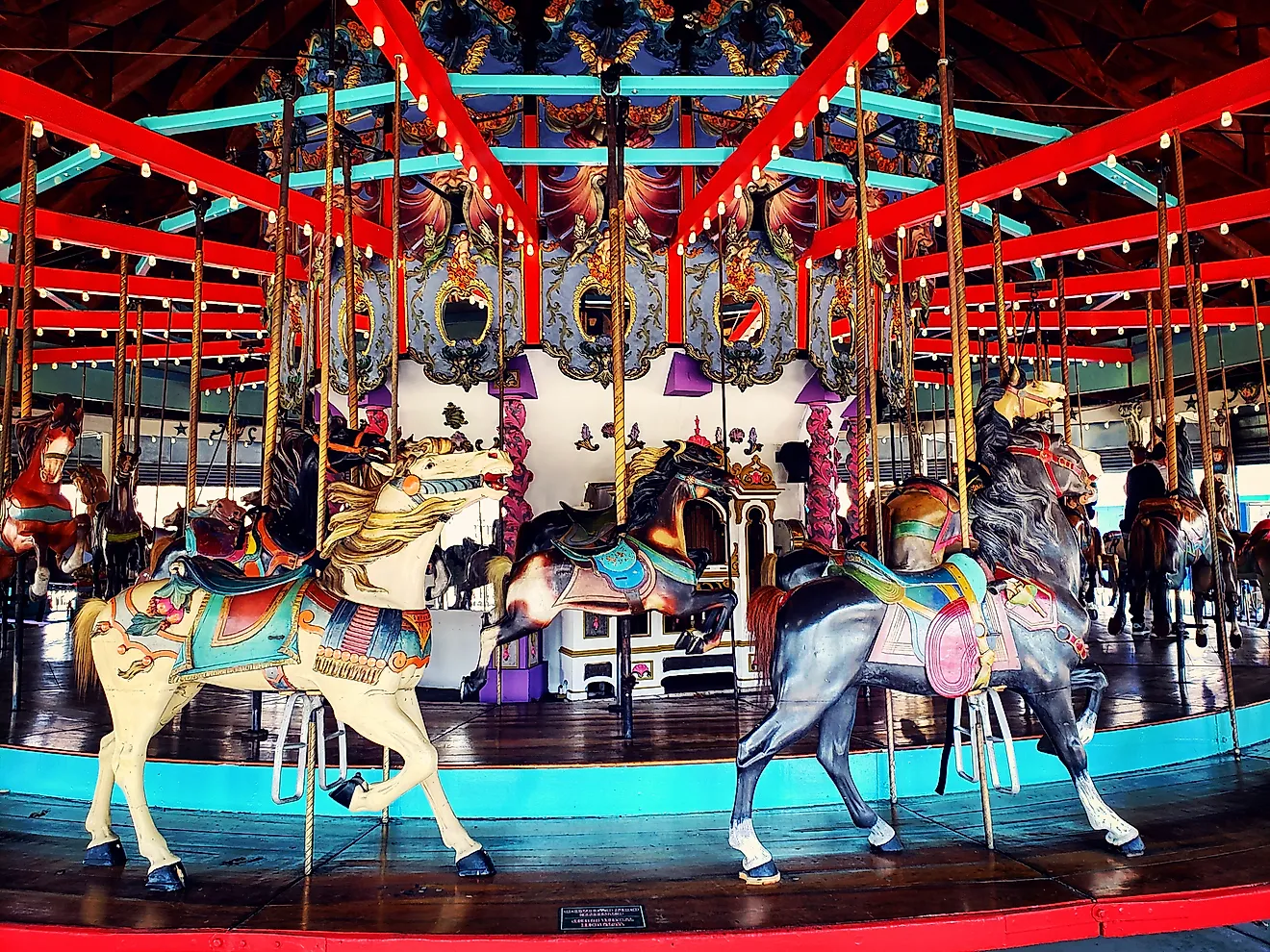
The highlight of a visit to this charming old railroad town, though, is the Midwest Old Threshers complex. Home to two operating railroad attractions, it’s here you’ll find the Midwest Central Railroad, which runs narrow-gauge steam trains on a 1.25-mile circle track, and the Midwest Electric Railway with its standard-gauge trolley line around the grounds. In addition to its collection of vintage American-made trolleys, cars come from as far away as Rio de Janeiro and Milan. The attraction’s steam fun extends to its collection of rare traction engines. These early steam tractors are displayed at the Richard E. Oetken Heritage Museums along with antique tractors, a 1915 farmhouse, a print shop, and a collection of stationary steam engines. There’s even a fully restored antique steam-powered carousel, a charming touch to one of the best places to visit to learn about Iowa’s fascinating steam heritage.
Creston

Created by the railroad in 1868 as a survey camp for the Burlington and Missouri River Railroad, Creston was, as its name suggests, positioned on the highest crest of the rail line between the Missouri and Mississippi River basins. Machine shops, a roundhouse, and a construction camp soon followed, and by 1890, Creston's population had surged to 7,200. Its massive roundhouse, with stalls for 60 engines, was the largest west of Chicago, and at the height of its operations, more than 50 trains passed through the town every day. By far the most important reminder of the era is Creston Station. Constructed in 1899, this attractive buff-brick building is now home to the town’s administrative offices, as well as an Amtrak stop. The building is also home to a number of attractions, including the Creston Arts Gallery, the Creston Model Railroad Club, and a quirky collection of dolls depicting American Presidents and First Ladies from George Washington through to Bill Clinton.
Another must-see railway-related attraction is the Union County Historical Village and Museum in McKinley Park. Highlights include a restored depot, a signal tower, and a caboose set among a replica 1890s Iowa village. Still a busy line, train spotters can often be seen watching out for the dozens of daily freight trains that roll through hauling agricultural products from across the Midwest.
Riding the Rails Through Iowa's Past
Iowa's railroad towns are places where trains still rumble by, pulling freight or passenger cars. These six towns, while just scratching the surface of this Midwest state’s deep-rooted connection to the railroad, perfectly encapsulate Iowa’s transformation from open prairie to a transportation hub. In the process, these railways helped connect and unify America.