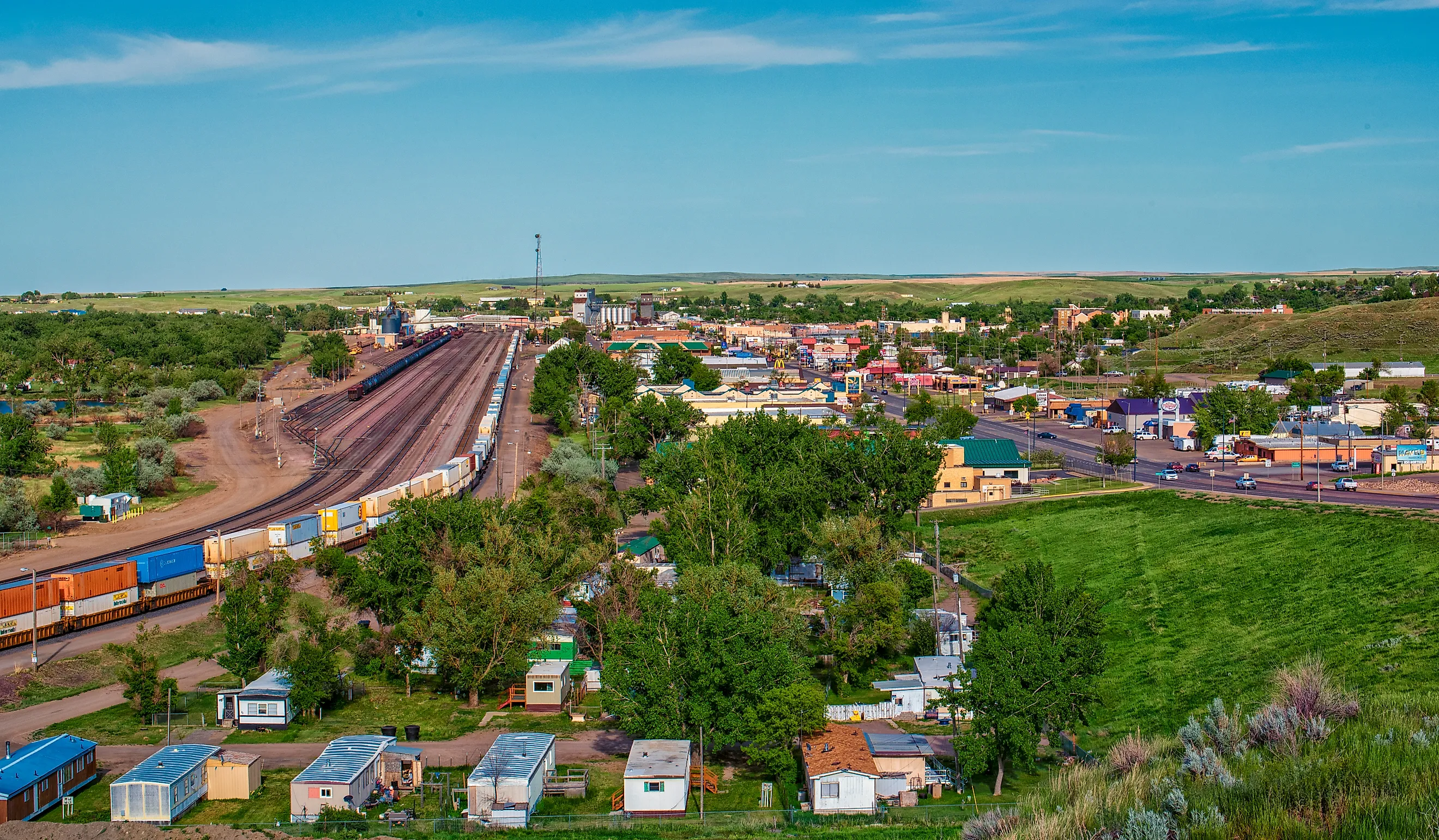
7 Charming Old Railroad Towns In Montana
Railroad towns are the stitching that holds much of Montana together. Long before interstates cut across the plains or mountain passes were carved into highways, rail lines determined where people settled, where goods moved, and where towns survived. In a place defined by distance, weather, and rugged terrain, the railroad turned isolated stretches of prairie and mountain valleys into connected communities almost overnight.
In a state like Montana, which spans roughly 147,000 square miles (380,800 square kilometers), the railroad wasn’t just vital; it was a game-changer for the state and its people. Lines like the Great Northern and Northern Pacific shaped Montana’s growth town by town, bringing workers, families, commerce, and culture with them. Many of the communities that sprang up along the tracks still carry that legacy today. Thankfully, despite how the world may have changed around them, these seven Charming Old Railroad Towns in Montana remain fantastic places to spend time and unwind.
Whitefish

First settled by Europeans in 1883, Whitefish became a railroad town in 1904 when the Great Northern Railway began operations in the area. Since then, Whitefish has grown to a population of around 7,700 residents, while still retaining much of its old-world charm. Those interested in this side of town can check out the Whitefish Museum, which showcases hundreds of items on the region’s railroad history with a mini-train chugging along the interior. On the other hand, visitors can enjoy activities year-round at Whitefish Mountain Resort. During winter, visitors can hit the slopes, while in warmer months, they can zip-line, ride more than 20 miles of mountain biking trails, and take scenic chairlift rides.
One of the town’s highlights is its lively festival calendar, including the Whitefish Winter Carnival, which features live music and the famous “Penguin Plunge” for those brave enough to plunge into frigid waters. Known as “Big Sky Country,” Montana’s natural beauty is on full display at the Whitefish Lake Golf Club, where golfers can enjoy a round or two surrounded by stunning mountain scenery.
Livingston

It’s fair to say that the Northern Pacific Railway played a major role in the founding of Livingston, which served as an important railroad hub. Today, this laid-back town remains a gateway to Yellowstone National Park, located roughly 55 miles south of Livingston. A great way to explore the town’s railroad past is by visiting the Park County Yellowstone Gateway Museum, which houses a wide range of permanent exhibits, including an old-fashioned blacksmith shop and an original Northern Pacific Railway caboose.
For sweeping views of the area, stop by the Mayor’s Landing Fishing Access Site, which sits along the Yellowstone River and is popular for boating, fishing, or simply soaking in the scenery. When hunger strikes, local favorite The Fainting Goat Pub serves hearty meals in a welcoming atmosphere. Catching a performance at the Blue Slipper Theatre or strolling downtown offers additional opportunities to admire the surrounding Rocky Mountains, so keep a camera handy.
Havre

Sitting along Montana’s famed Hi-Line, Havre was once nicknamed the “Crown Jewel of the Hi-Line” due to its importance to the railway. Founded in the late 19th century, the town was originally known as Bullhook Bottoms before residents voted to rename it after Le Havre, France.
Thanks to its location, Havre experiences long, cold, dry winters and hot summers with cooler evenings. One of its most distinctive attractions is Havre Beneath the Streets, an underground city created after a devastating 1904 fire destroyed much of downtown. Businesses were rebuilt below street level, including a bakery, saloon, and barber shop. Today, guided tours offer a fascinating glimpse into this hidden history. For souvenirs, Big Sky Images & Collectibles offers a wide selection of locally inspired items. After exploring, visitors looking to stay overnight will find accommodations such as the Super 8 by Wyndham Havre.
Shelby

Shelby began as a stop on the Montana Central Railway before later becoming part of the Great Northern Railway. To learn more about the town’s past, a visit to Marias Museum of History & Art is highly recommended. Its collection includes railroad artifacts, themed rooms such as a schoolhouse and a barber shop, and memorabilia from the legendary 1923 heavyweight boxing match between Jack Dempsey and Tommy Gibbons.
Golfers can enjoy the 18-hole Marias Valley Golf Course, which combines exercise with scenic prairie views. Movie lovers will appreciate the historic Roxy Theatre, built in 1936 and still operating today, an authentic cinematic relic with a beating heart in the modern era. After a day in Shelby, locals often gather at the Carousel Rest Area nearby for some ice cream and conversation, reinforcing Shelby’s small-town, neighborly feel.
Malta

Located on Montana’s high plains north of the Rocky Mountains, Malta is a small town of around 1,900 residents. It originated as a stop on the Great Northern Railway in 1887, and today, Amtrak’s Empire Builder continues to serve the town via the historic Malta Station. Malta’s standout attraction is the Great Plains Dinosaur Museum, home to an impressive fossil collection. Its most famous resident is Leonardo, a remarkably preserved 77-million-year-old Brachylophosaurus. Leonardo, along with fossils nicknamed Elvis and Roberta, was discovered in the surrounding area between 1994 and 2003.
For wildlife viewing, the nearby Bowdoin National Wildlife Refuge spans more than 15,000 acres and is home to dozens of mammal species and over 260 bird species, including ducks and bald eagles. For a different kind of outdoor experience, golfers can enjoy the well-maintained 9-hole Marian Hills Golf Club. Before leaving, be sure to learn about the town’s name; its origins remain uncertain, though local lore suggests a railroad official once spun a globe and landed on the Mediterranean island of Malta.
Cut Bank

Founded in 1891, Cut Bank owes its existence to the Great Northern Railway. While it once served as a key rail stop, today Amtrak serves the town of just over 3,000 residents. Though firmly rooted in the present, Cut Bank has not forgotten its past. Visitors explore the Glacier County Historical Museum. Spread across 14 acres, the museum features historic buildings, including a schoolhouse and an oil derrick. Inside the Glacier County Historical Museum, visitors can also see railroad-era artifacts and photographs that document Cut Bank’s role as a working stop along the Great Northern line, including a 1981 BN caboose.
One of the town’s most recognizable landmarks is the Cut Bank Penguin, a nearly 30-foot-tall roadside attraction that makes for a memorable photo. Shoppers should stop by Marketplace on Main, a well-stocked gift shop that was named Montana’s “Made in Montana Retailer of the Year”.
Wolf Point

Situated along the Missouri River, Wolf Point began as a trading post in the 1860s before becoming a stop on the Great Northern Railway in 1887. The arrival of the railroad helped establish Wolf Point as a supply and shipping point for northeastern Montana, linking ranching and agricultural communities to larger rail markets. Much of this history is preserved at the Wolf Point Area Museum, which houses photographs from the railroad era, early settler artifacts, and exhibits.
The town experiences long, cold winters and hot summers, making the Missouri River a popular place to relax during warmer months. Wolf Point is also deeply connected to Native American culture and hosts Montana’s oldest traditional Pow Wow each August. This major cultural gathering brings together dancers, drummers, and visitors from across the region. High-energy entertainment continues each July at Marvin Brookman Stadium during the Wild Horse Stampede, a three-day rodeo held since 1915. Moviegoers can catch a film at Prairie Cinema, and before leaving town, visitors should grab a bite at Dad’s Bar & Grill.
Montana’s Old Railroad Towns With Plenty Of Charm
For generations, the railways that crisscrossed North America served as the lifeblood of the nation. Along the way, thousands of towns like these were born, some thrived, while others were lost to history. Without the tireless efforts of the millions who laid the tracks connecting the nation from sea to shining sea, railroad towns would never have existed. Today, these towns in Montana survive not only as great places to live and visit, but also as living historical monuments to a bygone era. Each one possesses a distinct magic all its own. Happy travels!