9 Most Walkable Town Centers In Florida
Tourists regularly choose Florida for beaches like Clearwater Beach, South Beach, and the Gulf Coast, along with warm weather and relaxed coastal towns. Many popular destinations, such as Orlando’s theme park corridor or the wider Miami metro area, are spread out and heavily car-dependent. But Florida also has town centers where walking is the easiest and most practical way to explore. These places are built around compact downtowns, public waterfront access, and parks, shops, and cultural sites that sit within a few blocks of each other. In towns like Winter Garden or Seaside, you can walk from a main street to the water, a museum, or a market without planning a drive. Read on to discover nine Florida towns where walking fits naturally into a day of travel.
Winter Garden

Winter Garden is along a restored railroad corridor west of Orlando, and its town center works because daily needs, history, and recreation are compressed into a few flat blocks. Most visits begin on Plant Street, where brick sidewalks run past cafés, local shops, and the food hall at Plant Street Market. The market stays busy throughout the day, and everything inside is accessible on foot from either end of downtown in under five minutes. A short walk east brings you to the Winter Garden Heritage Museum, housed in the former Atlantic Coast Line Railroad Depot. Here you can educate yourself on the citrus industry, rail transport, and how the town rebuilt itself after freezes and decline.
From the museum, you can step directly onto the West Orange Trail, a 22-mile paved rail trail. In town, the trail feels like a linear park, shaded and well-marked, with benches and bike rentals nearby. Nearby, Centennial Plaza anchors the civic side of downtown, with a small stage and open lawn used for events and the weekly farmers market.
Dunedin

The town center of Dunedin accessorizes Florida’s Gulf Coast with a compact grid of shops, breweries, parks, and waterfront paths that make walking the easiest way to explore. Historic Main Street and Douglas Avenue meet at John R. Lawrence Pioneer Park, a community green space where you’ll find benches, shaded lawns, and frequent markets or live music events just steps from local cafés and galleries. For those seeking a long stroll, walk north to the Dunedin Fine Art Center, which features rotating exhibitions and hands-on workshops in a small, accessible space of local and regional art. It’s easy to spend 30 to 60 minutes here before turning back toward the heart of downtown.
Nearby, Hammock Park opens onto 90 acres of trails through maritime hammock forest, a butterfly garden, and a boardwalk that brings you closer to native Florida ecosystems without needing a car. Dunedin’s historic rail right-of-way also carries the paved Fred Marquis Pinellas Trail through town. Walk even a short section of this multi-use trail to connect easily with local shops, breweries, and waterfront overlooks.
Winter Park

Unlike many Orlando suburbs, Winter Park has a true town center, clustered closely enough to function as a pedestrian district. At the heart of downtown is Central Park, an 11-acre open space shaded by century-old oaks and dotted with fountains and benches. It’s a place where locals gather, markets are held, and it links directly into Park Avenue, a tree-lined street with boutiques, galleries, cafés, and restaurants that stretch for several blocks. If you want more green space on land, Mead Botanical Garden, a 47-acre site with boardwalks, creek views, and a butterfly garden, is roughly a 30-minute walk southeast from Park Avenue’s core.
Just off Park Avenue is the Charles Hosmer Morse Museum of American Art, home to the world’s most comprehensive collection of Louis Comfort Tiffany glass, including lamps, windows, jewelry, and the architect’s chapel interior from the 1893 World’s Fair. Expect to spend 45-90 minutes inside. From Central Park, it’s about five minutes on foot to the dock for the Winter Park Scenic Boat Tour, an hour-long guided cruise through canals and three of the chain’s lakes, giving you unique views of historic estates and cypress-lined shorelines.
Mount Dora

Right on Lake Dora, the historic center of Mount Dora is small enough to cover on foot. The Mount Dora Village Market happens at Sunset Park, where every Sunday from 9 a.m.-2 p.m., more than 50 vendors sell produce, crafts, plants, and coffee. From there, it’s a short walk south to Palm Island Park, an 8-acre nature preserve with a 420-foot boardwalk stretching over Lake Dora. That boardwalk gives elevated views of water, herons, and even gators along wide shoreline paths that are perfect for a quiet stroll.
Along the same lakefront path, you’ll find Grantham Point Park and the Mount Dora Lighthouse, one of Florida’s few inland lighthouses. Head north from Sunset Park along Donnelly Street to reach the Donnelly House, a Queen-Anne style home built in 1893 and listed on the National Register of Historic Places. The house anchors a block of historic buildings that trace Mount Dora’s 19th-century growth, and you can pick up a self-guided walking tour brochure from the Chamber of Commerce to deepen your understanding of each site.
DeLand

The Downtown DeLand Historic District is where DeLand’s walkable experience begins. Trees shade broad sidewalks that link galleries, cafés, and historic façades, keeping most key stops within a short stroll. Start at the Museum of Art-DeLand, a nonprofit art museum with rotating exhibitions and a collection of more than 750 works. Visitors often spend an hour or more here viewing contemporary pieces and special shows. Continue a few blocks north, and you’ll reach DeLand House Museum, a Victorian home from the 1880s with exhibits on local history and early settler life in West Volusia County. A few blocks from the DeLand House, Freedom Playground and Bill Dreggors Park share green space with shaded paths, interactive play areas, and places to sit down with a snack or drink you picked up nearby.
Seaside

Seaside, on Florida’s Scenic Highway 30A, lays out nearly everything you want to explore without a car, because its main beach, performance lawn, and shops sit within a few blocks of one another. Seaside Beach is a wide stretch of white sand and emerald water just south of the central square. Public access allows you to walk from the heart of town to the water in about five minutes; along the way, you’ll pass pastel cottages and pedestrian paths that keep traffic slow. It’s ideal for swimming, sunbathing, and watching the Gulf light change at sunset.
The town’s Central Square and Seaside Amphitheater sit at the junction of Highway 30A and Seaside Avenue. This grassy plaza hosts concerts, outdoor movies, and community events year-round. A short stroll northeast from the square brings you to Sundog Books, a beloved two-story bookstore with beach reads, local authors, and a small record collection. Just off the square, Airstream Row offers a clustered lineup of vintage food trucks where locals and visitors grab everything from shaved ice to smoked barbecue. It’s not only a meal stop; it’s part of Seaside’s social rhythm, especially on warm evenings.
Fernandina Beach

Sprawling across roughly 50 blocks, Fernandina Beach Historic District is surely a catch to discover. Start at Amelia Island Welcome Center on Centre Street to pick up a walking map and local event calendar. From there, it’s a short walk south to Amelia Island Museum of History, in the old Nassau County jail. Exhibits here trace 4,000+ years of island history, from indigenous Timucua settlements to pirate lore and Victorian seafood trade. Those seeking a long walk can take an hour-long stroll across town to Main Beach Park, a wide sandy shoreline with restrooms, picnic spots, and space to swim or collect shells. Its proximity to downtown makes it one of the most accessible beaches on Amelia Island without a car.
Tarpon Springs

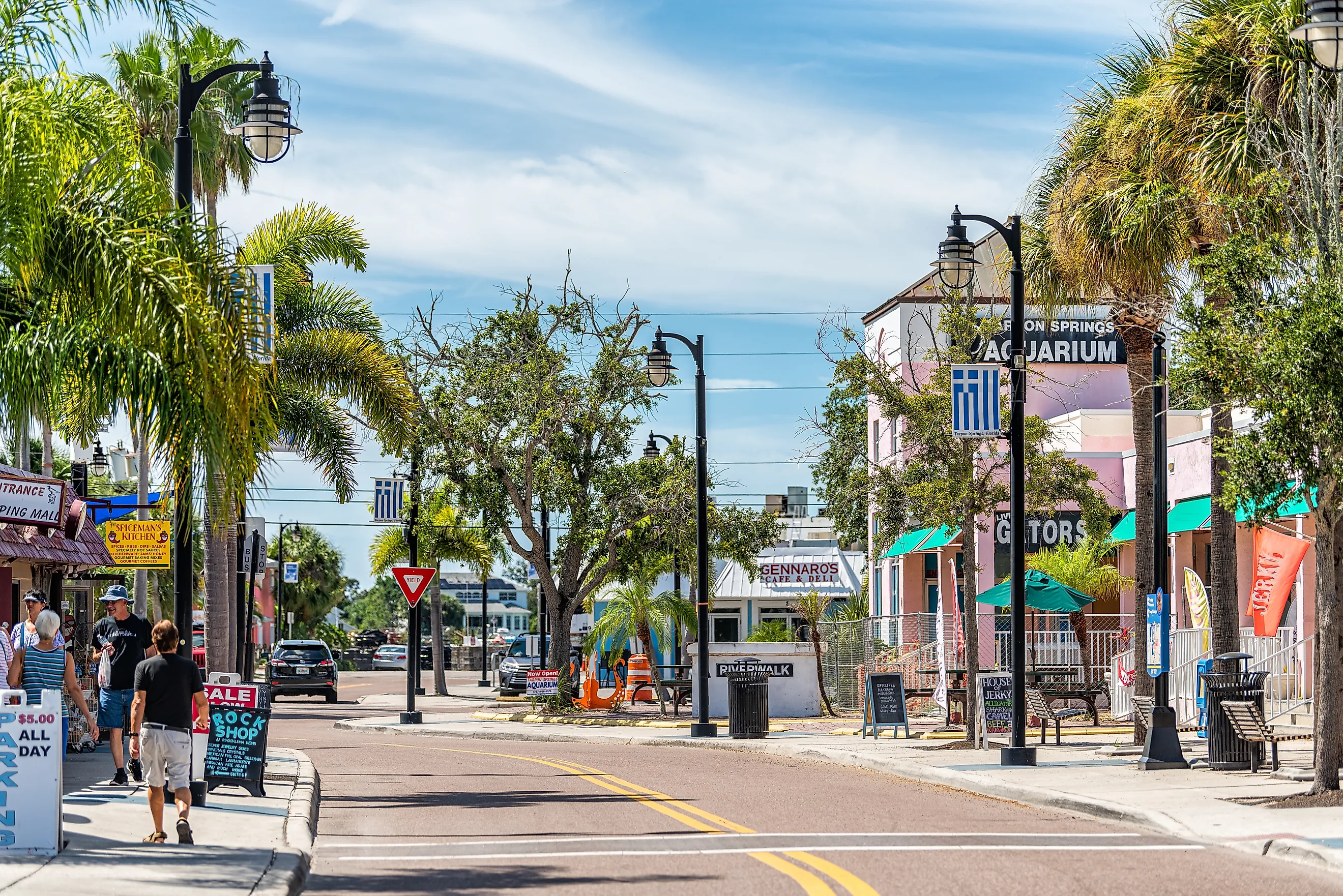
Tarpon Springs Sponge Docks sit along the Anclote River and make up the spine of Tarpon Springs’ historic waterfront. Walk the 1.2-mile loop of boardwalk and road that traces the old sponge industry’s docks and piers. Along this walk, you’ll see working boats, sponge displays, and local shops selling natural sponges, Greek olive oil, and handmade soaps. It's about a twenty-minute walk from there to the Tarpon Springs Heritage Museum, where you can learn about the town’s Greek-American sponge diving legacy, early settlers, and local cultural artifacts. Look for displays on traditional diving suits and photos of original sponge boats. Close to the docks and central business corridor, Tarpon Springs Cultural Center hosts local arts programming, workshops, and small performances.
Lauderdale-By-The-Sea

Lauderdale-By-The-Sea centers around its sandy shoreline and seaside village streets, where most highlights sit within a short walk. At the heart of town is Lauderdale‐by‐the‑Sea Beach, a 2.5-mile stretch of sand that’s also one of Florida’s best places to swim, sunbathe, and snorkel. A natural coral reef lies about 100 yards offshore, so when conditions are calm, you can swim straight from the beach to explore marine life without needing a boat. Stroll to El Prado Park, a small beachfront park with picnic tables, shade, and seasonal Sunday farmers markets (December-May). Or venture further north to the SS Copenhagen Shipwreck, north of the main beach, with informational plaques on land explaining the 1900 wreck and its role as an artificial reef. Meanwhile, restaurants like Aruba Beach Cafe are a short walk from beachside lounging.
The most walkable town centers in Florida fit the way people actually move in this state. Distances are short, sidewalks are flat, and shade and water breaks matter in the heat. In Tarpon Springs, a working waterfront, museums, and parks line one continuous walking route. In Lauderdale-by-the-Sea, the beach, reef access, parks, and cafés sit within a few blocks. These places succeed by keeping daily attractions close and connected. Across the United States, few states combine year-round outdoor weather with walkable town centers shaped so directly by beaches, lakes, and waterfront streets.