5 Classic Americana Downtowns In South Dakota
Historic saloons in Deadwood, railroad-era storefronts in Aberdeen, and the famous Corn Palace in Mitchell preserve classic Americana character across South Dakota's downtown districts. Railroad development across the Wild West and the cattle-and-mining frontier shaped these communities through the late 19th century. The five towns ahead represent that Americana lineage through specific architecture and ongoing traditions. Each pairs a preserved downtown with regional outdoor access and museum stops. The lineup spans the eastern Missouri River valley and the western Black Hills.
Aberdeen

Before Aberdeen became a town and even before European settlers came to the area, it was inhabited by the Sioux. Europeans entered the region and established a trading post during the 1820s. The first train came to the region in 1881, the same year Aberdeen was founded as a railroad town, and the city was incorporated in 1882. Through the years there were often floods, and the nickname "Town in the Frog Pond" was given. Tourists can discover the Dacotah Prairie Museum, one of the state's most atmospheric small-city museums. It is a classic example of Americana heritage preservation housed in a restored early 20th-century brick building. The museum is dedicated to the stories of homesteaders, railroad expansion, prairie towns, immigrant communities, and the everyday objects that shaped life in the region.

After a long day, or perhaps to start the morning, check out the Red Rooster Coffee House. A long-running indie café for over 25 years, it serves as the community's hub with live music, DJs, theme parties, and more.
Mitchell

Just over 15,000 residents call Mitchell their home. The first settlement was made in 1879, while the town was incorporated in 1883. It is named after Alexander Mitchell, a Milwaukee banker and railroad executive who served as president of the Chicago, Milwaukee and St. Paul Railway. Visitors can join the festivities on Memorial Day weekend to celebrate and appreciate veterans of the United States Armed Forces, with a poker run, cornhole tournament, car show, kids pedal ride, and BBQ championship and tasting.

One of the country's best-known pieces of Americana folk art is the world's only Corn Palace. The palace is decorated annually with murals made from 12 different naturally colored corn varieties. A local farmer grows the corn for the palace, and local artists design and create the murals every year in late August, continuing into September. This year's theme is 250 Years of America. America has a large agricultural history, especially in the Midwest, and a large portion of that farmland provides corn for the whole country. Mitchell's downtown unfolds along a corridor of brick storefronts, many dating from the 1880s through the 1930s when the railroad and agricultural trade shaped the town's identity.
Deadwood

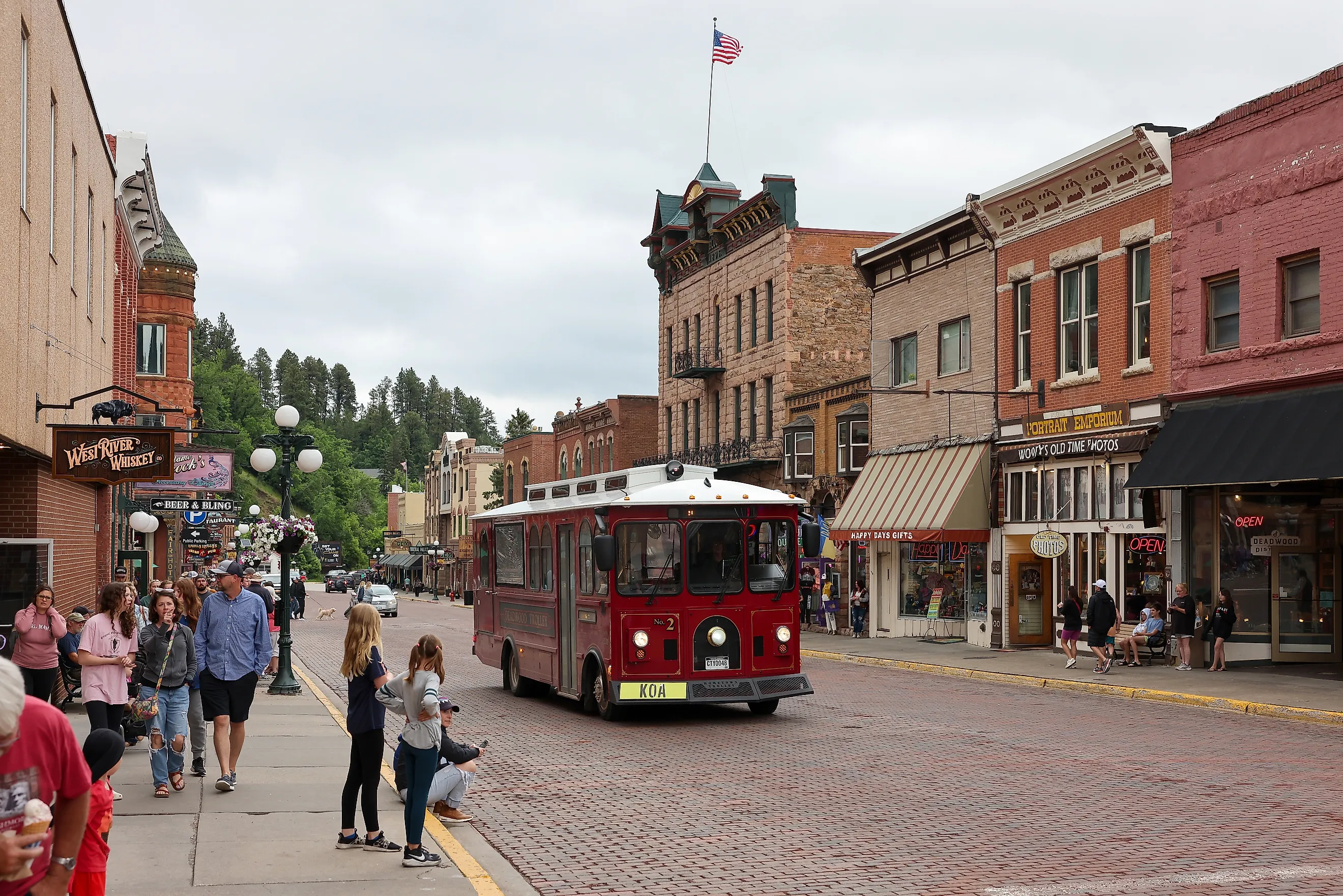
Deadwood is a historic town that sparked an HBO series about the Wild West. It was established in 1876 when prospectors from all over came to look for gold. The most famous frontier woman and sharpshooter was Calamity Jane, who appeared in Buffalo Bill's Wild West show and at the Pan-American Exposition in 1901. Nothing represents Americana more than an old-fashioned train ride. Train enthusiasts can take the 1880 Train, one of the oldest continuously operating tourist steam railroads in the United States. Its locomotives, many built in the early 1900s, run on a narrow, winding route originally laid for mining and logging between Hill City and Keystone.

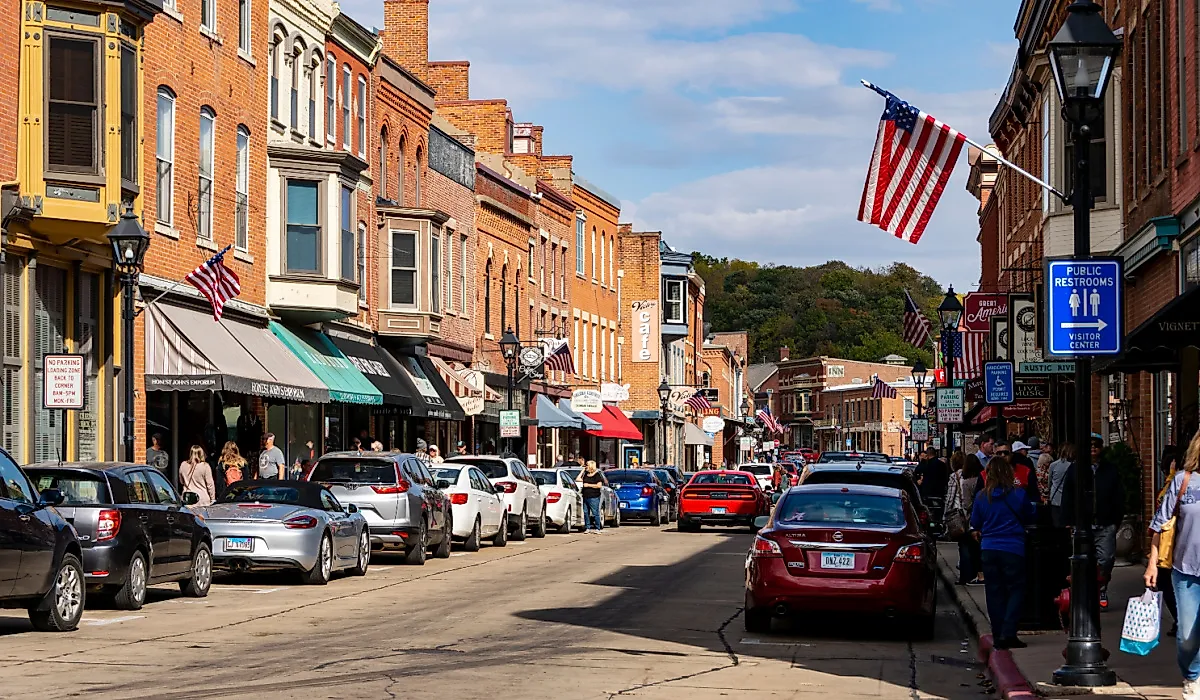
Nothing represents Americana more than the old brick storefronts and saloons that still line downtown Deadwood. Visitors can explore landmarks like the historic Bullock Hotel, opened in 1895 by Seth Bullock who served as Deadwood's first sheriff, or stroll along Main Street past restored Wild West-era gambling halls, hotels, and wooden-fronted buildings that preserve the town's frontier atmosphere.
Spearfish

Spearfish is a town with around 13,000 residents. Before the Black Hills Gold Rush of 1876, the area was used by Native American peoples including the Lakota. After the Gold Rush, the town was established in 1876 at the mouth of Spearfish Canyon. The town grew into a supplier of food to the region's mining camps. Even today, there is a significant number of farms in the surrounding area.
Several events commemorate the 250th anniversary of the United States this year. The High Plains Western Heritage Center hosts presentations like George Washington: Citizen Soldier, Statesman. It offers a presentation on the life and legacy of the country's founder. The museum itself spans over 20,000 square feet and features items ranging from Western artifacts and pioneering equipment to ranching, rodeo, transportation, American Indian, and mining exhibits. One of the center's features is a Concord Stagecoach and a schoolhouse.

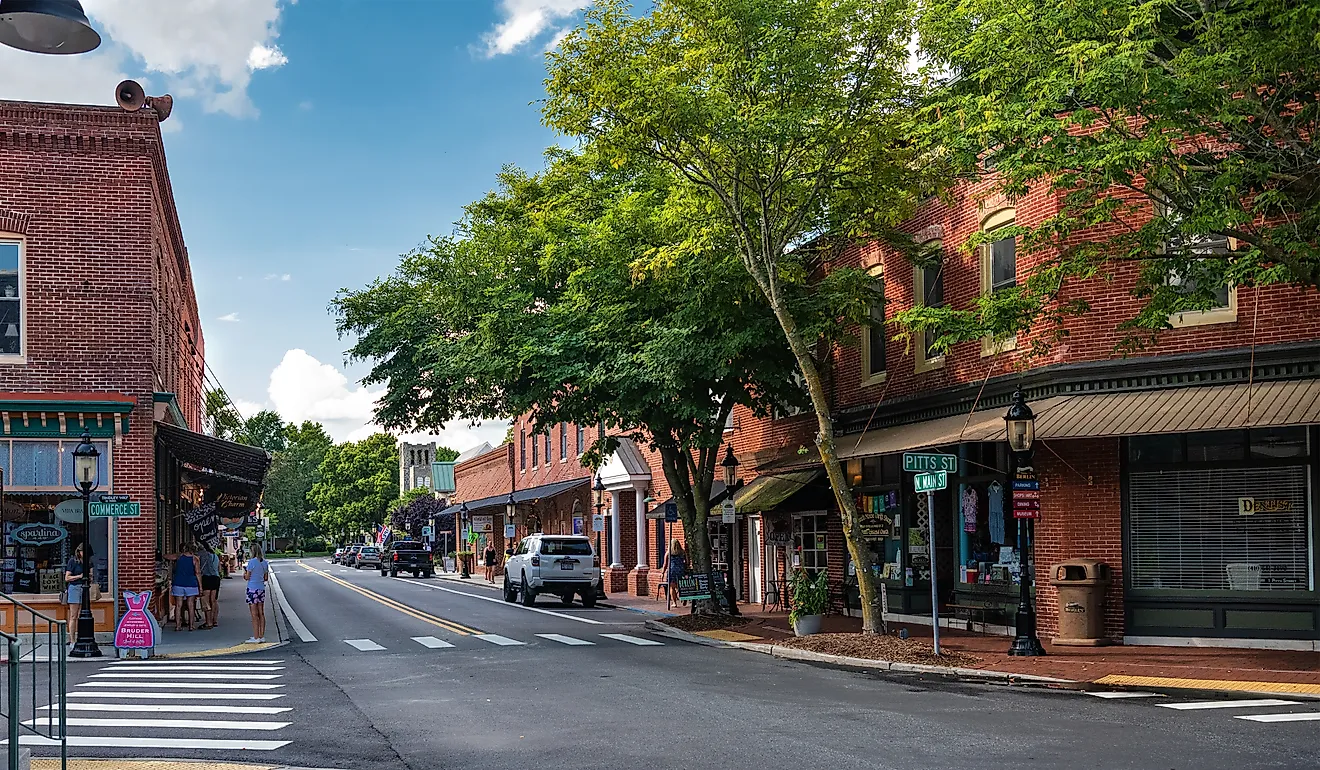
The downtown architecture is classic 1900s to 1930s Main Street, with two-story red-brick facades and tall windows. The Good Earth Natural Foods runs as a long-time independent grocery and cafe in a historic storefront. There's also the Green Bean Coffee House, a local roaster with a creative interior and a steady stream of regulars.
Custer

Custer is a town of just under 2,000 people. It was named after the historic figure, Lieutenant Colonel George Armstrong Custer. Before the Gold Rush, the area had been inhabited for thousands of years by various Indigenous tribes including the Lakota. Custer's 1874 Black Hills Expedition announced gold in the region, triggering the Black Hills Gold Rush. The town celebrates this discovery during Gold Discovery Days in the summer. The downtown core hosts a car show, arts and crafts, a volleyball tournament, a fun run, a cornhole tournament, golf, hot-air balloon rides, and the largest parades in the area. The festival also includes gold-hunting and gold-panning demonstrations.

One of the signature parts of Americana in the downtown core is the 1881 Courthouse Museum, a two-story Italianate-influenced building. The museum explores the history of the Black Hills and the Dakota Territory from 1874 to the present day. Visitors can check out several monumental pieces of Americana just outside of town. The Crazy Horse Memorial has been under construction since 1948 and would be much larger than Mount Rushmore when completed. Crazy Horse was among the Lakota and Cheyenne leaders who defeated Custer at the Battle of the Little Bighorn in 1876. Mount Rushmore, featuring four influential American presidents, can be reached in just 30 minutes outside of town.
Where the Heart of the Wild West Still Lives On
The frontier era left a deep mark across South Dakota, with five towns above carrying that heritage forward through preserved architecture, museums, and ongoing traditions. Custer is named after the cavalry officer defeated by Crazy Horse and other Lakota and Cheyenne leaders at the Little Bighorn. The Gold Rush in the Black Hills is synonymous with the frontier days and gave rise to the infamous town of Deadwood. Historical train rides on the 1880 Train still link the Black Hills towns. If you want to experience that Wild West heritage in 2026, plan a visit through these five South Dakota stops.