5 Classic Americana Downtowns In Missouri
Classic Americana downtowns are compact main streets built before the mid-20th century that reflect the early commercial and civic roots of the United States. Missouri sits in the central United States, its borders driven by the Mississippi and Missouri Rivers, which established major routes for settlement and trade. From the early 1800s through the early 1900s, river ports, railroad towns, wine communities, and county seats across Missouri built compact downtowns to house shops, hotels, saloons, and services. The towns featured here retain those downtowns through historic architecture and locally run stores, restaurants, workshops, and markets that continue to exist on the same blocks. Get off the highway and explore Missouri’s downtowns to experience the real Americana.
Ste. Genevieve

Historic downtown Ste. Genevieve is a National Historic Landmark District and forms the core of Ste. Genevieve National Historical Park, recognized as the oldest permanent European settlement in Missouri. Settled by French Canadians between the 1730s and 1750s, the town developed long before American statehood, leaving a downtown known for rare 18th-century French Colonial architecture. Among the most significant surviving buildings is the Green Tree Tavern, dating to 1790 and verified as the oldest building in Missouri. Originally operating as an inn and tobacco shop, it remains part of the national park, where guided tours are available of the interior.

Today, the same streets hold locally run workshops, shops, and restaurants working out of historic buildings. ASL Pewter focuses on 18th-century design, where visitors can watch artisans handcraft pewter goods using historical techniques. Nearby, Lavender Moon occupies a downtown storefront offering aromatherapy products, essential oils, and crystal items that draw steady foot traffic. Antiquing centers on The Antique Mall Ste. Genevieve, housed in a converted 1920s factory, where multiple vendors fill the large interior with furniture, collectibles, and regional finds. For food and drink, The Anvil Saloon & Restaurant, in business since 1855, continues to serve comfort food in a historic setting tied directly to the town’s long role as a river and trade stop.
Hannibal

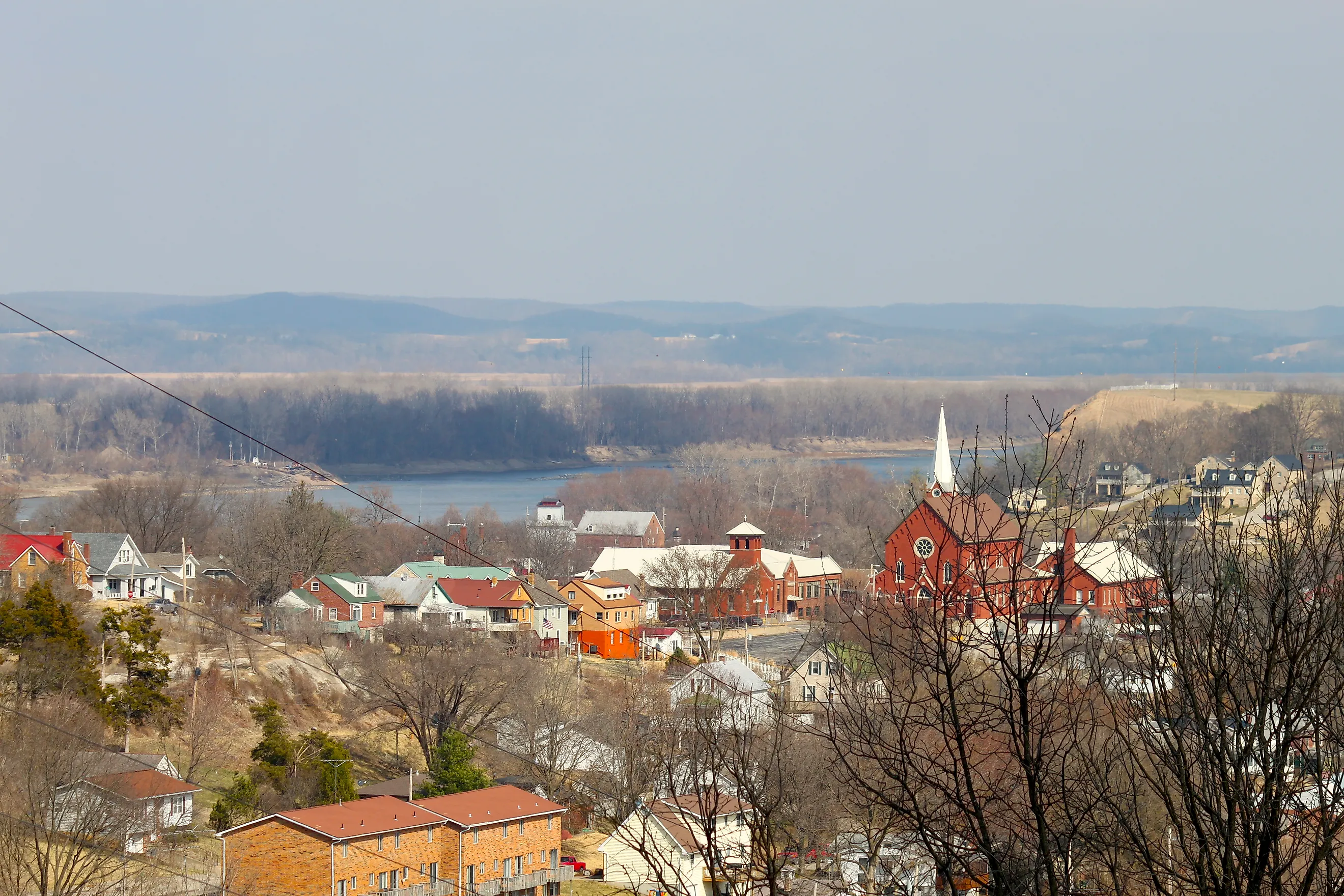
Founded in 1819 by Moses Bates, Hannibal rose quickly from a small frontier settlement into one of Missouri’s most active Mississippi River ports. That growth left a substantial downtown core now recognized as the North Main Street Historic District, where commercial buildings dating from 1852 to 1935 line the street. Italianate and Beaux Arts influences appear in brick façades, upper-story windows, and ground-floor storefronts built to handle steady traffic from steamboats and rail lines. The district also gained lasting cultural significance as the preserved setting for Mark Twain’s literary world, which helped keep its historic fabric intact rather than redeveloped.

The buildings remain occupied by family-owned shops, diners, and services that serve regular customers. Ayers Pottery, operating for more than 50 years, maintains an in-store studio where artists throw, paint, and fire handmade pottery visible from the sales floor. Nearby, Hickory Stick Quilt Shop, open since 1977, serves as a destination for quilters and has earned national recognition from Better Homes & Gardens. A short walk brings visitors to Native American Trading Co., run by the same owner for about five decades, specializing in authentic jewelry, instruments, and art. The downtown walk often ends at Chocolaterie Stam, where Dutch chocolates and house-made gelato add a food stop rooted in European tradition.
Weston

Established in 1837, this town developed as a river-facing trade town. Today, it boasts a National Historic District recognized for its well-preserved antebellum brick architecture. Built above the Missouri River floodplain, the town avoided repeated destruction and kept a dense commercial core of 19th-century buildings. Much of the downtown saved its original brick construction and 19th-century building footprints, preserving a commercial streetscape that dates to the pre-Civil War period.

That compact layout allows visitors to move easily between businesses housed in historic structures. A natural starting point is Pirtle Winery, which operates inside an 1867 former church, offering wine tastings and a small garden within a repurposed landmark. A short drive leads to Green Dirt Farm Creamery, where sheep’s-milk cheeses produced on nearby farms supply a café and cheese counter downtown. Then, Missouri Bluffs Boutique, a family-owned women’s clothing and accessories shop operating since 1984, occupies a brick storefront along the same stretch. Just down the block, Renditions Polish Pottery Shop imports handcrafted ceramics directly from Bolesławiec, Poland, filling another preserved building with specialty retail.
Hermann

As a central hub of the Missouri Rhineland, Hermann developed a beautiful downtown with more than 150 historic buildings, most dating to the mid-19th and early 20th centuries. Founded as a planned German settlement along the Missouri River, the town grew around wine production and agricultural trade, which explains the density of brick commercial structures built for storage, lodging, and retail. Thick masonry walls, arched openings, and multi-story façades remain consistent across the district. Near the downtown core, Stone Hill Winery, established in 1847, continues to operate from historic cellars and production buildings and stands as Missouri’s oldest and most awarded winery. On the same property, Vintage 1847 Restaurant occupies the winery’s original carriage house and horse barn, preserving those early service buildings as an active dining space.

That historic framework supports a varied mix of independent businesses within a few walkable blocks. For food, Hermann Wurst Haus fills the main street with the aroma of house-made sausages and German specialties produced on site. Antique shopping fills another niche at Hermann’s Attic Antique Mall, which uses a large historic interior for vintage furniture, collectibles, and regional finds.
Nevada

Downtown Nevada centers on a classic courthouse square and a compact central business district that largely dates to 1908. Permanent brick construction followed earlier destruction, and much of the area’s Romanesque Revival and Federal-style architecture remains in place today. Notably, significant portions of the downtown survived the town’s burning by Federal troops in 1863, leaving a streetscape that reflects rebuilding decisions rather than later redesign. Within this setting, W. F. Norman Corporation operates as a long-running manufacturer of cast tin ceiling tiles and metal ornaments, using original machinery in continuous operation for more than 100 years.
Shops and eateries continue to operate from the original buildings around the courthouse square. 54 Cafe provides a traditional diner experience within a downtown storefront, keeping morning and lunchtime traffic close to the courthouse. Nearby, Wagon Wheel Flea Market brings together multiple vendors selling antiques, collectibles, and handmade crafts inside a central location. A few steps away, Loretta’s Attic specializes in vintage furniture, décor, and thrift finds, adding another layer of browsing within the historic core.
Americana on Missouri’s Main Streets
These downtowns show how historic main streets developed and endured. The story begins along the Missouri River in Hermann, where German settlement and wine production established a dense brick core that still supports shops and food makers. That river-based pattern continues north in Weston, whose antebellum buildings reflect steamboat trade and now hold long-running storefronts and producers. Following the Mississippi south leads to Hannibal, where river commerce and rail traffic fixed the scale of downtown blocks still occupied by retailers and craftspeople. French colonial planning defines Ste. Genevieve, linking 18th-century buildings to present-day shops and eateries. Inland, Nevada completes the picture with a courthouse square that keeps manufacturing, dining, and retail centered downtown.