2026's 9 Most Scenic Florida's Emerald Coast Towns
The sand along the Emerald Coast is nearly pure quartz, white enough to stay cool underfoot in July and fine enough to squeak. Behind the dunes at Grayton Beach, Western Lake is one of the few coastal dune lakes in the world, where fresh and salt water meet. Navarre's pier runs more than 1,500 feet over water clear enough to spot the reefs below. Nine towns share this stretch of coast, each with a different way of framing the same white sand and green water.
Destin

Destin bills itself as the "World's Luckiest Fishing Village," and its charter fleet is among the largest in the state. The Destin History and Fishing Museum tracks how the town grew up around the water, and inside it the Mike Long Fish Wall displays over 100 local catches, a quick tour of the variety in Destin's Gulf. Most visitors want a boat of their own, whether rented or chartered, since the town's identity is tied so closely to what happens offshore. One of the most requested trips runs to Crab Island, a submerged sandbar in Choctawhatchee Bay about five minutes from Destin Harbor.
Several operators, including Crab Island Pontoons, Destin Vacation Boat Rentals, and Crab Island Cruises, run the short voyage with different group sizes and levels of customization. Shallow, clear water surrounds the sandbar, which makes it a forgiving place for beginners to snorkel and swim. The sand here has a long history: it traveled from the ancient Appalachian Mountains, carried grain by grain down rivers to the Gulf as nearly pure quartz. Those same white grains pile 30 feet high in the dunes at Henderson Beach State Park, where a boardwalk crosses to nature trails and more than 60 campsites.
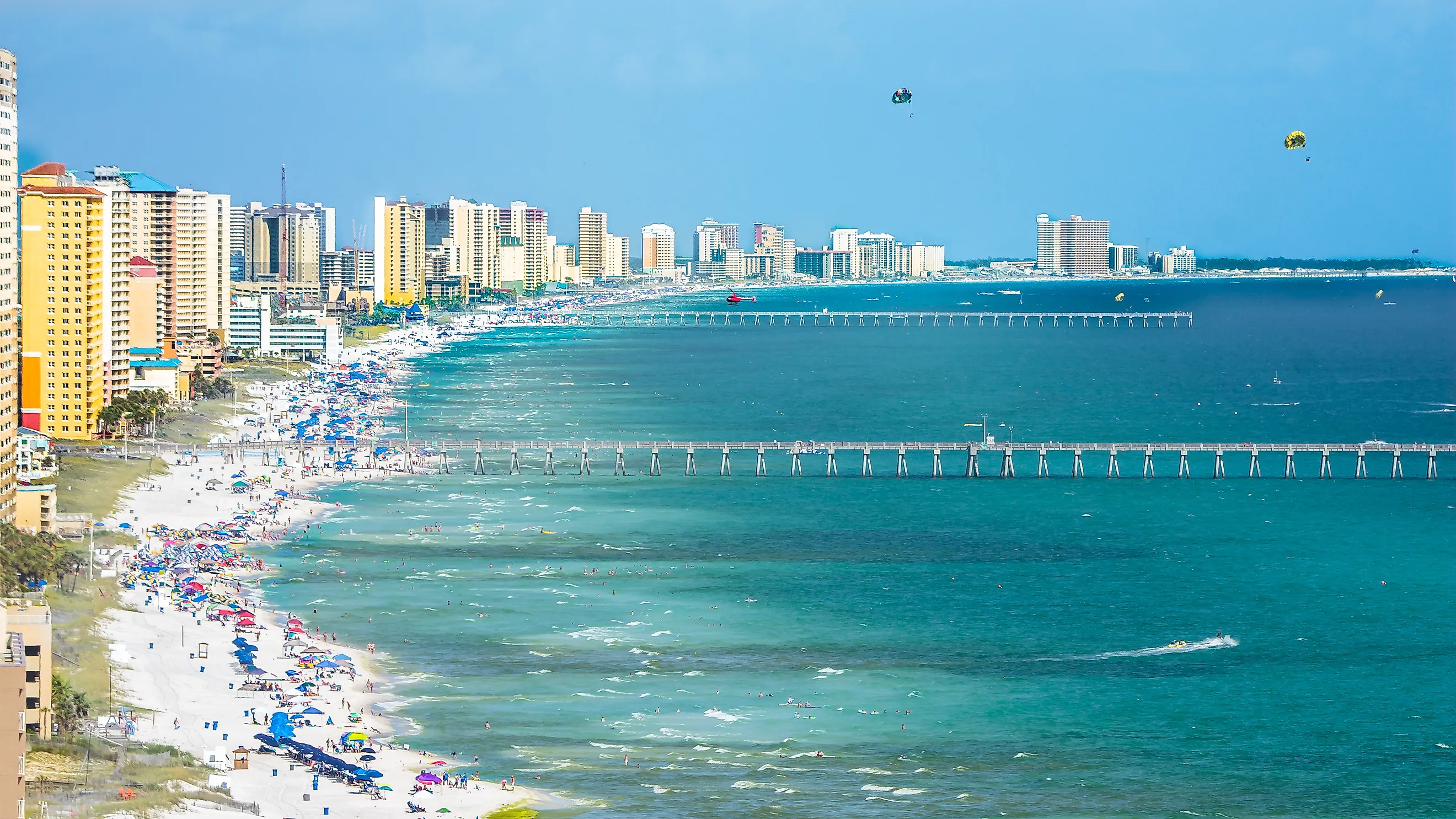
Panama City Beach

Wide stretches of protected coastal wilderness sit alongside the shoreline in Panama City Beach. At Panama City Beach Conservation Park, 2,900 acres of restored wetlands and pine forest double as a natural filter, cleaning water before it reaches St. Andrews Bay. Unpaved trails thread through the forest, and eight boardwalks totaling more than a mile carry visitors over the wetlands for close wildlife viewing. The Russell-Fields City Pier reaches 1,500 feet into the Gulf, a good spot for a sunset walk or a few hours of fishing, with tackle and bait sold on-site. Between St. Andrews Bay and the Gulf, St. Andrews State Park is a migratory stopover for a wide variety of birds and butterflies, and it has a piece of local lore attached. During a 1929 hurricane, a Norwegian sailor named Theodore Tollofsen shipwrecked here, liked what he saw, and homesteaded in his wrecked boat for the next 25 years.
Fort Walton Beach

Fort Walton Beach has classic Emerald Coast scenery at a noticeably calmer pace than nearby Destin. A bridge connects it to Okaloosa Island, a sugar-sand barrier beach held between the Gulf of Mexico and Choctawhatchee Bay, with clear water on both sides. During the summer, crowds gather on the Okaloosa boardwalk to watch fireworks burst over the water, filling the wait with the beach-themed shops that line it. John Beasley Park is a calm access point for a swim, with a 200-space lot ringed by dunes and wildflowers. There is real historical weight here too. The park opened in 1960 as the only beach in Northwest Florida open to Black residents, who were barred from the area's other shores under Jim Crow segregation.
Navarre

The shoreline in Navarre feels almost private. The uncrowded beach fronts a bedroom community of military families and retirees rather than a wall of tourists. Snorkelers head offshore to the Marine Sanctuary's artificial reefs, four of them scattered across the Gulf and the Sound, where sea turtles, octopus, and schools of bright fish have made homes. Residents work to protect those species at the Navarre Beach Sea Turtle Conservation Center, which explains why the reefs matter and houses Sweet Pea, an unreleasable green sea turtle, in a 15,000-gallon saltwater pool. The Navarre Beach Fishing Pier runs 1,545 feet into the Gulf and stands 30 feet above the water, the longest fishing pier in Florida and along the Gulf of Mexico, and a very different vantage on the same aquatic life.
Seaside

Seaside may feel familiar to film fans. Its scenery made it the filming location for "The Truman Show," the 1998 Jim Carrey film that was both a cult favorite and a mainstream hit. The beaches here are mostly reserved for residents, though visitors can gain access by renting chairs through the Cabana Man service. Modica Market, the family-owned grocery that appeared in the movie, turns a beach afternoon into a picnic with a cold drink and a sandwich. The town also gave rise to the term "New Urbanism," a design philosophy built around walkable spaces, and the layout shows it: nearly every home sits within walking distance of Central Square and the beach. In one corner of the square, an unsanctioned post office full of mailboxes completes the picture of a close-knit coastal town. So do the free family movies the Seaside Amphitheater screens on Friday evenings through the warmer months.
Rosemary Beach

Cobblestone streets and a compact, walkable town center give Rosemary Beach its intimate feel. At North Barrett Square, stucco buildings and timber-framed storefronts frame outdoor dining areas planted with shrubbery, where people stroll and eat. Town Hall stands in the square in a distinctive Dutch West Indies design, the largest building along Scenic Route 30A. The town is also a stop on the Timpoochee Trail, a paved, tree-lined path that parallels the Gulf for about 18 miles and links seven shoreline communities as it runs through marshes and towns like this one. Boardwalks and small connecting pathways tie the neighborhoods to public spaces and the beach. The smallest residents flutter among the plantings at the Butterfly Garden in the northwest corner.
Mexico Beach

A trip through Mexico Beach is an ecologically rich one, built around the ecosystems that support the town's wildlife. Even getting around ties into the natural world. You can paddle a kayak through the Mexico Beach Canal, a manmade waterway that winds through town and empties into the Gulf. The beach itself is open to the public, with the best access points on 37th Street and at Sunset Park.
The reflective white quartz sand stays comfortably cool underfoot even on the hottest summer days, so walking barefoot here will not burn your feet the way most beaches do. The shoreline is also a designated bird sanctuary, and birdwatchers travel from across the region to see the hundreds of species that nest along it. Sea turtles are protected here as well, hatching on the sand each year.
Grayton Beach

Grayton Beach has an "old Florida" feel, set by its bohemian pockets of wooden bungalows. That artistic streak carries into galleries like The Studio Gallery and La Duna Gallery, which show paintings and jewelry. It runs through the natural spaces too. Grayton Beach State Park covers roughly 2,000 acres, with campgrounds and cabins set among scrub oaks bent low by salty coastal wind. Within the park's wetlands lies Western Lake, a coastal dune lake, a rare feature found in only a handful of places worldwide, where fresh and salt water mix over the dunes. The shallow, calm water is good for paddleboarding and other gentle watersports.
Niceville

Beyond the beaches, the Emerald Coast has pockets of forest, and Niceville is where the trees take over. Tall pines have grown across a former World War II bombing and training range at Fred Gannon Rocky Bayou State Park, now given over to leisure, with trails and saltwater rivers for kayaking and fishing. Niceville's central boardwalk does not cross open water; instead it runs above the forest floor at Turkey Creek. The mile-long wooded path opens onto views of the forest and the wildlife within it. For a return to the water, Lions Park has a public boat ramp on Choctawhatchee Bay for launching kayaks and paddleboards.
Beauty is a given on the Emerald Coast, but the surprises are what stick. Hatching turtles, boardwalks strung over clear water and forest, reefs and canals shaped by human hands, and half-hidden islands all reward a closer look. Classic Florida runs through the same stretch too, in the timeless town squares and white-sand beaches. So settle into the familiar comforts of the coast, then go looking for the new paths through it and the new species filling its skies and water.