2026's 11 Best Small Towns To Visit In Maryland
Cumberland sits at mile zero of the Great Allegheny Passage, where the C&O Canal towpath ends and a restored steam locomotive still hauls passengers up the Allegheny Front to Frostburg. This type of unique, working history is alive and well across Maryland's smaller towns. Easton's downtown sits on the National Register of Historic Places. Kensington packs a block of antique dealers into a Victorian commuter suburb laid out in the 1890s. Less historic but decidedly timeless, Ocean City has ten miles of beach and a boardwalk that draws crowds year-round. These eleven Maryland destinations are the best to visit in 2026, spanning the Allegheny Mountains and the Atlantic shore.
Potomac

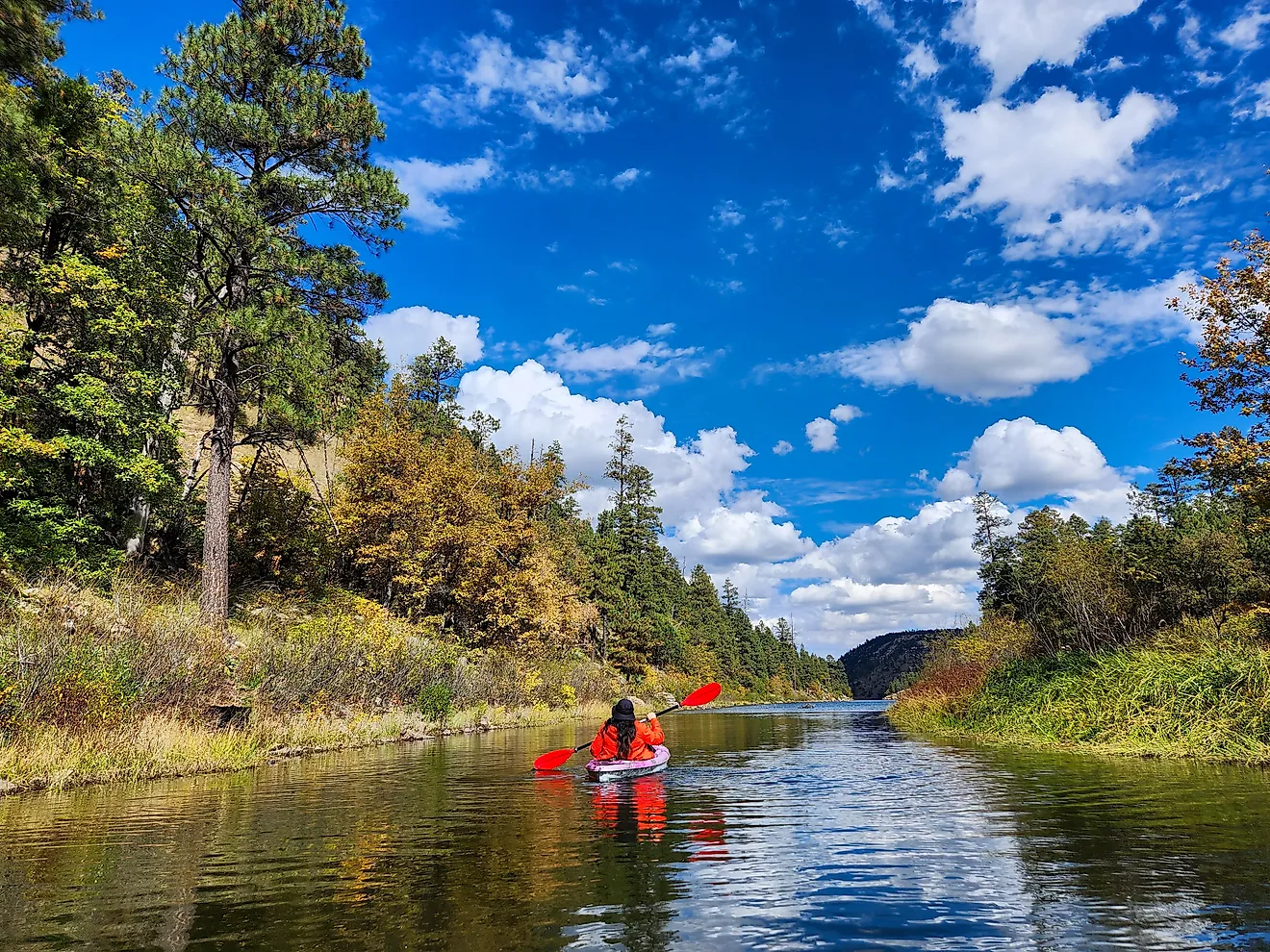
The community of Potomac is named for the Potomac River, and the river remains the reason to come. Great Falls Tavern sits beside Lock 20 at milepost 14.3 of the Chesapeake and Ohio Canal. It serves as the visitor center for this stretch of the national historical park. A short boardwalk crosses Olmsted Island to an overlook above the falls, where the Potomac drops roughly 76 feet through a series of narrow chutes. The Billy Goat Trail runs from the same trailhead along the Potomac Gorge, with a rocky scramble section that rewards the effort. The National Park Service also runs the Charles F. Mercer, a mule-drawn replica canal boat, on a seasonal schedule. Falls Road Golf Course is the public course in town, while the private Congressional Country Club sits just over the line in Bethesda.
Pasadena

Pasadena spreads across a peninsula in northern Anne Arundel County, taking in the Lake Shore and Riviera Beach neighborhoods along with the community that carries the name. Downs Park anchors the eastern end, a former farm turned county park covering more than 200 acres. A fishing pier reaches out into the Chesapeake, and the grounds hold a dog beach and a Victorian-style planting known as Mother's Garden. Fort Smallwood Park sits at the northern tip with a bay beach and a shoreline walk. Mike's Crab House North at White Rocks Marina has a deck over the water and live music on summer weekends. Antiques on the Go, a multi-dealer consignment mall, is the place for one-of-a-kind trinkets.
Laurel

Laurel began as a mill town, and the machinery of that history is still legible on the ground. Nicholas Snowden built a stone grist mill on the Patuxent River around 1811, and by the 1820s, the site was producing cotton duck. The Patuxent Manufacturing Company was chartered in 1835, the same year the B&O Railroad's Washington Branch reached town, and the firm put up dozens of stone and brick blocks to house its workers. The place was called Laurel Factory until 1875. The Laurel Historical Society now runs the Laurel Museum out of one of those company houses on Main Street, with rotating exhibits and free admission. Riverfront Park picks up at the end of the same street, with a paved trail past the old dam. Laurel Park, on the edge of town, hosted the 151st Preakness Stakes in May 2026 while Pimlico was being rebuilt.
Arnold

Arnold is home to fewer than 25,000 people, spread along the Broadneck Peninsula between the Magothy and Severn rivers. The Baltimore and Annapolis Trail runs straight through, a paved rail-trail of roughly 13 miles that follows an old interurban right-of-way between Glen Burnie and Annapolis. Belvedere Park offers a quieter green space off the water. Anne Arundel Community College has its main campus on College Parkway, which gives a town this size a theater and a public gallery. Golfers will want to stop by Bay Hills Golf Club, a public course dating to 1969 with more than 50 bunkers and water in play on ten holes. The Point Crab House & Grill sits out on Mill Creek with a deck over the water, and Spizzico Italian Kitchen is another popular option on Bay Dale Drive.
Ocean City

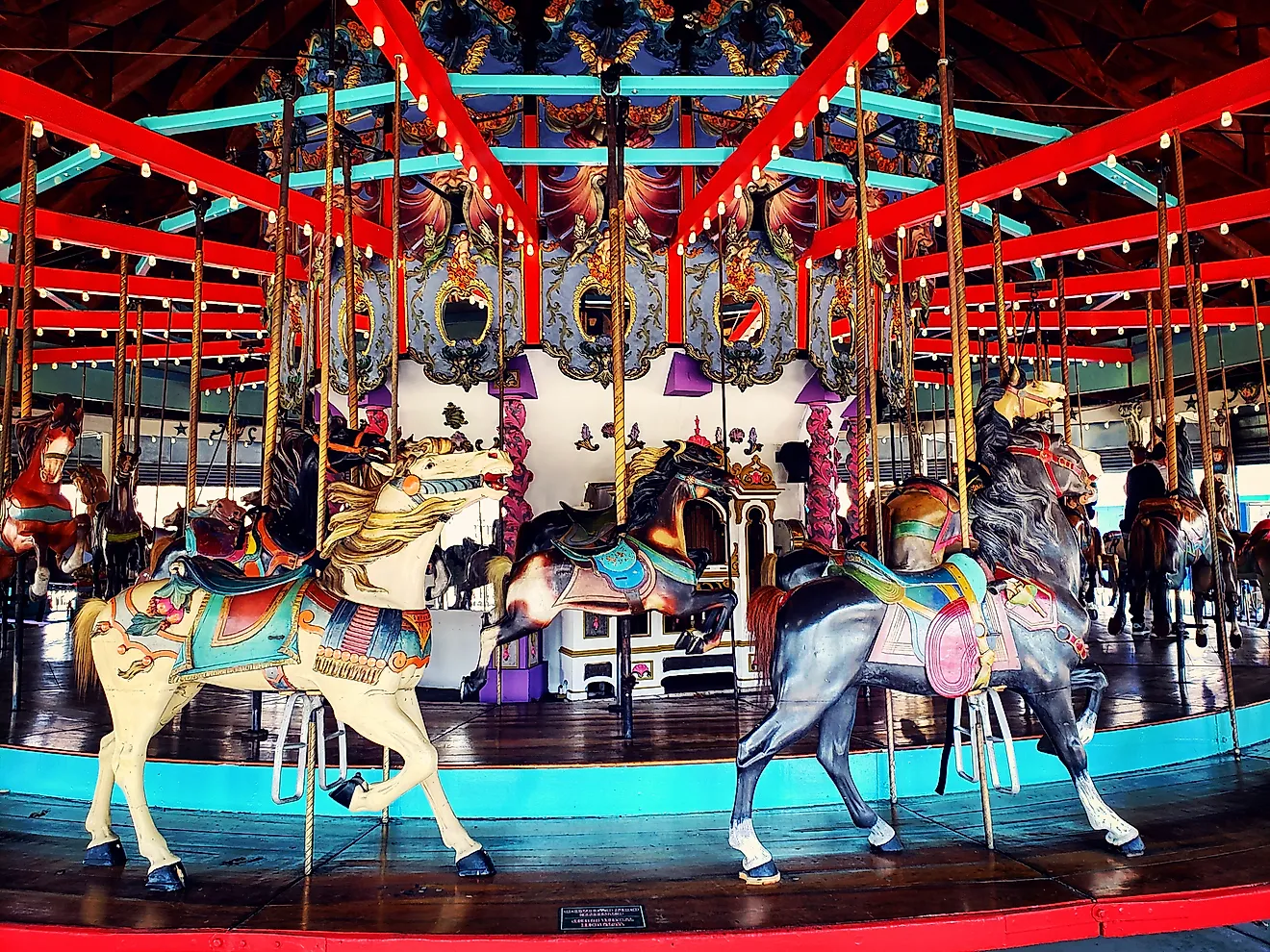
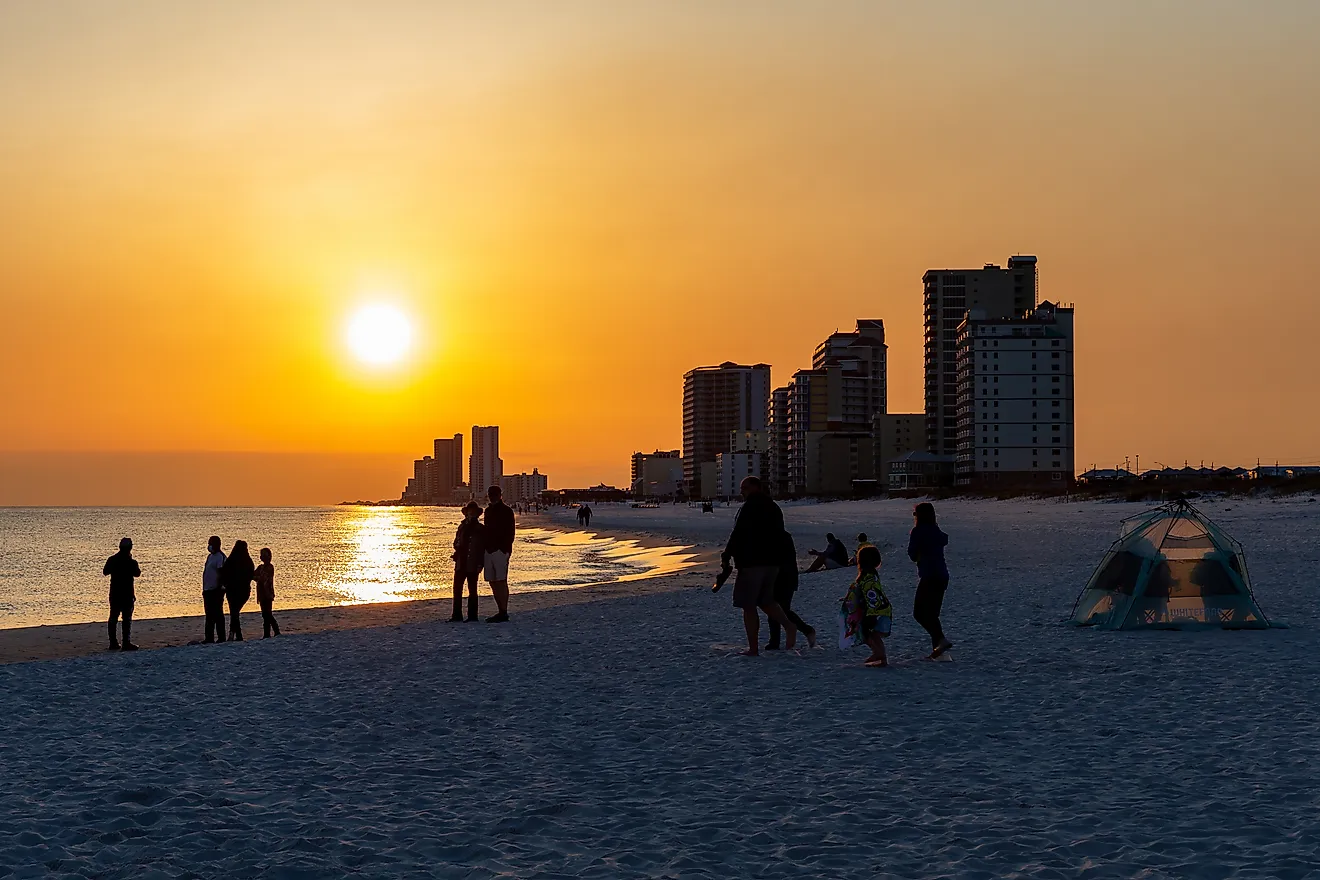
Ocean City counts ten miles of sandy beach along its barrier island, with a boardwalk running about two and a half miles up the southern end. Trimper's Rides has operated at the boardwalk's south end since the 1890s and remains one of the oldest family-run amusement parks in the country, with an antique carousel still turning indoors. A few doors down, the Ocean City Life-Saving Station Museum occupies the 1891 station house at the Inlet. The town hosts a deep bench of free summer events, including Movies on the Beach on Wednesday nights and Sundaes in the Park on Sunday evenings at Northside Park. Sunset Park Party Nights brings live music to the bayfront on Thursdays. Winterfest of Lights takes over Northside Park in the winter, featuring a 50-foot Christmas tree.
Cumberland

Cumberland has a cozy small-town ambience, and despite its quiet appearance there is plenty to do. Canal Place marks the western terminus of the Chesapeake and Ohio Canal towpath and mile zero of the Great Allegheny Passage, the rail-trail that continues 150 miles to Pittsburgh. From the restored 1913 station on Canal Street, the Western Maryland Scenic Railroad makes a three-hour round trip to Frostburg behind locomotive No. 1309, the largest operating steam engine of its type. The route climbs grades approaching 3 percent through the Cumberland Narrows and the 914-foot Brush Tunnel. The Allegany Museum, housed in a former courthouse on Pershing Street, covers the region from the French and Indian War forward and asks only for a donation. Ristorante Ottaviani handles dinner on North Centre Street, while Cafe Mark is the daytime spot for coffee and a cooked breakfast.
Aberdeen

About 30 miles northeast of Baltimore is the small city of Aberdeen, shaped by two things: the Army and baseball. Aberdeen Proving Ground opened in 1917 as a weapons testing installation and remains the area's dominant employer, with the adjacent Edgewood Arsenal dating to 1918. Ripken Stadium is the other landmark, built in Cal Ripken Jr.'s hometown and home to the Aberdeen IronBirds of the MLB Draft League. Its address, 873 Long Drive, is a nod to the jersey numbers worn by Cal Jr., his father, and his brother Bill. The Aberdeen Heritage Walking Tour covers the older streets for anyone wanting the pre-Army version of the town. Mamie's Cafe with Love serves American comfort food on Beards Hill Road, and Lee's Hunan Chinese Restaurant sits a few doors down the same street.
Easton

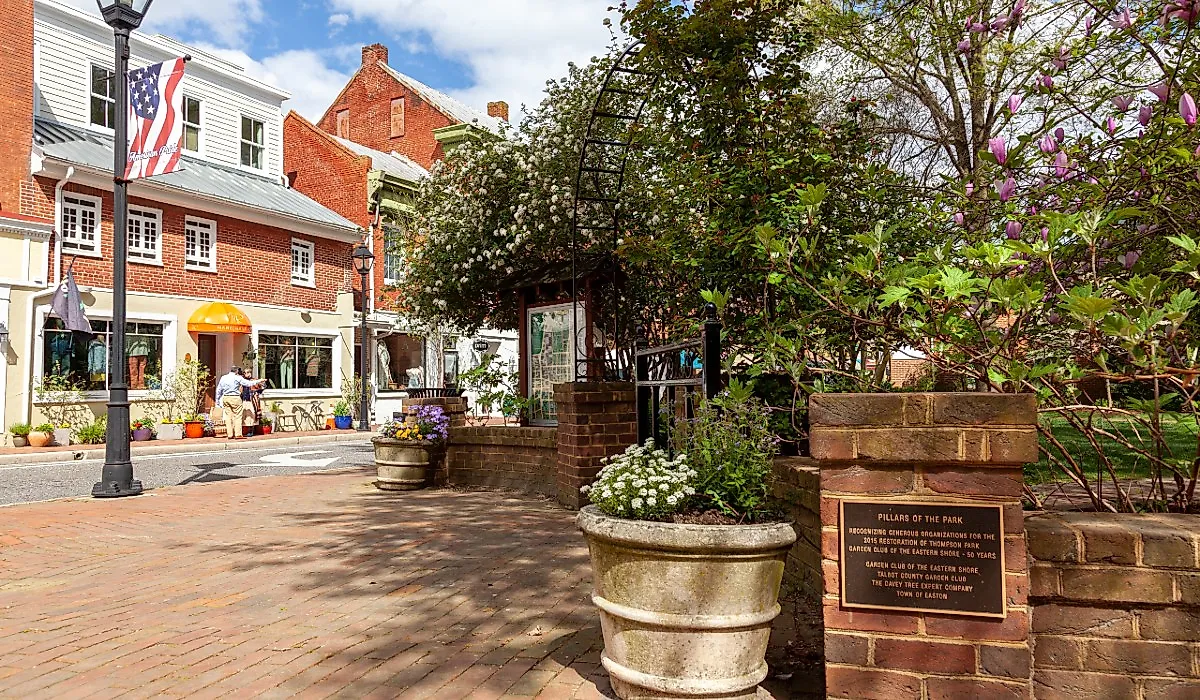
Easton might be a small town, but it is steadily growing and is currently home to more than 17,000 residents. The historic downtown is on the National Register of Historic Places and packs an unusual amount into a few blocks. The Avalon Theatre on Dover Street, a 1920s house now run by the Avalon Foundation, books touring musicians and film into a room small enough that the balcony is a good seat. The Academy Art Museum on South Street rotates exhibitions through a converted schoolhouse and charges no admission. The Talbot Historical Society on South Washington Street keeps a small museum and a genealogical research center, with gardens behind the Mary Jenkins House. Dining runs to the pub menu at Doc's Downtown Grille and northern Italian cooking at Scossa Restaurant, both on North Washington Street.
Mount Airy

Mount Airy is one of the smallest towns on this list, home to fewer than 10,000 people, and it sits on top of Parrs Ridge high enough that the B&O Railroad had to build four inclined planes in 1831 to winch trains over the summit. Plane No. 4 is still a marked location west of town. The brick 1882 station by architect E. Francis Baldwin is the crown jewel of the Mount Airy Historic District, added to the National Register in 1984 and covering 102 acres of Main Street commercial blocks and late-Victorian houses. Gaver Farm on Detrick Road shifts its activities with the season, running apple picking and a corn maze in the fall and cutting Christmas trees in the winter. Elk Run Winery offers tastings on a patio most afternoons. Olde Town Restaurant is a Main Street diner that closes mid-afternoon, while Mamma Angela turns out Sicilian deep-dish pizza into the evening.
Mount Rainier

Mount Rainier offers Maryland history in a leafy setting just inside the Prince George's County line. The town was platted as a streetcar suburb and incorporated in 1910, taking its name from the mountain in Washington state, and its early-twentieth-century bungalows and foursquares still line the residential blocks. Mount Rainier Day is the city's largest annual celebration, held each May, featuring a parade that ends at the Mount Rainier Nature Center, where guided tours run hourly throughout the festival. Porch Fest turns front steps across the city into stages for local musicians each September. Potomac Fish House & Deli on Rhode Island Avenue fries fresh fish to order, Era Wine Bar, a few doors up in the historic Singer Building, boasts award-winning wines, and Island Style Ice Cream handles dessert.
Kensington

Kensington is the smallest town on this list, with fewer than 3,000 people calling it home, and it was built on purpose. The Washington financier bought several hundred acres beside the B&O's Metropolitan Branch in 1890 and laid out a Victorian garden suburb on curving streets, naming it after the London district he had recently visited. The town incorporated under that name in 1894. The 1891 station, another E. Francis Baldwin design, still takes MARC commuters, and the surrounding Kensington Historic District joined the National Register in 1980. The Noyes Library, a small 1893 building, has served as Montgomery County's children's library since 1970. Kensington Antique Row on Howard Avenue is a dense cluster of dealers and bookshops. BabyCat Brewery welcomes thirsty guests a few blocks away, and Frankly Pizza serves up wood-fired pies on Armory Avenue.
The Shape Of Small-Town Maryland
These eleven towns have little in common geographically. Cumberland is a mountain rail and canal town at the far western end of Maryland, while Ocean City is a barrier-island resort at the opposite end. But each is small enough that a single street or a single stretch of boardwalk carries much of the town's character. Most of them hold that character without leaning on Baltimore or Washington to supply it, which is the harder trick in a state where two metro areas take up so much of the map.
.jpg)

