12 Picturesque Small Towns in Florida for a Weekend Retreat
A good Florida weekend can run on nothing more than a walkable main street and a slow morning by the water. St. Augustine still frames its oldest blocks with coquina walls and a stone fort finished in 1695. In Apalachicola, oyster boats work the bay a block from the 1907 Gibson Inn. Up on Lake Dora, Mount Dora carries the only freshwater lighthouse in the state. Tarpon Springs unloads sponges at the same docks its Greek divers built more than a century ago. The draw might be saltwater, a wall of murals, or an old courthouse square. These towns held onto what the rest of Florida paved over, and ask for nothing more than two days and a room near the water.
Fernandina Beach

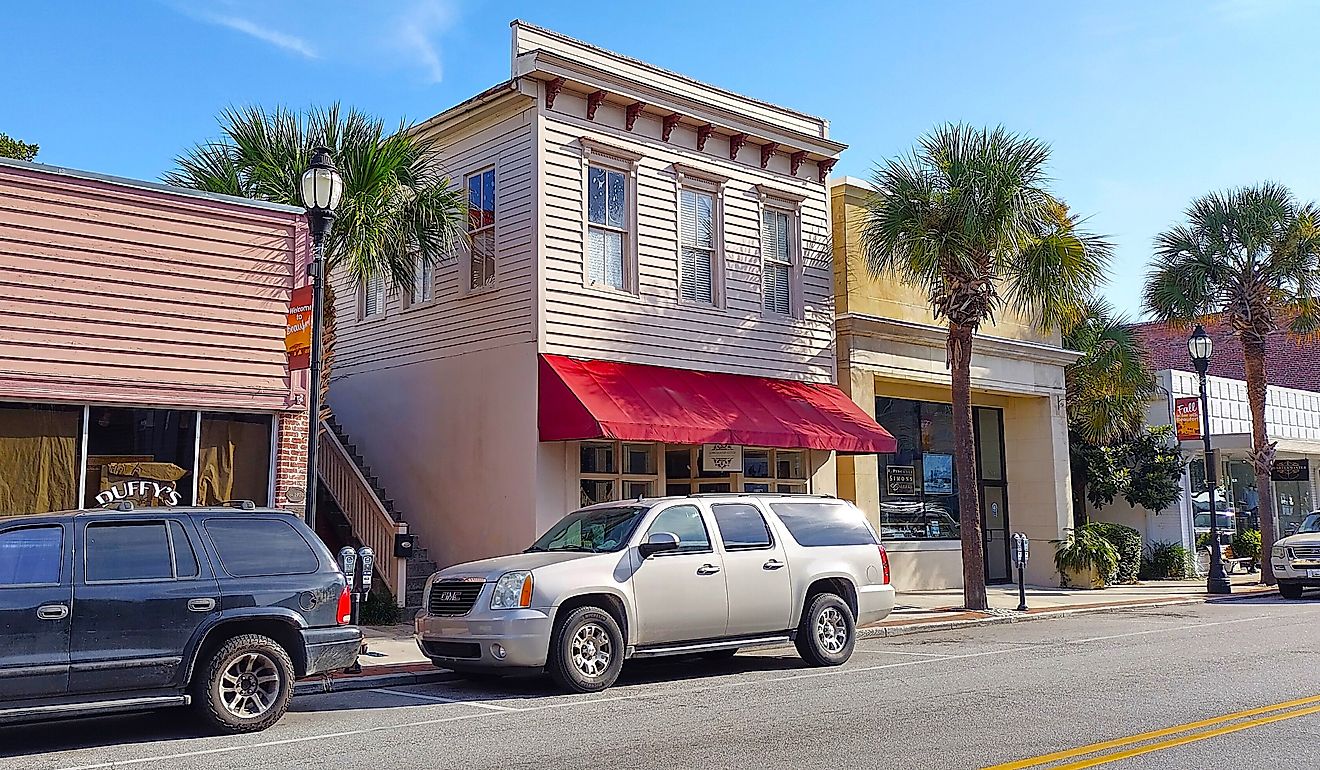
Fernandina Beach was a shrimping port first, and the boats that built it still work the docks. Centre Street runs straight to the Amelia River through fifty blocks of Victorian storefronts. Every May the Isle of Eight Flags Shrimp Festival toasts the fleet. The Palace Saloon, said to be Florida's oldest continuously operating bar, has poured on Centre Street the whole time. The Amelia Island Museum of History traces the rest from the old county jail.
On the island's north end, Fort Clinch State Park surrounds a well-preserved 1847 fort, its gun deck looking clear across Cumberland Sound to Georgia. Costumed reenactors work the grounds some weekends.
Monticello

The Monticello (Perkins) Opera House in Monticello, Florida.
Monticello, the Jefferson County seat, leans into being a little spooky. The 1890 Opera House still books concerts and dinner theater right on the courthouse circle, ringed by restored storefronts and antique shops. Its reputation as one of Florida's most haunted is half the draw, with ghost tours after dark. Each June the Watermelon Festival takes over the streets.
Just outside town, Monticello Ecological Park threads trails through hardwood forest and wetland thick with warblers and wild turkeys. The spring-fed Wacissa River, a short drive out, draws paddlers and airboats.
St. Augustine

St. Augustine wears its age openly. The historic district still follows the street grid the Spanish laid out in 1565, and the Castillo de San Marcos has guarded the harbor mouth since 1695. A few blocks in, the Pirate & Treasure Museum displays a real 17th-century treasure chest.
The St. Augustine Alligator Farm has run since 1893 and is still the only place with all 24 living species of crocodilian. Anastasia State Park, just across the bridge, trades the history for dune trails and long views over Matanzas Bay.
Apalachicola

Apalachicola is a working waterfront, not a tidied-up imitation of one. Oyster boats and old brick warehouses line it, and the 1907 Gibson Inn stands at the foot of the bridge under its cupola and wraparound porch. Along Water Street, the seafood houses serve what the boats brought in that morning. A few blocks inland, the John Gorrie Museum shows a replica of the ice machine a local doctor patented in 1851, an unlikely invention for a Gulf fishing town.
The 1912 Dixie Theatre still stages plays and concerts downtown, and the 1838 Raney House opens its Greek Revival rooms to show how the cotton money once lived. Each November the Florida Seafood Festival packs the riverfront with oyster-shucking contests. St. George Island and its beaches are a short drive across the bridge from downtown Apalachicola.
Cedar Key

The road into Cedar Key seems to run straight into the Gulf before it ends at a waterfront of weathered stilt houses and a fishing pier on Dock Street. Fewer than 700 people live out here, and the town has reinvented itself at least once, trading its old pencil mill and fishing past for clam farming in the 1990s. Tony's Seafood on Second Street has won a national chowder contest more than once.
The Cedar Key Museum State Park houses St. Clair Whitman's shell collection in his restored 1920s house. Kayakers paddle out to Atsena Otie Key, the original townsite a hurricane emptied in 1896 and now a quiet island of cemetery graves and refuge birds.
DeLand

DeLand runs on its college and its main street. The 1922 Athens Theatre still lights up Florida Avenue, the centerpiece of a brick-front downtown that has won national Main Street awards. Stetson University, founded here in 1883, sends music and lectures through town all year. The 1886 Stetson Mansion, built for the hat magnate the university is named for, opens for room-by-room tours.
The Museum of Art-DeLand shows rotating exhibits a few blocks from the theater. Hontoon Island State Park spreads along the St. Johns River, reached only by a short ferry, its 1,600 acres of hammock and pine left to kayakers and campers.
Mount Dora

Mount Dora rises over its lake on what passes for a hill in Florida, and out on Grantham Point stands the only freshwater lighthouse in the state. Downtown is antique shops and sidewalk cafes, with a winter arts festival each year on Donnelly Street. The 1893 Donnelly House stands a block off, an ornate yellow Queen Anne that looks more wedding cake than house.
The Lakeside Inn, open since 1883 and the oldest hotel still running in Florida, once put up Calvin Coolidge for a month on its veranda of rocking chairs. The Mount Dora History Museum occupies the town's old firehouse and jail, cell graffiti and all. Down at the water, boat tours slip out through the Dora Canal under a canopy of cypress.
Tarpon Springs

Tarpon Springs has been a Greek town for more than a century, ever since sponge divers settled here, and it still has the highest share of Greek Americans in the country. Sponge boats tie up along the docks, and the bakeries turn out baklava on Greek recipes. At its center, St. Nicholas Greek Orthodox Cathedral copies Hagia Sophia, down to an altar of Pentelic marble shipped from Greece.
Every January 6, the streets fill for Epiphany, when teenage boys dive into Spring Bayou after a thrown cross, a ritual the town has kept up since 1906. The rest of the year, tour boats put on sponge-diving demonstrations on the way out to Anclote Key.
Anna Maria Island

Anna Maria Island is low and slow by design, three small beach towns linked by a free trolley along the Gulf. Manatee Public Beach has picnic shelters and easy parking for families, and Pine Avenue lines up cottage shops a short walk from the sand. The wooden City Pier has been a landmark since 1911, though it is being rebuilt again after the 2024 storms, so check before you count on walking it.
Small-boat tours head into the surrounding bays, where dolphins and manatees turn up on most trips. Bayfront Park is open for the long Tampa Bay views, pier work or not.
Lake Placid

Lake Placid is the kind of town that commits to a theme. More than forty murals cover its downtown walls, turning a few blocks of Main Avenue into an open-air gallery. Melvil Dewey, who invented the library cataloging system, named the place in 1927 after Lake Placid, New York. It also grows about ninety percent of the country's caladiums and puts on a festival for them every July.
The commitment goes all the way to the American Clown Museum & School, where students still train to earn their red noses. The 1920s Atlantic Coast Line depot now houses the historical society. Out past downtown, the chain of lakes opens up for swimming and an early paddleboard before the heat.
Stuart

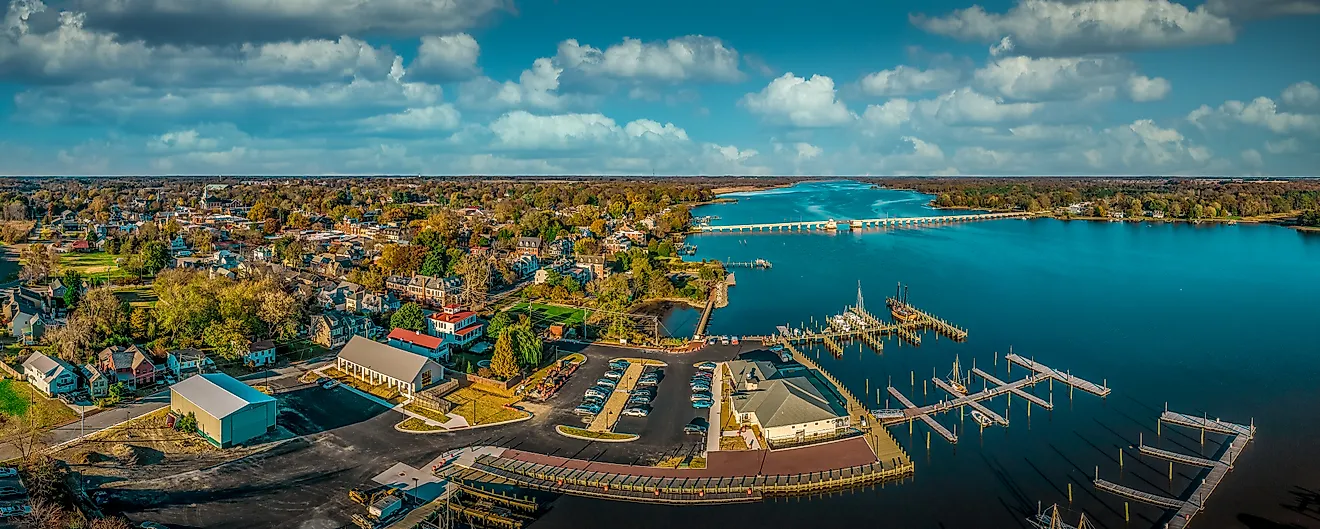
Downtown Stuart faces the St. Lucie River, a walkable grid of brick storefronts and galleries with a mile-long Riverwalk along the water. The whole downtown owes its revival to the 1926 Lyric Theatre, whose 1980s rescue set the rebuild in motion. It still books concerts and comedy on Flagler Avenue. The Stuart Heritage Museum is housed in a 1901 former general store, and at Sailfish Circle an 18-foot bronze sailfish leaps over the fountain, a nod to the town's nickname, Sailfish Capital of the World.
Out on Hutchinson Island, across the causeway, a low offshore reef turns Bathtub Reef Beach into a shallow pool that families wade and snorkel at low tide. Just up the shore stands the 1876 House of Refuge at Gilbert's Bar, the oldest building in Martin County. It is closed for a major restoration now, but still looks out over the rocks where keepers once watched for shipwrecks.
Venice

The beaches in Venice give up fossil shark teeth by the handful, which is how the town came to call itself the shark-tooth capital of the world. Locals work Caspersen Beach with a sifter, and the pier draws anglers most evenings. The downtown, inland, is a planned one. John Nolen drew it up in the 1920s, and its palm-lined avenues and Mediterranean Revival storefronts still follow his codes.
The restored 1927 Venice Train Depot is now a museum of both the railroad and the circus, a nod to the decades Ringling Bros. and Barnum & Bailey wintered here, from 1960 until the early 1990s. A restored caboose and circus car stand on the old tracks, now the start of the Legacy Trail.
Leave Room for a Second Morning
The trick is staying long enough to catch the second morning, before the day crowds arrive and the light is still low. Cedar Key has it at the end of its road, where the stilt houses lean over the Gulf and the clammers are already out. Fernandina has it along Centre Street before the shops open. Lake Placid has it on a quiet block of painted walls. That first slow hour, before the day-trippers arrive, is when each town looks most like itself.