11 Prettiest Downtown Strips In Montana
Montana built many of its main streets around mining booms, railroad routes, and river trade. Several still hold a look tied to their own valley or historic setting. Broadway Avenue in Red Lodge pairs brick storefronts with the Beartooth Mountains rising at the end of the block. Virginia City lines its historic district with 19th-century buildings from its years as Montana's territorial capital. The Washoe Theatre in Anaconda still stages performances inside its original 1936 art deco interior. Fort Benton's levee trail follows the Missouri River through a downtown shaped by the steamboat era.
Whitefish

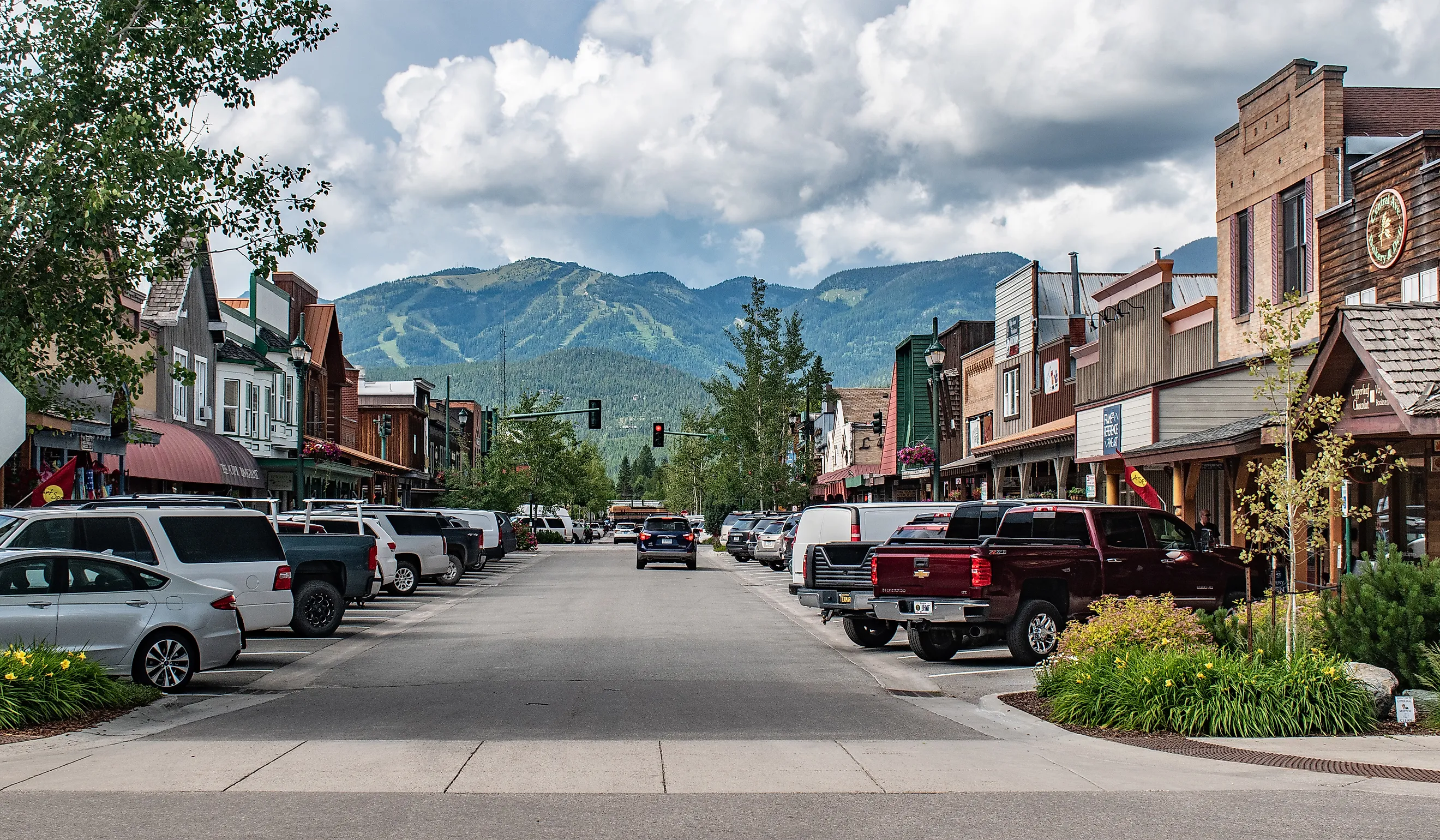
Whitefish has one of Montana's most attractive downtown strips, with Central Avenue giving the town a center of shops, restaurants, galleries, and mountain-town energy. Glacier National Park and Whitefish Mountain Resort help bring many visitors to the area, but downtown Whitefish gives them a reason to spend time in town.
The downtown combines mountain-town scenery with real street-level activity. Central Avenue gives Whitefish its most photographed stretch with storefronts, restaurants, galleries, and Big Mountain visible beyond town. Whitefish Theatre Company at the O'Shaughnessy Center stages performances close to the historic depot area, and Thirty Eight brings live music, food trucks, craft beverages, and community events into an open-air space. Central Avenue brings the storefronts, mountain views, restaurants, galleries, and local activity into one clear downtown experience.
Livingston

Livingston's downtown strip has a Western character that feels specific to the Yellowstone River valley. Historic brick storefronts, painted signs, outdoor shops, restaurants, and mountain views make downtown Livingston feel active without losing the railroad-town scale that shaped it.
The best downtown experience starts along Main Street, where the older commercial buildings give the strip a strong visual rhythm. The Livingston Depot Center adds a piece of railroad history, while Downtown Livingston Business Improvement District events and projects show that the district remains an active local center. The Yellowstone Gateway Museum gives visitors another way to connect the downtown to Park County history. Livingston is memorable because the strip feels historic but not frozen. The storefronts still serve everyday town life, and the mountain setting makes the whole block feel distinctly Montana.
Red Lodge

Red Lodge's Broadway Avenue is one of Montana's most memorable downtown strips with its brick buildings, hanging flower baskets, mountain views, and a clear old-mining-town identity.
Broadway Avenue is the main reason Red Lodge belongs on this list. The American Planning Association has recognized Broadway Avenue for its historic character, noting the Western-vernacular architecture and the role of buildings such as The Pollard Hotel in the street's identity. The Carbon County Historical Society and Museum offers local history through coal-mining exhibits, rodeo materials, and regional collections. Yellowstone Wildlife Sanctuary adds a nearby family-friendly stop where visitors can see native wildlife, connecting Red Lodge to the larger Yellowstone region. Red Lodge's location at the edge of the Beartooth Mountains keeps the town's downtown tied to a larger scenic setting.
Hamilton

Hamilton's downtown strip stands out because it feels closely tied to the Bitterroot Valley around it, yet the local restaurants, shops, and historic sites still serve the town first. This keeps downtown small enough to take in easily while still supporting restaurants, shops, breweries, and local museums.
Downtown itself gives visitors a practical starting point before they branch farther into the valley. Bitter Root Brewing, Nap's Grill, and local shops keep Main Street active for meals, errands, and casual afternoons in town. The Ravalli County Museum provides history inside the original 1900 county courthouse. Just outside the main strip, Daly Mansion preserves the former summer home of Copper King Marcus Daly and his family, giving Hamilton one of the Bitterroot Valley's major historic sites.
Anaconda

Anaconda's downtown has a different look from many Montana towns because its architecture still reflects the scale of a major copper-smelting city.
The standout is the Washoe Theatre on Main Street, a 1936 art deco theater that Historic Montana describes as one of the best-preserved theaters in the United States, with original fixtures and equipment still in place and in use. The Copper Village Museum and Arts Center displays local history and art inside the former Anaconda City Hall, while Old Works Golf Course gives the town a nationally known reclamation site turned golf course. Downtown Anaconda has a more substantial look than some Montana mountain towns. Its appeal comes from copper-era architecture, industrial history, and landmarks that still feel active in the community.
Philipsburg

Philipsburg is small, but its downtown strip has one of the most recognizable historic looks in western Montana. Broadway's colorful storefronts, old mining-town buildings, candy shops, and nearby mountain scenery give the town a look that is easy to recognize.
The best stops are close together. The Sweet Palace is the town's most famous downtown shop, according to Southwest Montana, with fudge, caramel, taffy, and more than a thousand candy selections. The Philipsburg Theatre at the historic McDonald Opera House operates as one of the oldest continuously running theaters in Montana. The Granite County Museum connects the strip to mining history inside the historic Courtney Hotel. Visitors can also try sapphire panning in town, another activity close to the downtown strip. Philipsburg's downtown works because its small scale makes every storefront count.
Lewistown

Lewistown's downtown strip feels substantial for a city its size, with historic architecture, local businesses, and public spaces that still shape daily life. The Lewistown Central Business Historic District was built during the town's prosperous early 1900s, with architecture that still shapes the street today.
Downtown Lewistown gives visitors a clear mix of local businesses, public spaces, museums, and creekside trails. Lewistown Downtown describes the district as a community hub where families, businesses, ranchers, and visitors gather. The Central Montana Museum on Northeast Main Street tells the area's history through homestead-era artifacts, Native American artifacts, medical history, and other regional exhibits. The trail system adds another local advantage with 24 miles of paved and graveled trails that connect downtown, parks, and schools along Big Spring Creek.
Fort Benton

Fort Benton's downtown and riverfront give it one of Montana's most distinctive historic strips. The city describes its downtown as steeped in history and connected to a trail that follows the Missouri River through town.
The best part of Fort Benton is how naturally the downtown sits beside the Missouri River. The Fort Benton Historic Landmark District gives the town one of Montana's most significant preserved historic areas, while the Missouri River levee has trails that are open and easy to explore. The Museum of the Northern Great Plains and the Fort Benton Museums and Heritage Complex offer places to understand the steamboat, agricultural, and frontier history tied to the town. Fort Benton's downtown is memorable because the historic district and the Missouri River sit side by side, making the town's early river-trade history easy to understand.
Dillon

Dillon's downtown reflects the town around it, with ranching history, railroad roots, and the University of Montana Western all shaping its local identity. The wide-open Beaverhead Valley gives the town a distinctly southwest Montana feel. The Beaverhead County Museum helps ground downtown in Beaverhead County history, with a log building complex, an authentic homesteaders' cabin, mining and agricultural equipment, and local history exhibits.
The University of Montana Western adds college sports, arts programming, and campus activity just a few blocks from the downtown core. Bannack State Park sits southwest of Dillon and preserves one of Montana's most important ghost towns. The Beaverhead River adds an outdoor piece close to town. Dillon's downtown strip is not oversized, but it feels grounded in the surrounding valley's history, college life, and outdoor access.
Big Timber

Big Timber's downtown has a classic small-town Montana look, with the Crazy Mountains and Yellowstone River country giving the town a scenic setting.
The strongest local stop is the Crazy Mountain Museum, which includes a replica Norwegian stave church, a one-room Sourdough schoolhouse, a Fjare homestead cabin, and Lewis and Clark gardens. The Two Rivers Gallery gives Big Timber a local arts presence with Montana-made photography, pottery, sculpture, jewelry, furniture, and rotating exhibits shaped by the region. The Natural Bridge Falls Picnic Area gives visitors a scenic outdoor destination south of town. Big Timber also has local businesses, such as The Grand Hotel Restaurant, that help keep the downtown useful as more than a quick photo stop. Big Timber's strip is small, but the mountains, museum, gallery, and local businesses give the town a fuller sense of place.
Virginia City

Virginia City is much smaller than most towns on this list, but its downtown strip stands out for having so many preserved 19th-century buildings clustered along the same historic street. Those buildings, along with shops, museums, and period displays, give visitors one of Montana's most recognizable territorial-era streetscapes. The town became Montana's territorial capital in 1865, and its historic district remains the main reason people come.
The downtown strip is the attraction here. The Virginia City Historic District includes preserved 19th-century buildings, period displays, shops, restaurants, and museums along the old street. The Montana Heritage Commission also operates the nearby Nevada City Music Hall and Museum, gold panning, and the Alder Gulch Railroad, giving visitors several ways to experience the area's mining history. Virginia City works because the downtown historic buildings are not scattered around town. They form a concentrated street scene that still feels tied to the landscape and the story of early Montana.
Montana Downtowns With A Strong Sense Of Place
Montana's prettiest downtown strips are not memorable because they all follow the same pattern. Whitefish, Livingston, Red Lodge, Hamilton, and Big Timber draw much of their appeal from mountain or valley settings, while Anaconda, Philipsburg, Lewistown, Dillon, Fort Benton, and Virginia City lean more heavily into history, museums, theaters, riverfront paths, college-town energy, and older commercial districts. The most appealing towns offer more than one good view. They give visitors a clear street to walk down, a landmark to remember, and enough local activity to make downtown feel like part of the town's daily life rather than a preserved backdrop.