11 Picture-Perfect Main Streets In Texas
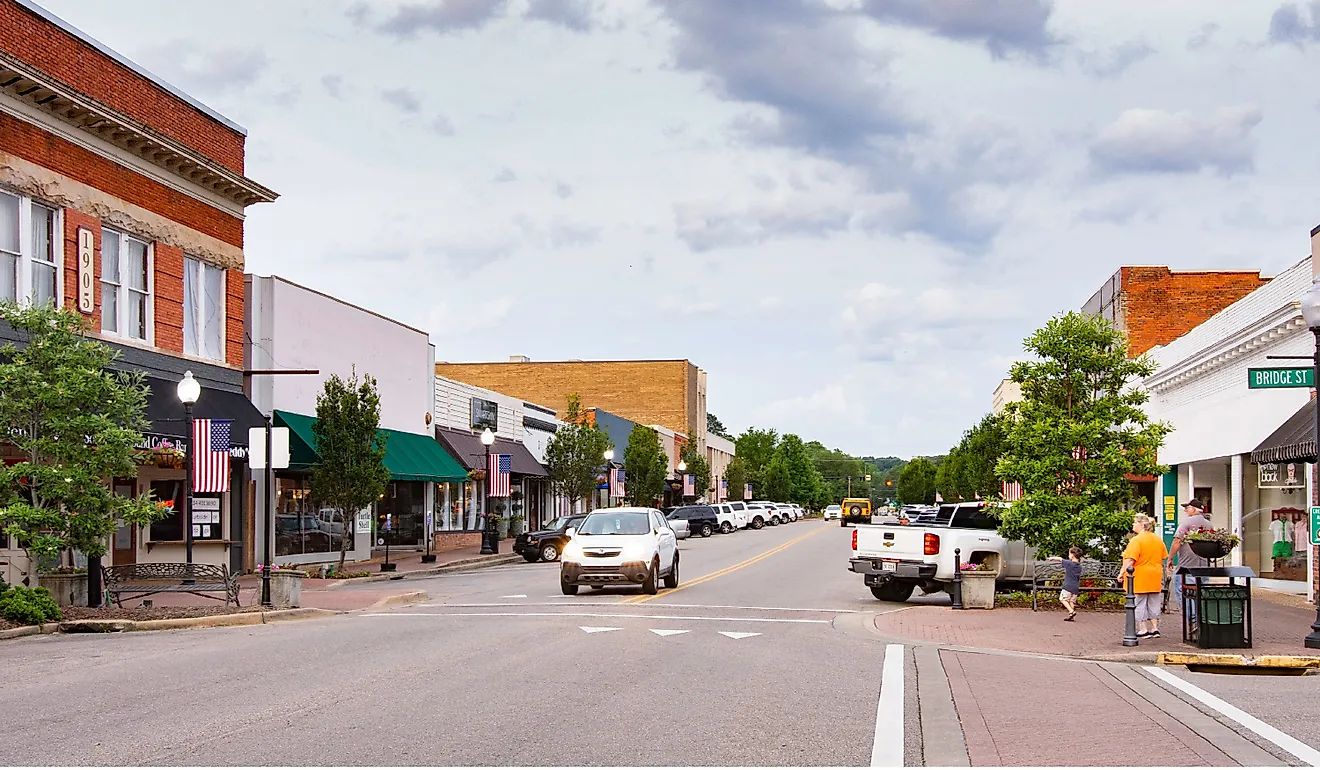
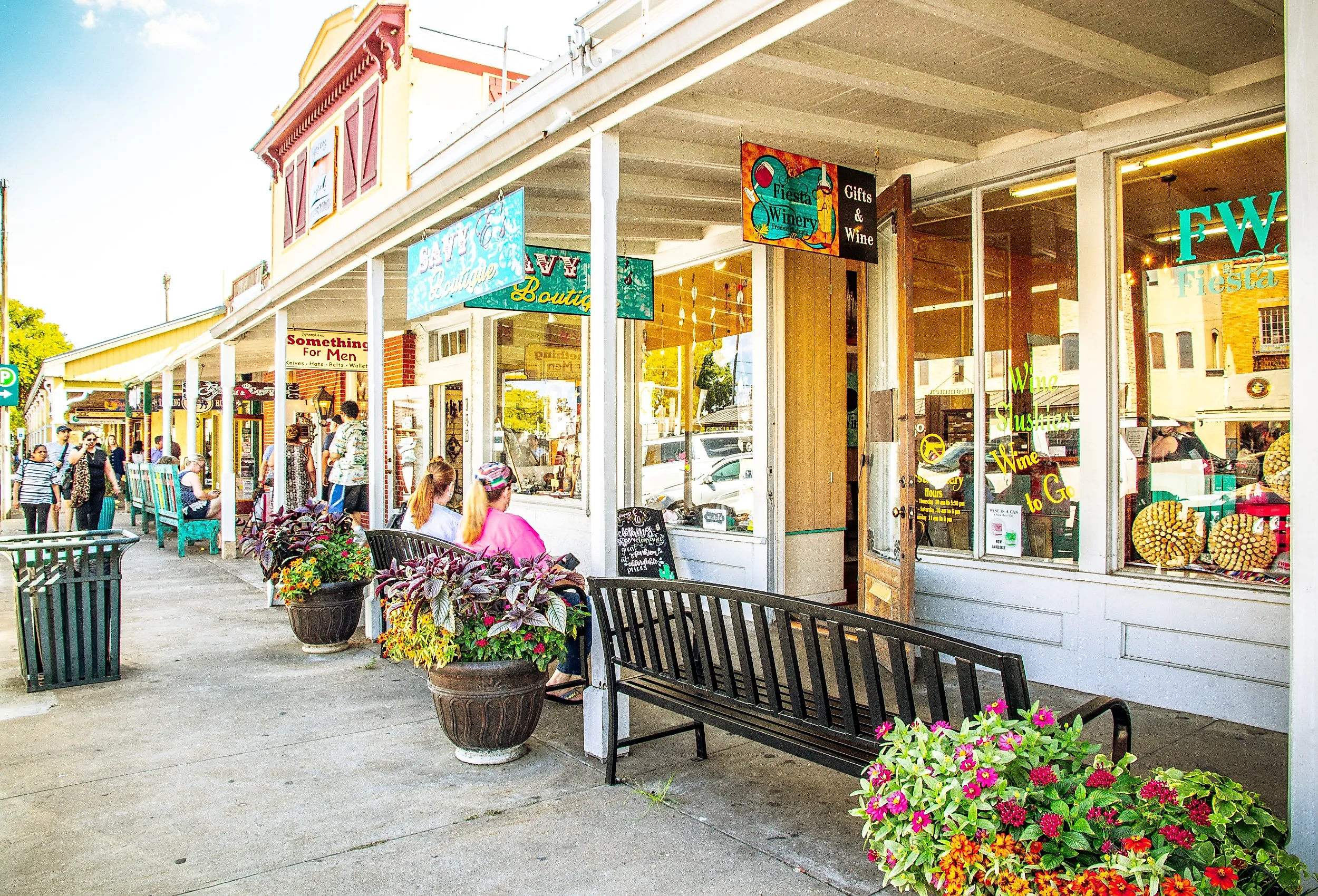
A good Texas main street tells you where you are standing within a single block. Jefferson lines its old steamboat district along the bank of a bayou. Fredericksburg keeps a mile of German limestone under one continuous roofline. Granbury wraps its shops around a courthouse lawn while Bastrop skips the square entirely and follows a river bluff. The eleven downtowns here each carry an unmistakable look built from stone, brick, water, or mountain backdrop. These are the most photogenic main streets in Texas.
Fredericksburg

Limestone is the signature here, roughly a mile of it, which is how Fredericksburg's Main Street earned the nickname "The Magic Mile." German immigrants founded the town in 1846, and the storefronts they cut from local stone still hold the same blocks. At the Marktplatz sits the octagonal Vereins Kirche, a replica of the 1847 church that served the colony as sanctuary, school, and meeting hall all at once. A few blocks east, the National Museum of the Pacific War spreads across six acres on the site of Admiral Chester Nimitz's family hotel. Nimitz, who commanded the Pacific Fleet in World War II, grew up on this street.
Jefferson

Spanish moss hangs over Big Cypress Bayou, and excursion boats still push off from the water at the edge of downtown Jefferson. Polk Street climbs from that waterfront through brick blocks raised when this was the busiest inland port in Texas, its wharves fed by steamboat traffic. The Excelsior House Hotel anchors Austin Street from a building a riverboat captain put up in the 1850s, and it has rented rooms ever since, to guests who reportedly included Ulysses S. Grant and Oscar Wilde. Two blocks on, the Jefferson Historical Museum fills the 1888 federal courthouse and post office. Its Romanesque Revival halls hold exhibits on the port years, the Civil War, and the Caddo who were here first.
Granbury

The Hood County Courthouse holds the center of Granbury, but the square around it is the picture. East Pearl Street frames the lawn with 19th-century brick, much of it carrying second-story balconies and decorative cornices above narrow shopfronts. The Granbury Opera House faces the courthouse from a restored limestone building and has staged performances since the 1880s.
A short walk off the square, the Granbury Depot Museum keeps relics of the railroad that pushed local trade past the county line. Follow Main Street south and it eases down toward Lake Granbury, where the water sits within easy reach of the storefronts.
Bastrop

Most Texas county seats build their downtown around a courthouse square. Bastrop does the opposite and runs its main street along the Colorado River bluff instead, lining the bank with one of Central Texas's deepest stocks of 19th-century brick. The two- and three-story storefronts march for several blocks, some still wearing their original cast-iron columns. Deeper in, the Lumberyard Music Hall plays shows inside a converted industrial building.
At the foot of downtown, the river slides under the Old Iron Bridge. The 1923 steel-truss span now carries pedestrians, linking the brick blocks to riverside parkland and the loblolly pine forests the locals call the Lost Pines.
Gruene

Built in 1878, Gruene Hall is the oldest continually operating dance hall in Texas. It still works out of its original 6,000-square-foot frame, the tin roof and side flaps open to the night. The careers of George Strait, Lyle Lovett, and Hal Ketchum all ran through this room. The hall sits at the head of a tight commercial strip left over from the days when Gruene shipped cotton, now a historic district inside New Braunfels.
The old workshops and trading rooms along the strip have taken on new tenants without losing their bones. The Gruene General Store still trades out of one of the community's earliest buildings. Past the last storefront, the Guadalupe River runs between limestone banks a few steps from the district.
Georgetown

A copper dome marks the Williamson County Courthouse, and the square below it is one of the most complete Victorian commercial cores in the state. Late 19th- and early 20th-century buildings ring nearly every side, their facades keeping the decorative brickwork and cast-iron trim that local merchants paid for. The Georgetown Palace Theatre still lights up the block from a restored 1925 house. Several streets over, San Gabriel Park opens onto the river that drew the first settlers to this spot.
Wimberley

Cypress Creek runs cold and clear under bald cypress at Blue Hole Regional Park, just off Ranch Road 12 and a short walk from the heart of Wimberley. The town's main stretch is less a row than a scatter of independent shops in small buildings, shaded by the same big trees that line the creek. Wimberley Glassworks is the landmark most people remember, a working hot shop that draws crowds to its public glassblowing.
Further along Ranch Road 12, boutiques and studios fill converted cottages and old workshops, the kind of one-off storefronts the chain strips elsewhere in the Hill Country never quite manage. The square hosts one of the largest outdoor markets in Texas on the trading days that fill it with vendors.
Nacogdoches

Red brick underfoot sets Nacogdoches apart, its sidewalks paved to match the preserved storefronts that line the oldest commercial blocks in this East Texas town. The Stone Fort Museum, on the Stephen F. Austin State University campus, reads out centuries of regional history through maps, weapons, and dug artifacts. Downtown, the Charles Bright Visitor Center hands out maps and local lore for anyone setting off on foot. Lanana Creek and the SFA Mast Arboretum push a band of green right up against the commercial blocks, planting native and exotic species a few steps from the brick.
Salado

Salado Creek threads the business district, and the limestone buildings of Main Street crowd close to the water that named the town. The Stagecoach Inn is the best-known face along the street, a lodging that hosted Sam Houston and Robert E. Lee in its stage-stop days and now runs as a small resort. Up the creek bank stand the limestone ruins of Salado College, founded in 1859 as one of the earliest coeducational schools in Texas. Fire took the building three times in the early 20th century, but stretches of its original stone still look down on the creek.
Alpine

The Davis and Glass Mountains stand at the ends of Holland Avenue, framing Alpine's brick storefronts against bare desert peaks. The avenue grew up with the railroad and still gathers most of the town's trade into a few walkable blocks. The Granada Theatre marks the strip with a restored vertical marquee that has faced the street since the mid-20th century. Bookstores, galleries, and coffee shops fill the buildings around it, and the "Alley Art" murals near Holland Avenue turn the side passages into open-air galleries.
Marfa

The red-brick Presidio County Courthouse, raised in 1886, rises over Highland Avenue as the most striking building for a hundred miles. The street it presides over mixes old commercial fronts with the galleries that made Marfa a desert art capital. A short walk west, the Chinati Foundation fills a former army base with the large-scale installations Donald Judd and others built into the old artillery sheds. East of town, the Marfa Lights Viewing Area looks out over Mitchell Flat, where unexplained glowing orbs have drawn watchers to the horizon for more than a century.
One State, Eleven Signatures
Set the brick square at Granbury next to the limestone run of Fredericksburg's Main Street or the mountain-walled blocks of Alpine's Holland Avenue, and no two read the same. Steamboat trade built one, the railroad another, German stonecutters and ranching money still others. Each left behind a downtown you could identify from a single photograph, which is exactly what makes these the most photogenic main streets in Texas.