11 Most Underrated Towns in the United States
The towns below all earned their reputations the hard way. Walla Walla cleared land for more than 120 working wineries in the Columbia Basin since the first commercial vintage in 1977. Bisbee retrofitted an 1880s copper-mining boomtown into a working artists' colony when the open-pit mine shut down in 1975. Genoa kept the 1851 trading post on Mormon Station ground that opened Nevada to wagon traffic on the Carson route to the gold fields. Breaux Bridge cooks the crawfish étouffée that put Cajun cuisine on the national menu. Eleven towns, eleven specific local cases for the visit.
Walla Walla, Washington

Walla Walla sits in its namesake valley in southeast Washington with the Blue Mountains framing the southern horizon and the Oregon state line six miles south. The town is the seat of Walla Walla County and runs on a wine economy that opened with the 1977 founding of Leonetti Cellar. More than 120 wineries operate in the surrounding American Viticultural Area, making the Walla Walla Valley AVA one of Washington's most established wine regions and the most concentrated wine-tasting circuit in the Pacific Northwest by acreage.

The Whitman Mission National Historic Site preserves the location of the 1836 Presbyterian mission founded by Marcus and Narcissa Whitman, killed during the 1847 Whitman Massacre that marked a turning point in white-settler relations with the Cayuse people. The Fort Walla Walla Museum on the west side of town runs 17 historic structures across a 208-acre site, including an early-1800s Hudson's Bay Company-era trading post. Hot summers and mild winters make Walla Walla pleasant to visit year-round.
Dodge City, Kansas

Dodge City built its national reputation in the 1870s as the end-of-trail destination for the Texas longhorn cattle drives that came north up the Western Trail, with Front Street running the gambling halls, dance halls, and saloons that drew Wyatt Earp, Bat Masterson, and Doc Holliday as town marshals and gamblers. Today's town of about 27,800 (the population's grown thanks to the meatpacking industry) keeps the 19th-century identity through the Boot Hill Museum on the original Boot Hill site, with a reconstructed 1870s Front Street that runs gunfight reenactments through the summer.
The Boot Hill Cemetery still holds 34 graves of trail-era burials, identified by the boots the deceased were wearing when buried (cowboys who died in their boots got buried in them on Boot Hill, hence the name). The Dodge City Trolley runs a narrated 90-minute loop through the historic district. The annual Dodge City Days event in late July and early August fills the town with rodeos, parades, live music, and barbecue cookoffs across ten days of programming.
Narragansett, Rhode Island

Narragansett (population about 14,500) sits at the mouth of Narragansett Bay with Atlantic-facing beaches and an active commercial fishing harbor at Galilee, one of the busiest commercial fishing ports in New England. The Towers, the surviving 1880s Romanesque stone archway from the burned-down Narragansett Pier Casino, still spans Ocean Road as the town's defining structure; the casino burned in 1900 but the Towers archway survived intact and now hosts community concerts.
Point Judith Lighthouse, first lit in 1810 and rebuilt to its current octagonal form in 1857, sits at the entrance to Narragansett Bay. Roger Wheeler State Beach (Sand Hill Cove) offers gentle waves and lifeguard-monitored swimming. Block Island Ferry service runs year-round from Galilee. Fishermen's Memorial State Park on Galilee's western edge offers camping with sea views and pays tribute to local commercial fishermen lost at sea.
Natchez, Mississippi

Natchez sits on high bluffs above the Mississippi River and traces its founding history to 1716 with the French construction of Fort Rosalie, making it the oldest European settlement on the river. The town survived the Civil War nearly intact (a notable distinction in the Deep South), and the result is one of the densest concentrations of antebellum architecture in the United States. Stanton Hall, Longwood, Rosalie Mansion, Melrose, and the William Johnson House (now part of the Natchez National Historical Park) anchor a circuit of more than 1,000 antebellum buildings.
The Natchez Trace Parkway, a 444-mile National Park Service road connecting Natchez and Nashville, follows the original Indigenous trail used by Choctaw and Chickasaw peoples and later traveled by frontiersmen returning upriver before the steamboat era. The annual Spring and Fall Pilgrimages, running since 1932, open dozens of private antebellum homes to public tours. The Natchez Visitor Center on the bluff includes substantive interpretation of the city's role in the domestic slave trade.
Genoa, Nevada

Genoa is Nevada's oldest permanent non-Native settlement, founded in 1851 by Mormon traders who built a trading post on the Carson River route used by westbound emigrants headed for the California gold fields. Mormon Station State Historic Park preserves the reconstructed 1851 trading post along with a museum of frontier-era artifacts. The Genoa Historic District, a National Register-listed area along Main Street, includes the 1853 Genoa Courthouse Museum and the Genoa Bar, the oldest continuously operating thirst-quenching establishment in Nevada (since 1853).
The setting against the eastern slope of the Sierra Nevada in the Carson Valley keeps the climate mild and the views to the Pine Nut Mountains long. The annual Genoa Candy Dance, originating in 1919 as a fundraising fall event to pay for the town's first street lighting, still runs in late September with a craft fair, vendors, and the original homemade candy that gave the event its name.
Bisbee, Arizona

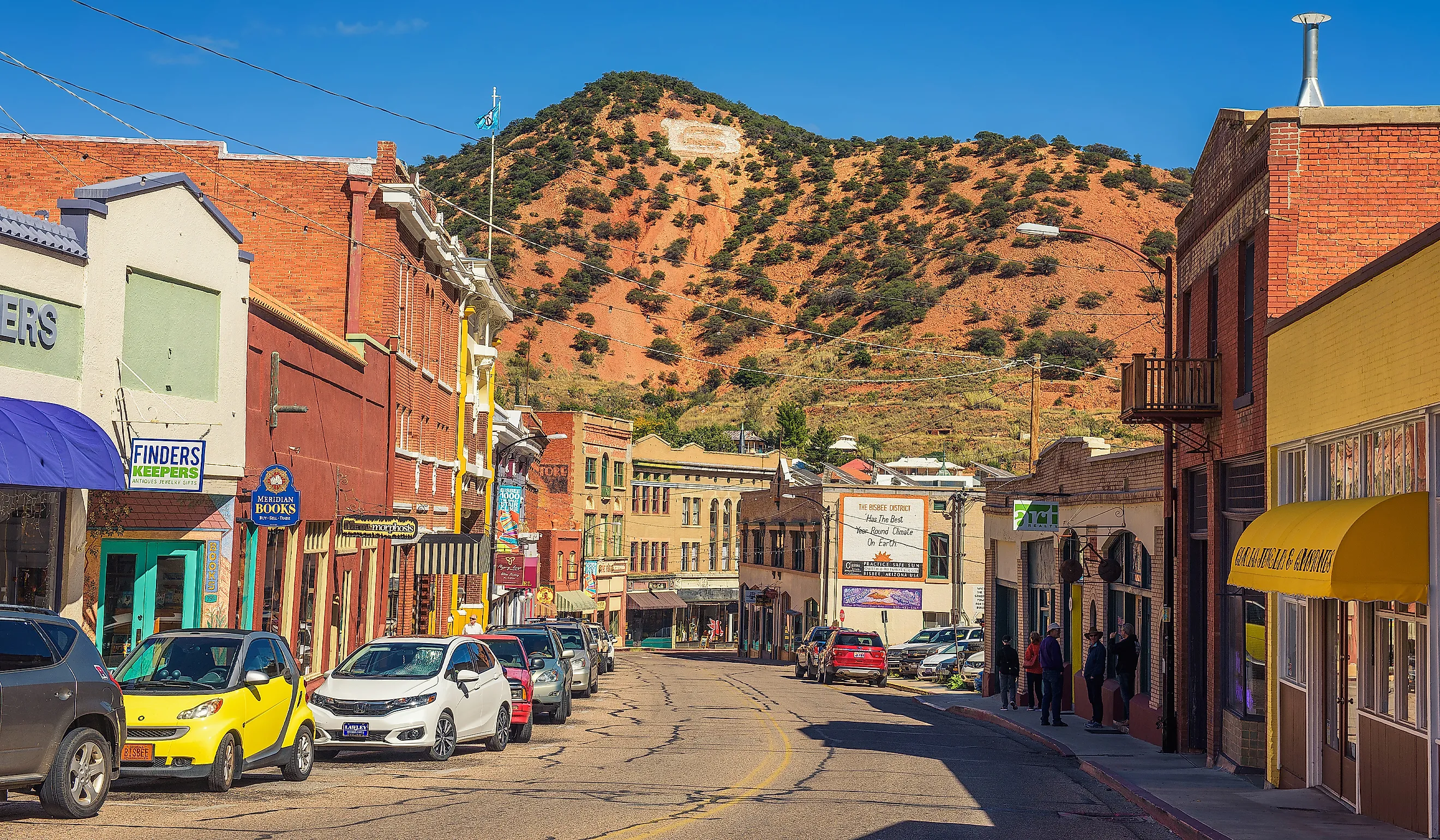
Bisbee is the small Cochise County seat in southern Arizona's Mule Mountains (population just under 5,000) that retrofitted itself from copper mining boomtown to working artists' colony when the Phelps Dodge open-pit mine closed in 1975. The town runs up the mountain on a series of steep staircases that thread between Victorian-era miners' cottages, and the architecture from the 1880s mining boom is mostly intact because the downward population trend stopped any teardown wave. The Bisbee Mining and Historical Museum, a Smithsonian Affiliate, holds the mine's archive in the original 1898 Phelps Dodge General Office Building.
The Queen Mine Tour takes visitors 1,500 feet into the actual mine workings on the original mining ore cars, guided by retired Phelps Dodge miners. The Lavender Pit, the open-pit mine that swallowed an entire neighborhood between 1950 and 1974, is visible from the highway overlook just east of town. The Bisbee 1000 Stair Climb each October runs 4.5 miles past nine staircases and more than 1,000 steps as one of the most unusual urban hikes in the country.
Hodgenville, Kentucky

Hodgenville (population about 3,300) was where Abraham Lincoln was born on February 12, 1809, in a one-room log cabin on the Sinking Spring Farm three miles south of town. The Abraham Lincoln Birthplace National Historical Park preserves the site, with a 1911 Beaux-Arts neoclassical Memorial Building enshrining the symbolic log cabin (the cabin inside the building is a 19th-century structure that may or may not be the actual Lincoln cabin; the Park Service position is honest about the ambiguity). Fifty-six steps lead up to the Memorial Building, one for each year of Lincoln's life.
The Lincoln Boyhood Home at Knob Creek, ten miles north of the birthplace, preserves the farm where the Lincoln family moved when Abraham was two and lived until he was seven. The Lincoln Museum in downtown Hodgenville fills out the family history through dioramas and period artifacts. The bronze Lincoln statue in the town square is by sculptor Adolph Alexander Weinman, who also designed the Walking Liberty half-dollar.
Madison, Connecticut

Madison runs along Long Island Sound between Branford and Clinton, incorporated in 1826 and named for President James Madison. The town holds Hammonasset Beach State Park, the largest shoreline park in Connecticut at 919 acres with more than two miles of beach; the park draws about one million visitors a year, making it the most-visited state park in Connecticut by attendance. The Meigs Point Nature Center inside the park runs free interpretive programs through the summer.
Downtown Madison runs along Boston Post Road with R.J. Julia Booksellers (a 1990 independent that hosts hundreds of author events a year) and the Madison Art Cinemas, a 1912 movie house restored for first-run independent films. The Deacon John Grave House, built around 1685 and continuously occupied by Grave descendants until 1983, is one of the oldest still-standing houses in Connecticut and runs as a small house-museum.
Telluride, Colorado

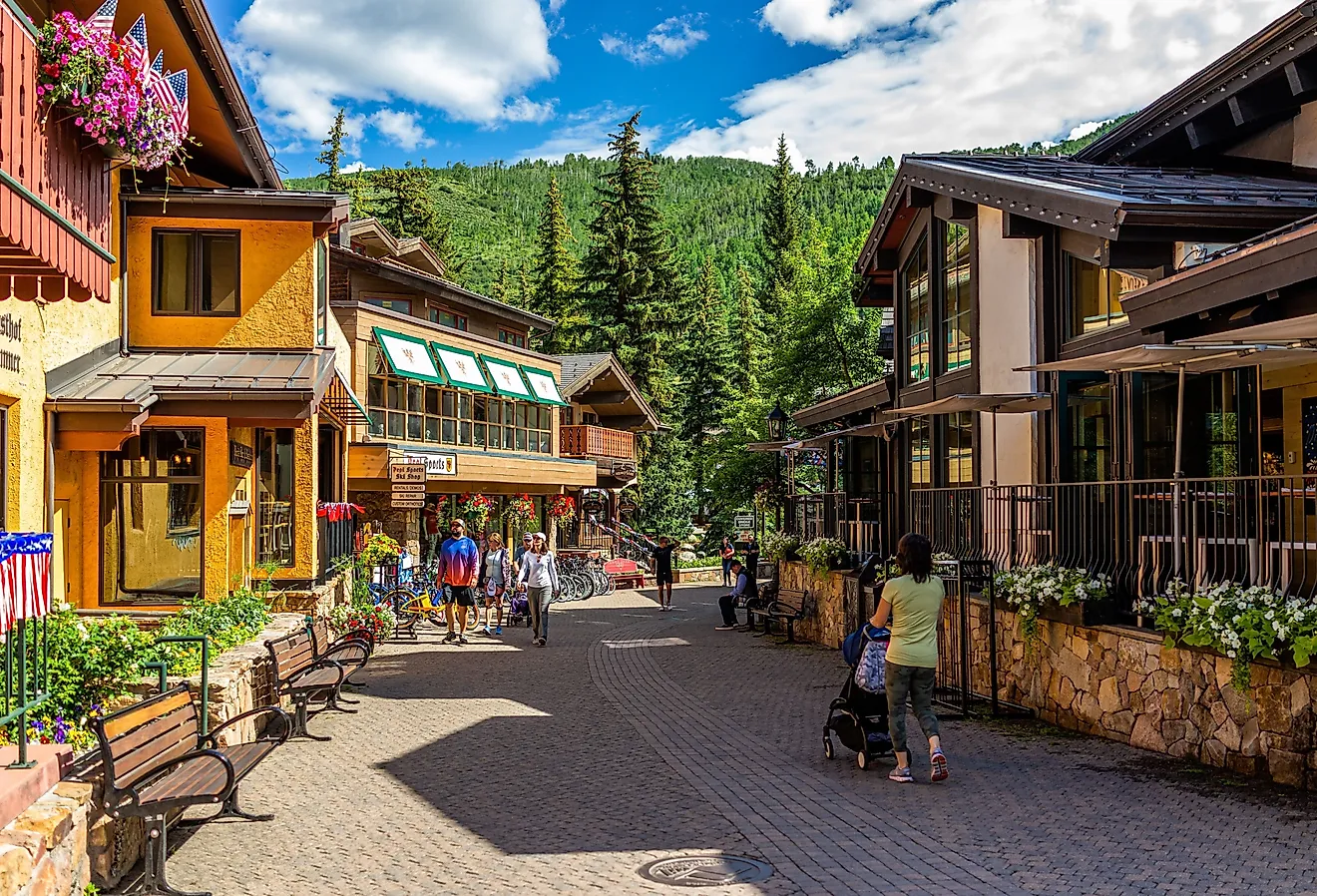
Telluride sits at 8,750 feet in a box canyon in the San Juan Mountains, surrounded on three sides by 13,000-foot peaks (Ajax Peak, Telluride Peak, Ballard Mountain, and Bear Creek Falls). The town was founded in 1878 during the silver boom and was the site of Butch Cassidy's first major bank robbery in 1889, when the Wild Bunch hit the San Miguel Valley Bank for $24,580. The historic district holds Victorian-era landmarks, specialty shops, and local eateries along Colorado Avenue.
The Telluride Ski Resort opened in 1972 and offers high-alpine skiing across 2,000 acres of terrain. Free year-round gondola service (the only public free transit gondola in the United States) connects the historic town to Mountain Village above. The Telluride Film Festival, held over Labor Day weekend since 1974, draws filmmakers and critics from across the world and routinely premieres future Oscar contenders. The Telluride Bluegrass Festival each June and the Telluride Jazz Festival each August round out the summer calendar.
Carpinteria, California

Carpinteria is a small Santa Barbara County coastal town (population about 13,000) about 12 miles south of Santa Barbara. The downtown Linden Avenue strip pairs locally owned restaurants, the Lucky Llama coffee roaster, and a working independent bookshop with a downtown that runs at half-block scale. Carpinteria State Beach, with a mile-long stretch of soft sand, holds a campground that books up about a year in advance for summer weekends.
The Carpinteria Bluffs Nature Preserve, a 52-acre coastal bluff at the south end of town, hosts the world's largest harbor-seal rookery accessible from the public bluff trail (the trail closes seasonally during the December-to-May pupping season to give the seals their space). The annual California Avocado Festival each October turns the fruit into the star of three days of food vendors, music, and parades in downtown Carpinteria, the self-described avocado capital of the country.
Breaux Bridge, Louisiana

Breaux Bridge is the small St. Martin Parish town (population about 7,500) that the Louisiana Legislature officially designated the "Crawfish Capital of the World" in 1959. The annual Crawfish Festival on the first weekend of May serves more than 30,000 pounds of crawfish to roughly 50,000 visitors across the three-day weekend, with crawfish-eating contests, crawfish étouffée, crawfish boudin, and crawfish pie all on the menu. The festival features Cajun and zydeco music continuously across multiple stages.
Outside of festival time, the long-running Café des Amis on Bridge Street serves a Zydeco Breakfast on Saturday mornings that has become a local institution; Buck and Johnny's hosts a similar Saturday morning zydeco breakfast and dance. Lake Martin, a few miles east of town, runs swamp tours through cypress-tupelo wetland where alligators, herons, roseate spoonbills, and great egrets nest in spring and summer.
Eleven Specific Cases
The eleven towns above each carry one specific reason to make the visit. Walla Walla runs on 120 wineries. Dodge City runs on the 1870s Texas cattle trail. Bisbee runs on a copper-mining boomtown rebuilt as an artists' colony. Hodgenville runs on Lincoln's log-cabin birthplace. Telluride runs on a box canyon and a Labor Day film festival. Breaux Bridge runs on crawfish étouffée and Saturday-morning zydeco. Pick the case that fits the trip.