11 Georgia Towns Where Time Stands Still
Georgia stretches from the Blue Ridge Mountains to the Atlantic marshes, and scattered across that landscape are towns that feel untouched by the rush of modern life. These are places where shrimp boats still dock at weathered piers and where antebellum mansions line streets shaded by centuries-old oaks. You will find Bavarian villages reimagined in the Appalachian foothills, colonial forts overlooking tidal rivers, and downtowns that double as film sets for Hollywood productions. From the gorge that once rivaled Niagara Falls to the rose gardens that bloom each spring in the state's southwest corner, these eleven towns preserve Georgia's diverse heritage while welcoming visitors who want to slow down and step into places where time seems to stand still. Whether you are chasing waterfalls, tracing presidential history, or simply looking for a spot where the pace of life matches the gentle sway of Spanish moss, you will find it here.
Madison

The story goes that General Sherman considered Madison too beautiful to burn during his March to the Sea, and walking through its streets today, you can see why. Founded in 1809, this town east of Atlanta was largely spared during Sherman's campaign, leaving one of the South's finest collections of antebellum architecture intact. Tour Heritage Hall, a Greek Revival mansion built in 1811, or visit the Rogers House and Rose Cottage, the latter constructed in 1891 by Adeline Rose, a formerly enslaved woman who earned her living as a laundress at 50 cents per load.

The Madison-Morgan Cultural Center, housed in a Romanesque Revival school from 1895, anchors the town's cultural life. Time your visit for May's annual Tour of Homes and Gardens, when private residences like Honeymoon 1851 Mansion and Serenata Farm open their doors to visitors.
Helen

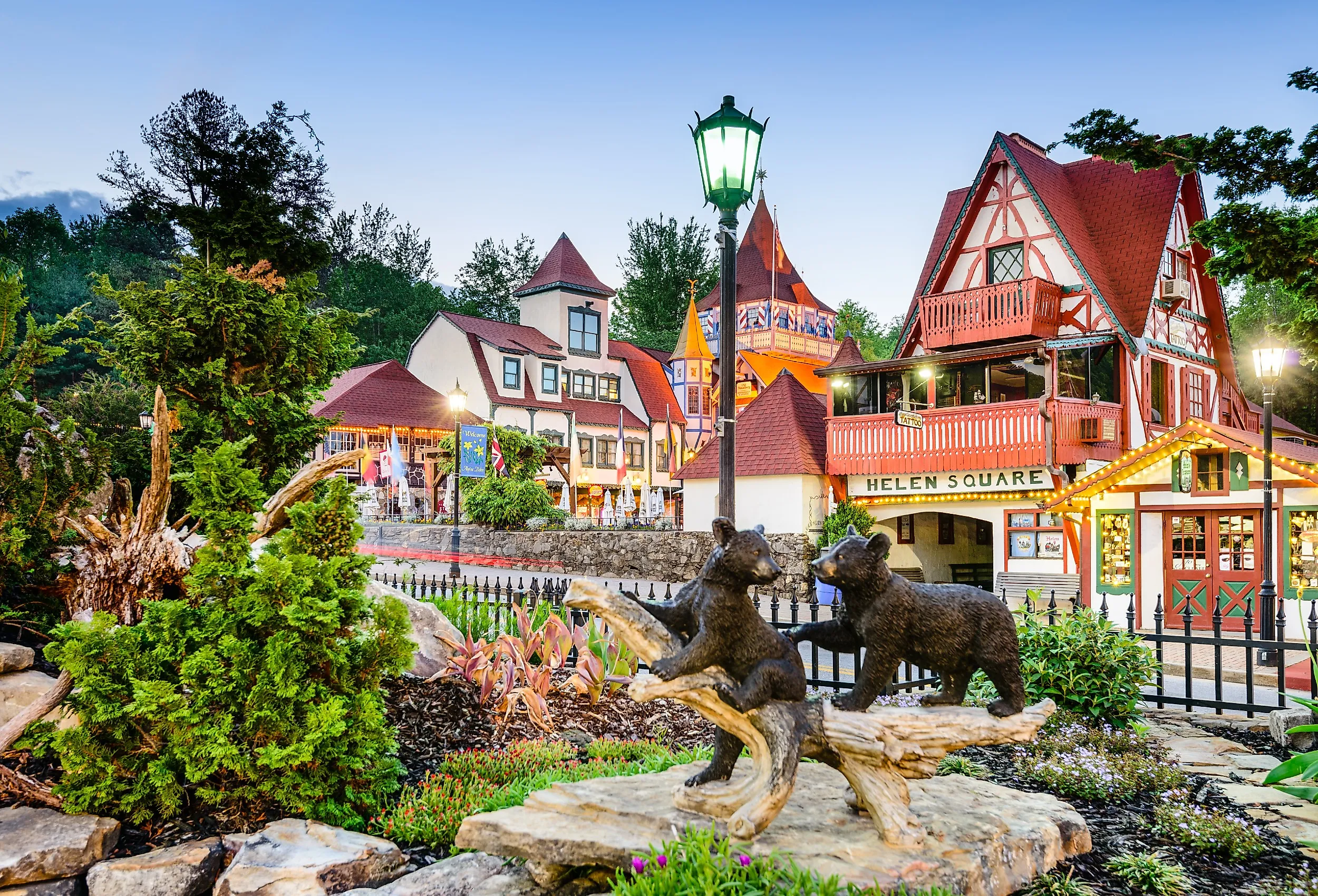
A declining logging town reinvented itself in 1969 when local artist John Kollock sketched a vision of Bavarian-style facades on Main Street, and the idea stuck. Today, this White County village of just over 500 residents welcomes between 1.5 and 2 million visitors annually, making it Georgia's third most-visited destination after Atlanta and Savannah. The Chattahoochee River runs through the center of town, where tubing companies like Helen Tubing offer summer floats.
Stop by Hofer's Bakery and Cafe for apple strudel, browse Black Forest cuckoo clocks at Bavarian Clockworks, or sample wines along the Dahlonega Wine Trail that stretches into nearby valleys. A 15-minute drive leads to Anna Ruby Falls, twin cascades accessible by a paved trail through the Chattahoochee National Forest. Oktoberfest runs from September through November, complete with polka dancing and bratwurst.
Thomasville

Founded in 1825, Thomasville became the "Winter Resort of the South" in the Victorian era, when wealthy Northerners arrived by rail to hunt quail on sprawling plantations. That legacy lives on: the surrounding Red Hills region still hosts dozens of privately owned hunting estates. The downtown's brick-paved streets pass more than 100 specialty shops and restaurants, including locally owned spots serving farm-to-table quail and wild game. The Thomasville Rose Garden blooms with over 1,500 varieties each spring during the Rose Show and Festival, a tradition since 1922.
Don't miss The Big Oak, a live oak dating to around 1680 at the corner of Monroe and Crawford streets, with a limb span stretching over 165 feet. Tour Pebble Hill Plantation, an antebellum home converted to a shooting resort in 1896 and now open to the public. The Lapham-Patterson House, an 1884 Victorian marvel built without a single right angle, and the Jack Hadley Black History Museum, with nearly 5,000 African American artifacts, round out the town's cultural scene.
Blue Ridge

In the heart of the Chattahoochee National Forest, Blue Ridge began as a vital railroad stop and is now a gateway to the Appalachian Mountains. The town's signature attraction is the Blue Ridge Scenic Railway, which departs from the 1905 depot downtown on a 26-mile round-trip journey along the Toccoa River to McCaysville, where you can stand with one foot in Georgia and one in Tennessee.
Between train rides, browse the antique shops and art galleries lining Main Street, or hike to Fall Branch Falls and Long Creek Falls in the surrounding national forest. The town also claims the title "Trout Fishing Capital of Georgia," thanks to Lake Blue Ridge and the streams that feed it. Order a craft beer at Grumpy Old Men Brewing before sunset.
Covington

Covington has served as a backdrop for over 100 film and television productions, earning it the nickname "Hollywood of the South." The 1884 Newton County Courthouse and its iconic clock tower appeared throughout The Vampire Diaries, transforming the town into the fictional Mystic Falls. Fans still line up at Mystic Grill, a restaurant opened specifically to recreate the show's hangout spot, and browse memorabilia at Vampire Stalkers Mystic Falls Tours on Monticello Street. But Covington's history predates its Hollywood fame.
Founded in 1822 and named for War of 1812 general Leonard Covington, the town survived Sherman's troops during the March to the Sea. Several antebellum homes still stand, including the Twelve Oaks Bed and Breakfast, an 1836 mansion rumored to have inspired Tara's rival in Gone With the Wind. Grab ice cream at Scoops, a cast favorite, and wander the Floyd Street Historic District.
Tallulah Falls

At the dawn of the 20th century, Tallulah Falls rivaled Niagara as a tourist destination, drawing visitors by rail to see waterfalls plunging nearly 1,000 feet through a two-mile gorge. The town's fate changed forever in 1913 when a hydroelectric dam was completed, taming the falls but providing vital power for Atlanta. A devastating fire in 1921 destroyed much of the resort town, leaving it a quiet mountain community ever since.
Today, the primary attraction is Tallulah Gorge State Park, established in 1992 through a partnership between Georgia Power and the Department of Natural Resources. Visitors can hike the North and South Rim Trails for stunning overlooks or brave a descent into the gorge to cross a suspension bridge swaying 80 feet above Hurricane Falls. The Jane Hurt Yarn Interpretive Center chronicles the area's history, from Cherokee inhabitants to the Victorian resort era. The state park issues a limited number of permits for rock climbing within the gorge.
Darien

Scottish Highlanders founded Darien in 1736, making it Georgia's second-oldest planned city after Savannah. They named it after a failed colonization attempt in Panama and built Fort Darien to defend against Spanish incursions from Florida. The reconstructed Fort King George State Historic Site now anchors the town's colonial heritage, featuring a blockhouse, barracks, and museum that tells the story of Georgia's earliest English settlement. This McIntosh County seat of about 1,460 residents remains a working shrimp port; watch trawlers unload their catch at Darien River Waterfront Park and buy fresh shrimp directly from the boats.

Skipper's Fish Camp serves wild Georgia shrimp with views of the Altamaha River, while B&J's Steaks and Seafood draws crowds for its Friday night seafood buffet. The Blessing of the Fleet each spring brings decorated shrimp boats parading down the river, and ferries depart for Sapelo Island, home to a Gullah-Geechee community and pristine maritime forests.
St. Marys

The original Spanish settlement here dates to 1566, making St. Mary's one of the oldest continuously inhabited European-established towns in the contiguous United States. This Camden County city of about 18,000 sits on the St. Marys River at Georgia's southern tip and serves as the ferry departure point for Cumberland Island National Seashore, Georgia's largest barrier island. The 45-minute ferry ride delivers visitors to undeveloped beaches, wild horses, and the ruins of Dungeness, the Carnegie family's Gilded Age mansion.

Back on the mainland, the St. Marys Historic District preserves 19th-century architecture, and the St. Marys Submarine Museum honors the nearby Kings Bay Naval Submarine Base with working periscopes and patrol reports. The 600-foot St. Marys History Walk traces the area's past through 24 interpretive panels, from Timucuan inhabitants to Acadian refugees who fled here after the Haitian slave revolt. Pick up boiled peanuts at Seagles Saloon and watch the shrimp boats return at sunset.
Greensboro

On the shores of Lake Oconee, Greensboro's history reaches back to its 1786 founding and its later transformation into a lake resort community. The town's past is preserved at the Greene County Courthouse, built in 1848 and still in use today. Just behind it stands the Old Gaol, completed in 1807 and believed to be Georgia's oldest surviving jail structure, its granite walls two feet thick and iron-barred windows unchanged since the early 1800s. Genuine Georgia showcases handcrafted pieces by local artisans.
The Greene County African American Museum preserves the stories and contributions of the county's Black community, while Festival Hall hosts performances year-round. Lake Oconee spreads across 19,000 acres with 374 miles of shoreline, drawing anglers, boaters, and golfers to resorts like The Ritz-Carlton Reynolds, Lake Oconee. For a relaxed dining experience with water views, Gaby's by the Lake is a popular choice.
Milledgeville

For 60 years, Milledgeville served as Georgia's capital, and the grandeur of that era still lines its oak-shaded streets. The Georgia Old Governor's Mansion, completed in 1839, stands as one of the finest examples of Greek Revival architecture in the South. The Gothic-style Old State Capitol, now part of Georgia Military College, witnessed the secession convention of 1861. But Milledgeville's literary legacy rivals its political one.
Author Flannery O'Connor spent her final 13 years at Andalusia Farm, now a National Historic Landmark open for tours, writing the stories that would cement her reputation as a master of Southern Gothic fiction. She is buried at Memory Hill Cemetery, alongside Congressman Carl Vinson, who represented the town for 50 years. The Milledgeville Historic District encompasses over 40 preserved structures, and Lake Sinclair covers 15,300 acres of water recreation just north of town.
Senoia

Senoia transformed from a sleepy railroad town into a Hollywood destination as the primary filming location for The Walking Dead. Many of the show's iconic backdrops, including the fictional town of Woodbury, were created here. Fans can explore filming sites on guided tours and shop for memorabilia along Main Street, now lined with boutiques in its historic storefronts.
Settled in 1860 and incorporated in 1866, Senoia's Victorian storefronts now house The Woodbury Shoppe, stuffed with show memorabilia, and Nic & Norman's, a restaurant opened by executive producer Greg Nicotero and actor Norman Reedus. The Senoia Area Historical Society and Museum occupies a historic home filled with exhibits predating the town's zombie fame, and Marimac Lakes Park provides catch-and-release fishing for those who want to escape the crowds. Before the film crews arrived, Senoia hosted just a handful of businesses; now there are over 50.
Georgia's Living Time Capsules
These eleven towns share something beyond population thresholds and photogenic main streets. In Madison, you can tour a cottage built by a woman born into slavery. In Darien, you can buy shrimp from the same trawlers that have worked these waters for generations. In Greensboro, you can browse antiques in 19th-century storefronts before watching the sunset over Lake Oconee.
Some of these towns embraced transformation, like Helen's reinvention as a Bavarian village or Senoia's overnight fame as zombie territory. Others, like Tallulah Falls and Milledgeville, weathered decline before finding new purpose in heritage tourism. What unites them is the sense that time moves differently here, that the past isn't something to be paved over but preserved, celebrated, and shared. Whether you are crossing a suspension bridge 80 feet above a canyon floor or stepping into a jail unchanged since 1807, Georgia's small towns reward those who slow down long enough to notice.