8 Tiny Off-Grid Towns In Idaho
Long before interstate highways connected Idaho's mountain valleys to coastal metros, settlements sprang up wherever resources demanded extraction. You can still feel that off-grid vibe in places like Challis, where the Land of the Yankee Fork begins at town limits and side trips lead to the Bayhorse ghost town. It also shows up in Orofino, which doubles down on its backwoods roots during Lumberjack Days with log rolling and chainsaw carving. Explore the 8 off-grid Idaho towns below.
Lava Hot Springs

Geothermal waters bubble in Lava Hot Springs from subterranean vents between 102°F and 112°F, carrying minerals without the sulfur odor plaguing thermal basins elsewhere in Idaho. The Shoshone-Bannock called this place Poha-Ba ("Land of Healing Waters"), relishing these baths for centuries until federal treaty agreements transferred the springs to state control in 1902. The Lava Hot Springs Foundation stewards the public soaking pools year-round, its outdoor terraces terraced along Main Street to spellbind travelers with specific temperatures tailored for therapeutic variety.
The Home Hotel, one of Lava's first major structures, now offers private in-room mineral tubs fed directly from the geothermal source. Meanwhile, Sunken Gardens reimagines a former Victorian-era greenhouse as public grounds honoring the early spa culture era, when health-seekers rode trains from Salt Lake City seeking therapeutic soaks. The Northern Rockies’ crystalline chill persists even in Lava Hot Springs, as the Portneuf River cleaves the town to isolate the hot pools from the Olympic Swimming Complex, the summer tubing run providing a glacial counterpoint to the thermal baths.
Athol

Silverwood Theme Park has swallowed Athol's identity whole, as the Northwest's largest theme park now consumes this entire rural village as an amusement outpost. Roller coasters like Tremors and Stunt Pilot dominate the horizon where farmland once cascaded. The former, an earthquake-themed ride, plunges through multiple underground tunnels, while the latter’s 87-degree drop honors the site's history as the Henley Aerodrome. It was here that park founder Gary Norton famously outbid what their website calls "a much larger company we’ll simply call 'The Big D.'" That bid secured a 1915 narrow-gauge steam train as the centerpiece for his new attraction.
In the summertime, Boulder Beach Water Park reinforces Athol's theme park craze, converting it into a fun spot for the season, rather than an agricultural one. Its Eagle Hunt water coaster stretches as the nation's longest dueling water slide, and then there's Velocity Peak, which sends riders zooming down at 55 miles per hour. The town organizes an even more special event to charge the masses up for Halloween, a month-long extravaganza called Scarywood Haunted Nights. This period also signals a seasonal transmutation as the park grounds adopt a darker skin, complete with spooky areas and labyrinthine mazes designed for immersive horror.
Mountain Home

Mountain Home Air Force Base shapes this aptly-named Elmore County seat 40 miles southeast of Boise along Interstate 84. The military installation employs thousands and supports an infrastructure beyond what similar-sized Idaho towns typically manage. Anderson Ranch Reservoir fills canyon walls 25 miles northeast, its blue waters stocked regularly for fishing and open to recreational boating as soon as the ice melts each spring.
The Mountain Home Historical Museum safeguards relics from the frontier’s sunset, emphasizing how stagecoaches paused here en route between Boise and the Oregon Trail. Ranging from mining and logging equipment to materials related to the sheep, cattle, and agricultural industries, exhibits rotate periodically throughout the year. This diverse amalgamation of history and culture has drawn those seeking proximity without suburban sprawl consuming the farmland that makes Mountain Home a unique high-desert outpost. Exploring the area is easy for adventurers, with highway access placing Boise about 40 minutes west and Twin Falls roughly 90 minutes east.
Grangeville

The Nez Perce-Clearwater National Forests skirt the high Camas Prairie to flank Grangeville on multiple sides, burgeoning with recreation steps away from residential blocks and motels. These primordial expanses embolden travelers to cultivate self-sufficiency through remote living at sequestered locales like Fish Creek Campground, a mere eight miles south. Frank Church-River of No Return Wilderness Area stretches south of town as one of the largest protected regions of its kind in the continental United States. Its trails are accessible for backcountry hiking.
Border Days Rodeo gallops through Grangeville each Fourth of July weekend, marking Idaho's oldest rodeo and the World's Largest Egg Toss tradition that fills Pioneer Park with excited townsfolk. The four-day celebration includes daily parades, bull riding competitions, and fireworks over the high school football field. The Grangeville Centennial Library anchors the community beyond its book collection, hosting Art in the Park during Border Days when vendors sell handcrafted items under shade trees. The library also schedules year-round programming, including watercolor workshops and educational speakers.
Orofino

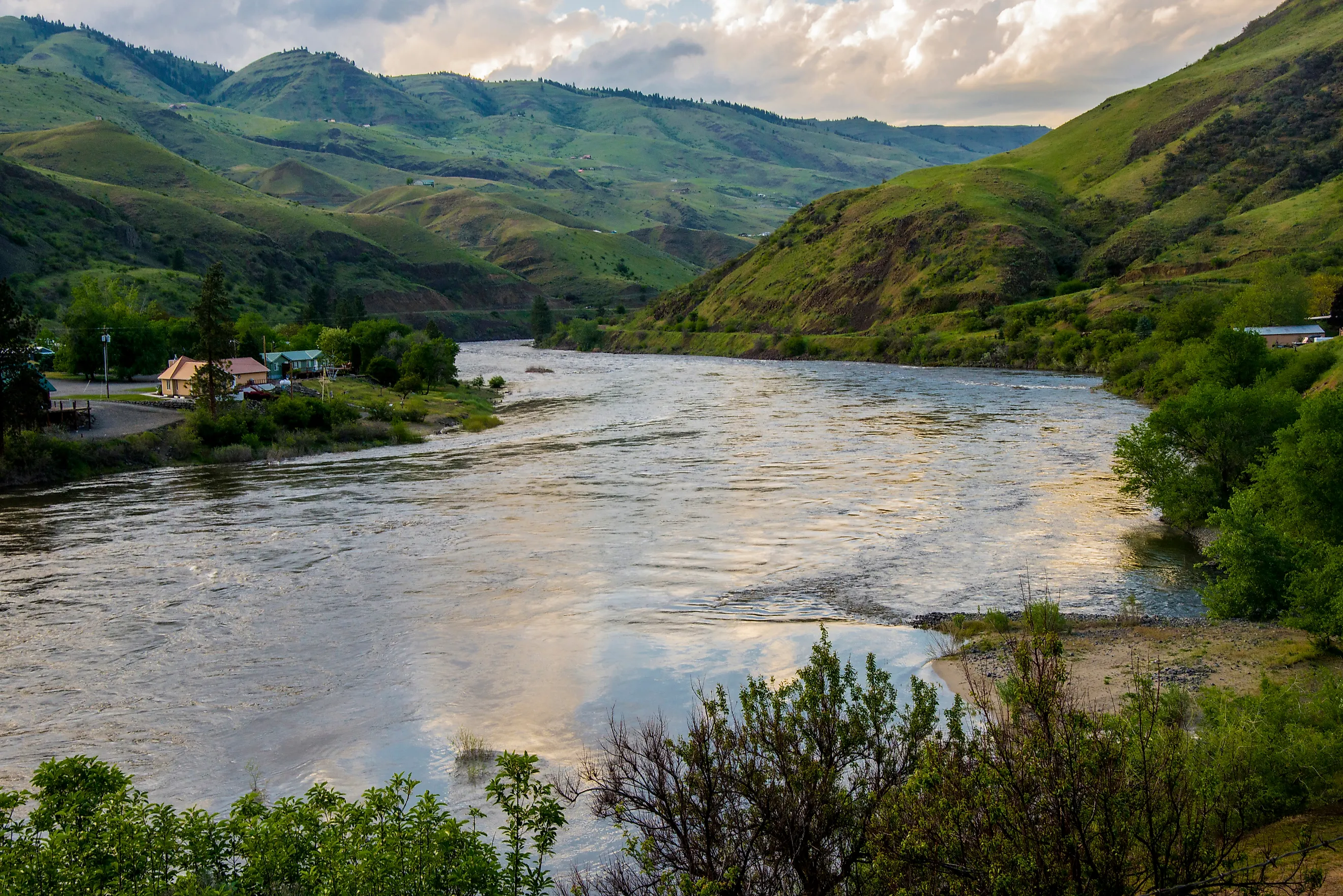
The Clearwater River winds past Orofino before joining the Snake River, attracting steelhead anglers from September through April during the salmon runs. Each September, the Clearwater County Fair and Lumberjack Days Festival celebrate the town’s timber heritage, featuring traditional competitions such as axe throwing, log rolling, and chainsaw carving — events that recall the era when local sawmills employed large crews before mechanization drastically reduced the workforce.
The Clearwater Historical Museum operates Tuesday through Friday, preserving artifacts from the Nez Perce tribe, Lewis and Clark’s 1805 canoe construction at nearby Canoe Camp, and the gold rush era when prospectors flooded these hills seeking the “fine gold” referenced in Orofino’s Spanish name. The Rex Theater screens current films from its downtown location, the historic cinema maintaining vintage charm through decades of operation. Dworshak Dam, one of the tallest straight-axis concrete dams in the Western Hemisphere, towers over Dworshak Reservoir, where kokanee salmon and rainbow trout thrive year-round.
Dubois

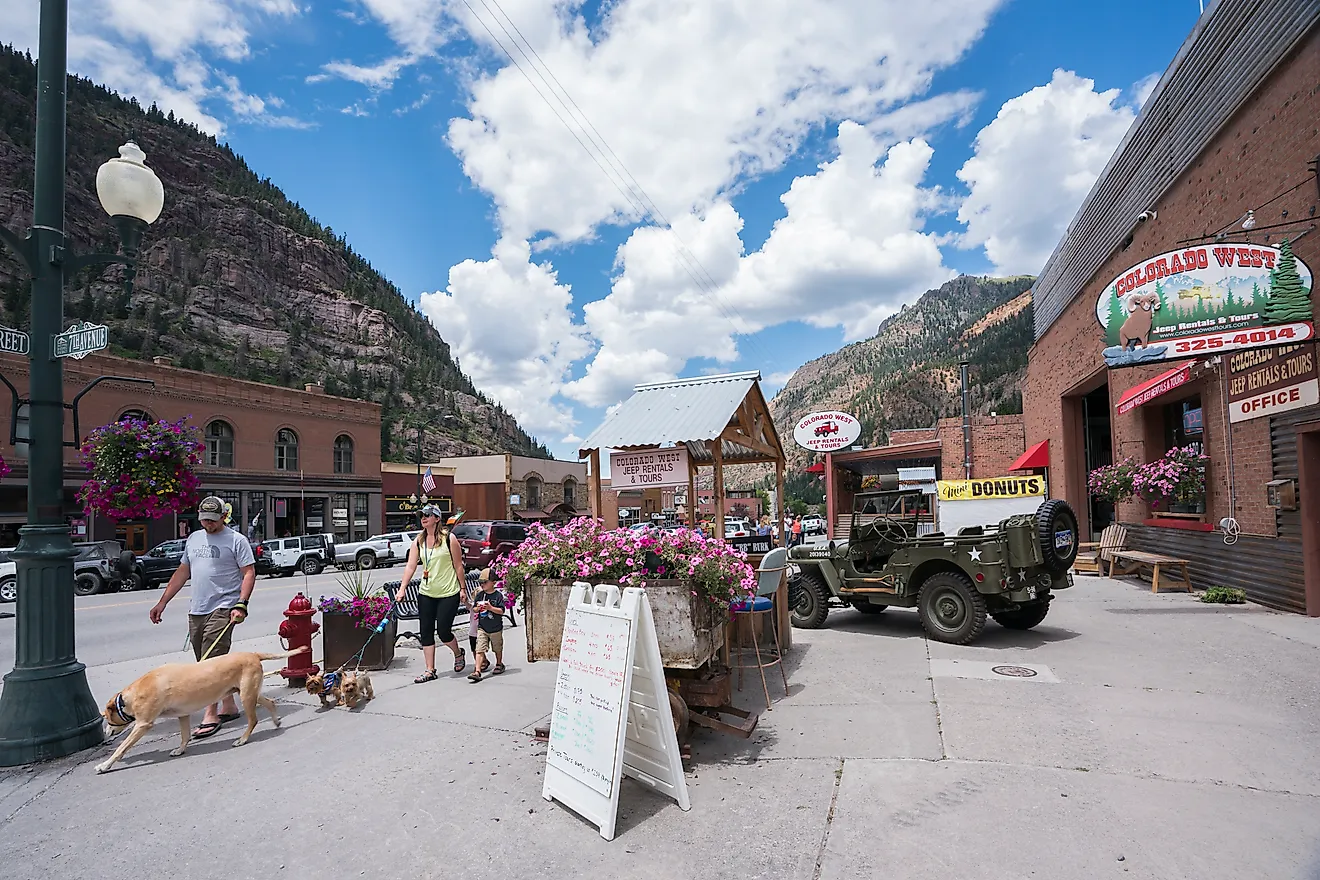
Between opal-digging expeditions north of town, annual rodeo traditions, and the preservation of weathered Western storefronts, Dubois flaunts a multifaceted character. Mining heritage largely defines the Clark County seat, spearheaded by the hamlet of Spencer, 15 miles north. Here, the celebrated Spencer Opal Mine opens seasonally to welcome visitors as more than mere bystanders. All a rockhound requires to ensure this incomparable experience is paying entrance fees covering buckets they fill with raw, opal-laden specimens.
Back in town, Dubois Main Street transports visitors back to railroad boom days when stagecoaches rumbled through Clark County. As a key outpost in the development of the American West, it maintains eroded storefronts built during the railroad boom years when Union Pacific connected eastern Idaho to Montana terminals.
Heritage Hall, originally St. James Episcopal Church, now traces the stagecoach thoroughfare through antique items and photographs. Each summer, the annual Dubois Rodeo halts traffic in an extravagant celebration of ranching traditions, its barrel racing, bull riding, and street dances reviving a frontier heritage.
Arco

It was when the BORAX-III reactor flipped switches in 1955 that Arco, an unassuming town not far from present-day Atomic City, became the first worldwide to be powered solely by nuclear energy. That achievement followed the success of the Experimental Breeder Reactor-I in lighting four light bulbs through atomic fission, proving electricity could be generated from splitting atoms rather than burning coal. The EBR-I Atomic Museum opens each late spring, offering self-guided tours through the original control rooms and turbine halls of the Experimental Breeder Reactor-I, a pioneering site in nuclear electricity generation.
The Devil Boat, also known as "Submarine in the Desert," the conning tower from USS Hawkbill submarine (hull number SSN-666), rises from desert grounds at the Idaho Science Center, installed to honor Arco's longstanding Navy and nuclear fleet associations. The Lost River Range pierces through the Snake River Valley behind town, and central Idaho's natural wonders complement its artificial niche. Moreover, Craters of the Moon National Monument spreads an hour north in the rugged wilderness, its volcanic landscape frozen in geologic time.
Challis

Ghost towns outnumber living settlements around the Salmon River, designating Challis the gateway to the Land of the Yankee Fork, with attractions like the Fork Gold Dredge and Challis Hot Springs under its belt. Moreover, the Interpretive Center chronicles Idaho's frontier mining era through museum exhibits. Its gold panning stations spotlight techniques prospectors used to separate flakes from gravel, and audiovisual programs detailing ore extraction.
The Challis Bison Jump archaeological site provides concrete evidence of communal hunting strategies employed by Native Americans, who drove bison over the limestone escarpment. A short, paved trail allows visitors to observe the terrain firsthand and understand the techniques and ingenuity behind these prehistoric hunts.
Downtown Challis retains historic log houses and board-and-batten buildings scattered across several high-mountain districts. Bayhorse ghost town assumes its arrested decay theme through stabilization. The Gilmer and Salisbury stamp mill, Wells Fargo’s brick building, and miners’ cabins from the 1880s boom stand alongside Bayhorse Charcoal Kilns, which produced fuel to smelt the ore. These beehive-shaped forms resist low-heat operation temperatures without bracing. Additionally, Braun Brothers Reunion music festival reinforces Challis's niche as a remote mountain hideout. Outlaw country performers invoke the frontier spirit prospectors cultivated in these isolated canyons.
Idaho's Welcoming Corners
The smallest of Idaho communities scatter across the Rocky Mountains' high desert plains and mountain valleys, their isolation gifting them a distinct flavor before helping them preserve it. These off-the-grid corners harbor rare assets, be it opals beneath desert hills, timber thick across national forests, geothermal waters heated by volcanic activity, or uranium deposits powering experimental reactors.
Arco exhausts wayfarers with atomic discoveries at EBR-I before Lava Hot Springs recharges them through geothermal soaks. Orofino refuses to forget its lumberjack legacy and Nez Perce canoe-building traditions, while Dubois and its mineral-rich neighbor dig their share of resources straight from the ground. Harboring places that refuse to homogenize into interchangeable mountain towns, the Gem State and its small towns shape identities through geography and happenstance without relying on deliberate planning.